Chevron Stock Moved Past $200: What Should You Do With It Next? Just last year, we were talking with clients about Chevron in the $150–$160 range. It felt like Chevron had a good run. It felt constructive. But it didn’t feel like a major moment. Today, Chevron Corporation (CVX) is trading around $205—well clear of its ~ $160 200-day moving average. No one realistically thought we’d be above $200 / share in early 2026. Now the real question is: how do you turn this into something real—after taxes and in terms of what you actually keep? Past performance is not indicative of future results. This report has been generated through application of the analytical tools and data provided through ycharts.com and is intended solely for conducting investment research. The investment examples set forth in this presentation should not be considered a recommendation to buy or sell any specific securities. There can be no assurance that such investments will remain in the strategy or have ever been held in a WJA strategy. Why is Chevron Stock Going Up We all know, this is an oil story. Tensions with Iran and disruption risk around the Strait of Hormuz have pushed crude prices sharply higher. With uncertainty in oil supply, energy markets reprice quickly. Chevron’s stock price reflects that. This run isn’t due to any underlying business changes. It’s exposure to oil. Chevron’s Stock Outlook in 2026 Compared to Recent Years Chevron’s stock hasn’t been trending higher. Since mid-2023, the stock has been flat to down. A few reasons: Arbitration uncertainty with ExxonMobil Corporation over the Hess acquisition Rangebound-to-weaker oil prices for much of that period Questions around capital allocation and growth visibility How Oil Prices & the Iran Conflict are Impacting Chevron Stock So this recent move isn’t just continuation—it’s a reversal driven by an unexpended blockade of around 20% of the world's oil and gas. Consider this: if the key driver of the stock price is external, the outcome can change quickly. Oil prices moved almost overnight. They can also fall just as fast. If war in the middle east dies down and oil cools, Chevron likely follows. If tensions persist, it could move higher. You’re not just holding Chevron stock. You’re implicitly making a geopolitical bet on the length and magnitude on the war in Iran. Behavioral Investing: When Should I Sell My Chevron Stock? When people own stock that has made a significant run short-term, I often see people adjust price targets. Targets are easy to set when they’re abstract. Harder to execute in real-time. "I'll trim at $180." Then it hits $180... "Let's see if it runs." Now it’s $200. And the target moves again. This pattern repeats more often than people realize. Chevron Employees: CVX Stock Concentration Risk For many Chevron employees, they receive a significant portion of their annual compensation in Chevron stock. Through LTIPs, many hold: Stock grants Stock options (with built-in leverage and a clock) Option exercises often trigger ordinary income on the spread Selling vested shares typically results in capital gains (often long-term if held long enough) And this is where timing and taxes intersect. That means decisions here aren’t just about price: they’re about after-tax outcomes. A strong move like this can be an opportunity, but only if you’re thinking about what you actually keep. Diversifying Chevron Stock Exposure With Our Clients The conversation we’re having with clients is consistent: This may be a moment to take advantage of strength. That can look like: Exercising options while they’re meaningfully in the money (with a tax plan in place) Selling a portion of vested shares (and tax loss harvesting in the rest of the portfolio to offset the capital gains) Not all at once. Not reactively. Systematically and intentionally, using disciplined follow-through. For many people meeting with us, I’m asking, “If you had cash, would you be buying CVX stock today or something else?” The Takeaway If you wouldn’t be buying CVX stock with an extra $200, why are you continuing to hold it? Chevron being over $200 feels important. But what matters more is this: After a long stretch of sideways performance, you’ve been given a window. Between price, concentration, and taxes, this is one of those moments where a few simple decisions can change outcomes. If this is a position you’ve been meaning to revisit, it’s worth doing it now with both the market and the tax side in view. We’re happy to help you think it through.

Just last year, we were talking with clients about Chevron in the $150–$160 range. It felt like Chevron had a good run. It felt constructive. But it...
READ MORE
Nick Johnson, CFA®, CFP®
PRESIDENT & CHIEF INVESTMENT OFFICER
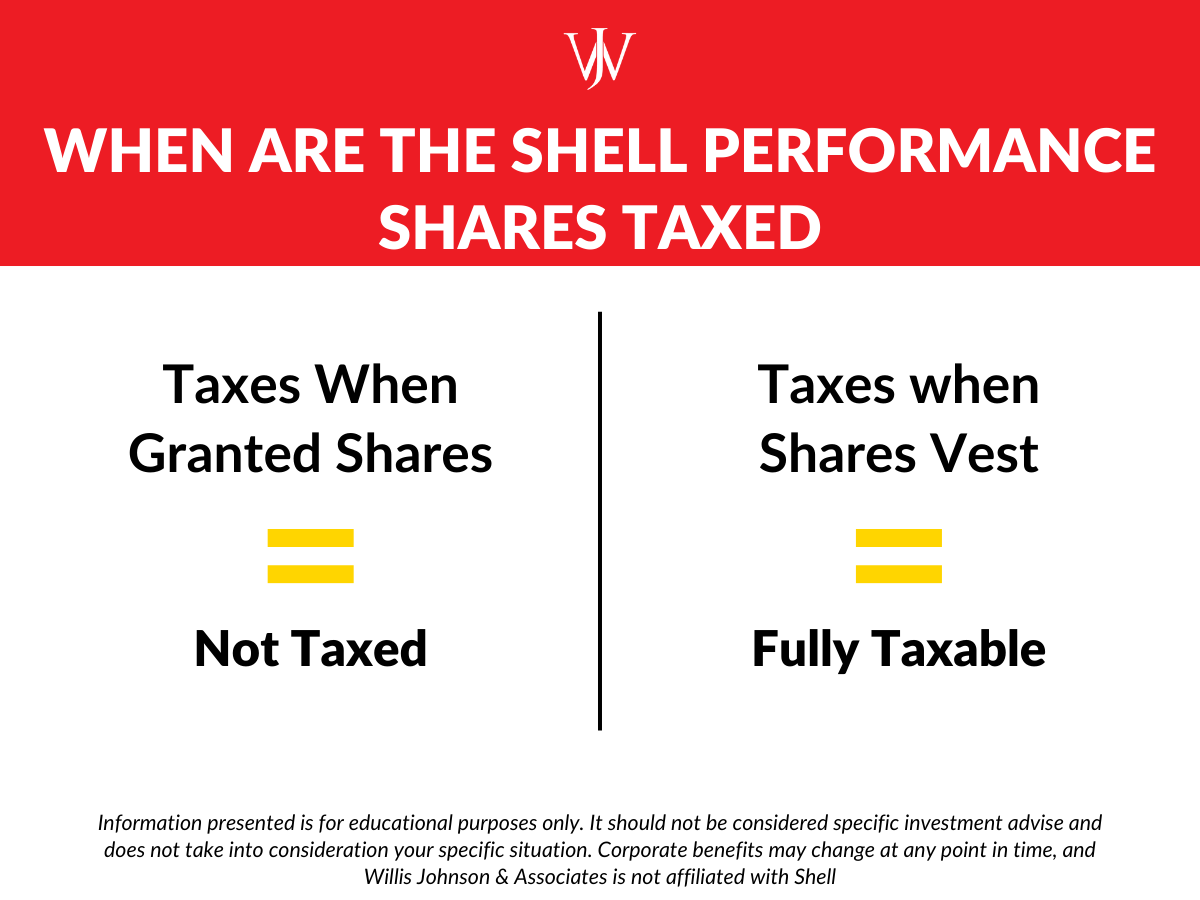
Shell Stock Crossed $90: Should You Hold or Sell in 2026? A few weeks ago, we were talking with clients about Shell in the $70s. And then, it actually happened: Shell crossed $90. It felt strong. It felt like progress. But it didn’t feel like a defining moment. Now, as I write this, Shell plc (SHEL) is trading around $91.88—well above its 200-day moving average of roughly $74. And now we’re having a different conversation with clients: what should you do with your Shell stock after a major market run-up like this, and is now the time to start selling Shell stock? Past performance is not indicative of future results. This report has been generated through application of the analytical tools and data provided through ycharts.com and is intended solely for conducting investment research. The investment examples set forth in this presentation should not be considered a recommendation to buy or sell any specific securities. There can be no assurance that such investments will remain in the strategy or have ever been held in a WJA strategy. Why is Shell Stock Going Up To think clearly about what comes next, it helps to separate this into two related drivers. A strategic re-rating that was already underway A geopolitical oil shock that accelerated the move Most commentary and headlines only focus on the second point, but the first is where the story really starts. Shell’s Strategic Shifts & Plans for Long-Term Growth Before the recent spike in oil, Shell had already been trending higher, and that wasn’t by accident. Under CEO Wael Sawan, Shell has become much more explicit about its priorities: Lower, more disciplined capital spending Higher shareholder distributions Continued cost reductions A clearer focus on LNG, oil, and gas Ongoing portfolio simplification At its latest Capital Markets Day, Shell outlined plans to keep annual investment in a tighter range, increase the percentage of cash flow returned to shareholders, grow LNG volumes, and reduce structural costs. For years, investors questioned how European energy companies would balance energy transition goals with profitability. Shell responded with a clear and focused strategy, and markets have responded. LNG & Oil Focus Driving Shell Stock Outlook Shell has not abandoned the energy transition, but it has become more selective about where it invests. Management has emphasized delivering “more value with less emissions,” prioritizing areas where the company believes it has a competitive advantage. In practice, that has meant leaning more heavily into: LNG and global gas demand High-return upstream projects Businesses with stronger, more predictable cash flow How Sale of Jiffy Lube is Impacting Shell Stock Another piece of the story is simplification. Shell has continued to sell non-core assets and streamline the business. Most recently, it announced the sale of Jiffy Lube for approximately $1.3 billion. Moves like this don’t usually drive a stock in the short term. But over time, they can support a higher valuation by: Simplifying the business Improving capital allocation Redirecting resources toward higher-return opportunities How Oil Prices & Iran Conflict Impact Shell Stock Outlook The recent move in Shell stock from the upper $70s into the $90s is much more directly tied to oil. The escalation in the Iran conflict and disruption in the Strait of Hormuz has pushed oil prices sharply higher. When oil moves like that, Shell’s stock price tends to move with it. That relationship is well understood and it’s the clearest explanation for the most recent leg higher. The recent run in Shell stock is driven by two different forces at once: A stronger, more disciplined business A commodity-driven spike layered on top This matters because strategic improvements may persist as Shell doubles down on their competitive advantage, but the spikes in energy are less predictable over time. A de-escalation, reopening of shipping routes, or normalization in crude prices could bring energy prices back down. If that happens, Shell could still be a stronger company than it was two years ago. But what does this mean for investors holding Shell stock? Behavioral Investing: When Should I Sell My Shell Stock? This is where investing gets interesting. Not long ago, for many investors, the number wasn’t $90. It was $80. “If Shell gets to $80, that would be an amazing opportunity to sell.” That felt like the win. The nice run. The moment to reduce exposure. And then it happened. Shell moved through $80. And instead of selling, the conversation changed: "Let's see if it gets to $90." "Oil is strong, this might have more room." "This isn't the right time anymore." The target moved. This is a very human pattern. The level that once felt like the finish line quickly becomes the new baseline and a new target appears just beyond it. The Risk of Holding Shell Stock Too Long The risk is not that the stock goes higher. It might. The risk is that the plan quietly fades into the background and disappears. Some investors were waiting for $70. Then $80. Now $90. Next, it may be $100. And at each step, the same logic applies: “Just a little bit more.” If you had a plan built on strategy and told yourself: “When Shell gets to $80, I’m going to diversify a portion of my holdings” Then this is the moment to revisit that plan honestly. How we like to look at it from an objective approach: “If you had cash, would you be buying Shell stock today or something else?” That answer tends to clarify things quickly. If the answer is: "Something else" why don't you sell and diversify "My situation has changed" that's worth evaluating "I just feel like holding on a bit longer" that's where behavior tends to take over Diversifying Shell Stock Exposure We’re having a lot of conversations right now with Shell executives and professionals who have benefited from this recent run-up. In many cases, our recommendation is consistent: Use the strength to diversify. Not because Shell is a bad company. Not because the stock can’t go higher. But because moves like this, especially when influenced by geopolitics—don’t tend to last forever. When the war in the middle east ends, it could likely do so quickly, with the opportunity to sell at today’s prices in the rear-view mirror. How Shell Stock Compensation Impacts Your Decision For many Shell employees, this timing is particularly relevant. A lot of clients have just received new shares in Q1 through: Performance Share Plans (PSP) GESPP purchases At the same time, many still have granted but unvested shares that will continue to vest over the next several years. This means even if you sold everything that’s fully vested today, you would still remain meaningfully exposed to Shell through future vesting and performance-based compensation. And that’s before you factor in your exposure from your base salary, bonus compensation, and pension all being tied up in the same company! You’re not walking away from all the upside. You’re simply reducing concentration risk today. Want to go deeper? We’ve written more about how Shell compensation works and how to think about diversification and taxes around Performance Shares and the GESPP: https://insights.wjohnsonassociates.com/blog/shell-stock-compensation-shell-shares

A few weeks ago, we were talking with clients about Shell in the $70s. And then, it actually happened: Shell crossed $90. It felt strong. It felt...
READ MORE
Nick Johnson, CFA®, CFP®
PRESIDENT & CHIEF INVESTMENT OFFICER
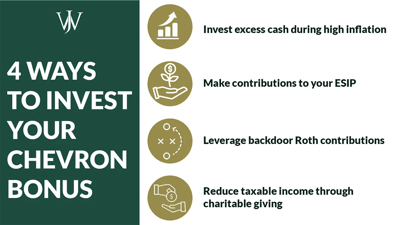
4 Ways to Invest Your Chevron Incentive Plan (CIP) Bonus time can be exhilarating – a large lump sum of cash that Chevron employees can use for many expenses – paying off debt, taking a vacation, or hiding under the mattress for a rainy day. But for Chevron super-savers, there are many additional strategies to help you optimize your bonus payout. What is the Chevron Incentive Plan (CIP)? The Chevron Incentive Plan (CIP) is Chevron's short-term cash incentive program. Colloquially, many Chevron employees refer to the CIP as the annual Chevron bonus. Chevron CIP Formula & Calculation Factors Chevron bases an individual's CIP bonus on the employee's job grade, individual performance, and the company's annual performance. Chevron reviews many factors when determining company performance, including comparing the company to top performers in the Oil Industry Peer Group. In 2026, we expect to see a lower bonus payout than in recent years, as Chevron's earnings declined in 2025 compared to the previous year. With this impending bonus payout for Chevron employees, it is important to note how this additional income will impact your cash flow, retirement savings, and taxes. How is Your Chevron Bonus Taxed? When you receive your bonus, it's an excellent time to check in on your tax withholding. It's essential to know that you are withholding enough in taxes from your paychecks and bonuses, so you do not need to make an estimated tax payment for Q1. The last thing you want to deal with is an additional tax penalty on top of your tax bill come April 2027. Additionally, since CIP payouts are considered supplemental income, they are taxed differently than ordinary income. The IRS taxes supplemental income, like bonuses, up to $1 million at a flat withholding rate of 22%. If you are a high-income earner at Chevron, 22% may not be enough withholding to cover your tax bill without additional penalties. Therefore, it's essential to work with a tax professional who can check in on your ongoing tax withholding and help you calculate any extra payments you may owe after you receive your bonus. How the CIP Impacts the Chevron Pension (CRP) If retirement is near the horizon, consider how your next CIP payout may affect your pension calculation. The Chevron Retirement Plan (CRP) formula considers your years of service and Average Final Compensation (AFC). If either of those variables increases, the pension value increases. Chevron averages the 36 most highly compensated consecutive months in the last ten years when reviewing AFC for an upcoming retiree. A larger bonus payout for this year could increase the AFC over the previous 36 months for an impending retiree. For the CRP calculation, a crucial caveat is that Chevron employees who want their AFC to include the March 2026 CIP payout must be on the U.S. payroll for at least one day in April 2026. Chevron provides retirees with prorated bonuses for work completed in their year of retirement, so long as the employee works for at least one day in the next quarter. So, for example, if someone retired on July 1st, 2026, they'd receive a 50% prorated bonus, and if they retired on October 1st, 2026, they'd receive a 75% prorated bonus. Given that timeline, it would be prudent to review your AFC and determine whether it would be valuable to stay on the payroll until the first day of an upcoming quarter to maximize the AFC for your pension. How to Invest Your Chevron Incentive Plan Payouts When talking to Chevron supersavers, a common question arises, “should I invest my bonus or save it in a certain account?” The answer depends on an individual’s unique circumstances and goals. However, the following strategies are considerations we discuss widely as ways to consider leveraging the CIP payout in March. Invest Excess Cash To Avoid Tax Drag from Inflation Having a cash reserve for emergencies is critical to sound financial planning, but carrying too much cash can be detrimental to a plan. You need to earn 2.6% from investments to break even on the purchasing power of your cash if we look at the inflation numbers from December 2025. With the CIP payout in March 2026, it would be prudent to review your cash holdings and determine if you should reinvest any funds, with the goal to achieve growth that outpaces inflation. And with the market currently pulled back from all-time highs, investing cash in this pullback could be a strategic investment opportunity. Make Contributions to Your Chevron 401(k) Since the bonus payouts occur in March, you should plan to check your 401(k) contributions before and after the bonus payout. You may consider contributing more to pre-tax or supplemental with your CIP payout, especially if you know you will reach or exceed 2026's income limit of $360,000 before maxing out your ESIP. Front-loading contributions with the CIP will help make sure you max out your pre-tax, after-tax, Roth and company contributions before reaching this $360,000 income limitation. After the bonus payout, you will want to check your year-to-date ESIP contributions to determine if you need to adjust your future supplemental contribution percentages to max out pre-tax contributions of $24,500 if you are under and over 50. If you're over 50, you can do the $8,000 catch-up into a Roth, as well as your after-tax contributions. Your total after-tax contribution amount will vary annually depending on your salary and CIP payout. Your total after-tax contribution amount is the difference between the overall 401(k) contribution limit and the sum of your pre-tax and Roth contributions and your 8% company match (if contributing 2% to basic). Leverage Backdoor Roth Contributions You have several options for where you can invest excess cash. For example, if you've maxed out your 401(k), you may consider contributing to an after-tax account or making a backdoor Roth contribution. A backdoor Roth contribution allows you to roll your excess cash over into a Roth IRA to take advantage of long-term tax-free growth, even if you're above income limits that prevent you from directly contributing to a Roth. Backdoor Roth Contributions allow individuals to make a nondeductible IRA contribution of $7,500 if under 50 or $8,600 if over 50. Once you contribute to the IRA, you convert the IRA to a Roth IRA. Once funds are available in the Roth IRA, you can invest the cash in an allocation designed for growth, which can be a great solution to get cash working towards tax-free growth. There are currently no income limits on nondeductible IRA contributions; therefore, individuals who are over the income limit for direct Roth IRA contributions can still use this Backdoor Roth strategy. Reduce Taxable Income Through Charitable Giving A more significant bonus may result in a higher-than-average income year and a significantly higher tax bill. While working, you can pull a few levers to minimize your tax bill – max out pre-tax retirement savings accounts, deduct property taxes up to or at least $10,000 based on your income, deduct mortgage interest on up to $750k of debt for mortgages after 2017, and deduct charitable donations. Starting in 2026, provisions from the One Big Beautiful Bill Act include a 0.5% floor on charitable contribution deductibility, creating additional complexity in tax planning. If you are charitably inclined, making a significant charitable gift in a year of high income can be incredibly beneficial to lowering your tax bill. You could consider direct contributions to a charity or a Donor-Advised Fund (DAF) to bundle your charitable gifts into more significant lump sum donations. To optimize the tax efficiency of your contribution, consider donating appreciated stock instead of cash. You can gift appreciated stock directly to a charity or a DAF, which offers you an itemized deduction on your tax return and avoids the capital gains taxes on the stock. With your cash CIP payout, you can replace the stock value with cash and either reinvest in the same stock or diversify elsewhere. OptimizeYour Investment Strategy by Working with a Financial Advisor CIP payouts every spring are exciting, but it's important to invest them in the things that matter most to you and your family. At Willis Johnson and Associates, we can help optimize your annual performance bonus for the journey ahead through tax planning, savings prioritization, and benefits eligibility assessment. Partnering with an advisor who understands your financial needs for today can be instrumental in helping you establish financial systems to support your future goals. Get started today by discussing your financial goals and Chevron benefits with the advisors at WJA, who can offer tailored guidance to help you reach financial independence.
Bonus time can be exhilarating – a large lump sum of cash that Chevron employees can use for many expenses – paying off debt, taking a vacation, or...
READ MORE
Alexis Long, MBA, CFP®
MANAGING DIRECTOR, WEALTH MANAGEMENT
How to Avoid Double Taxation on Restricted Stock Units (RSUs) If you’ve worked for Dow, Shell, Chevron, BP, or other major oil companies for several years you may receive Restricted Stock Units (RSUs) or other company share awards as part of your executive compensation package. The value of the RSUs you receive is included in your W-2 as compensation in the year you receive the shares. Far too often, when we review a professional’s tax returns, we discover that the executive (or the CPA preparing their return) has used the incorrect basis when selling RSUs. Unfortunately, when they sell the RSUs a few years later, they end up paying taxes twice! And…who really wants to pay more to the IRS than what is required? In this article, we’ll cover how this costly mistake arises and how to fix it to get a refund of money you overpaid to the IRS, so let’s dive in. What are Restricted Stock Units (RSUs)? Restricted stock units are a form of employee compensation via company shares that an employer gives to employees on a predetermined vesting and distribution schedule. Many oil and gas companies have different names for these plans, some given by the companies themselves and others by the employees receiving them. For example: At Shell, many employees refer to RSUs by a few different names including Shell Performance Awards, Shell Stock Awards, and "Share Grants." At BP, these are known as Restricted Share Units as part of BP's overarching Share Value Plan. Within the Share Value Plans at BP, employees may also have Reinvent Options or Performance Shares, which are beyond the scope of this article. At Chevron and at Dow, RSUs are called by their name: Restricted Stock Units, or RSUs for short. When these RSUs are granted, the value of the shares is considered compensation income for the year you received them. Compensation income is considered “ordinary” income and is taxed at regular tax rates. RSUs are not considered a capital gain or passive income and, therefore, are not taxed at preferential capital gains taxes. RSUs & Ordinary Income Taxation Let’s use an example to illustrate taxation on restricted stock units. Suppose you are a Shell professional who’s been granted the following RSUs throughout the years. Remember, the values of the shares at the time of grant were included in your Form W-2 as compensation income the year you received them. Date of Grant Number of Shell RSUs granted Value per share at the time of grant Value included on your Form W-2 01/01/15 155 $57.59 $8,926.45 03/08/16 497 $70.96 $35,267.12 03/13/17 587 $72.18 $42,369.66 03/12/18 536 $65.98 $35,365.28 02/27/19 410 $72.90 $29,889.00 02/17/20 463 $66.40 $30,743.20 03/01/21 364 $46.44 $16,904.16 03/01/22 590 $52.35 $30,886.50 03/02/23 539 $63.09 $34,005.51 03/01/24 2,268 $62.32 $141,341.76 03/04/25 1,566 $45.21 $70,798.86 Total shares granted 7,975 $476,497.50 Through the years, your Forms W-2 have reported a total of $476,497.50 in taxable compensation from your RSUs. Let’s suppose you reported the income from your W-2 ($476,497.50) on your tax returns each year and have been fully taxed on each year’s stock grant. Because you’ve been taxed on this income, you should include that compensation income from the yearly grants into your cost basis of the shares. Discovering Double Taxation on RSUs Using Form 1099-B To continue the example, in May 2026, let’s suppose you retired from Shell. In December, you decided to sell all 7,975 shares to diversify your portfolio. The market was lower then, and it seemed like a good time to buy into other investments. The total proceeds for the sale of all 7,975 shares were $299,145.74, which are reflected in your 2025 Form 1099-B as shown below: Form 1099-B has been prepared per the IRS reporting requirements and is correct. And, because you didn’t pay anything for these shares when they were granted to you through the years, it makes sense to you that the cost basis shows $0 for all the shares. When preparing your tax return for 2025, you enter these sales with a cost basis of $0 and recognize a long-term capital gain of $299,145.74, which results in the following tax amount: 20% capital gains rate tax on gain from RSU sale $59,829 3.8% net investment income tax on gain from RSU sale $11,368 The total amount of tax that you will pay on the sale of the Shell Performance Shares is $71,197, which is quite a substantial amount of tax. All this seems pretty straightforward, right? It’s “just using the information on Form 1099-B for your tax return.” What could possibly go wrong? By following these steps, as straightforward as they seem, you've actually made a costly mistake — Double-Taxation. RSU Income is Not Reflected as a Cost Basis Let’s take a closer look at the small print on Form 1099-B. In the cost basis column, there is a little code “e” followed by very specific and important conditions. This small print acknowledges that the shares that were sold were acquired through the employer stock plan. “Cost basis associated with these shares may not have been adjusted for any compensation income that was associated with those shares in the year of acquisition.” This small print states that the Form 1099-B cost basis does not include the previously-taxed compensation income that was included in years of Forms W-2. This previously taxed income should be included in the cost basis. Most taxpayers (and sometimes even their CPAs) report exactly what is shown on their Form 1099-B when they prepare their yearly tax returns. However, a little-known regulation of the IRS is that brokers (like Fidelity, Edward Jones, UBS, Charles Schwab, etc.) are not allowed to include “ordinary” income on Forms 1099-B. This is why, in our example, Form 1099-B reflects only $0 as a cost basis. How to Prevent Double-Taxation on Your RSUs What is the solution? Many brokers, like Fidelity, provide important details in their Supplemental Information included in the last pages of the yearly Forms 1099-B. Taxpayers (and their CPAs) must look beyond Form 1099-B and into this Supplemental Information for information that will prevent double taxation. Use Supplemental Information from Brokerage Firms Fidelity has online resources to walk taxpayers through both Forms 1099-B and the accompanying Supplemental Information. You will need both Form 1099-B and the Supplemental Information section included with your Form 1099-B when you prepare your tax return. Continuing with our example, the following information is included in the Supplemental Information of your Form 1099-B for 2025: You can see the column “Ordinary Income Reported,” which reflects the amount of income that was included in your Form W-2 through the years. Note that the same amount is included in the column “Adjusted Cost or Other Basis”. Once you include the cost basis in the calculation of the gain, the result is actually a long-term capital loss (LTCL) of $177,351.79! Impact of Double Tax on RSUs This loss can offset current and future long-term capital gains, which, assuming a 20% capital gains rate plus the 3.8% net investment income tax, will save $42,210 in taxes. Additionally, you will save yourself from paying the $71,197 in tax by not including the cost basis in the calculation. Double-Taxation Cost of Using $0 Cost Basis $(71,197) Tax Savings from Using Supplemental Info Cost Basis, Resulting in LTCL Carryover $42,210 In this example, the total double-taxation costs are the following: 1) current year tax of $71,197, and 2) the foregone tax savings from the loss of $42,210. That’s a whopping $113,407 in tax costs! Uncovering Double Taxation on RSUs We’ve seen how quickly this mistake can add up in a given year, so you may ask, “Did I make this mistake?” Here’s how you can find out: First, dig through your closet or search the files on your computer for your past three years of tax returns. Next, log into your brokerage account for the complete Forms 1099-B for the three years, including the Supplemental Information section. Then, take these steps: In your tax return, locate Form 8949, Sales and Other Dispositions of Capital Assets. Search for the sale of the specific RSUs and identify the amount shown in column (e) for Cost Basis. In the Supplemental Information section of your Form 1099-B, find the adjusted cost basis for the corresponding sale of the RSUs. Determine if these numbers are the same. If so, your tax return was completed correctly. If the numbers do not agree, you likely have an error on your return, which may have caused you to pay more tax than necessary. How to Address Double Taxation on Previous Tax Returns If this error exists on a prior year’s tax return, you can amend the three most recently filed tax returns by filing a Form 1040-X, Amended U.S. Individual Income Tax Return. Filing an amended return will permit you to correct the basis and get a refund of any taxes you have overpaid. Three years is the statute of limitations on filing an amended return. If you amend a return to correct the error, it must be filed within three years of that return's original filing date. The following tables illustrate the periods you have to file an amended return, assuming you filed on or before the April 15 due date: 2025 tax return April 15, 2029 2026 tax return April 15, 2030 2027 tax return April 15, 2031 Working with a Tax Professional Can Help You Avoid Double Taxation If your cost basis is incorrect and a CPA or other tax professional prepared your return, reach out and request that they review the return and file an amended return on your behalf. If you prepared the return yourself, you will likely need professional assistance to file an amended return. For WJA clients, we offer a complimentary review of your tax return to identify whether the sales of RSUs or other performance shares have been reported correctly. Our in-house tax department routinely provides this service to provide our clients with high-quality, year-round tax planning and compliance. If you have any questions about whether you have been double-taxed on selling your RSUs or performance shares, act now. The stakes are high. You should not pay more to the IRS than is required. Schedule a conversation with an advisor today to discuss your tax situation and its role in your overarching financial plan.

If you’ve worked for Dow, Shell, Chevron, BP, or other major oil companies for several years you may receive Restricted Stock Units (RSUs) or other...
READ MORE
Leah Cessna, CPA
DIRECTOR OF TAX
5 Ways to Get More From Your Shell Bonus This Year Bonus season is finally here! From dream vacations to visions of paying off expenses, your hard-earned bonus holds exciting potential. For Shell super-savers seeking to make the most of their bonus, the clock starts ticking the moment it hits your account. This spring, unlock the full power of your bonus with strategies devised to help you reach your financial goals, invest for future growth, or simply make your bonus work smarter for you. Shell Bonus Formula & Calculation Factors To determine an individual’s bonus, Shell looks at three factors: The employee's job grade with a target bonus, individual performance, and the company's annual performance. When evaluating company performance, Shell reviews financial targets and their performance in the industry to determine the company’s bonus factor. In the years where Shell performs well, the bonus payouts have been higher. For some employees, Shell awards spot bonuses for exceptional individual performance in managing or completing company strategies. In 2026, we expect to see a relatively positive bonus payout compared to recent years. Shell’s adjusted earnings for 2025 were $18.5 Billion. With this anticipated shift in payouts for Shell employees, there are strategies and opportunities to consider. How is the Shell Bonus Taxed? Bonus season is the perfect opportunity to do a tax tune-up and review your withholdings. Why? Because you want to avoid two possible surprises come April: a hefty tax bill, or a potential penalty. Remember, bonuses are treated differently than regular income. They're considered "supplemental income," and the IRS takes a flat 22% out of them for supplemental income up to $1 million. As a high-income professional at Shell, withholding 22% might not be enough to cover your full tax bill. That's where working with a professional tax team comes in—They can assess your current withholdings and calculate any additional payments you may need after your bonus hits to avoid penalties. One way to think of it is as an investment in your peace of mind, avoiding last-minute scrambles and unnecessary fees. How the Shell Bonus Impacts Pension Payouts At Shell, you have two pensions that you may be eligible for depending on when you began employment: the 80 Point Pension and the APF Pension. For either pension, your average final compensation (AFC) plays a crucial role in the calculation of your benefit. The higher your AFC, the higher your pension benefit at retirement. Specifically, Shell uses the highest three years of average final compensation within the last ten years to determine your pension payout. One thing many Shell professionals notice when evaluating their AFC over the last ten years is the impact COVID had on their annual compensation in 2020 and 2021. If you recall, due to the global shutdowns and the energy sector’s performance in those years, many Shell professionals received minimal bonuses or no bonus at all. However, if we fast forward to 2023 and 2024, we saw a huge rebound in energy. As a result, many Shell professionals received promotions, salary increases, or higher-than-average bonuses. However, in 2025, Shell's earnings were down by about 11%, so strategically evaluating your AFC in light of these shifts can significantly impact your pension calculation. If your retirement date from Shell is flexible, waiting until you receive your 2025 bonus payment in 2026 to retire could be crucial so your pension calculation includes this higher AFC number. Investment Strategies for Your Shell Incentive Plan Payout Many Shell professionals come to us with the same question: "With my annual performance bonus on the horizon, should I invest it or keep it in a savings account?" As with every financial decision, the answer truly depends on your circumstances and future goals. However, there are several popular strategies that Shell professionals often consider after receiving their payout each March. Let's delve into some of these options: Contribute to the Provident Fund Because the bonus payouts are in March, you should plan to check your Shell Provident Fund contributions before and after the bonus payout. In 2026, you can contribute up to $24,500 if you’re under 50 to either pre-tax or Roth sources in the 401(k). If you're over age 50, you're eligible to make catch-up contributions to your 401(k). If you’re age 50-59 or over age 64, you can contribute up to $32,500 for this year. If you're age 60-63, you can contribute up to $36,000 in 2026. However, if your income exceeded $150,000 in 2025, any catch-up contributions must be designated as Roth contributions. Beyond the pre-tax and Roth sources in the 401(K), it's essential to check your year-to-date 401(k) contribution percentages to maximize the after-tax source. The maximum amount you can contribute to Shell’s after-tax source in 2026 is $11,500. Making 401(k) Contributions Directly from Your Bonus Let’s say you want to use your bonus to make 401(k) contributions this year in hopes of maxing out all sources in the Provident Fund. If so, you must set up those elections in Fidelity before the bonus gets distributed. Even if you’re making contributions from your paycheck, the default election for bonus contributions to the 401(k) is 0%. If you know you will reach or exceed 2026's income limit of $360,000 this year, you can consider front-loading your contributions from your paycheck and bonus to ensure you max out the 401(k) before exceeding the threshold. For high-income Shell employees, this can make a HUGE difference in how much they can save each year. Once an employee crosses the threshold of the IRS’s 415 income limits, neither Shell nor the employee can contribute to the 401(k). So, if you receive a significant bonus but don’t make contributions to the 401(k) from it, you may be leaving a lot of money on the table for retirement. Learn how to max out your Shell 401(k) this year here >> Get Invested: Don’t Sit on the Cash Inflation numbers are at 2.6% as of December 2025, which means that due to ongoing inflation, any cash is effectively losing purchasing power by 2.6%. To have a sound financial plan, holding some cash-on-hand is necessary for emergencies, but carrying too much cash can be detrimental to a plan. To break even on your cash’s purchasing power, you need to earn 2.6% on investments. With the approaching bonus payout in March 2026, it would be well-advised to review your cash holdings and determine if you should reinvest any funds, with the goal to achieve growth that outpaces inflation. Leverage Backdoor Roth Contributions There are several options available for where you can invest excess cash. For example, if you've maxed out your 401(k), you can contribute to an after-tax account or make a backdoor Roth contribution. If you are a high-income earner, you probably already know that you can’t contribute directly to a Roth IRA. The backdoor Roth contribution strategy is a way to get around the income limitation and still save money in a Roth IRA. With a backdoor Roth contribution, you can roll your excess cash over into a Roth IRA, where that money can grow tax-free in the long term, even if you’ve surpassed the income limits that prevent you from directly contributing to a Roth. With backdoor Roth contributions, you can make a nondeductible IRA contribution of $7,500 if under age 50 or $8,600 if over 50. After you have contributed to the IRA, you convert the IRA to a Roth IRA and enjoy tax-free growth for life. Mega Backdoor Roth Strategy If you are contributing after-tax dollars to the Shell Provident Fund, you can also roll out the after-tax funds annually to a Roth IRA to take advantage of a strategy known as the mega backdoor Roth strategy. When you make after-tax contributions in your Shell Provident Fund 401(K), you have two options for what you can do with those funds: leave them in the 401(K) or roll them out via a Roth conversion to a Roth IRA. If you leave the funds in the 401(K), at withdrawal, your contributions will be tax-free, and any growth you accumulate will be taxed at ordinary income rates. That’s not too tax-efficient. If instead, you annually roll the after-tax funds over to a Roth IRA, the growth and contributions grow tax-free for life! Learn More About the Mega Backdoor Roth Strategy Here >> Reduce Taxable Income Through Charitable Giving While a noteworthy bonus may bring delight, it can also result in a higher-than-average income year and a significantly higher tax bill. You can strategically pull a few levers while you're working to minimize your tax bill – max out pre-tax retirement savings accounts, deduct property taxes up to $10,000, deduct mortgage interest on up to $1m of debt, and deduct charitable donations. Starting in 2026, provisions from the One Big Beautiful Bill Act include a 0.5% floor on charitable contribution deductibility, creating additional complexity in tax planning. Like many of our clients, you may be charitably inclined, and making a significant charitable gift in a high-income year can be incredibly beneficial to lowering your tax bill. Some options include - direct contributions to a charity or a Donor-Advised Fund (DAF) to bundle your charitable gifts into more significant lump-sum donations. Advisor tip - To maximize the tax efficiency of your contribution, you can donate appreciated stock instead of cash. In addition, gifting appreciated stock directly to a charity, or a DAF offers you an itemized deduction on your tax return and avoids the capital gains taxes on the stock. With your bonus payout, you can replace the stock value with cash and either reinvest in the same stock or diversify elsewhere. Optimize Your Investment Strategy by Working with a Financial Advisor The annual bonus payout is a well-deserved reward for your hard work at Shell. But amidst the excitement comes an important question: how can you leverage this benefit to propel yourself and your family toward your financial goals? At Willis Johnson and Associates, we understand the unique needs of Shell employees. We partner with you to help you make the most of your bonus each year, keeping your goals, tax implications, savings priorities, and other benefits top-of-mind. As a planning-led firm, our advisors are equipped to: Leverage your benefits: Maximize the value of your Shell benefits and compensation package so you don't leave any money on the table. Craft a personalized strategy: Once we know what’s available to you, we delve into your financial aspirations and current tax situation so we can tailor solutions that fit your individual needs. Navigate the tax landscape: Ensure you keep more of what's yours by leveraging tax strategies to lower your tax burden over time. Prioritize savings: Identify the most impactful savings vehicles to achieve your short- and long-term goals. Investing in your future starts today. Our experienced advisors can help you establish a robust financial plan for any stage of life. Our goal is to make the complex simple so you can achieve financial freedom, whether it's planning for retirement, caring for loved ones, or donating to the charities you care about most. Get started by scheduling a complimentary consultation with the advisors at WJA. We’ll discuss your financial goals and Shell benefits, and together, we'll craft a personalized plan to help you achieve financial independence and fuel your future success.

Bonus season is finally here! From dream vacations to visions of paying off expenses, your hard-earned bonus holds exciting potential. For Shell...
READ MORE
Brandon Young, CFP®
WEALTH MANAGER
5 Opportunities for Your BP Annual Cash Bonus Bonus time can be thrilling – having a large amount of cash on hand to fund expenses such as paying off debt, taking a vacation, or hiding it under the mattress for a rainy day. But for BP super-savers who want to maximize their bonus payout, there are many additional strategies to leverage this spring. BP Annual Cash Bonus (ACB) Formula & Calculation Factors BP bases an individual's ACB bonus on the employee's job grade, with a target bonus, individual performance, and the company's annual performance. BP reviews many factors when determining company performance, based on performance and financial targets, and BP’s performance within the industry. In those years in which BP's performance has been high, the bonus payouts have been higher. BP also awards spot bonuses for exceptional individual performance in managing or completing Company strategies. As BP continues to make progress on its longer term goals, we anticipate bonus performance calculations to be higher this year — in the 1.5 factor range. Personal and group target bonuses may be higher. When we engage with BP employees, we explore strategies and opportunities for planning, including their bonus outcomes. How is Your BP Bonus Taxed? Receiving your bonus is an excellent time to revisit and look over your tax withholdings. To avoid making an estimated tax payment for Q1, it is essential to ensure that you are withholding enough in taxes from your paychecks and bonus. Dealing with an additional tax penalty on top of your tax bill in April 2027 is not something you want to be dealing with. Bonus payouts are taxed differently than ordinary income because they are considered supplemental income. The IRS taxes supplemental income, like bonuses, up to $1 million at a flat withholding rate of 22%. As a high-income earner at BP, 22% withholding may not cover your tax bill without additional penalties. Therefore, working with a tax professional who can check in on your ongoing tax withholding and help you calculate any extra payments you may owe after you receive your bonus is crucial. How the BP Bonus Impacts the BP RAP Pension If you are gauging your pension as a factor in your retirement, you should consider how your next ACB payout may affect your pension calculation. The BP RAP formula considers your years of service, age, and your annual compensation. If you are over 50 with 20 years of service at BP, you are credited with up to 11% of your eligible pay, including base pay and annual cash bonus (not spot bonus or other incentive pay). So, a major uptick in cash compensation can create a significant increase in the cash balance of your RAP Pension. How to Invest Your BP Incentive Plan Payouts A common question we often hear when talking to BP supersavers is, “Should I invest my bonus or save it in a certain account?” This answer is contingent on an individual’s unique circumstances and goals. The following strategies are discussed widely as ways to consider leveraging the ACB payout each spring. Invest Excess Cash To Avoid Tax Drag From Inflation To have a sound financial plan, holding some cash-on-hand is necessary for emergencies, but carrying too much cash can be detrimental to a plan. You need to earn 2.6% from investments to break even on the purchasing power of your cash, looking at inflation numbers from December 2025. With the approaching ACB payout in March 2026, it would be well-advised to review your cash holdings and determine if you should reinvest any funds, with the goal to achieve growth that outpaces inflation. Make Contributions to Your BP 401(k) Because the bonus payouts are in March, you should plan to check your 401(k) contributions before and after the bonus payout. If you know you will reach or exceed 2026's income limit of $360,000, you can consider contributing more to pre-tax with your ACB payout before you max out your ESP. Front-loading contributions with the ACB will ensure you max out your pre-tax, after-tax, and company contributions before reaching this $360,000 income limitation. After the bonus payout, it's important to check your year-to-date ESP contributions percentages to not only max out your after-tax contributions but max out pre-tax contributions of $24,500 if you are under 50 or $32,500 if you're over 50. Factors, including your salary and the amount of your ACB payout, will vary your total after-tax contribution amount annually. Your total after-tax contribution amount is calculated by taking the difference between the overall 401(k) contribution limit, the sum of your pre-tax contributions, and your 7% company match. For example, Sheri is a BP professional, age 54, whose base salary is $280,000 and whose target bonus is 40%. Figuring that she will fill out her pre-tax bucket and after-tax bucket over the full year, she decides to elect 18% of her base salary to defer into the 401(k), so she will contribute both the full pre-tax and the after-tax by December. However, Sheri’s bonus, even without any performance factor, will push her total compensation to almost $400,000. By October, when Sheri hits the compensation limit of $360,000, she can no longer contribute to the 401(k). …But Don’t Over-Contribute to your 401(k) After the bonus payout, you will want to check your year-to-date ESP contributions to determine if you are about to over-contribute. Due to BP’s 401(k) spillover provisions, your continued contribution, either pre-tax or after-tax, can push BP’s contribution to the plan into the Excess Benefit Plan (EBP). The EBP is a non-qualified plan with more stringent restrictions, which poses a challenge for financial planning. For example, Trevor, age 51, has a compensation structure similar to Sheri (in the example above) - a $280,000 base with a 40% bonus target. He is well aware that he will top out on his compensation limit, so he sets his deferral to the 401(k) at $33% to max out his pre-tax and after-tax by well ahead of hitting the compensation $360,000 limit. He succeeds. By April, he has contributed fully to the after-tax and the pre-tax. However, Trevor does not adjust his contribution because he does not know about the spillover provisions in the 401(k) plan. As such, he continues to make after-tax contributions and does not notice because he is busy with his job. Dollar for dollar, these contributions begin to “push out” the BP contribution to the 401(k) and into the Excess Benefit plan. While Trevor can still save quite a bit for retirement this way, pushing funds into the EBP isn’t optimal for long-term financial planning. The EBP has unique distribution rules he’ll need to plan around in the future, so keeping an eye on contributions before they spill over would be more optimal. Leverage Backdoor Roth Contributions There are several options available for where you can invest excess cash. For example, if you've maxed out your 401(k), you can contribute to an after-tax account or make a backdoor Roth contribution. With a backdoor Roth contribution, you can roll your excess cash over into a Roth IRA, where that money can grow tax-free in the long term, even if you’ve surpassed the income limits that prevent you from directly contributing to a Roth. With backdoor Roth contributions, you can make a nondeductible IRA contribution of $7,500 if under 50 or $8,600 if over 50. After you have contributed to the IRA, you convert the IRA to a Roth IRA. When the funds are available in the Roth IRA, you can invest the cash in an allocation designed for growth. Equity-heavy allocation can be a great solution to get cash working towards tax-free growth. Currently, there are no income limits on non-deductible IRA contributions, which means individuals over the income limit to contribute to a Roth IRA directly can still use this backdoor Roth strategy. Reduce Taxable Income Through Charitable Giving While a noteworthy bonus may bring delight, it can also result in a higher-than-average income year and a significantly higher tax bill. You can strategically pull a few levers while you're working to minimize your tax bill – max out pre-tax retirement savings accounts, deduct property taxes up to $10,000, deduct mortgage interest on up to $1m of debt, and deduct charitable donations. Starting in 2026, provisions from the One Big Beautiful Bill Act include a 0.5% floor on charitable contribution deductibility and a cap on deductibility for those in the 37% tac bracket, creating additional complexity in tax planning. Like many of our clients, you may be charitably inclined, and making a significant charitable gift in a high-income year can be incredibly beneficial in lowering your tax bill. Some options include - direct contributions to a charity or a Donor-Advised Fund (DAF) to bundle your charitable gifts into more significant lump-sum donations. Advisor tip - To maximize the tax efficiency of your contribution, you can donate appreciated stock instead of cash. In addition, gifting appreciated stock directly to a charity or a DAF offers you an itemized deduction on your tax return and avoids the capital gains taxes on the stock. With your cash ACB payout, you can replace the stock value with cash and either reinvest in the same stock or diversify elsewhere. Optimize Your Investment Strategy by Working with a Financial Advisor Bonus payouts are definitely something to be excited about, especially if BP has had a great performance year. However, it's important to anticipate the bonuses with strategies designed to maximize opportunities for you and your family. At Willis Johnson and Associates, we can help optimize your annual performance bonus for the journey ahead through tax planning, savings prioritization, and benefits eligibility assessment. Partnering with an advisor who understands your financial needs today can be instrumental in helping you establish financial systems to support your future goals. Get started today by discussing your financial goals and BP benefits with the advisors at WJA , who can offer tailored guidance to help you reach financial independence.

Bonus time can be thrilling –having a large amount of cash on hand to fund expenses such as paying off debt, taking a vacation, or hiding it under...
READ MORE
John Siegel, CFP®, EA
SR. WEALTH MANAGER
How to Use Cash Reserves as an Emergency Fund for Retirement You’ve finally made it to retirement. You’ve achieved the goal of financial independence. Now what? In this article, we talk about making tax-efficient withdrawals in retirement. While smart withdrawals are undeniably crucial and can help optimize your portfolio in your golden years, what should you do about plain, boring cash? A common question we get from clients is: do you need to hold cash, and, if so, how much cash do you need for retirement? We believe a Cash Reserve can be an integral part of your portfolio and strategy post-retirement. Why? Having an adequate cash reserve offers emergency funds, so you have flexibility over when to sell your investments, peace of mind in times of market volatility, and comfort when spending and enjoying your hard-earned savings in retirement. How Much Cash Should You Have On-Hand in Retirement? Let’s talk about the basics: what is a Cash Reserve, and what is its strategy? As the name alludes to, a cash reserve is an account holding only cash or cash-like investments. The optimal cash-on-hand is likely between one to two years of expenses, depending on an individual’s risk tolerance and annual expenses. It is crucial to identify the right amount to have on hand because your cash reserve number needs to meet the Goldilocks standard: not too much, not too little, but just the right amount. It’s often pertinent to have enough money set aside to ride out a market downturn or accommodate your needs in a rising-inflation environment. Benefits of a Cash Reserve The Cash Reserve concept is important because it offers comfort and security in knowing where your money is coming from. Peace of Mind One of the key benefits of having a reserve is peace of mind. If you feel comfortable knowing how you’ll afford your lifestyle if there’s a dip in the market or even a recession, you will be more likely to stick with your investment strategy. Unfortunately, we see many investors without an emergency fund panic while trying to preserve their life savings. These investors get out of the market at the wrong time and make other investment mistakes that do more harm than good. Security in Your Investment Strategy On top of sticking to a long-term investment strategy, a cash reserve can also help you do what seems counter-intuitive when the market has fallen: buy. Buying at fire-sale prices and keeping funds invested can potentially augment your portfolio compared to trying to time the market. Too often, we see individuals sell out when the market is crashing and then either never get back in or get back in when the market is at all-time highs again, locking in investment losses. How Does the Stock Market Impact Your Cash Reserve? When retirees make tax-efficient withdrawals from their investment accounts during retirement, certain times in the market cycle are more beneficial than others to take these withdrawals. It’s great to take these withdrawals from your portfolio when the market is up and running, but it’s not always efficient to take them when the market is recessed. Having the right amount of cash set aside for down markets means that you can pay for expenses with the cash reserve to avoid selling invested funds at a bad time. During good times in the market, sending out systematic distributions regularly to the cash reserve helps act as paycheck replication for retirees. As the market runs, you can elect to pass distributions to a bank account for spending and covering ongoing expenses from your investments. However, during a downturn in the market, you can turn off the systematic distributions from investment accounts and live off of the Cash Reserve until the market recovers. This tax-efficient withdrawal strategy is a great way to supplement the Cash Reserve strategy over time. How to Replenish Your Cash Reserve in Retirement? A Cash Reserve can help one ride out a bad market, but we don’t wait until the market dips to think about it. When working with our clients, our goal is to continually top off the Cash Reserve to plan their cash flow and liquidity to adapt to changing market conditions. Generally, once we have decided on the right amount to keep on hand, we will set dividends and interest from a taxable account to be sent out to the Cash Reserve regularly to top off the reserve continually. Additionally, when establishing a cash reserve strategy, we want to use market run-ups to top off the Cash Reserve with distributions from an investment account if the reserves drop below an optimal amount. By leveraging market activity to fund our reserve, we can take profits and lock in gains during good times in the market rather than locking in losses by selling at bad times. Conversely, once we reach our target cash reserve threshold, any cash over and above that amount can be moved into the portfolio to be invested for future potential growth. Cash Reserves & Inflation As mentioned above, we typically believe the right amount to hold in a Cash Reserve is generally one to two years’ worth of expenses. However, that number is unique for each individual’s situation. Often, our focus with clients is ensuring enough is in their reserve for emergencies, but what about having too much set aside? After the December 2021 CPI climbed to 7%, and with banks paying minimal interest on cash, most investors were losing over 6% per year in purchasing power from their on-hand cash! With this in mind, there should be additional focus on finding the right amount to hold, not too much or too little. Common Mistakes Surrounding Cash Reserves in Retirement Let’s look at a couple of examples of how a Cash Reserve could have aided retirees, Amy and Matt, in the scenarios below. After two very successful careers, Amy and Matt reached financial independence at age 60. Together they decided to retire and use their golden years to travel all over the world, a goal they’ve been working toward since they began their careers. Together, Matt and Amy have the following assets when they retire: Matt IRA: $1,500,000 Amy IRA: $2,000,000 Joint Taxable Account: $100,000 Cash in the Bank: $20,000 For the sake of our examples later, we’ll assume a growth on the investment accounts of 8%. While working, Amy and Matt were very successful savers and had trouble spending for enjoyment, despite having steady incomes. Now that they have no salaries, they find it challenging to travel because of the mental hurdle of spending their hard-earned savings. To finance these trips, they must make withdrawals from their retirement accounts. But, because they live off their retirement accounts, they are considerably more sensitive to market fluctuations because they see market volatility as a threat to a successful retirement. Falling into the Lure of Stock Market Timing Strategies Let’s say that Matt wakes up one morning and sees that the market is down 20%. That’s a massive chunk of their retirement savings, just gone! Matt and Amy decide to go all to cash to protect the rest of their hard-earned savings. Three months later, when the market returns to where it stood initially, Amy and Matt are still afraid to re-invest since they will be purchasing at the top of the market. They will either make one of two decisions: 1) they will keep waiting and waiting for the market to dip again to buy securities at a low price, or 2) they will buy at highs in the market. Unfortunately, Matt and Amy have fallen into a common mistake by believing they can time the market. Why Trying to Time the Stock Market Doesn’t Work Matt and Amy will likely lose out on investment returns if they stay in cash instead of re-investing. However, more importantly, if they weren’t comfortable staying invested during a previous downturn, it’s unlikely Matt and Amy can convince themselves to take advantage of the next dip to get their funds re-invested. Market timing is highly debated amongst financial planners, but we believe it to be a foolish investing strategy for the long-term investor’s benefit. Bank of America looked at data from 1930 to 2020 and found that if an investor missed the S&P 500′s 10 best days each decade, the total return would stand at 28%, but if they held study over the 70 years, the return would have been 17,715%. We Talk About Market Timing and Other Common Investment Mistakes in Our Webinar, 3 Strategies to Become a Better Investor. Watch It Now >> Let’s assume Amy and Matt stay in cash for an entire year after deciding to pull their funds entirely to cash. Then, if the market still hasn’t had a pullback, let’s assume they get back in at the same prices that were available when they were fully invested. Their investments accounts, initially totaling $3,600,000, became $2,880,000 after Matt and Amy cashed out when the market dipped, a loss of $720,000! If we also assume a rate of return equaling 8%, Amy and Matt lost an additional $230,400 of growth potential from being out of the market for a year. So by being out of the market for just one year, they took a $950k hit to their retirement portfolio! Disclosures: The 8% return is derived from the historical average stock market returns for the S&P 500. The impact of investing does not represent future values of any WJA account. The deduction of advisory fees, brokerage or other commissions, and any other expenses that would have been paid is not reflected in the calculation results. Unfortunately, even if Matt and Amy decide to re-invest once the market rebounds (three months later), they will still lock in the $720,000 in losses they took earlier. Both of these decisions have the potential to de-rail their retirement, precisely what they were trying to avoid! Spending Beyond Your Retirement Budget Let’s switch up the example to another scenario we often see with people we meet with. What if, instead of being conservative spenders, Amy and Matt have a habit of spending beyond their means and don’t have a good idea of their retirement budget? Between obligations and spending, Matt and Amy need to continue making withdrawals from their accounts even during a downturn in the market. What if they need $300,000 this year ($25,000 per month) for expenses and the market averages a 25% loss across those 12 months? In this scenario, Matt and Amy face losses of $75,000. While this may not seem like a lot, these losses will add up over time if they continue to make withdrawals during market dips in the future, which can impact their retirement savings and goals. Cash Reserves can Offer Investment Opportunities How could these situations have been avoided, and what could Matt and Amy do differently? If instead, Amy and Matt had additional cash set aside to cover 1-2 years of expenses, rather than only $20,000, they may have felt more comfortable with the dip in the market. While pullbacks are always slightly uncomfortable, a Cash Reserve makes the uncertainty more manageable. In addition, having an emergency fund set aside allows Amy and Matt the security to sleep at night during the market volatility because they know they have at least two years’ worth of expenses and trip costs set aside to carry them through this downturn. With this peace of mind, they can also see the opportunity this downturn presents to buy on the dips at great prices. Then, as they ride the market back up, Matt and Amy will be in an even better place financially than they were before the dip. While these fictional scenarios are great, let’s confront a real-life example we all can relate to — March of 2020. Using Your Emergency Fund During Market Downturns Cash reserves were the financial heroes for our clients during the COVID recession. When the market dropped in March of 2020, no one knew when it would rebound. The onset of a global pandemic was scary, and the global financial impact was unknown. The cash reserves strategy helped our clients sleep at night during this period of uncertainty, knowing they were prepared for this exact moment. With each client, we review the Cash Reserve strategy leading up to their retirement. We decide the proper amount of cash to set aside and strategically send systematic distributions into the reserve with dividends and interest when the market is thriving. In addition, we have education sessions on why these reserves are significant and how they can help us make good decisions during market volatility. In addition to staying invested, we took the market drop as an opportunity to help clients add to their investments by buying asset classes that fell substantially during the drop. Leveraging market momentum through target band rebalancing worked exceptionally well for our clients as they rode the market back up and took advantage of recently-rebounded market areas. Though no one knew how quickly the market would recover, and it recovered more rapidly than expected, the cash reserve strategy allowed us to leverage opportunities in the market by staying invested. We’ve had excellent market performance following the initial COVID market drop in February 2020, but our job now is to prepare clients for whenever the next market dip occurs, to make sure our reserves are topped off, and to make sure the emergency fund can carry them through the next period of volatility. A Cash Reserve can be an essential part of your retirement plan. Ask yourself this: Will you be ready for the next market drop, and how will you handle it? Could having a cash safety net help you be a better long-term investor? Could the cash reserves strategy help you budget and rebalance your portfolio regularly? Could having cash set aside for expenses encourage you to buy when things are scary in the market? Efficiently structuring your financials during retirement can allow you to enjoy what you’ve worked so hard for while feeling secure about the market and making withdrawals to enjoy this new chapter in your life. At Willis Johnson and Associates, we look at the pieces of your financial picture together to ensure nothing gets overlooked. We believe that a cash reserve can be an essential piece of everyone’s financial picture. Together, we can review the optimal amount of cash to hold based on annual expenses in conjunction with your risk tolerance. We have found that those with Cash Reserves have better investment returns over the long run because there is no concern about where funds will come from to cover expenses in a down market. Additionally, the comfort of knowing that cash is available helps decrease reactivity to the market when we see a pullback, allowing funds to stay invested and continue to grow and compound over time. This strategy can make a substantial difference in your portfolio over time when done correctly. Working with a financial advisor is beneficial to determine if this or other tax-efficient savings strategies can help you reach your long-term goals. Start the conversation with an advisor today.

You’ve finally made it to retirement. You’ve achieved the goal of financial independence. Now what? In this article, we talk about making...
READ MORE
Sarah Sikorski, CPA, CFP®
DIRECTOR, WEALTH MANAGEMENT
Shell GESPP: Everything You Need to Know about The Shell Shares Plan Shell Oil's employee stock purchase plan is called the Global Employee Share Purchase Plan (GESPP). An Employee Stock Purchase Plan is a benefit that allows employees to purchase company stock at a discount from fair market value. U.S. tax law allows the discount to be as high as 15%. What is the GESPP? The GESPP is offered as part of Shell's effort to tie its employees’ financial success to the company's, but what may be the most valuable feature is the discount that goes along with the GESPP plan. Over time, the ability to purchase the stock, year after year, at a 15% discount can result in significant savings compared to paying the market price. In addition to the 15% discount, there are tax benefits to the GESPP that most employees are unaware of, which I will explore in more detail below. For most, this is a plan worth considering when you evaluate the value of the discount and the tax benefits. Let us dive further into how Shell's General Employee Share Purchase Plan works, what the benefits may be, and what tax factors you should consider. This information is summarized in nature. Please refer to the Shell GESPP Hub for additional information about the GESPP program, including the terms and conditions for participation. How to Participate in the GESPP Unlike many of Shell's other benefit plans, any employee who wishes to participate in the GESPP can do so at any time during their employment. If you want to participate in the GESPP for 2026, you must re-enroll, even if you participated previously. You generally need to re-enroll by the 15th of the month prior to when you want to start contributions. Alternatively, you can make a one-time contribution of the maximum allowable amount. To re-enroll (or sign up for the first time), go to EquatePlus. How does the Shell GESPP Work? All contributions to the GESPP are deducted from your payroll—similar to how it works for your Shell Provident Fund. You can contribute to the GESPP for 11 months of the year, from January to November. No contributions are allowed in December. For those who participated in the GESPP before 2019, this 11-month contribution window requires adjusting how we think about the tax ramifications of liquidating vested stock from the GESPP in the future. The annual contribution limit for the GESPP is based on EUR 6,000. For U.S. Shell employees, this translates to a maximum GESPP contribution of $6,911 for 2026. The U.S. dollar equivalent for the contribution limits is determined on the 1st business day of November of the preceding year, in this case, November 3rd, 2025. The 2026 contribution limit increased to $6,911 from the 2025 equivalent of $6,517 (determined on November 1st, 2024). Additionally, the GESPP gives employees a discount on the purchase price compared to buying Shell stock on the open market. Specifically, the price advantage comes in two forms: 1) A discount from the fair market value 2) A look-back provision Receiving Shell GESPP Shares in Your Fidelity Individual Account For US-based employees and residents, the vested shares are deposited into a Fidelity Individual account in your name at the end of January. This Fidelity Individual account is the same account you will receive Shell Performance Shares in if you are eligible. Taxes are withheld by selling an appropriate amount of shares based on your supplemental tax rate to cover the GESPP discount. The tax implications of participation in the GESPP will vary according to your unique circumstances. You do not receive the benefit of dividends from the Shell stock before vesting (unlike Performance Shares). Still, you do receive dividends in the future once the shares have been vested in your Fidelity account. Once the shares are deposited into your Fidelity Individual account, you can sell them at any point in time. But before you do, make sure you understand the tax ramifications. What are the Benefits of Participating in the GESPP We believe that most employees should consider taking advantage of the GESPP. To some extent, the discount and the ability to purchase at the lower of the two prices are similar to a company's match to a 401(k). Let's consider an example that shows the price advantage we discussed above: The GESPP Offers a 15% Discount on Shell PLC (SHEL) The GESPP offers a 15% discount from the market price, which can be a great benefit of participating in the plan. For example, if the price of Shell stock is $75.44, the GESPP allows for the purchase of shares at $64.12 per share—a 15% discount! The GESPP Look-Back Provision A look-back provision allows Shell to look at two dates: the price on the first day of the plan year and the last day of the plan year, then apply the discount to whichever price is lower. Let us look at the 2025 plan year as an example. In 2025, Shell stock was valued at $63.10/share on the first trading day of the plan year (closing price on the offer date, 1/2/2025) and at $75.44/share on the first trading day after the end of the plan year (closing price on the purchase date, 1/2/2026). The 15% discount is applied to the offer date price since it is the lower of the two. Source: YahooFinance Shell stock increased in value throughout 2025. By participating in the GESPP, using the lower of the two prices, and adding the 15% discount, your discounted price for SHEL is only $53.64. The ability to look back in time and apply the discount to the lower of two price points is tremendous for participants in added value! Source: YahooFinance Should You Consider Buying Shell Shares in an Oil Downturn? When oil prices drop, we see many Shell employees worrying about the effectiveness of their GESPP and other Shell benefits; however, the benefit of the GESPP can compound in years like 2024. Let's take a look at a historic example. In 2024, Shell's stock prices decreased by about 4%, and even in low-priced years, Shell employees still get an additional 15% discount comparedto market price. Let's consider what it may have looked like for Shell employees who chose to max out their GESPP (contributing $5,335) in the 2024 plan year. Closing Price for SHEL on 1/3/2024: $66.93 Closing Price for SHEL on 1/2/2025: $63.10 Discounted Price for 2024 GESPP Shares: $53.64 Source: YahooFinance If you maxed out your GESPP contributions in 2024, you could get 122 Shell shares through your GESPP in early 2025 at the $53.64 price per share. Suppose we fast forward to early 2026. Those shares were worth $75.44 per share as of the close of 1/2/2026. In that case, your 122 shares would increase to $9,203 in value, offering you an added value of over $2,500! As with any investment, there is no guaranteethe price will stay above your purchase price. The price of Shell’s stock would need to drop below the $63.10 price from January 2, 2025 (and your discounted price of $53.64) before any loss is reflected in your share value. The Importance of Diversification There are numerous ways Shell executives can accumulate company stock. While these programs allow you to maximize your purchasing power, they can also over-concentrate your portfolio. With an overconcentration in company stock, you may be exposed to more risk than you desire. Suppose you are taking advantage of the GESPP. In that case, you should be careful to avoid being over-concentrated in Shell stock. Paying attention to this over-concentration risk is even more critical if you are a Shell Performance Shares recipient. If you have your job, your investments, your bonus, and your benefits all tied up in the success of one company, you may have a higher concentration of risk than you intended. Make sure you have a tax-efficient company stock diversification plan in place. Check out our favorite diversification strategies here >> Investment & Tax Savings Opportunities Using the GESPP Many Shell employees believe the savings offered by the GESPP are the most significant benefit of the plan. While the initial savings on the stock purchases are a significant benefit on their own, there are financial planning opportunities that can offer tax savings over time as well. Tax Savings Opportunities When Selling Shell Shares When you buy Shell stock through the GESPP, you use after-tax dollars to make the purchase. It naturally seems that when you receive the Shell stock, it should be tax-free, right? Wrong. The IRS views the 15% discount that you receive as a form of compensation. So, Shell will withhold taxes on the effective discount in stock from the purchase price. For those who qualify, you can sell the stocks purchased through the GESPP at a discount at tax-preferential capital gains rates instead of ordinary income rates. Shell's plan's contribution window is only 11 months. You must hold the stock for 13 months from when it vests (becomes available within your Fidelity account) before you can sell it if you want to take advantage of preferential long-term capital gains tax rates. Upon selling the stock, you may owe taxes on the difference between the purchase price and the sale price. The tax rate you pay may be ordinary income, long-term capital gains, or a combination, depending on whether you receive a qualified disposition or disqualifying disposition. Source: Fidelity What Is a Qualified Disposition? To receive preferential tax rates on the sale of proceeds from your GESPP, you must have a qualified disposition. To do so, you must meet the following rules: 1) You must have held the stock for at least one year from the original purchase date. 2) You must have held the stock for at least two years from the original offer date. If a person meets these criteria, the received discount will be taxed as ordinary income. The gain over the discount will be taxed as capital gains. What Is a Disqualifying Disposition? A disqualifying disposition is anything that is not a qualified disposition. All gains from the purchase price of the Shell stock will be taxed as ordinary income instead of a portion taxed at preferential long-term capital gains rates. Depending on the gain and your tax bracket's size, this could be a big tax hit or a small tax hit. Consider this: the max investment ordinary income rate is 40.8% (including the 3.8% Medicare surtax on investment income). The maximum long-term capital gains tax rate is 23.8%. That is a 17% difference! Tax Loss Harvesting: How to Offset Losses from Shell Share Purchases In years when the price of Shell stock dips, there can be an opportunity for significant tax savings through a strategy known as Tax Loss Harvesting. This strategy allows you to "harvest" investment losses against your income, using the loss to bring valuable tax savings on your tax return. Let's suppose you have vested company shares at a loss that you're reluctant to sell at the current market price. If you sold some shares this year, you could realize those losses to offset realized gains from future sales. While this strategy can yield great opportunities for savings and allows you to de-concentrate from the stock holding, it can also be complicated and challenging to implement correctly. To help identify the proper timing and implementation of tax-loss harvesting opportunities for our clients, our team of financial advisors and on-staff CPAs looks at clients' portfolios regularly. There are a few situations where it may not make sense for an employee to participate in the GESPP, often due to cash flow concerns. For many employees at Shell, the GESPP is a benefit you should consider taking advantage of. To implement the strategies we discussed above, or if you have questions about leveraging your Shell GESPP within your portfolio, reach out to one of our Shell benefits specialists.
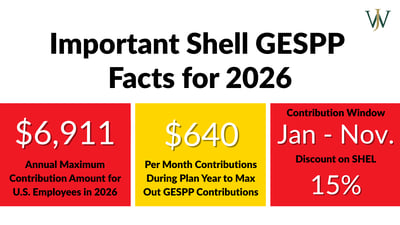
Shell Oil's employee stock purchase plan is called the Global Employee Share Purchase Plan (GESPP).An Employee Stock Purchase Plan is a benefit that...
READ MORE
Nick Johnson, CFA®, CFP®
PRESIDENT & CHIEF INVESTMENT OFFICER
How the Pro-Rata Rule Impacts Your Backdoor Roth Contributions Backdoor Roth contributions are a common strategy we use with high-income professionals to get extra savings into Roth for tax-free compounded growth. For those making too much income to contribute to a Roth directly, this strategy is a helpful way to circumvent the income limitations. Unfortunately, when super-savers come to us after attempting a Backdoor Roth contribution on their own, a common mistake arises time and time again – forgetting to fully clean out an IRA of all pre-tax dollars before executing the strategy. Why is this important? A critical statute known as the pro-rata rule can cause you to pay more taxes than necessary on the Backdoor Roth strategy if you aren't meticulous about every step along the way. What is a Backdoor Roth? The goal of the Backdoor Roth contribution is to move non-deductible IRA contributions over to a Roth IRA, so these contributions can grow tax-free in the Roth IRA as opposed to letting them grow tax-deferred in a typical IRA. This strategy sounds simple enough, but it often requires a clean-up of the IRA before someone can effectively execute the strategy if the IRA contains both pre-tax and non-deductible (after-tax) contributions. Learn More About How A Backdoor Roth Works Here What is the Pro-Rata Rule for a Backdoor Roth? For the Roth Conversion step when performing a Backdoor Roth contribution, the pro-rata rule says that all IRAs are treated as one IRA. This means that any funds converted to Roth will be taxed proportionally according to the amount of pre-tax and non-deductible funds subject to the conversion, incurring the risk of double taxation. For many of our clients, this means that, without proper preliminary clean-up, utilizing a Backdoor Roth contribution strategy could incur negative tax consequences. Luckily, individuals with an existing 401(k), 403b, 457, solo 401(k), or some pension plans can roll pre-tax dollars into one of these plans without taxation. A key caveat is that these employer plans are not subject to the aggregation standards under the pro-rata rule. Tax Impact of Where You Choose to Save & Invest Your Money Many clients ask, "Can cleaning up the IRA add that much value?" Let's look at an example: Imagine a client, whom we'll call Jim, who has $150,000 of non-deductible contributions within his IRA. These contributions have been sitting in cash, and now, Jim is thinking about how to best invest these funds. Once he invests the after-tax contributions, they may start to grow year over year in the IRA, and any growth will eventually be taxable. Alternatively, let's assume we utilize a Roth conversion strategy to move the IRA funds to Jim's Roth IRA, which will allow his IRA contributions to grow tax-free in a Roth. Suppose we assume that both the IRA and Roth IRA see 8% of growth, net of fees, and invested in the same funds. For this example, we will assume that Jim is in a 25% tax bracket. In that case, we could add $1 million of after-tax value to Jim's portfolio over the remainder of his lifetime (41 years) simply by moving his after-tax contributions from the IRA to the Roth. This value considers the growth of these funds in a tax-deferred (IRA) versus a tax-free account (Roth). The Roth account allows Jim to take distributions with no tax incurred, while the IRA distributions will be subject to taxation per the ordinary income brackets. Source: The impact of asset location assumes an 8% return, which is derived from TradeThatSwing. Impact of investing does not represent future values of any WJA account. The deduction of advisory fees, brokerage or other commissions and any other expenses that would have been paid is not reflected in the calculation results. Simply changing where contributions grow can add value because future growth in the Roth IRA is non-taxable. Additionally, unlike traditional IRAs, a Roth IRA has no required minimum distributions, which can provide planning flexibility for passing assets to the next generation. Cleaning up the IRA also allows us to help our clients with Backdoor Roth contributions going forward, with the goal of minimizing taxes over time. IRA Contribution Sources and the Pro-Rata Rule As we review an individual's IRA, we often see a mix of contribution types. For example, contributions to the IRA can take the form of pre-tax, after-tax, or pre-tax rollovers from employer retirement plans such as a 401(k). Remember, the pro-rata rule treats all IRAs as one IRA, so knowing which funds in an IRA are pre-tax and after-tax is crucial. For 2026, if you're covered by an employer retirement plan, and you make over $91,000 (filing single) or $149,000 (filing jointly), you are only eligible to make non-deductible (after-tax) contributions to an IRA. Tracking IRA Contributions Sources on a Backdoor Roth for Tax Purposes We mentioned it above, but when we look at the types of contributions comprising the IRA balance, our main questions are: Have non-deductible (or after-tax) contributions been made? If so, are they being tracked correctly? Whether savers are using a tax advisor or tax software like TurboTax to prepare their returns, we often see that the non-deductible, after-tax contributions have not been tracked correctly or at all. One of the ways our advisors and tax professionals determine if an individual has tracked their contributions correctly is by reviewing historical tax returns and Form 8606. If non-deductible after-tax contributions have not been properly tracked, the default judgment from the IRS is that all funds in the IRA are pre-tax. Therefore, we work to correctly classify these after-tax funds so the taxpayer doesn't have to pay taxes on these funds twice! How to Organize IRA Contributions Sources Before Doing a Backdoor Roth To clean up an IRA generally requires a deeper dive into the makeup of the IRA balance. We organize this into two main branches: Identify the split between pre-tax and after-tax funds in the IRA, and Move pre-tax money from the IRA into a company-sponsored retirement account such as a 401(k). Once the pre-tax money is in a company-sponsored account, we can convert the after-tax money from the IRA to the Roth IRA. Let's walk through each of the steps that comprise these branches. Branch 1: Identify the split between pre-tax and after-tax funds in the IRA Step One: Review Previous IRA Contributions Using Tax Forms (Forms 5498 & Forms 1099) One of our strategies to add value for our clients is by piecing together the historical contributions they've made to an IRA. To do this, we review their IRA tax forms (specifically, Forms 5498 and Forms 1099), which document contributions and rollovers to the IRA. Using these forms, we can understand which funds are after-tax in the IRA and which are pre-tax. Let's look at an example: Imagine a client, whom we'll call Barb, has an IRA with a balance of $185,000. When looking at her tax forms, we can see the following contributions making up this IRA balance: $4,000 of deductible (pre-tax) contributions $24,000 of non-deductible (after-tax) contributions $125,000 rollover (pre-tax) from an employer retirement plan. We now have a clear split between pre-tax ($129,000) and after-tax ($24,000) contributions, which brings us to a total of $153,000 in combined contributions to Barb's IRA. Step Two: Assess Growth Within IRA from Previous Contributions The growth on Barb's IRA investments is $32,000. We also consider the value of this growth from contributions to be pre-tax. Using the illustration below, we can see that the IRA split between pre-tax and after-tax is $161,000 and $24,000, respectively. Step 3: Amend tax forms as needed At this point in evaluating someone's IRA, it's common that we may need to amend tax forms to remedy earlier mistakes. The IRS assumes that contributions made to an IRA are pre-tax unless indicated otherwise on the 8606. Failure to correctly report these after-tax contributions for a Backdoor Roth is among the top three most common tax mistakes we see from high-income earners, and it often results in being taxed on the funds twice! Once the amended forms, if any, are filed, we can proceed to the last step in the IRA clean-up. Below is an example of Form 8606 for the current year based on the example above. However, we need to also file amendments for prior years to capture historical non-deductible contributions. Branch 2: Move pre-tax money from the IRA into a company-sponsored retirement account such as a 401(k) Step 4: Roll Pre-Tax Dollars Out of IRA Continuing with our previous example, we will roll pre-tax dollars of $161,000 back into Barb's 401(k). We can do this rollover because employer plans are not subject to the pro-rata rule. We can also do this rollover with 403b, 457, solo 401(k), and some pension plans under this rule. This rollback of pre-tax funds to the 401k is a non-taxable event that allows us to seamlessly remove pre-tax money from the IRA while enabling it to continue growing in a separate pre-tax account. Once these pre-tax funds are out of the IRA, only the non-deductible $24,000 remains in the IRA. Thus, when the IRA is free of all pre-tax money, the conversion of the non-deductible funds to the Roth IRA is not negatively impacted by the IRS' pro-rata rule. We can initiate a tax-free transfer of the non-deductible funds to the Roth IRA, which effectively zeroes out the IRA's balance. This "clean" or "zero" balance in the IRA lets us continue making tax-free Backdoor Roth contributions for our clients while they are still working or have earned income every year. In addition, utilizing this strategy ensures that the growth on all previous non-deductible contributions is tax-free in the future. Step 5: Roll After-Tax Dollars Out of IRA The last step in cleaning up the IRA is rolling the non-deductible contributions of $24,000 from the IRA to the Roth IRA. Because we've amended and filed Forms 8606 to reflect these non-deductible contributions and we've rolled pre-tax funds from the IRA back to the respective 401k, we can also move these $24,000 of non-deductible contributions to the Roth IRA without incurring any tax. As a result, these funds will grow tax-free in the Roth IRA in the future. This distribution from the IRA will need to be captured on Form 8606 in the year that it occurs. See the example below for how to report the non-taxable distribution on the tax return. At Willis Johnson & Associates, our financial advisors work alongside our clients and in-house tax team to ensure that the historical non-deductible contributions are shown and tracked correctly on our client's tax returns. Additionally, we can prepare and file any necessary amendment to prior-year tax returns to ensure accuracy for years to come. While this seems like an intricate and complicated process to make indirect Roth IRA contributions, when done correctly, this strategy can make a substantial difference in savings over time. A correctly implemented Backdoor Roth contribution can be an excellent way to augment retirement contributions and savings already being done. Our firm focuses on comprehensive financial planning and correctly implementing strategies like the Backdoor Roth contribution to help our clients reach their financial goals. While cleaning up an IRA to achieve the Backdoor Roth may seem like a daunting task, you don't have to go it alone. Working with a financial advisor is beneficial in determining if this or other tax-efficient savings strategies can help you reach your long-term goals. Start the conversation with an advisor today.
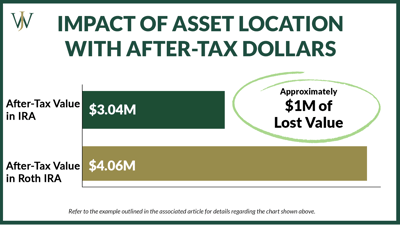
Backdoor Roth contributions are a common strategy we use with high-income professionals to get extra savings into Roth for tax-free compounded growth...
READ MORE
Sarah Sikorski, CPA, CFP®
DIRECTOR, WEALTH MANAGEMENT
What to Consider Before Accepting a Severance Package From Shell Severance. It’s a term that can evoke anxiety; most of us aren’t ready to talk about it or hear the phrase “severance package” discussed in conjunction with our career. How can a severance package impact your financial plan? What does severance pay mean for your tax liability? What about insurance? When Shell employees are offered severance packages, it leads to an emotionally overwhelming decision that causes them to weigh their financial goals and retirement options earlier than they might have anticipated. However, severance doesn’t have to be negative. If accepting a severance package fits into your overall financial plan, it can give you an opportunity to get an early start on retirement or a second career. Get Your Shell Severance Checklist Here Should You Accept Your Severance Package Offer from Shell? During departmental reorganizations, it’s common for Shell to offer voluntary severance packages to employees who are nearing retirement age. These employees receive severance as an additional benefit above their standard retirement options. In this situation, accepting a severance package can be financially advantageous, especially to those individuals who were already planning to retire in the near future. To determine whether it makes sense to accept the offer, you need to understand which financial benefits are included in your Shell severance package, how soon you’ll need to take advantage of them, and whether you feel financially secure and ready for retirement. It’s important to do an in-depth analysis on the benefits you’ll receive and have a solid understanding of the impact they’ll have on your finances. What Is Typically Included in a Severance Package from Shell? When Shell employees are offered severance packages based on the Special Severance Plan, the following benefits are provided: Pay: A severance payment includes three weeks’ pay for every year of accredited service — up to a maximum of 78 weeks of pay. The severance payout differs depending on whether an employee is immediately pension-eligible. For those immediately eligible for the pension, severance is paid in two equal payments -- the first half is paid four weeks after separation, and the second half is paid in February of the following year. For those who aren't immediately pension-eligible, the severance is paid in one payment four weeks after separation. For example, if you had 20 years of accredited service at Shell and took the severance package, you would receive 60 weeks of pay. You would receive the first severance payment of 30 weeks within four weeks of your last day, and the second payment of 30 weeks would be received in February of the following year. Medical benefits: If you do not have immediate pension eligibility, or you are not eligible for post-retirement benefits and are currently enrolled in a Shell medical plan, you can elect to continue coverage under COBRA. Shell will continue to pay the employer portion of your medical premium for up to four months. Pension eligibility: Under the Special Severance Plan, if you are within 12 months of immediate pension eligibility, you can be placed on a Special Leave of Absence (SLOA) with continued pay until the last day of the month in which you achieve immediate pension eligibility. This SLOA will bridge you to immediate pension eligibility if you have not already attained such status by the time your severance occurs. Bonuses: You may be eligible to receive a prorated bonus for the portion of the year you were employed. These benefits are all included under Shell’s Special Severance Plan guidelines; however, additional benefits may be offered to specific individuals based on their pension eligibility or tenure at Shell. What Other Financial Considerations Should You Take Into Account If You’re Offered A Severance Package? Your specific salary isn’t the only consideration when determining whether a severance package will meet your financial needs. It is also important to factor in all the income you will receive during the year of your severance and following your retirement, including: Base Salary Bonuses Shell Performance Shares Non-qualified Plans, such as the Shell Provident Fund BRP or Pension BRP Working with a financial advisor to create a detailed cash flow forecast can help you assess your level of preparedness for spending and retirement goals, as well as the impact of potential tax obligations. By having these discussions with a CERTIFIED FINANCIAL PLANNER™ professional prior to accepting a severance plan, you can create a plan designed to optimize your income flow and mitigate tax obligations, thus easing your retirement transition. How Will Severance Pay Affect Your Retirement Plan? In many instances, Shell will set a predetermined retirement date for severance. However, some employees may have the opportunity to negotiate their final severance date, ensuring the date of their official severance and the dates they will receive severance package payments are to their benefit. If you’re offered a Shell severance package, your financial advisor can help you determine whether it’s beneficial to push severance to the following year. Pushing the first severance payment forward a year allows the income to be received in a new (often lower) tax year, which can decrease overall tax obligations. Additionally, pushing out severance may provide additional time to maximize contributions to the Shell Provident Fund 401(k), 80 Point or APF Pensions, GESPP, or other employee benefits. Making the decision to accept a Shell severance package isn’t something to be taken lightly. Taking time and using specialized advice to position yourself for the next phase in life should be an important part of your process in evaluating your severance options. If you’re trying to make your decision regarding a severance offer from Shell or another corporation, don’t do it alone. Our team of financial advisors is experienced in navigating these packages. Let us help you evaluate your options and determine how even small details can affect your severance package’s impact on your financial future.
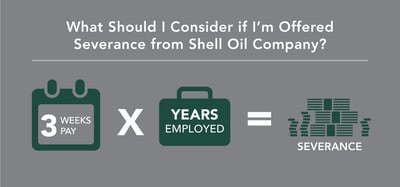
Severance. It’s a term that can evoke anxiety; most of us aren’t ready to talk about it or hear the phrase “severance package” discussed in...
READ MORE
Alexis Long, MBA, CFP®
MANAGING DIRECTOR, WEALTH MANAGEMENT
How to Strategically Set Your Retirement Date from Shell Oil You may be thinking about the right time to retire, to say goodbye to your career at Shell Oil, and start moving toward a new future. The term “right time” can be somewhat subjective. However, if you’re getting close, it’s important to think about something a little more specific — the right date. Choosing your retirement date from Shell Oil wisely can have a significant impact on your financial standing, from tax implications to pension and severance amounts. While there’s no perfect answer that applies across the board, our advisors have worked with many Shell employees to calculate the impact of their retirement date on their income taxes and various sources of income (including Shell pensions, the Shell Provident Fund, and Shell Performance Shares). Based on that experience, we’ve identified a few areas it’s wise to consider before getting your retirement date engraved on a gold watch. How Your Shell Retirement Date Can Affect Your Income Taxes If you’re not thinking about income taxes when selecting your retirement date, you’re potentially leaving money on the table. In most situations, income taxes are the largest determining factor when it comes to your retirement date because the year of your retirement and the year immediately following are likely to be some of your highest-earning years and, thus, highest taxed. Anything you can do to reduce or spread out the tax burden over multiple years can dramatically increase your after-tax take-home pay. How does your income change so dramatically in those two years in particular? Think about all the income sources you may receive in your year of retirement and the one immediately after: ✔ Your base salary ✔ Bonuses ✔ Shell Performance Shares ✔ Provident Fund BRP payout ✔ Pension BRP payout ✔ Monthly pension income ✔ Vacation payout ✔ Severance While having these options available to you means you’ve probably done a thorough job preparing your finances for retirement, receiving them all at the same time can have a disastrous impact on your tax rate. The last thing you want is to pay a 37% (or higher) tax rate on these sources of income and erode the savings gains you’ve made. Before determining an optimal retirement date, it’s important to understand when you’ll receive payments from each of the income sources: With that information in mind, consider how various retirement dates may positively impact your after-tax take-home pay by allowing you to spread out the income and receive the lowest effective income tax rate. When is the Worst Time to Retire from Shell, from an Income Tax Perspective? One of the worst times to retire can be near the end of the third quarter or the very beginning of the fourth quarter. You have already received a variety of income and benefits; for example, you: ✔ Have earned three-quarters of your salary ✔ Received your prior year bonus ✔ Will likely receive a prorated bonus for the current year ✔ Have received Performance Shares ✔ Will have your Provident Fund BRP and Pension BRPs payout before the end of the year ✔ Will receive a payout for any unused vacation ✔ Will potentially receive half a severance payment The combined income generated through most of these payouts could end up being taxed at the max rate of 37%, which can be a lot to swallow. The following year, the only income you may have is your Performance Shares and the other half of your severance payment, which means you could have benefited from shifting some of that income and staying in a lower tax bracket for the next year. Which Times of Year are Better for Retiring from Shell from an Income Tax Perspective? As a comparison to the tax-heavy scenario we just mentioned, imagine you retired on January 1 of the following year instead. Your retirement year would not include a full year’s salary and/or prorated bonus on top of a full bonus. This alone puts you in a much better position by reducing your starting income for the calendar year before adding in benefits like your BRPs, vacation, and severance. If you receive a Shell severance package, you are also spreading it out over two lower tax years instead of receiving half in a high-income year. Our goal is to get your average tax rate over time as low as possible instead of having an incredibly high tax year followed by lower tax years. Shell Performance Shares If you normally receive Shell Performance Shares, their value should be part of your decision-making process when selecting your retirement date. It’s worth noting, though, that the 2017 changes to Shell Performance Grants have made this award a less important consideration than in the past. What changes took place in 2017, and how do they affect you? All grants from 2017 and onward are now prorated for your employment at Shell. This change means if you don’t work for the full three-year performance period, you will not receive 100% of the award. For example, if you were granted an award in 2025, and you left Shell on December 31, 2026, you would only receive two-thirds of the award upon vesting in 2027 instead of receiving the full payout. Historically, the performance grants had a high impact on retirement funds; some clients targeted giving notice in March specifically to ensure they received current-year grants. However, based on the recent changes, even if you wait to receive that next grant, you may end up only receiving 3/36 or 4/36 of it. Since the final payout is prorated based on each month of employment, you shouldn’t make these grants a primary consideration when determining your last day of work. Shell Performance Bonus While the impact of performance grants is not as important, your Shell Performance Bonus remains one of the most prominent factors you should consider in setting your retirement date. This bonus is traditionally paid out at the end of February for work done in the prior year; however, you may not have to stay employed through that date to receive your award. If you are retiring and worked the full previous year, Shell will generally pay out your full performance bonus. Alternatively, if you only worked a partial year and then retired, you may still receive a bonus, but it will likely be reduced on two fronts — the amount of time you worked and your reduced performance (company and individual) bonus factors. To optimize your Shell Bonus, you generally want to secure the best possible performance factors. In most situations, the actual performance factor for employment time will be greater than the reduced factor Shell hands out to retirees, which means it often makes sense to work at least through January. Shell Pension – APF (Alternative Pension Formula) The Shell Alternative Pension Formula (APF) can be taken as an annuity or a lump sum. Because you have some flexibility regarding when you begin to take this pension, the Shell APF Pension does not have a big role in determining your retirement date. Even if you are 60 or older, Shell does not force you to immediately begin taking the APF annuity pension (which increases your taxable income). If you choose to take the lump sum and roll the money over into your Provident Fund or IRA, there is no immediate income tax impact. However, if you have substantial amounts of money in the Shell Pension APF Benefit Restoration Plan, those funds can impact your retirement date. Because this money is paid out about 90 days after retirement and is immediately taxable, you may want to consider pushing that income to a lower taxable income year by retiring late in the fourth quarter or early the following year. Shell Pension – 80 Point The Shell 80 Point Pension only impacts your retirement date if you are over 60 and early retirement eligible. If you find yourself in that situation, it’s important to realize that your pension will start the first of the month after retirement and be aware of what your income from this source could look like. There isn’t any benefit to delaying benefits from this pension plan if you are over 60 and retirement-eligible. However, note that accepting the disbursement may result in additional taxable income, which could push you into a higher tax bracket. Other Factors Affecting the 80-Point Plan If you have a substantial amount of money in the Shell 80 Point Pension Benefit Restoration Plan (Pension BRP): Because this money is paid out as a lump sum about 90 days after retirement, it may make sense to retire late in the fourth quarter or early the following year to ensure this income is pushed to a lower tax year. If interest rates have moved significantly from last year to this year: Interest rates have an inverse relationship with the pension payout. If rates are lower, you’ll receive a bigger payout. If rates are higher, you’ll get a smaller payout. For any current year distribution, Shell looks at the IRS segment rates as of the end of September for the prior year. If rates have risen quite significantly in the intervening time, you could receive a significantly smaller pension BRP payout by retiring in the fourth quarter as opposed to earlier in the year. If interest rates have risen enough and if you have a significant amount of money in the Pension BRP because of a long career at Shell: It may still make sense to retire prior to the fourth quarter or early in the next year, because the reduction in your Pension BRP could be a larger impact than the potential tax savings. Shell Company Severance The standard Shell severance package is three weeks of base pay for every year you worked for the company, up to a max of 78 weeks (for employees who have worked 26 years or more at Shell). The Shell severance is paid out in two equal distributions over two years — half in the year you retire and half the following year. If you’re receiving a severance package, it can be best to retire early in the year, so your severance is paid out over two low tax years. For instance, if you retire in January, your severance will likely be paid out in a lower tax year than retiring in December of the previous year. Then the other half of the severance will be paid out the following year (in what’s likely to be an even lower tax year, as you won’t have any BRP, vacation, or bonus payouts to factor in). Oftentimes, Shell severance is offered on a certain date and there’s little opportunity to adjust this date to your benefit. However, if moving the date slightly could yield a significant financial benefit by allowing you to receive the payments in lower tax years, don’t hesitate to discuss options with your manager. Download Your Shell Severance Checklist here >> While there’s no specific retirement date that’s perfect for everyone, you can apply research and develop a strategy to manage your finances and distributions. In this way, you’ll be able to make efficient financial decisions that lessen the impact of taxes and offer more opportunities for a successful retirement. The sheer number of variables in the process can make pinpointing the right date complicated. At Willis Johnson & Associates, we’ve helped many Shell employees consider their options and position themselves for a successful retirement. Learn more about our philosophy and how our team of financial advisors can support you through your retirement decisions.

You may be thinking about the right time to retire, to say goodbye to your career at Shell Oil, and start moving toward a new future. The term “right...
READ MORE
Nick Johnson, CFA®, CFP®
PRESIDENT & CHIEF INVESTMENT OFFICER
How To Use Company Stock, a 401(k) & Net Unrealized Appreciation for Tax Savings Do you have employer stock in your 401(k)? If so, you might have a net unrealized appreciation (NUA) distribution opportunity, which can help you avoid an unexpected (and sometimes high) tax liability when you retire. If there is a significant gain on the stock upon your retirement, it may be more sensible for you to distribute the stock to a brokerage account. Before deciding to take your first withdrawal, you'll want to wait until you learn more about Net Unrealized Appreciation (NUA), so let's dive in. What is NUA, and how does it work? Net Unrealized Appreciation is the difference in value between what you or your employer paid for the stock (cost basis) and the current market value of your company stock held in your 401(k). If you have NUA, you can distribute the stock from your 401(k) to a brokerage account, instead of rolling it over to an IRA (which would result in having to pay ordinary income taxes on the entire distribution). By distributing the stock to a brokerage account, you’ll pay ordinary income taxes on the cost basis at the time of the distribution, but you won’t pay any taxes on the gain until you actually sell the stock. When you sell the stock in the future, you will pay long-term capital gains taxes on the gain if it has been held for over one year. Disclosure: Chart assumes growth for illustrative purposes only. Growth and gains are not guaranteed. What are the Tax Benefits of NUA? NUA is a complicated strategy, but it can yield significant tax savings when executed properly. Let's take a look at an example. Tax Rates on 401(k) Distributions When taking distributions from a 401(k), many believe that the distributions are taxed solely at ordinary income tax rates. That is partially correct — Most distributions from 401(k)s are taxed at ordinary income rates. However, with the employer stock in your 401(k), you have some flexibility on taxes. Tax Rates on Company Stock in 401(k) If you distribute the company stock to a brokerage account as the first withdrawal from a 401(k) to utilize the NUA strategy, you will pay ordinary income taxes on the cost-basis portion of the withdrawal. When you eventually sell the stock, you will pay long-term capital gains taxes on the gain of the stock if held for over one year. Below is an example of how the tax savings could work if you have $300,000 of employer stock with a cost basis of $50,000: NUA Comparison No NUA Tax Treatment Tax Bracket Tax Liability Stock Value After Taxes $300,000 Ordinary Income 35% $105,000 $195,000 NUA Tax Treatment Tax Bracket Tax Liability Stock Value After Taxes $50,000 Ordinary Income (on Cost Basis) 35% $17,500 $32,500 $250,000 Long-Term Capital Gains 15% $37,500 $212,500 $245,000 Tax Savings with NUA: $50,000 If you utilized the NUA strategy in this scenario, you would save $50,000 in income taxes. Disclaimer: Assumes $250K qualifies for Long-Term Capital Gains at 15% rate and ordinary income at 35%; actual rates may vary. Who Can Take NUA Distributions? It’s pertinent to understand how NUA withdrawals work and what the qualifying rules are to take advantage of the strategy. Like many tax-related guidelines issued by the IRS, NUA distributions can be complicated and easily misunderstood. Unfortunately, it’s not uncommon for corporate professionals and/or retirees to attempt to make an NUA distribution and also give themselves a major headache and tax bill by making mistakes. To take an NUA distribution, one of the following must apply to you: You are separated from the service of the company whose plan holds the stock You are age 59 ½, You are disabled, or You have passed away, and your spouse is permitted to utilize the NUA strategy What Challenges Should You Prepare for When Using NUA? NUA can be a valuable financial planning opportunity to leverage as you’re preparing for retirement. However, there are specific guidelines you must follow to avoid a negative impact on your tax responsibilities and your ability to do this type of disbursement. Guidelines for NUA include the following: You must experience a triggering event to qualify for NUA. If you take a withdrawal from the 401(k) prior to retirement (for a loan or other reason), an NUA cannot be completed unless you wait until a triggering event has occurred. In this case, the triggering event must be either reaching age 59½ or death. Employer stock must be distributed in-kind as shares of stock. It cannot be liquidated before the distribution. Your entire 401(k) balance must be made as a lump-sum distribution (distributed in the same calendar year). If you roll out your company stock to your brokerage account, you can roll over the remainder of your 401(k) balance to an IRA in the same transaction or later in the same year. However, your 401(k) balance must be $0 by year-end. The NUA distribution must be the very first withdrawal you take after retirement. If you take any other withdrawals prior to completing the NUA, you’ll lose the opportunity to take advantage of the NUA and the tax savings that come along with it. Why hasn't my advisor mentioned NUA? Other advisors may overlook NUA opportunities. This could cost you thousands in missed tax advantages. WJA takes the time to evaluate opportunities, such as NUA that could reduce your long-term tax burden. Check out our video below to learn more. We work closely with you, so you can ask questions and receive advice focused on your best interest and long term goals. Beyond these guidelines, there are also additional factors to consider when deciding if NUA is the right strategy for you. For example, are you under age 59 ½? If so, you may be subject to a 10% penalty for early withdrawal. Additionally, assets outside of retirement plans do not enjoy the same level of creditor protection. Finally, NUA may not always be the most tax-efficient strategy, especially if the stock price declines or tax rates change. Often, NUA may only make sense when you have a significant gain and can pay taxes on the majority of the stock's value at long-term capital gains rates. It is also important to consider the timing of the NUA solution and how it may best align with your personal tax situation over the next few years. Professional guidance can help you identify the discrepancies and limits of your company stock plans and leverage a strategy that minimizes your tax burden. Before you make a final decision, consult your financial advisor for advice or meet with one of our financial professionals to get a second opinion.
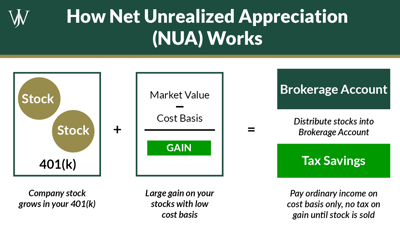
Do you have employer stock in your 401(k)? If so, you might have a net unrealized appreciation (NUA) distribution opportunity, which can help you ...
READ MORE
Alexis Long, MBA, CFP®
MANAGING DIRECTOR, WEALTH MANAGEMENT
80 Point & APF: What’s the Difference Between the Shell Pensions When reviewing your retirement benefits after a long career at Shell, one of the unique and highly sought-after benefits you can receive is the Shell pension plan. Shell offers two pension plans, the 80 Point and the Accumulated Percentage Formula (APF), that the company fully funds which offer employees income for retirement. Thinking about your pensions alongside additional retirement savings and financial planning strategies is crucial for a successful retirement. As a Shell professional, it’s essential to understand your pensions, the factors that go into the pension calculation, and to think about your payout elections early so you can make the most of the benefit. Qualified and Non-Qualified Pensions at Shell At Shell, you have two pensions that you may be eligible for depending on when you began employment: the 80 Point Pension and the APF Pension. Qualified Pension Plans at Shell According to ERISA regulations, Shell's 80 Point and APF pensions are designated as “qualified” pensions. A retirement or pension fund is “qualified” if it meets the federal standards promulgated by the Employee Retirement Income Security (ERISA) and is funded by the organization up to the IRS’ annual limits. Non-Qualified Pension Plans at Shell Some Shell employees whose compensation exceeds the IRS’ annual income limits may also qualify for Shell’s “non-qualified” pension plans known colloquially as “BRPs.” Shell designed the Benefit Restoration Plan (BRP) to “restore” company contributions to an employee’s pension that would otherwise be excluded from the pensions due to annual pension contribution limits set by the IRS. At Shell, each pension has a corresponding BRP: the 80 Point Pension BRP and the APF Pension BRP. These BRPs are non-qualified, deferred compensation plans that allow large companies to continue bolstering an employee’s pension after reaching the IRS threshold. Non-qualified pension plans allow organizations to deposit excess contributions in a designated pool for an employee to draw upon in retirement. However, these payouts can often cause substantial tax headaches for Shell employees if they fail to time their retirement correctly. Learn the best and worst times to retire from Shell in our Timing Shell Retirement webinar by clicking here >> How Does Shell Calculate the Pensions? Many Shell employees understand that their pension plans provide supplemental retirement income, but most don’t know how to calculate the value. To incorporate these income sources into your retirement planning, you’ll need to understand the different variables involved in their calculation and the impact you can have on those variables to increase your benefit. The Key Component of Shell Pension Calculations Whether you participate in the Shell 80 Point Pension Plan or the Shell APF Pension plan, it’s crucial to understand one of its most significant variables: how to calculate your average final compensation (AFC). Your AFC plays a substantial role in determining your retirement income from your pension value. To determine your Average Final Compensation for Your Pension Calculation: First, look at your last 120 months (10 years) of service at Shell. From that range, determine the highest-compensated consecutive 36 months (three years) of eligible compensation (salary + bonus, but not performance shares). Add up the total compensation, divide by three, and you’ll have the average final compensation. Learn more about your AFC and how to calculate your Shell pension here >> Shell 80 Point Pension Calculation Shell’s “traditional” 80-Point Pension Formula calculates your benefit using your age, average final compensation, your primary social security benefit, and your years of service. You generally must reach a minimum age and years of service before receiving payment under this formula. To determine your “points” for the 80-point pension, add your years of service with Shell and your age — the resulting sum is your “points.” To determine the annual benefit from the 80 Point Pension, you’d use the following calculation: AFC* Years of Service*1.6% = Annual Benefit AFC – Average Final Compensation Years of Service – How long you have worked at Shell 1.6% - Multiplier Shell APF Pension Calculation For those under the Accumulated Percentage Formula (APF) pension, Shell attributes a designated percentage for each year of an employee’s service to calculate the employee’s pension benefit. Your annual percentage is based on a schedule using the number of points (your age plus your years of completed service) that you have at the end of the prior calendar year. Accumulated Percentage Formula (APF) Table APF Points Annual Percentage* 0-29 3% 30-39 4% 40-49 6% 50-59 8% 60-69 10% 70-79 13% 80+ 16% *The annual percentage for a partial calendar year of APF participation is prorated based on the amount of APF Service in that year. Then, Shell sums your annual percentages and multiplies the total by your Average Final Compensation to calculate a single lump-sum amount or a monthly annuity benefit when you leave the company. “Points” for the APF Pension: Age + APF-Eligible Years of Service The APF pension formula is as follows: Accumulated Annual Percentages * AFC * 12 = Lump Sum Annual Percentages – ranges from 3%-16% AFC – Average Final Compensation 12 – number of months The Main Difference Between the 80 Point and APF Calculations The most significant difference between the two Shell pension formulas is how the benefits accumulate over time. For employees with lifelong careers at Shell (20+ years) who started their employment before 2013, the 80-point pension will often accrue more substantial benefits. However, if you choose to retire before reaching immediate pension eligibility, you receive a reduced pension amount for the lifetime of the benefit. The percentage that Shell reduces the pension value varies by your age at retirement and changes in interest rates and mortality values, but you can find the most up-to-date information in your Summary Plan Description. If you leave before reaching 80 points or if you’ve had a shorter career at Shell, the Accumulated Percentage Formula may provide a more significant benefit. To maximize the pension benefit for either of Shell’s plans, additional years of service at Shell will increase both your points and the outcome of your pension payout. Let’s consider two examples to illustrate the impact this approach could have: Let’s say that there are two Shell employees, Max and Simon. Max is enrolled in the 80 Point pension, and Simon is enrolled in the APF pension. Scenario 1: Let’s calculate Max’s pension payout on the 80 Point Pension plan. Max is 60 years old, has 30 years of service, and his AFC is $250,000 AFC* Years of Service*1.6% = Annual Benefit $250,000 * 30*1.6% = $120,000 This results in a monthly benefit of approximately $10,000. What if Max decided to retire five years prior and begin his begin receiving his 80-point pension at age 55, rather than 60? Per the early pension factors, Max’s 80-point benefit would be reduced by 25%. $250,000 * 30*1.6% = $120,000 * 75% = $90,000 By retiring and commencing his benefit 5 years prior to 60, Max's estimated benefit reduces by $30,000 per year, which, based on his average life expectancy could amount to over $750,000 less in accumulated benefits over his lifetime! In this situation, Max has two options. He could retire at age 60 to receive the total value of his 80-point pension benefits, or He could retire at 55 and wait to start taking his 80-point pension until age 60, which would avoid the reduction in the pension value. The pension reduction is permanent, which means that, if you elect to take your pension early, your reduced benefit will not adjust to the full benefit upon turning 60. Something to keep in mind is that this reduced benefit amount is based on retiring with immediate pension eligibility (80 or 70-point eligibility). Commencing your benefit before the normal retirement age without immediate pension eligibility results in a more aggressive reduction schedule. Scenario 2: Now, let’s look at Simon’s APF pension calculation. For example, let’s say Simon is also 60 years old, has 30 years of service, and his AFC is also $250,000. Annual Percentages * Monthly AFC * 12 = Lump Sum 285% * $20,833*12 = $712,500 What if Simon decided to retire five years prior and begin receiving his APF pension at age 55 rather than 60? Annual Percentages * Monthly AFC * 12 = Lump Sum 205% * $20,833*12 = $512,500 If Simon retires five years earlier, his lump sum payout will decrease by approximately $200,000! Considering your unique combination of age, AFC, and years of service to maximize the value of whichever pension plan (or both) you’re enrolled in can significantly impact you, so you want to get it right. Reviewing your retirement income needs with an advisor can be particularly helpful if you’re wondering when is the right time to start your pension and which payout elections are best for you. At Willis Johnson & Associates, we work with several Shell professionals to educate them on leveraging their benefits alongside their investments, tax-savings efforts, and other financial components that can help them reach financial goals. Start the conversation with an advisor about your Shell benefits and how they should be leveraged as part of your comprehensive financial plan here. Key Things to Consider Before Making Pension Distribution Elections As with any career decision, you must make basic assessments about where you are, where you think the company is going in the future and where you hope to be at retirement. Understanding how to calculate your pension is crucial. As a Shell professional, understanding the ins and outs of your pension benefits often can give you a general idea of how much you could receive post-retirement. For example, while you can only take the 80 Point pension as an annuity, you can elect to take the APF pension as an annuity or a lump sum upon your retirement. Therefore, there are a few crucial factors to consider when making your distribution elections. How Pension Income is Taxed You could lose money if you don’t consider the tax impact of benefit payouts near your retirement date. Because the year you retire and the year immediately after are likely to be some of your highest-earning and thus highest-taxed years, income taxes are usually the most significant determining factor for your retirement date. If you take the lump sum, you can defer taxes by rolling the lump sum into an IRA. Then, when you withdraw the funds from the IRA, you will only be taxed for what you withdraw at ordinary income rates. However, an IRA is subject to rules about required minimum distributions when you reach age 72, so your taxes later in retirement could be higher by taking this approach without proper planning. If you take an annuity pension, the taxation is similar to your working years. Annuity payments are similar to receiving a paycheck, and you’ll be taxed at ordinary income rates on those funds every year. We discuss the various payouts at retirement and how to time them in a tax-efficient way here >> Inflation Risk A commonly discussed drawback of annuity pensions is their failure to adjust for inflation. While it can be reassuring to have a steady income stream over your entire retirement, you’ll want to work with an advisor to determine that your cash flows from non-pension sources can cover your expenses if a period of high inflation arises. With a lump sum payout, you can re-invest the funds for growth or income depending on your needs and make changes to the allocations to potentially offset inflation. Investment Allocation When considering your pension alongside your other retirement savings vehicles, it’s critical to adjust your allocations accordingly to achieve your desired results. Typically, pensions are invested conservatively in a similar manner to fixed income. Therefore, we often discuss aggressive investment strategies in other retirement accounts to help our clients pursue their retirement goals. Let’s suppose your goal is to be invested 50/50 stocks to bonds across your retirement vehicles (IRA, 401(k), and pension). If you invest 50% stocks and 50% bonds in your IRA & 401(k), your portfolio may have closer to a 20% stocks and 80% bonds allocation because of the pension’s lean towards fixed income. As such, it’s crucial to look at all the pieces of your financial picture comprehensively so you can determine the best moves to achieve your goals. There’s no right or wrong answer to which type of pension payout is best for every retiree from Shell. It’s a personal decision that requires careful consideration of your tax situation, current and future saving opportunities, and retirement goals. Immediate Pension Eligibility Before electing the pension benefits you will receive, you must first determine eligibility for pension distributions. Shell employees who do not meet the requirements for immediate pension eligibility before their retirement date may be sacrificing the substantial value of their pension benefit or the entirety of the benefit altogether. If Shell hired you before January 1, 2013, you could choose either the Accumulated Percentage or the 80-Point Pension Formula. Shell calculated your future pension benefits under the same formula in subsequent years unless you elected a different pension formula. If Shell hired or rehired you on or after January 1, 2013, you were automatically enrolled in the Accumulated Percentage Formula and cannot elect the 80-Point Pension Formula. To be eligible for immediate pension eligibility on either plan, you must either: Must be 50 years of age with years of service and age equaling 80 pts Terminate at age 65 or older Leave with disability pension Satisfy the 70pt eligibility rules As you begin thinking about your retirement date, start reviewing your pension estimates and eligibility requirements in order to take the proper steps while employed to facilitate a smooth transition into retirement. Our team has helped hundreds of Shell professionals weigh the considerations of these benefit elections to reach financial freedom and welcome the opportunity to help you do the same. You can start the conversation here >>
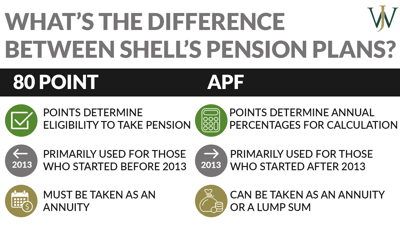
When reviewing your retirement benefits after a long career at Shell, one of the unique and highly sought-after benefits you can receive is the Shell...
READ MORE
Alexis Long, MBA, CFP®
MANAGING DIRECTOR, WEALTH MANAGEMENT
Asset Allocation: The Key Component For Your Investment Strategy When setting your long-term financial goals, it's important to understand the fundamentals of an investment strategy if you plan to use the stock market to help you reach them. There's more to investing than the old adage of "buy low, sell high" or trying to time the market perfectly. In fact, according to a study done by Brinson, Singer, and Beebower, "Asset Allocation is the primary driver of performance comprising 93.6% of returns," not an individual security or asset class. There are a few steps to take before determining the right asset allocation for you, so let's dive in. What is Asset Allocation in an Investment Portfolio? Asset allocation is an investment strategy that leverages risk, reward, and diversification against one another in a portfolio. Another way to look at it is – asset allocation is the pre-determined mix of stocks, bonds, cash, and mutual funds within your portfolio. For those looking to grow their investments over time to eventually use in retirement, utilizing a pre-determined asset allocation strategy can offer confidence and peace of mind as it becomes increasingly difficult to differentiate between the various stocks, bonds, and mutual funds options to invest in as one-off investments. Using this strategy, you can prioritize asset classes rather than individual stocks to invest in while staying within your desired risk levels. The Role of Diversification Alongside Your Asset Allocation One of the key components to any asset allocation strategy is diversification. Diversification of your investments allows you to reduce your exposure to specific types of risk. A well-diversified portfolio can keep you afloat in volatile years and can help you reach your long-term financial goals for when you need to live off of it later. Let’s consider an example: Let’s say you and a friend of yours have investment portfolios, but your portfolio is heavily weighted in your company’s energy stock while your friend is more diversified across energy, fixed income, technology, and emerging market equities. If we looked at each of your portfolios in early 2020, we’d see that your portfolio likely took a hard hit due to the fall of energy stocks in the first and second quarters; however, your friend with a more diversified portfolio likely saw less of a dip in their overall portfolio value and may have even witnessed some gains in the market sectors that ran during the COVID-19 crisis. Oftentimes, your exposure to risk amplifies within asset classes and their respective subclasses when your portfolio includes a disproportionate amount of one asset class or another. Diversification goes further than just having both stocks and bonds in your portfolio. At Willis Johnson & Associates, we encourage our clients to diversify both across asset classes and across many of the subclasses as well for both a breadth and depth of coverage. Understanding how to leverage your asset allocation within your portfolio is a crucial component of any investing strategy since it’s known to be a key driver of performance according to Beebower, Brinson & Singer. How to Make the Most of Your Asset Allocation When considering your approach to investing and determining the right allocation for you, it’s important to start with the end goal in mind. Do you need a certain amount for retirement? Are you hoping to pass on a certain amount to the next generation? Answering these types of questions while also understanding the level of risk you’re willing to take on are the crucial first steps to determining your asset allocation. When looking at various asset allocations, there are three common starting points to consider. How to Start – Determine Your Risk Threshold & Investment Style Aggressive – If you’re willing to take on more risk to achieve more growth in your investments, we often describe your asset allocation as more aggressive. A colloquial way to think of this strategy is “more risk for more reward.” A common starting asset allocation for aggressive investors is a 65-35 equities-to-bonds ratio, but if 65% equities doesn’t seem high enough to achieve your desired growth, you can always decide to take on more risk by adding equities to your portfolio. Sometimes, investors with a long time horizon (the time until they’ll need the money from their investments) believe that they can afford the additional risk, but that’s not always the case. A significant factor to consider when deciding if you want to take on those extra equities is that because they are significantly riskier, you could also stand to lose more value if we enter a downturn. Conservative – For those who are more risk-averse tend to carry more fixed income in a portfolio to achieve their desired growth, we often describe this asset allocation as more conservative. Rather than the “more risk, more reward” approach of aggressive investors, the conservative approach tends to lean towards “slow and steady wins the race.” A common starting point for a conservative asset is the opposite of the aggressive asset allocation – 65-35 bonds-to-equities. Similarly, if that proportion doesn’t seem right, you can decide if you’d rather carry more or less fixed income or equities in your portfolio to reach your goals. We often see investors taking a conservative approach when their time horizon is shorter or if their need for the money in the portfolio is approaching. A key consideration for those looking to use a conservative asset allocation is that while this approach tends to be how people want to invest to avoid extra unnecessary risks, it may not help them reach the amount needed in retirement to maintain their desired lifestyle. Balanced – For those looking for a place to start that balances the two approaches above, we’d describe your asset allocation as "balanced". A good place to start for a balanced asset allocation is 50-50 equities-to-bonds. From there, you can adjust and add either fixed income or equities until you reach the risk and growth thresholds you’re most comfortable with. How to Maintain Your Asset Allocation Through Target Band Rebalancing While we’ve pointed out that determining the right asset allocation is crucial to any investment strategy, maintaining your asset allocation over time is arguably more important. As the market shifts, the weight of your holdings within a portfolio can shift in kind and move you away from your desired allocations. We use a strategy called Target Band Rebalancing with our clients to keep them within preferred risk allowances. Using Target Band Rebalancing To Stay Within Your Preferred Risk Tolerance A strategy we like to use with our client’s portfolios is called Target Band Rebalancing, or Opportunistic Target Band Rebalancing, which helps them stay within a desired range of their asset allocation. Oftentimes, market dips and runs can cause the weight of a portfolio’s holdings to shift and can expose an investor to more or less than their desired risk. By setting up desired thresholds or “target bands” around a desired asset allocation, this strategy enables us to trim profits and capitalize on a market run-up or to buy recently beaten-up positions at a lower cost during a downturn which both help return to the portfolio’s desired allocation. Learn How To Use Target Band Rebalancing with Your Investments Here >> Asset allocation is a core tenet of an investment strategy and can have a huge impact on long-term returns. Managing your exposure to risk is critical in making sure your investments are working for you over time. As the market shifts and you move into various stages of your life, it’s often necessary for your asset allocation and investment strategy to evolve as well. If you want a second opinion on your portfolio or recommendations on the right asset allocation for you, get in touch with us and our advisors can offer guidance on the right strategy to help you reach your financial goals.

When setting your long-term financial goals, it's important to understand the fundamentals of an investment strategy if you plan to use the stock...
READ MORE
Alexis Long, MBA, CFP®
MANAGING DIRECTOR, WEALTH MANAGEMENT
How to Determine The Best Date for a BP Retirement What’s the best date to retire from BP? With 365 options, there’s a lot to contemplate for successful oil and gas executives. Picking your retirement date may seem trivial in comparison with all the other planning you’ve done to secure your retirement. However, you want to ensure you maximize your BP employee benefits and minimize income taxes — and selecting the right retirement date can have a significant impact on those benefits and your taxable income in the years following your retirement. Choosing the right date to retire from BP is complicated because of the multiple variables at play. Your circumstances are unique and can be affected based on the date you choose. What Factors Should I Consider When Choosing My Retirement Date From BP? It’s important to carefully consider your income taxes and the employee benefits you’re due to receive as you work to set your retirement date. The following factors may have an impact on your retirement date, based on the way each is calculated or paid out. Factor #1: Income Taxes Excessive income tax payments can be one of the largest eroders of your retirement income. Because of their potential to eat away at your retirement income, we recommend careful consideration of the tax implications surrounding your retirement date. Why do income taxes have such a weighty impact? It’s because typically the year you retire and the year immediately following your retirement are among your highest tax years. You’ll likely receive multiple new streams of income, and spreading out the tax burden from these financial gains can have a dramatic positive effect on your after-tax pay. These income sources include current earnings (your base salary and any bonuses or stock units you may earn) as well as disbursements from your BP Excess Compensation Plan, pension income, vacation/unused benefit payouts, and potentially severance. Read More About the 4 Steps to Navigating a BP Severance here If you receive all these payments within one calendar year, you’re likely to find yourself paying an extremely high tax rate (37% or higher) and forfeiting a great deal of the nest egg you’ve worked so hard to accumulate. Before determining an optimal retirement date for taxes, it’s important to understand when each of the income sources pays out: Bonus: Generally paid mid-March; however, any prorated bonus amounts may be paid on or around your last day of employment. BP Restricted Stock Units: Paid out mid-February. Post-2004 BP Excess Compensation pension payout: Paid out around 14 months after retirement. BP Excess Compensation (Savings) Plan: Employees have until December 31st of the present year to make distribution elections for additions that will take place the following year, and how those additions will be paid out. If employees fail to make a distribution election by the end of the year, they receive a default distribution 14 months after employment ends. This is a standard benefits piece we help our BP clients out with during the final quarter of each year to ensure these payouts are spread out in the most tax-advantageous manner feasible. Pension: BP RAP pension can be deferred or taken as a lump sum and rolled to an IRA, which does not have an immediate tax impact. Employees also have the option of taking a single life, 50% Joint & Survivor, 75% Joint & Survivor, and 100% Joint & Survivor annuity if they prefer to take annual fixed distributions rather than rolling it to an IRA and investing it in the market. BP also offers a 50% partial lump sum with a residual annuity option containing the aforementioned 50%, 75%, and 100% Joint & Survivor options. This allows retiring employees to enjoy a fixed monthly income stream all the while also getting some of the proceeds invested into the market. Vacation: Generally paid out on or around your last date of employment, along with other unused benefits. Severance: Generally half paid out the year you retire and half paid out the year after you retire; however, in some cases, BP has also made significant severance payments (up to a year and a half of salary) all in the year of retirement. When's the Worst Time to Retire from BP from an Income Tax Perspective? Even one of these income streams can have a significant effect on your after-tax take-home funds; combining multiple streams within one year can have a tremendous impact on your tax bracket. By spreading your retirement income out as much as possible, you can reduce the amount of money you receive in a specific calendar year and alleviate your tax burden accordingly. From a tax perspective, one of the worst times to retire is near the end of the third quarter or the very beginning of the fourth quarter. In addition to already having earned three-quarters of your salary, you’ve probably received performance shares and your prior year’s bonus, and you’ve also probably earned a prorated bonus for the current year. Along with the other retirement payouts you’ll receive by the end of the year (including the Excess Compensation Savings plan payout, unused vacation, and potential severance payments), you could end up being taxed at the max rate of 37% on these earnings and benefits, which can devour a huge portion of your retirement income. As a comparison, retiring on January 1 can make better financial sense. Your chosen retirement year does not include a full year’s salary or prorated bonus on top of a full bonus; this alone puts you in a better tax position by removing your base income from your tax calculations for the year. Learn About the Most Common BP Retirement Mistakes We See Here >> Factor #2: BP Restricted Stock Units Many people consider their BP Restricted Stock Units an important factor in setting their retirement date. However, in our opinion, restricted stock units should not be a major factor in determining when you retire. BP has the ability to take back any granted shares that have not yet vested. Unless BP grants an exception, you’ll lose any unvested shares upon retirement. There are two common exceptions to consider. The first of the two is if a participant dies, his or her Restricted Shares Units will vest on the date of death in full. The second exception to the rule is if an employee is granted “Good Leaver” status. Qualification for the "Good Leaver" exception may include termination by the company due to ill health, injury or disability. It can also be granted by BP’s directors — this option is typically used to reward employees with extensive tenure at the company. Factor #3: BP Performance Bonus BP Performance Bonuses can have a sizable impact on your retirement date selection. These bonuses are traditionally paid out mid-March for work done in the prior year. If you are retiring and worked the full year last year, BP will generally pay out your full performance bonus. Alternatively, if you only worked a partial year and then retired, you may still receive a bonus, but it will likely be reduced on two fronts. It’s worth noting that your bonus will be prorated based on the time you worked. Thus, to get the best bonus payout for last year’s bonus, it often makes sense to work at least through January. Factor #4: BP Pension (RAP) Employees receiving the BP RAP pension have a variety of disbursement options available. If you choose to take the pension in the form of annual fixed distributions, you may select from multiple payment options, including: Single life 50% joint & survivor 75% joint & survivor 100% joint & survivor annuity Alternatively, the BP Retirement Accumulation Plan can be taken as a lump sum and rolled directly into an IRA, which has no immediate tax implications. Another option includes taking a 50% lump sum award and receiving the residual amount in the form of an annuity. This choice allows you the security of ongoing distributions as well as the opportunity to invest a portion of your funds as you choose. When making your selection on how/when to receive these funds, it’s important to consider the other income you’re receiving in the same year, and determine how to roll your pension income into an IRA if you choose. Factor #5: Post-2004 BP Excess Compensation If you have a substantial amount of money in the Post-2004 BP Excess Compensation plan, you’ll want to pay special attention to when you plan on retiring and be aware heading into the year following retirement or the year after that you will be receiving a large sum of money. This lump sum is immediately taxable and pays out 14 months after retirement. Understanding the implications of this large payout can impact your retirement date if you’re seeking to push this income two calendar years from the date of your actual retirement. You certainly don’t want to overlook the implications of this payout; strategizing this disbursement’s timing can potentially help you avoid landing in the hgiher 32%, 35%, or even 37% marginal income tax bracket. Learn the 3 Biggest Tax Mistakes High-Income Earners Make Every Year Factor #6: Severance BP’s severance offerings vary across departments and employee tenure. While some employees may not qualify for severance, other clients we’ve worked with have received severance packages totaling 70+ weeks of base pay. Because this payment option isn’t guaranteed, it’s not one of the highest-ranking factors to consider when setting your retirement date. However, if you do receive a severance package offer, its distribution can also impact your annual taxable income. For example, if you accept a severance package at the end of the third quarter, those funds would factor into your taxes along with your already-earned base salary, bonuses, and other retirement funds. Download our BP Severance Checklist Here When you’re planning to retire from BP, there are a lot of moving pieces to consider. Pinning down one specific date can be difficult; however, with the right help and guidance, you can start putting the pieces together into a cohesive plan designed to maximize your retirement savings and minimize your tax burdens. At Willis Johnson & Associates, we are available to support you in these efforts. With years of experience serving BP employees in their retirement endeavors, we have the knowledge and experience you need to continuously evaluate your options and make wise planning decisions for the future. Get to know us and what we offer to support BP executives, including our focus on supporting you through each stage of life.

What’s the best date to retire from BP? With 365 options, there’s a lot to contemplate for successful oil and gas executives. Picking your retirement...
READ MORE
John Siegel, CFP®, EA
SR. WEALTH MANAGER
401(K) Income Limits: The Mistake Professionals Earning Over $360,000 Often Make Many executives believe that they're maxing out their 401(k) contributions year after year. However, due to the IRS' 2026 401(a)(17) limitation of $360,000 in income and the impact it has on both individual and company contributions to a 401(k), many of these corporate professionals unknowingly miss out on thousands of dollars in potential contributions. What are the 401(k) Income Limits? There is a fairly unknown rule known as the 401(a)(17) contribution limit that keeps many corporate professionals from fully maxing out pre-tax contributions to their 401(k). The 401(a)(17) rules set a maximum on how much of an employee's compensation can be used to determine an employer's contribution or match amount to the employee's 401(k) and many other types of retirement plans. Specifically, the 401(a)(17) rules only allow super-savers in 2026 to receive 401(k) contributions from their employers with consideration up to the first $360,000 of income for a qualified retirement plan, like a 401(k). Once someone has made $360,000 during the year, an employer can no longer contribute on the employee's behalf to their company’s 401(k) plan. To prevent accidental overfunding in the 401(k), the vast majority of large employers will immediately cut off all contributions to an employee's 401(k) upon reaching the annual limits. The IRS specifies that only the first $360,000 of an employee's income can be considered for salary deferral into 401(k) plans, which means that both company and employee deferrals are often prohibited once an employee reaches that threshold. Learn more about how these contribution limits impact your: Shell 401(k) Chevron 401(k) BP 401(k) In some instances, an employer's plan can specify that contributions to a qualified retirement plan (ex.401(k)) are halted once a participant's total compensation exceeds the annual limits, and will re-route contributions into a non-qualified retirement plan instead. Exceptions to the 401(a)(17) limits There are exceptions to the 401(a)(17) earnings limit rules whereby a company can allow its employees to consider income past $360,000 when making contributions to retirement plans. Few organizations actually permit these exceptions, as they regularly conflict with anti-discrimination testing, which causes bigger problems for the organization. How Could The 401(k) Income Limits Affect You? We started working with a new client who almost completely missed out on maxing out his 401(k) contributions for the year, despite thinking he was set up to max it — all due to the 401(a)(17) limitations. This particular client was a high-income executive from one of Houston's leading oil companies aiming to max out his contribution to his company's 401(k). He had a long career with the company and was grossing over $600,000 annually between base pay and bonus. It's important to note that the 401(a)(17) limits take total income into account, including any bonuses or commissions received in addition to a salary. He knew that for the 2026 year, the maximum amount he could put into the 401(k) is $32,500, as he is over age 50, and that his company's 401(k) contribution of 10% would max out at $36,000 of additional contributions to his 401(k). Luckily for him, he visited us at the beginning of the year. Originally, he took his maximum employee contribution amount and divided it by his expected benefit-eligible compensation (salary + expected bonus) to determine how much to contribute pre-tax from his paycheck. Maximum Employee 401(k) Contribution Amount Total Compensation Pre-Tax Contribution Percentage of Income $32,500 $600,000 5% His assumption was that if he set his pre-tax contribution to his 401(k) to 5%, then he would max out by year-end; however, this would prove to be a crucial error. Why? Because after his bonus and salary reached the $360,000 limit, both he and his employer were prohibited from making additional contributions to his 401(k). Since this saver set his contribution to 5%, he would have only contributed $18,000 ($360,000 * 5%) to his plan—potentially missing out on $14,500 of pre-tax contributions he could have made! After we sat down with him and showed him his 401(k) statement, he realized that due to the same error in prior years, he had missed out on thousands of dollars in tax-beneficial savings. (For the 2026 year, the maximum pre-tax contribution for someone over age 50 is $32,500. This is $1,500 more than 2025’s maximum pre-tax contribution amount.) Income Limits Affect Employer 401(K) Contributions As mentioned above, the 401(a)(17) limits apply not only to employee contributions but also to employer contributions. Once you earn over the benefit-eligible contribution limit ($360,000 for the 2026 year), your employer is no longer able to put money into your 401(k). Many employers will set up non-qualified retirement plans so they can continue making contributions even if they cannot direct them to the 401(k), such as: Chevron ESIP 401(K) & ESIP-RP At Chevron, the company continues to contribute the 8% but allocates the 8% for every dollar of income earned over and above the $360,000 limit to the ESIP Restoration Plan (ESIP-RP). Learn more about maximizing savings for Chevron employees Shell Provident Fund 401(K)& Provident Fund BRP At Shell Oil, the organization continues its 10% contributions over the limit to the Provident Fund Benefit Restoration Plan (PF BRP). Learn more about maximizing savings in the Provident Fund for Shell employees BP ESP 401(K) & ECP At BP, the company continues to contribute 7%, but defers them to another savings plan, the Excess Compensation Plan (ECP), with more stringent provisions. Learn more about maximizing savings for BP employees While the continuation of matching dollars is a nice benefit, these plans have additional limitations and restrictions, making them less attractive than the 401(k) plan. If you have a non-qualified plan, there are many considerations you should assess leading up to and before electing a retirement date to maximize your benefits and minimize taxes. Make Sure You Get Your Maximum 401(k) Contributions in 2026 This super-saver could have easily made sure he maxed out his contribution to the 401(k) by slightly adjusting his formula. When determining his formula for 2026 contributions, he should take the 2026 max contribution limit of $32,500 and divide it by the 2026 income earnings limit of $360,000. For 2026 contributions for those over 50, $32,500 / $360,000 = 9% For 2026 contributions for those under 50, $24,500 / $360,000 = 7% Both the maximum contribution and earnings limits are inflation-adjusted annually. Both limits utilize the same cost of living adjustment, so in most cases, the percentage deferral stays the same from year to year. Generally speaking, if you are a high income earner and are subject to the 401(k) earned income limits, you will not be able to contribute to your 401(k) proportionally throughout the entire year. How Income Limits Impact After-Tax and Roth Contributions Also, note that all employee deferrals are affected by earnings limits. This includes Roth 401(k) contributions and Non-Roth After-Tax 401(k) contributions. If you aim to max out both pre-tax and after-tax contributions to the 401(k), it’s important to max out contributions to the after-tax source before hitting the earnings limit. When doing the math, remember to take the maximum you can contribute to the after-tax source and divide by the earnings limits. For example, our super-saver can contribute $11,500 to the after-tax source in 2026 using the assumptions from our earlier example. To make sure that he can max out contributions to the after-tax source in his 401(k), he will need to defer ~3% ( $11,500 / $360,000=3.19%) in addition to the pre-tax contribution before reaching the income limit. Oftentimes, we see high earners make contributions to their 401(k) over the first half to three quarters of the year. Once they have hit the earnings limit, their net paycheck goes up as they can no longer make contributions to their company 401(k). It’s important to realize that if you are a high earner, you will have lumpy take-home pay, with lower earnings at the start of the year than at the end. As part of our comprehensive asset management and planning process, we sit down with clients annually to review projected compensation and employee benefit plans, educating you on your options and assisting you in making the changes necessary to optimize your specific situation. At Willis Johnson & Associates, we work with our clients to help them get their company's full 401(k) contribution, max out their pre-tax and after-tax contributions, take advantage of backdoor Roth IRAs, and facilitate after-tax roll-outs from the 401(k) to get the maximum amount of savings. If you have any questions about the 2026 contribution and compensation limits, schedule a free consultation with one of our advisors.
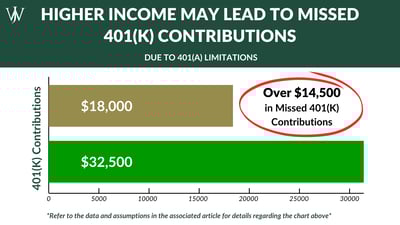
Many executives believe that they're maxing out their 401(k) contributions year after year. However, due to the IRS' 2026 401(a)(17) limitation of...
READ MORE
Nick Johnson, CFA®, CFP®
PRESIDENT & CHIEF INVESTMENT OFFICER
Improve Your Investment Strategy With Target Band Rebalancing When asked about the best ways to invest, people offer a variety of responses. Inevitably, many of these responses boil down to "buy low, sell high." Charmed by its deceptive simplicity, investors worldwide aim to time the market to make this strategy work. Yet, research shows that the average investor significantly underperforms the market over any 20-year timeframe. For our clients, we rely on an investment strategy that takes the "buy low, sell high" idea to the next level called Target Band Rebalancing. What is Target Band Rebalancing? Strategic target band rebalancing, often referred to as opportunistic rebalancing, uses real-time market shifts to reallocate funds per your target asset allocation within your portfolio. As the markets run up or dip, the weight of holdings within a portfolio shift in kind, which can alter your desired target asset allocation. Target band rebalancing allows us to set up a threshold a designated percentage above and below our desired allocations to signal a rebalance. When positions reach these thresholds, we: 1) Trim the profits to capitalize on a run-up, or 2) Buy recently-battered positions at a lowered cost to get back to the desired allocations. Why You Should Rebalance Your Investment Portfolio Regularly As many investors know, asset allocation is one of the most important components of a successful investment strategy, which is why we believe that systematic rebalancing is a core pillar of portfolio management. When a portfolio shifts away from its intended asset allocations due to market movement, we call it "portfolio drift." Portfolio drift is quickly addressed by rebalancing, whether you use a target band strategy or a more simplistic calendar rebalancing strategy, and any rebalancing to keep you in line with your desired asset allocation is better than no rebalancing. However, let's explore the differences between these two approaches. Calendar Rebalancing vs. Target Band Rebalancing, What Is the Difference? Calendar Rebalancing is the rebalancing approach taken by many advisors and individuals where at set intervals (quarterly or annually, for example), you take a look at your portfolio and rebalance to the desired allocation. Target Band Rebalancing is a more active rebalancing approach. If your portfolio runs up or takes a dive to where it reaches a trigger point too far from the asset allocation you've designated, you’re notified to rebalance your portfolio so you don’t get too far from your desired allocations. Is Target Band Rebalancing Better Than Calendar Rebalancing? Let's say your account is targeting an allocation of 65% equities and 35% fixed income. Suppose the equity markets boom and your initial allocation for equities grows into 72% of your total portfolio instead of the preferred 65%. You are now overweight in equities and unintentionally taking on more risk than you desire. Calendar rebalancing is a simplistic way to correct this phenomenon. At a set time, for instance, once a year or every quarter, you rebalance your portfolio to the optimal allocation. Rebalancing at predetermined intervals allows you to ensure that your portfolio that's already crept up to 72% equities doesn't continue growing to 80% or even 85% equities. Calendar rebalancing has the potential to increase returns in a portfolio over time since you are periodically able to sell the assets that run-up in value or buy assets that have recently lost value. We typically refer to this as trimming the winners and adding to the losers. As Warren Buffet once said, "I prefer to buy when others are fearful, and sell when they are greedy." When using a target band rebalancing strategy, rebalancing trades are triggered in the portfolio when it gets far enough away from its target allocation. Let's use our previous example with the target band rebalancing strategy to see the difference. After determining your target asset allocation (65% equities, 35% fixed income), let's suppose that you and your advisor agree on a 10% tolerance above or below your target. If the market runs up and equities become overweight in your portfolio, there will be a trigger to rebalance once your asset allocation shifts to 75% equities and 25% fixed income. Each time your portfolio reaches a trigger, trades take place to bring you back to your desired 65/35 allocation at the time the tolerance is exceeded rather than letting the off-target asset allocation continue to run until the next calendar rebalancing date. This enables you to leverage the market's momentum in either direction closer to real-time, while only exposing you to your desired level of risk. Benefits of Target Band Rebalancing in a Portfolio If calendar rebalancing adds value, why do we prefer target band rebalancing instead? This proactive rebalancing approach helps keep your accounts aligned with your preferred asset allocation to reach your financial goals. Over time, you are more likely to sell the winners and trim the losers at a better price when using the target band rebalancing strategy compared to calendar rebalancing. Let’s consider an example that compares the two approaches following the S&P 500. Let’s say that in a year with high volatility like 2020, you desired a 50/50 stocks to bonds asset allocation. If you used a calendar rebalancing strategy where you only checked your portfolio once a quarter, say February 15th and again on May 15th, you may have sold on a run-up in the market, but you’d miss opportunities to buy at the market low in March. This could have a significant impact on your exposure to risk between your rebalancing intervals. With a target band rebalancing strategy, you’d be notified as things happen in the market, which allows you to rebalance and take advantage of these opportunities in the market. In general, we prefer a target band rebalancing strategy because it’s a proactive approach to investing and leveraging opportunities in the market where a calendar rebalancing strategy is more reactive. How Does Target Band Rebalancing Impact Investment Returns? We believe that market volatility is part of the new normal, and the market shifts can be rapid and steep. Instead of only looking at your account on a quarterly or annual basis like some advisors do, we check our client's investments daily to leverage these market movements or protect against downturns. While not even a target band rebalancing strategy can perfectly time the market, the systematic approach can offset many behavioral finance mistakes even the savviest investors make. Over time, subtle biases can leak into an investment strategy and expose a portfolio to unnecessary additional risks. A report by Dalbar found that the number one finding for an investor's underperformance isn't the fees or transaction costs of investing, but rather the individual's psychology. Many factors lead to an investor making one or two lousy investment decisions every few years between headlines in the news or an individual security's performance. These decisions often result in poor asset allocation or bad timing decisions — the "emotional gap." These decisions often seem harmless at the time — For example, feeling uncomfortable about the market's volatility and deciding to go to cash to wait it out. From the market's bottom in March 2009 to 2018, the S&P 500 ran up nearly 300%, and these investors missed out because of their fear-driven asset allocation choices. Train Yourself to Make Better Investment Decisions. Learn how here >> Some advisors believe in a passive approach to rebalancing, which could result in missed opportunities for their clients. It's your financial advisor's job to help you reach your financial goals, to make objective recommendations based on complete information instead of gut-checks or the most recent news headlines, and to work in your best interest when offering those recommendations. At Willis Johnson & Associates, we work to make sure our clients understand and feel confident in the strategies we leverage for their investments. If you have questions about rebalancing or want a second opinion on your portfolio, reach out to our team for a complimentary meeting with one of our experienced advisors.
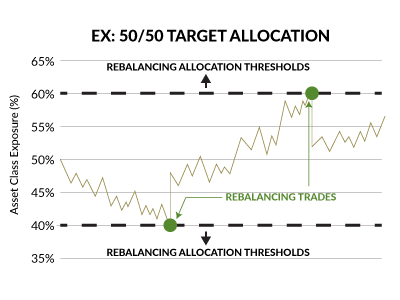
When asked about the best ways to invest, people offer a variety of responses. Inevitably, many of these responses boil down to "buy low, sell high."...
READ MORE
Nick Johnson, CFA®, CFP®
PRESIDENT & CHIEF INVESTMENT OFFICER
Self-Employment Tax Considerations When Starting a Consulting Business After a long career and decades of experience, you’ve finally reached retirement. Now what? You may have considered what you will do with your newfound time and flexibility while still maintaining your connections and skills. We often work with individuals who are retirement-aged and contemplating or have been approached about offering consulting services. It’s an obvious and popular choice for retirees, as a means to counsel companies and keep abreast of their industries. The benefits seem apparent. Consultants can supplement retirement income in an unpredictable market. Additionally, by continuing to work after retirement, you can defer Social Security distributions and leave your retirement accounts virtually untouched, maximizing earnings. But what are the impacts and potentially hidden costs of a consulting career in retirement? Let's walk through financial factors and various scenarios, so you can enhance, not hinder, your retirement years. How to Protect Your Personal Assets When Starting a Business The very last thing you want is to retire, consult, and then have the personal assets you accumulated over many years of hard work threatened because of a lawsuit. The first thing we want to discuss is liability protection. You want to consider the following points: Is the service I am providing in a litigious field? For example, a construction engineer on an offshore platform is subject to a greater risk of litigation than an editor of professional journals. Does it make sense to set up a separate legal entity, or will appropriate insurance policies be sufficient protection? For example, if you are on the board of an organization, you probably only need Directors & Officers Insurance. However, if you are the construction engineer on the offshore platform, you may want to set up a separate legal entity and have a good insurance policy. What is the cost of protecting your assets, and are the benefits of consulting worth the costs of setting up these protections? Depending on your circumstances, often the best approach is to set up a separate legal entity through which to operate. However, sometimes a good insurance policy is all you need. You will want to answer these questions and have your plan in place BEFORE establishing your consulting business. If you decide that setting up a legal entity is worth it, an excellent choice of entity for consulting is a Limited Liability Company (LLC). An LLC provides limited liability protection for its owners, thus separating your personal assets from potential liabilities arising from your consulting business. Items to consider when establishing your LLC: You will need to register the LLC by filing the appropriate documents with your state. This can be a thoroughly complicated process, so it is best left to attorneys. Willis Johnson & Associates can help you correctly establish your LLC by coordinating with our network of attorneys. Determine the state annual reporting requirement for LLCs. Most states, including Texas, require the filing of an annual information report, and some states require the payment of a yearly fee. Determine the federal annual reporting requirement for LLCs. You will likely establish a single-member LLC for your consulting business, which means you are the 100% owner (member). For U.S. tax purposes, a single-member LLC is a disregarded entity, which means you will report this income as a sole proprietor on a Schedule C, Profit or Loss from Business, of your Form 1040. If, however, you have a partner, you will need to file a separate tax return for the consulting business. Good Record Keeping and Business Deductions You will want to keep detailed records of your income and expenses to report to the IRS and complete any required state filing requirements. Business Considerations Regarding Business Expenses: The IRS audits a lot of small businesses, so it is vital that you set up a separate bank account for your consulting and don’t run personal expenses through your business account. You also don’t want to run business expenses through your personal account. And the same is true for credit cards; you will want a dedicated business credit card on which you don’t charge personal expenses, and vice versa. The IRS requires that all expenses deducted on a tax return have proper documentation. This means you must have appropriate documentation to support your expenses, so keep receipts, appropriate bank records, and credit card statements pertaining to those expenses. You must maintain a travel log to deduct any business mileage. This travel log must be maintained concurrently with your activities, so be sure to keep an up-to-date calendar of your business driving, including running errands to buy supplies, attending networking events, and traveling to meet with clients. With these record-keeping requirements in mind, let’s talk about some deductions that are available to consultants: Computers, phones, office supplies, business travel, marketing, continuing education, insurance, and other such costs. A full list of deductible expenses can be found on the Expenses portion of Schedule C. You can also deduct expenses for legitimately officing out of your home. There are some special rules here that you need to pay attention to when claiming an office in the home, and keep in mind that you may only deduct certain costs designated specifically for your consulting business. If you meet specific requirements, you can receive up to 100% in deductions for your medical insurance premiums. You can also establish a retirement plan to make deductible contributions. Additionally, there is a 20% Qualified Business Income deduction, otherwise known as the Section 199A or QBI deduction. Under the One Big Beautiful Bill Act (OBBBA), signed into law on July 4, 2025, this deduction has been made permanent. It is basically 20% of your net income from your business (after reducing for the self-employment tax deduction and any retirement plan contribution). If you have a very high income, there are limitations in place, and for service providers at this high level of income, the QBI deduction is no longer available. How to Save for Retirement When Self-Employed As a self-employed consultant, you have lots of opportunities to establish a retirement plan in which to contribute your earnings and get a tax deduction for this contribution. These contributions will grow tax-free, just like the retirement account you had while employed. Two of the simplest retirement plans for self-employed individuals are: Simplified Employee Pension Plan (SEP) Solo 401(k) However, if you make a significant amount of income in your consulting gig — say above $300,000 — there are opportunities to put away $200,000 or more into tax-deductible retirement accounts. Simplified Employee Pension Plan A SEP-IRA allows you to set up a traditional (non-Roth) IRA for yourself and also for any employees you may have. You have until the date your tax return is filed (including extensions) to set up a SEP-IRA, make a contribution, and receive a deduction on your tax return. For example, with an extension, the deadline to file your 2025 tax return is October 15, 2026. You have until October 15, 2026, to open and fund the SEP-IRA to receive the deduction on your 2025 return. What to Know About the SEP-IRA A SEP-IRA is established by opening a SEP-IRA account prototype plan with an insurance company, mutual fund, bank, or other financial institution. Contributions are elective each year, which means you do not have to make contributions in a year when your income is down. You can deduct the contributions to your SEP-IRA, which reduces your taxable income. Contributions to a SEP-IRA cannot be designated Roth contributions. However, once you have made a contribution to a traditional SEP-IRA, you can perform a Roth conversion. The maximum employer contribution to a SEP-IRA in 2026 is the lesser of 25% of net income (limited to the first $360,000 of income) or $72,000 maximum. SEP-IRA plans do not have a specific catch-up contribution provision for individuals age 50 or over. The maximum employer contribution limit of $72,000 is the same for all eligible participants, regardless of age. Let’s illustrate with a couple of examples. Example 1: You are age 58 and have net income from your consulting practice of $100,000 for 2026. Your maximum SEP-IRA contribution will be $25,000 (25% of $100,000) Example 2: You are age 58 and have net income from your consulting practice of $325,000 for 2026. Even though 25% of net income is $81,250, your maximum SEP-IRA contribution will be $72,000, the maximum contribution in 2026. Solo 401(k) Plan A Solo 401(k) plan is another excellent option for self-employed individuals to save for retirement. Unlike a SEP-IRA, a Solo 401(k) must be established in the year in which you take the deduction on your tax return. Following the recent passage of SECURE 2.0, you must establish the 401(k) plan prior to the tax filing deadline for the year you want the plan established. For example, you must establish a solo 401(k) plan by April 15, 2027, to make a contribution and receive a deduction on your 2026 tax return. The good news is that once the plan is established, you have until you file your tax return (including extensions) to actually make the contribution to the 401(k). How a Solo 401(k) Works These plans can have only one participant, which is you. Employees cannot be added to the plan. A Solo 401(k) can be funded with either pre-tax, after-tax, or designated Roth contributions. However, please note that starting in 2026, catch-up contributions in Solo 401(k)s must be made on a Roth basis for participants whose wages in the prior calendar year exceeded $161,000. However, individuals with prior-year wages at or below $161,000 can still choose pre-tax catch-ups. These plans come at a compliance cost because you may be required to file an annual Form 5500 (EZ or SF) with the Department of Labor. The yearly maximum is determined by two different types of contributions: Employee contribution (also known as Elective Deferral): For 2026, the maximum employee contribution is $24,500 ($32,500 for those ages 50 to 59 and $35,750 for those ages 60 to 63). Employer contribution (also known as Profit Sharing): Assuming you are consulting as a sole proprietor, you can contribute an additional 20% of net income from your consulting practice. (Generally, plans for self-employed individuals call for discretionary contributions of 25%. This results in a recalculated maximum contribution rate of 20% for the self-employed owner because net income is reduced by the self-employment tax deduction and the employee contribution to the Solo 401(k)). Please note that the combination of these two types of contributions cannot exceed $72,000 for 2026 ($80,000 for those age 50 to 59 and $83,250 for those age 60 to 63). Let’s illustrate this with a couple of examples. Example 1. You are age 58 and have net income from your consulting practice of $100,000 for 2026. Your total contribution to your 401(k) for 2026 is determined as follows: Elective deferral (the maximum) $32,500 Profit sharing (20% net income) $20,000 Total contribution for 2026 to Solo 401(k) $52,500 Example 2. You are age 58 and have net income from your consulting practice of $250,000 for 2026. Your total contribution to your 401(k) for 2026 is: Elective deferral (the maximum) $32,500 Profit sharing (20% net income) $50,000 Combined amount $82,500, this amount exceeds the annual limitation. Total contribution for 2026 to Solo 401(k) $80,000, the annual limit for 2026 Which is Better — The SEP-IRA or the Solo 401(k)? Some things to consider before choosing which plan is best for you: Do you have employees? A Solo 401(k) can only have one participant, which is you. If you have employees you wish to cover with a retirement plan, you will need to choose the SEP-IRA. How much income do you expect to earn? Your income will determine the maximum contribution you can make. In general, if you earn less than approximately $360,000, a Solo 401(k) is the best way to maximize your contributions because it provides for both an employee deferral and a profit-sharing contribution. Cash Balance Defined Benefit Plans If your consulting gig generates significant income over a period of years, say in the range of $ 600,000 or higher for five or more years, you may want to consider a cash balance defined benefit plan. Such a plan will enable you to put away $300,000 or even more into a tax-deductible retirement account each year. These plans are not free to set up, and you must contribute yearly. So, this is a long-term commitment. Additionally, an actuary is needed to calculate the amount of yearly contribution. To illustrate the extent you can contribute, let’s assume a 58-year-old male earns $600,000 net income from consulting in 2026. This individual can receive an annual cash balance pay credit (which is put into the plan) of about $245,000. Additionally, he could supplement that with a 401(k) or profit-sharing plan elective deferral and a profit-sharing contribution. This could result in deferring well over $320,000 in income to a retirement plan, receiving a significant tax break from income and self-employment taxes. The large tax breaks from deferring so much income may be worth the costs of setup and yearly compliance. The benefits of contributing such large amounts to a retirement plan are worth investigating. Navigating Self-Employment Taxes If you’ve never been self-employed before, self-employment (SE) tax can come as a big shock. Self-employment taxes are the Social Security and Medicare taxes paid on the net earned income of self-employed persons. Social Security and Medicare taxes are assessed on both employees and employers, each paying 7.65% of the earned income of the employee. When you were employed, your employer withheld 7.65% of your salary from your paycheck, and your employer also paid another 7.65%. Your employer paid this total of 15.3% of taxes to the Department of the Treasury for your Social Security and Medicare taxes. However, when you become self-employed, you are considered both employer and employee and must pay both sides of the Social Security/Medicare tax, a total of 15.3% (on net earnings up to the Social Security wage base f $184,500 for 2026; Medicare porttion continues with no cap, plus an additional 0.9% Medicare tax on earned income exceeding $200,000 for single filers, $250,000 for married filing jointly, or $125,000 for married filing separately). Consequently, by becoming self-employed, your tax rate has already increased 7.65%. Establishing an Hourly or Project Rate When establishing your hourly rate for consulting, you’ll want to pay careful consideration to this. Whatever you were making per hour as an employee will not be the same rate you want to charge when consulting. When you’re consulting, you’re responsible for paying the additional 7.65% self-employment tax, and you’re also responsible for covering your own benefits. Be sure that your hourly rate covers these additional costs that were once incurred by your employer. Self-Employment Tax Considerations Your overall tax liability on your individual tax return will now include both your income tax and your self-employment tax liability. This is because your self-employment tax is calculated on your Form 1040 using Schedule SE. The amount that is calculated on Schedule E will be added to your total tax liability on your Form 1040. To avoid a penalty for underpayment of taxes imposed by the IRS, you should estimate and pay your tax liability each quarter. The payment due dates are the same every year – April 15, June 15, September 15, and January 15. You can make these payments in many ways; the simplest is through the IRS website. Estimating and paying your quarterly liability is a huge component of your consulting business. How Consulting Impacts Your Social Security Benefits If you are already receiving Social Security benefits, and then you begin to consult, you stand a good chance of losing some of the benefits you are entitled to. Let’s take a look at the rules involving earning income and receiving SS benefits, keeping in mind the SSA has said that your full retirement age is 66-67, depending on your birth year: If you are younger than full retirement age (ex. 66-67) when you begin collecting SS benefits, your benefits will be reduced by $1 for each $2 you earn above an annual earnings limit ($24,480 for 2026). If you begin collecting benefits in the year of your full retirement age, your benefits will be reduced by $1 in benefits for each $3 you earn over an annual earnings limit ($65,160 for 2026). Age When SS Begins Reduction in Benefits Annual Earnings Limit (2026) 62 - Full Retirement Age (FRA) $1 for every $2 earned above the annual earnings limit $24,480 The year you reach FRA $1 for every $3 earned above the annual earnings limit $65,160 After you reach FRA No reduction No limitation Additional Taxes on Social Security Income as a Result of Consulting Now there is a caution here: If you earn income from consulting while also receiving SS benefits, it may subject up to 85% of your SS income to taxation at ordinary rates. So you may make your plans to receive no reduction in benefits, but you may have to pay taxes on your SS benefits. It also may result in higher premiums for your Medicare. Our key takeaways from these scenarios regarding Social Security benefits are: Don’t collect SS benefits until you reach full retirement age (at the earliest) to maximize your lifetime benefits. The longer you postpone receiving benefits, the larger your lifetime benefits. Consulting after you retire will help you prolong the collection of your SS, which maximizes your lifetime benefits. You can earn unlimited income after full retirement without losing any of your Social Security benefits. Deciding to take benefits before your full retirement age AND consulting will result in rather sizeable reductions to your lifetime benefits. Are you Ready to Work as a Consultant? At Willis Johnson & Associates, we focus on providing comprehensive financial planning for every stage of life to maximize your opportunities for success. Understanding these issues is very important because making a decision without all the facts could be very costly for you if you decide to add consulting to your list of retirement activities. Learn more about the services we offer and our commitment to helping your family make the most of your resources.

After a long career and decades of experience, you’ve finally reached retirement. Now what? You may have considered what you will do with your...
READ MORE
Leah Cessna, CPA
DIRECTOR OF TAX
Why Now Is the Time for Donor-Advised Funds Before 2026 Tax Changes Hit High-income families and philanthropic investors are increasingly turning to donor-advised funds (DAFs) to support the causes they care about, while also reducing taxes. DAFs enable donors to contribute cash or appreciated assets, secure an immediate tax deduction, and then recommend grants to charities over time. They’re also convenient and widely offered through major custodians. But 2025 is not just another year for charitable planning. Beginning in 2026, sweeping changes under the One Big Beautiful Bill Act (OBBBA) will significantly restrict charitable deduction benefits, especially for donor-advised fund contributions. Several current advantages decline after 2025, creating a planning window that is too valuable to ignore. How Donor-Advised Funds Work A DAF allows you to: Contribute assets (cash or appreciated securities) Receive a deduction in the year contributed Avoid capital gains tax on appreciated assets Invest the funds tax-free inside the DAF Recommend grants to charities later These benefits make DAFs a powerful tool for donors who expect: A high-income year A large bonus, equity vesting, or business liquidity event High unrealized gains on securities DAFs are also popular because they provide a centralized hub for all charitable giving, with simple tracking and administration Let's illustrate through an example. An investor holding stock purchased at $40 per share and now worth $300 per share can donate it directly into a DAF. Immediate deduction for the full fair-market value of $300 per share No capital gains tax owed on appreciation of $260 per share Investment growth inside the DAF continues tax-free That makes appreciated-asset contributions one of the most tax-efficient giving strategies available. It can also be a great strategy for rebalancing a portfolio and reducing stock concentration Trump's Tax Bill: What Changes for Charitable Giving in 2026 Beginning with the 2026 tax year, OBBBA introduces new charitable deduction limitations: Taxpayer Type New Rule Individuals who itemize Charitable deductions allowed only for amounts exceeding 0.5% of AGI High-income individuals Max deduction benefit reduced to ~35% (down from 37%) The OBBBA (One Big Beautiful Bill) provides an opportunity to make non-itemized, above-the-line charitable deductions ($1,000 for single filers and $3,000 for joint filers); however, contributions to donor-advised funds are ineligible. What the One Big Beautiful Bill Act (OBBBA) Means for Donor-Advised Funds Deductions for DAF contributions in 2026+ become less valuable Moderate donors may lose deductions entirely due to the new 0.5% AGI floor Those in the top marginal tax bracket will receive lower marginal tax savings per dollar donated These are strong incentives to accelerate contributions in 2025. Key Strategies to Consider for Your Donor-Advised Fund in 2025 Strategy #1: Front-load giving into 2025 If you plan to give over multiple years, contribute several years at once to your DAF now, then grant later. Strategy #2: Donate appreciated assets Lock in capital-gain avoidance under today's rules. Strategy #3: Use 2025 to offset unusually high income Those with larger bonuses or other compensation packages can realize considerable tax benefits. Strategy #4: Ensure your contribution clears this year The deduction applies only if the asset is irrevocably transferred in 2025 Strategy #5: Ensure your contribution clears this year Carry-forward deduction strategy may further enhance tax value. Even with stricter rules ahead, donor-advised funds remain: Flexible Tax-efficient vs. direct cash-only giving A great tool for legacy family philanthropy However, the best financial outcome is realized if you act before tax reform takes effect. Incorporating Charitable Giving Into A Comprehensive Financial Planning Strategy Donor-advised funds provide a rare combination of: Tax savings today Avoiding capital gains Philanthropic control and flexibility Because OBBBA introduces less favorable tax opportunities beginning in 2026 that take a meaningful bite out of tax benefits for many donors. Our integrated team of portfolio managers, financial advisors, and CPAs helps our clients leverage strategies like donor-advised funds to accomplish their goals, but charitable giving is just one of the many goals our advisors can help clients accomplish on their road to financial independence. If you'd like to learn how we can help you position your financial plan to achieve your philanthropic goals, you can learn more about our process here.
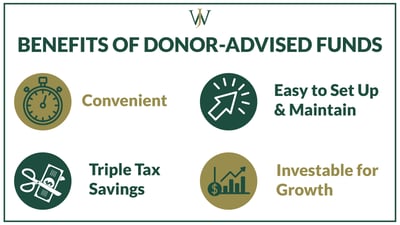
High-income families and philanthropic investors are increasingly turning todonor-advised funds (DAFs)tosupport the causes they care about, while...
READ MORE
John Siegel, CFP®, EA
SR. WEALTH MANAGER
How to Select Retiree Medical Health Benefits for BP Professionals Picture this: waking up each morning and having nowhere to be. Sounds magical, right? As retirement from BP comes into focus, this magical picture may start feeling tainted and blurry. Worries start to creep in. “Can I retire?” is a common one. One that doesn’t get as much attention or is overlooked until the last minute is: “How do I get health insurance after I retire, and how do I pay for it?” This question may not have even been on your radar, but it’s a very important one. Now that I’ve successfully raised everyone’s blood pressure, let’s step back and take a breather. You’ve got options when it comes to retiree health care. The priority is to choose the right option for you. The goal of this article is to educate you on those options so that you can approach this decision with clarity about how these choices can affect you financially. Health Insurance Options after a BP Retirement What are your medical coverage options after retirement from BP? As I mentioned, there’s some flexibility here, and you have options! COBRA Affordable Care Act Marketplace BP Retiree Medical Insurance COBRA You can elect COBRA within 60 days of retiring from BP. The great thing about COBRA is that it allows you to keep your same health insurance policy for a specific period of time. At BP, that’s 18 months. That could be 18 months before starting Medicare or having to look for a plan in the Marketplace. The downside is that once coverage ends, you're responsible for the full cost under COBRA: 100% of the premium plus a 2% administrative fee, billed directly to you. BP does not subsidize the premium. Affordable Care Act Marketplace You could elect to look at the Marketplace for a plan that fits you and your family. This can be a great option if you do not qualify for BP Retiree Medical Insurance or if COBRA won’t provide coverage for as long as you need it. However, shopping for coverage can be complicated and sometimes these plans are unaffordable if you don’t qualify for a subsidy. BP Retiree Medical Insurance Lastly, but certainly not least, is the BP Retiree Medical Insurance. You may be asking, what is it exactly, and how do you get it? Eligibility You are eligible for coverage under the plan when you reach age 50 with at least 10 years of vesting service OR age 55 with at least 5 years of vesting service. Music to everyone’s ears, right? BP doesn’t make it too difficult for you to qualify to be covered by their retiree plan when you’re ready to retire. And guess what? They will also cover your spouse, domestic partner, dependent child (to age 26), and a fully disabled child. No one likes to think about this part, but BP will also continue these medical benefits for surviving spouses and qualifying dependents if you pass away. You have 30 days after leaving the company to sign up for coverage. If you ever decide to terminate this coverage, BP allows you to re-enroll once more. However, the option to re-enroll is limited to one time only, so make sure you’re comfortable with your choice of coverage. How Much is BP Retiree Medical Plan Coverage? A few common questions we get from our BP clients are, "How does one go about paying for this? Is it all out-of-pocket?" The answer, as usual, is it depends. If you were hired before April 1, 2004, you will pay a percentage of the premium based on your years of service and age. Age and loyalty will get you a fairly nice discount on your premium cost, ranging from 50% to 30%. BP Retiree Reimbursement Account (RRA) Things look a little different if you started working at BP after April 1, 2004, and before January 1, 2020. If this is you, you’re eligible to participate in the BP Retiree Reimbursement Account Program (RRA). According to BP, this plan "is designed to help eligible retirees who are not eligible for a reduced premium contribution pay for any qualifying medical expense.” Based on your age and years of service, you earn an annual credit that you may use to reimburse yourself for any "qualifying" medical expense. We will explore together how to do this tax efficiently to help take the sting out of being on the new plan. The original BP Retiree Medical is easy enough. You pay a portion of the full premium. It’s the RRA that gives you decisions. While there’s not going to be a right answer personally, there may be one financially for when and how to spend these funds. Let’s first dive a little more into how this plan works: How the BP RRA Works You will receive an annual “credit” in your RRA based on age and years of service. Only BP makes contributions to this plan, you do not. Once this account is depleted, it’s gone. However, it will not affect your ability to continue Retiree Medical coverage. It will just cost you more out-of-pocket. Under this plan, when you have a qualified medical expense, you will pay the expense and submit a claim for reimbursement by the RRA when the claim is approved. BP Retiree Medical Health Plan Options We’ve answered the questions: “How do I qualify for BP Retiree Medical?” and “How do I pay for the coverage?” Now it’s time to dive into: “What are the plan options, and what are they going to cost?” Just like you have now as a current BP employee, you’ll have multiple choices for coverage after retirement. Retiree Medical Health Plans if You Aren't Eligible for Medicare For those who are not yet Medicare-eligible (under age 65), the following plan options are available: HealthPlus PPO – lowest out-of-pocket Standard PPO – mid-range cost plan Health+Savings PPO – a high-deductible plan that allows you to contribute to an HSA BP won’t help you contribute to this once you’re retired, but it’s still a great option. If a high-deductible plan and HSA make sense for your medical situation and your family, then brace yourself for the great opportunity they present. Say it with me: triple tax-advantaged. Three beautiful words. If all these options sound too good to be true, it's because they are. Kind of. BP still exercises some control over you and these plans even after you’re long gone. Their control over the plans extends to even when you can’t remember how you ever had time to work a full-time job (yes, this is the comment we get most from our retired clients who are busy enjoying all of their free time in retirement), which is why it's good to understand the caveats now. BP Wellbeing Program Let’s talk about the catch. To qualify to sign up for the HealthPlus or Health+Savings PPO options, you must participate in the BP wellbeing program for retirees. Not only that, but you have to earn a minimum of 1,000 points annually to continue to participate in these plans. I’ll let you explore these for yourself, but here's a quick glimpse by example: Annual Flu Shot and volunteering earn 75 points each. You can still participate in the Standard PPO plan and avoid having to participate in the BP wellbeing program. BP Medicare-Eligible Retirees We’ve talked about Retiree Medical BEFORE Medicare kicks in. Let’s talk about the elephant in the room: medical coverage with Medicare. The BP Retiree plan for those on Medicare is called “BP Medicare Advantage PPO ESA”. In short, this is coverage on top of Medicare coverage you’ll already be required to sign up for when you reach 65. To sign up for this advantage plan, you’ll first need to be enrolled in BOTH Medicare Parts A and B. You will have 12 months to enroll in the Medicare Advantage plan from the date you become eligible. Dependent Coverage If you and your spouse are different ages, and you’re wondering what happens to your spouse when you switch plans, fret not. You and your spouse or dependents can be on different plans. If your spouse isn’t yet Medicare eligible, they can stay on the Non-Medicare Option while you transfer to the Medicare Advantage plan. BP won’t leave you in a lurch! If you aren’t a big fan of major choices or making decisions, you’re in luck. There’s only one option for Medicare Advantage coverage through BP, and there’s no well-being program participation requirement. Is the BP Company-Sponsored Retiree Health Insurance Right for You? We've covered a lot of information, but I'm sure you still have questions. Below is a brief summary of the BP Retiree Medical Insurance information, however, it’s still quite dense. Let’s look at some real-life examples to truly quantify how this might affect you. We’ve got two big questions here: Should I Delay Retirement Just to Qualify For BP's Retiree Medical Plans? It’s easy to say yes here, but why? Not only do you get to avoid the Marketplace to shop for coverage if you qualify for BP Retiree Medical, but you also get some assistance from BP to pay for their coverage (either discounted premiums costs or a Retiree Reimbursement Account). Before going any further, those are TWO big reasons to wait to retire until you qualify for these benefits. Let's consider an example using a BP employee named Michael. Michael is single and he’s tired of working. He wants to retire and knows he’s financially independent, but he has so many things he wants to do with his retirement, including extensive travel. He’s 50 years old and has worked for 9.5 years at BP. He’s not quite at the point where he qualifies for BP retiree medical (50 years old and 10 years). What’s in it for him if he powers through for another six months? Let’s say Marketplace coverage is about $1,200 per month for one person, and the full premium cost for BP Retiree Medical is $600 per month. Right off the bat, that’s a $7,200 difference in annual costs. To Michael, that’s at least one potential trip he’s missing out on annually. As a reminder, Michael is fairly young. He’s 13 years away from qualifying for Medicare. Let’s do some quick math here: $7,200 multiplied by 13 years is $93,600. That’s almost $100,000 that Michael would not have had to pull out of his invested brokerage account to cover medical premiums. Let's go one step further. If we assume that his $93,600 would grow hypothetically at an annual rate of 8% over this period in the market, we are looking at potential value of $254,556. That’s nothing to sneeze at. From a financial standpoint, the math makes it a no brainer to work the extra six months to qualify for the Retiree Medical coverage. However, from an emotional standpoint, that might be a different story. One of our jobs as holistic financial planners is to help our clients assess these huge life choices from all angles so that they are fully informed and can make the best possible decision for themselves. When & How Should You Use the BP RRA For Medical Costs in Retirement? Let's consider another example. You just retired. You’ve built up a gorgeous RRA account balance, and your first retirement medical bill comes in. You look at your RRA balance and ask, "Why start to drain it now?" The short answer? Because the math says to. Let’s review a few key facts before we dive into this example: The RRA is not able to be invested and there are no additional contributions made after you retire from BP. If you’re not spending from your RRA, you’re likely spending from funds that are or could have been invested. And for the most depressing key fact: none of us know how much longer we have. The key takeaway here is: start spending your RRA. Let's pivot to a BP retiree named Stephanie. Stephanie built up her RRA balance to $125,000 at the time of her retirement. She’s wondering where to pull from first to cover her medical premiums and bills. Simply, the answer comes down to a concept we use a lot in financial planning: the Time Value of Money. I like to think of her RRA as a bucket of cash as it’s not invested. Her brokerage account ($350,000), on the other hand, is fully invested and growing hypothetically 8% annually on average. Her total medical bills annually equal $12,500, which would deplete her RRA in 10 years. One of the questions I want us to consider is: What would her brokerage account look like if she preserves her RRA versus if she uses her RRA to cover all of her medical bills over the next ten years? If she pulls out $12,500 from her brokerage account annually to cover her medical bills, she will still be able to grow the account. However, she will only be able to grow it to about $575,000 by the 10th year as she’s regularly pulling out funds and not letting the assets grow and compound. However, if she pulls the $12,500 from her RRA annually to cover her medical bills, her brokerage account could potentially grow more substantially and hypothetically total $755,000 by the 10th year. That’s potentially a $180,000 difference over a relatively short period of time. While it’s hard to let go of those RRA funds, it may be the right choice financially because it lets your other assets grow and stay invested. Medical spending in retirement is what the RRA is for, so use it while you have it. Working With a Fiduciary Financial Advisor on Your Path to Retirement These are just a handful of examples of things to think about as you’re trying to maximize your BP benefits in and after retirement. While the BP retiree medical benefits can be confusing, I hope this article provided insights into the various considerations to look at as you near the point of needing to decide on a plan. The transition to retirement and the numerous decisions that follow are conversations we have with BP professionals all the time. If you're interested in getting step-by-step guidance on your medical coverage in retirement or how to stretch your savings to help support your retirement goals, we offer a complimentary meeting with one of our BP-focused financial advisors who can give you tailored recommendations designed to reach your goals.
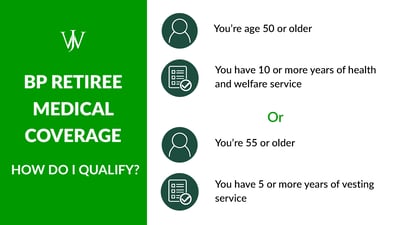
Picture this: waking up each morning and having nowhere to be. Sounds magical, right? As retirement from BP comes into focus, this magical picture...
READ MORE
Sarah Sikorski, CPA, CFP®
DIRECTOR, WEALTH MANAGEMENT
End Of Year Financial Planning Checklist for BP Professionals As the end of the year approaches, it’s time to start making your list and checking it twice when it comes to your financial planning. BP professionals have a number of opportunities to save money and reduce their tax bill before year-end, and the time to take advantage of these opportunities is now. Want to jump ahead to a specific item we discuss with our BP clients each year? Click the links below: Maxing out the BP 401(k) Contributing to the HSA Making charitable donations Reduce taxes through tax loss harvesting Review Open Enrollment elections & your estate plan 1) Max Out Your 401(k), the Employee Savings Plan (ESP) Contributing to your 401(k) is one of the easiest ways to save for retirement. BP offers a generous company match, making this a priority checklist item to maximize your benefits. BP’s 401(k) Match BP employees are eligible for up to a 7% match, which means BP may contribute up to a total of $24,500 in 2025 of money you don’t want to miss out on. While you can contribute more than 4% of your pay (up to designated contribution limits), employees should ensure they are at least contributing 4% to receive the full BP matching. 401(k) Contribution Limits for 2025 Each year, the Internal Revenue Service (IRS) identifies contribution limits for 401(k) plans. The amount you contribute to your Employee Savings Plan in the pre-tax source reduces your taxable income dollar for dollar, however, any contributions made to Roth or After-Tax don’t reduce your taxable income. In 2025, if you are under 50 you may contribute up to $23,500 into the pre-tax or Roth sources of your 401(k). If you are over 50, this limit increases to $31,000 across the sources after catch-up contributions. Across all sources, the total contribution limits to a 401(k) for 2025 are as follows: If You are Under 50: $70,000 If You are Over 50: $77,500 These numbers change every year so re-evaluating your contributions annually is crucial to maxing out the ESP each year. In addition to pre-tax, Roth, and the BP company match, there’s another source in the 401(k) called the after-tax source that employees can contribute to. The after-tax source isn’t as tax-efficient as pre-tax or Roth, but it provides a unique opportunity for what we call the Mega Backdoor Roth strategy which can be incredibly tax-efficient over time. What’s the Mega Backdoor Roth Strategy? The Mega Backdoor Roth strategy, also known as an After-Tax rollover, is a process that allows you to transfer after-tax contributions out of the 401(k) to a Roth IRA where your contributions can grow tax-free for life. Unlike pre-tax contributions, your after-tax contributions do not get deducted from your taxable income. However, converting the contributions to a Roth IRA every year to avoid taxable growth in the 401(k) can keep them growing without a tax drag, and when you take out qualified distributions during retirement, you get to take the funds tax-free. However, this strategy is not as simple as it seems. There can be significant tax implications if the process is done incorrectly or if there are any earnings in the after-tax account, so working with an advisor who has experience in this area is crucial. Non-Qualified Plans & the BP 401(K) The ESP is a unique plan that comes with great opportunities for long-term planning (as we see with the Mega Backdoor Roth strategy) and for simply made mistakes. In 2025, if you’ve properly maxed out your employee contributions and received the maximum company match from BP, you can put up to $22,000 into your after-tax source within the 401(k). However, we often see employees over-contribute to the ESP, which pushes BP’s company match contributions over to a non-qualified plan called the Excess Benefit Plan. This non-qualified plan isn’t as tax-efficient at retirement when it pays out compared to the 401(k). Often, we try to help our BP clients avoid this pour-over by closely monitoring ongoing ESP contributions instead. Perform a Self-Audit to See If You’re On Track to Max Out Your BP ESP This Year Many BP professionals believe that they have maxed out their Employee Savings Plan by making the most of their pre-tax contributions. However, we perform a simple audit with clients that you can use to ensure you’ve maxed out the 401(k) each year in both the pre-tax and after-tax sources. To see if you’ve maxed out the ESP, use the following steps to pull up your contribution summary. 1. Log in to your Fidelity NetBenefits account 2. Select Your BP Employee Savings Plan 401(k) account 3. Under the “Summary” tab, select “Statements” 4. Choose Year to Date to see this year’s data (or use the specific date feature to look at previous years), and click “Retrieve Statement” 5. Scroll down to “Your Contribution Summary” and review your contributions Often, we see many BP professionals’ contribution summaries look something like this if they believe they’ve maxed out the 401(k) for their age and their income meets the IRS 415 income limitations in a given year. You may look at this and think, “They’ve saved over $50,000, so surely this person is at the maximum in the 401(k), right?” Unfortunately, this individual left their after-tax pool empty, which means they’ve missed an opportunity to add $10,500 to their retirement savings! How Income Limits Impact 401(k) Contributions in 2025 If you’ve already accumulated over $350,000 in income in 2025 between base and bonus, and your goal is to max out the 401(k), your summary should read as follows: Employee After-Tax: $22,000 Company Contribution: $24,500 Employee Pre-Tax (if over age 50): $31,000 So, what should you do if you notice this error in the future? If you’ve left money on the table, you can adjust your contributions for 2025 to allocate funds to the after-tax pool. However, if it looks like you will not make the maximum contributions this year, you can increase your contribution percentage over your final pay periods as a final push to increase your savings. Although, if your base and bonus have pushed you over the $350,000 income limit threshold for this year, you will have to wait until 2026 to begin making 401(k) contributions again. When making your elections for 401(k) contributions in 2025, the proper formulas for maxing out the Employee Savings Plan are as follows: If you make under $350,000 in base & bonus: (After-Tax or Pre-Tax/Roth Limit Based on Your Age) / Salary = Percentage Allocation If your base & bonus exceeds $350,000: (After-Tax or Pre-Tax/Roth Limit Based on Your Age) / $350,000 = Percentage Allocation When the compensation limits for 2026 are released, using the formulas above with the new limits can be an effective way to maximize your Employee Savings Plan contributions throughout the year. Using the formula for someone over age 50 making $350,000 in base and bonus compensation in 2025, below is an example of what the contributions should look like in the employee pre-tax and employee after-tax contribution sources each month to be considered on track to max out. Compensation Accumulation Bonus Cumulative Employee Contributions to After-Tax Cumulative Employee Contributions to Pre-Tax End-of-Year Targets $255,000 $95,000 $22,000 $31,000 January $21,250 - $1,381.25 $2,125 February $42,500 - $2,762.50 $4,250 March $158,750 $95,000.00 $10,318.75 $15,875 April $180,000 $11,700.00 $18,000 May $201,250 $13,081.25 $2,012.50 June $222,500 $14,462.50 $22,250.00 July $243,750 $15,843.75 $24,750.00 August $265,000 $17,225.00 $26,500.00 September $286,250 $18,606.25 $28,625.00 October $307,500 $19,987.50 $30,750.00 November $328,750 $21,368.75 $31,000.00 December $350,000 $22,000 $31,000.00 Total Compensation $350,000 Total Contributions $22,000 $31,000 In this example, the calculation required a 10% contribution each month to pre-tax and a 6.5% contribution to after-tax. With these contribution elections, the employee maxes out both sources by the end of the year. We frequently discuss this process with our clients when determining strategies to employ to make the most of their 401(k) contribution elections. If you’d like to learn more or realize you've left 401(k) contributions on the table, reach out to us to set up a complimentary conversation with one of our fiduciary advisors. 2) Contribute to Your Health Savings Account Another simple action BP employees can leverage to minimize their taxable income is making contributions to HSA or FSA accounts. FSAs operate on a “use it or lose it” principle, so it’s important to use the funds by December 31st! For HSAs, the contribution deadline for 2025 is April 15, 2026. After December 31st, contributions won’t come from the 2025 payroll, but can still be made out of pocket and deducted on your tax return. Health savings accounts (HSAs) offer triple tax benefits, providing a great way to save for medical expenses. The catch is that HSAs are only available to high-deductible medical plan participants. In 2025, you can put up to $8,550 into a family HSA or $4,300 for an individual account if you’re under age 55. If you’re over 55, there’s an additional $1,000 catch-up allowed for each type of account. Much like pre-tax contributions, HSA contributions reduce your taxable income dollar for dollar! Additionally, BP contributes $1,000 to employees' HSA accounts if they meet certain criteria. And, if your spouse works at BP as well, they’ll contribute $2,000 of free, tax-advantaged dollars which can yield significant savings over time! Flexible Spending Account (FSA) For those with flexible spending accounts, December 31st is crucial for a different reason. With an FSA, the funds operate on a “use it or lose it” basis. Before year-end, you must use any of the funds you’ve placed in the account for qualified expenses, or you’ll lose access to the funds. If you’re nearing the end of the year and don’t have any major medical expenses left to cover, you can also spend the funds on medical products included on sites such as FSA Store. 3) Make a Charitable Donation Another way to trim your tax bill is to give to charities. Charitable contributions can be deducted from your taxable income, and in some cases, BP may offer a matching gift program. Make sure to check with HR to confirm eligibility. Donor-Advised Funds (DAFs) One way that you can do this is to set up a donor-advised fund, making regular and irrevocable contributions. Donor-advised fund contributions allow for multi-year contributions to be made in one year, with the benefit of immediate tax deductions in the year the gifts were made to the DAF. Once inside the DAF, the assets are allowed to grow and given to charity over whatever time you deem appropriate. This strategy can be an effective way to avoid paying capital gains taxes, helping you keep thousands of dollars in your accounts. When we talk about charitable gifts, remember that they can be made in cash or stock. The transfer of cash is quick and easy. However, it can be more beneficial to gift appreciated stock into your DAF to avoid taxes on the gains. Gifting your appreciated stock allows you to not only get a deduction of the amount transferred but also avoid paying capital gains on the appreciated stock. 4) Reduce Your Taxes Through Tax-Loss Harvesting At WJA, one of the things we pay special attention to for our clients is taxes and lowering their tax burden over time. Using the tax-loss harvesting strategy, we sell positions in our client’s portfolios at a loss to offset potential capital gains and minimize their taxes for a given year. The IRS allows taxpayers to apply an offset of up to $3,000 to reduce their taxable income each year. Something we at WJA do, especially in down markets, is sell positions at a loss to offset potential capital gains. Any losses not offset by gains can be applied to reduce taxable income up to $3,000. Any additional losses may be carried over into the following years until they are used. Learn more about this strategy here >> 5) Review Your Open Enrollment Options & Your Estate Plan Because BP’s Open Enrollment is early in the new year, the end of the year is the perfect time to make sure your life & disability insurance coverage is adequate to protect your family in the event of your death. In addition to AD&D provided by BP, you can purchase additional coverage as well as contribute to a cash accumulation account that works similarly to your 401(k) contributions. This provides another vehicle for before-tax savings. Don’t forget to review your current financial needs against your disability insurance coverage elections as well. While disability premiums are not a direct savings vehicle, it’s important to regularly reassess your coverage as finances change throughout your life. Finally, review your estate planning documents including your last will and testament and your designated power of attorney. You might also include a living will and a medical power of attorney in case you become mentally or physically handicapped before your death. Everyone should have an estate plan regardless of age, wealth, or social status. Creating trusts or detailing directives for asset transfers can be part of a long-term tax strategy that helps keep generational wealth in your family. Download our Estate Planning Checklist here >> Optimize Your Financial Future with End-of-Year Tax Planning For many, the later months of the year are filled with celebration and anticipation for the new year. However, it’s also a time ripe with the opportunity to manage taxes and set yourself on a strong financial foundation for the years ahead. By taking advantage of these opportunities, you may be able to save money, reduce your tax bill, and support your financial future. At WJA, we proactively work with our BP clients to take advantage of the unique financial planning opportunities available to them as the year comes to an end so they can leverage them effectively. If you’re curious about what opportunities are available to you, reach out to our team for a complimentary discussion and discover what you can do to make the most of the season.

As the end of the year approaches, it’s time to start making your list and checking it twice when it comes to your financial planning. BP...
READ MORE
John Siegel, CFP®, EA
SR. WEALTH MANAGER
401(k) Contribution Limits & How to Max Out the Shell Provident Fund The IRS has recently released the 2026 retirement plan contribution limits, and starting January 1, 2026, many provisions under SECURE Act 2.0 are officially underway. For super-savers at Shell, this is great news. Shell employees can now contribute $24,500 (or $32,500 for those over 50 years old) of pre-tax or Roth savings to the Shell Provident Fund and can get up to $88,250 (or $98,350 for married couples aged 55-60) of retirement savings into tax-efficient vessels including the HSA, in 2026. Source Under 50 Age 50-55 55-59, 64+ 60-63 Fully maxing out all 401(k) sources $72,000 $80,000 $80,000 $83,250 Backdoor Roth $7,500 $8,600 $8,600 $8,600 HSA (family, +1 catch up where applicable) $8,750 $8,750 $9,750 $9,750 Total Retirement Savings $88,250 $97,350 $98,350 $101,600 How Much Is Shell's 401(k) Contribution? Shell offers a 10% contribution to 401(k) accounts for employees who have been with the company for over nine years. Since the annual 401(k) income limit for 2026 is now $360,000, Shell will cap company contributions to the Provident Fund at $36,000. How Shell Employees Can Max Out the Shell 401(k) if Under Age 50 If you’re under age 50, the total IRS limit for 401(k) contributions in 2026 from employee or employer contributions is $72,000. Here's how it breaks out: In Pre-tax or Roth: Employees under age 50 can contribute up to $24,500 across the two sources In Non-Roth After-Tax Contributions: The maximum Shell allows for after-tax contributions is $11,500 in 2026. Shell's Employee Contribution: Shell contributes anywhere from 2-10% of an employee's compensation to their 401(k) each year. The maximum Shell can contribute in 2026 is $36,000 due to the IRS' income limits. How to Max Out Your Shell 401(k) in 2026 If You're Age 50 or Older If you’re over age 50 and under age 60, the total IRS limit for 401(k) contributions in 2026 from employee or employer contributions is $80,000, broken out as follows: In Pre-tax or Roth: Employees in these age brackets can contribute up to $32,500 across the two sources, thanks to a $8,000 catch-up allowance. Following the passage of SECURE Act 2.0, starting in 2026, catch-up contributions must be designated as Roth contributions for individuals making over $150,000 in annual income. This income threshold is indexed annually for inflation. In Non-Roth After-Tax Contributions: The maximum Shell allows for after-tax contributions is $11,500 in 2026. Shell's Employee Contribution: The maximum amount Shell will contribute to an employee's Provident Fund in 2026 is $36,000 due to the IRS' income limits. In addition to the 401(k), there are valuable savings opportunities in vehicles such as the Backdoor Roth or HSA (which has additional catch-ups once you reach age 55). If you’re maxing out all of these sources alongside the backdoor Roth and full HSA contribution limit for families with an individual catch-up, you could save $98,350 in tax-efficient vehicles in 2026! Super Catch-Up Contributions at Age 60-63 Starting in 2026 Employees aged 60 to 63 after January 1, 2026, can contribute even more to workplace retirement plans thanks to legislation under Secure Act 2.0. Individuals in this age group have a higher catch-up contribution amount, indexed each year for inflation. With the passage of SECURE Act 2.0, individuals age 60-63 can contribute over and above standard and catch-up limits to their 401(k)s for retirement. In addition to the standard catch-up contribution, individuals age 60-63 can contribute the greater of $10,000 or 50% more than the standard catch-up limit. Because the standard catch-up contribution limit for 2026 is $8,000, the maximum catch-up contribution allowed for individuals age 60-63 is $11,250 for 2026. Sounds exciting, right? To get this right, you need to be mindful of a few important caveats. For high-income earners (your income exceeds $150,000 for the year), these catch-up contributions must be made as Roth contributions and are not tax-deductible. Second, not all employer plans support these contribution limit amounts, so confirm with HR or your 401(k) Summary Plan Descriptions before making your 401(k) elections for the year. For super-savers at Shell, this change provides a valuable opportunity for older employees to enhance their retirement savings as they approach retirement. Employees in this 4-year age bracket maxing out their Shell Provident Fund, a family HSA with catch-ups, and backdoor Roths can save up to $101,600 in 2026! Smart Savings Strategies After Maxing Out Your 401(k): Backdoor Roths, HSAs, and More Roth accounts are one of the most effective ways to grow wealth for the future because your money grows tax-free. Contributions are made with after-tax dollars, so when you retire, you can withdraw both your contributions and earnings without owing taxes. For many Shell professionals, this helps create flexibility in retirement by balancing taxable and tax-free income and keeping more of what they’ve worked hard to earn. Backdoor Roth The IRA contribution limit for 2026 increased to $7,500 ($8,600 if age 50+). Though many high-income earners are prevented from directly contributing to a Roth IRA, many Shell employees can take advantage of the backdoor Roth strategy to get more saved in Roths each year. This strategy is nuanced and can cause more harm than good if enacted poorly, so be sure to discuss it with a financial advisor if you want to incorporate it into your financial plan. Shell Employees Can Save on Taxes Using a Mega Backdoor Roth with After-Tax 401(K) Contributions Additionally, if you are contributing after-tax dollars to the Shell Provident Fund, you can roll out the after-tax funds annually to a Roth IRA to take advantage of the mega backdoor Roth strategy for additional tax savings over time. How to Use Shell's HSA (Health Savings Account) for Tax-Optimized Savings A Health Savings Account (HSA) is often an under-utilized benefit that provides a unique triple tax advantage for those looking to save more each year: Tax-Deductible Contributions: Contributions made to an HSA are tax-deductible, which means they lower your taxable income in the year you make the contribution. This can reduce your overall tax liability. This year, Shell employees can contribute up to $8,750 (or $9,750 if they are over age 55 and both spouses are taking advantage of the catch-up contribution) for a family. For individuals, the maximum HSA contribution is $4,400. Tax-Free Growth: The funds in your HSA can be invested, and any earnings or capital gains from these investments are tax-free as long as they remain in the account. This allows your savings to grow over time without incurring taxes. Tax-Free Withdrawals for Qualified Medical Expenses: The withdrawals are entirely tax-free when you use the HSA funds for qualified medical expenses. When using an HSA as a retirement fund, Shell employees can benefit from both tax deductions and tax-free growth, making HSAs a valuable tool for long-term savings and retirement planning. High earners should consider using both plans strategically – what do savings amounts look like if you max out the 401(k), leverage the backdoor Roth, AND max out your HSA this year in each situation? Source Under 50 Age 50-55 55-59, 64+ 60-63 Fully maxing out all 401(k) sources $72,000 $80,000 $80,000 $83,250 Backdoor Roth $7,500 $8,600 $8,600 $8,600 HSA (family, +1 catch up where applicable) $8,750 $8,750 $9,750 $9,750 Total Retirement Savings $88,250 $97,350 $98,350 $101,600 What If You Make Over the 401(k) Compensation Limit in 2026? The annual compensation limit for 2026 has increased from $350,000 to $360,000. If you make over $360,000 in base and bonus compensation for 2026, remember to max out your Provident Fund contributions before reaching that income threshold. After you earn $360,000 of income, both you and Shell can no longer contribute to the Provident Fund. What Happens if You Make More than the 401(K) Income Limits? In 2026, once you earn more than $360,000, Shell will contribute to the Shell Provident Fund BRP (Benefit Restoration Plan) instead of the Shell Provident Fund. If 2026 is the first year you expect to make over $360,000, check that you have an allocation and investment strategy for your Provident Fund BRP. The 2026 limit adjustments will be advantageous for super-savers at Shell, and it is crucial to be sure that you make the most of these changes. Get a Tailored Savings Plan From an Advisor with Specialized Shell Benefits Knowledge At Willis Johnson & Associates, we work with our Shell clients to help them get the full 10% company contribution, take advantage of backdoor Roth IRAs, and facilitate after-tax roll-outs from the Provident Fund to help optimize retirement savings. If you have any questions about the 2026 contribution and compensation limits, please contact your advisor or schedule a free consultation with one of our Shell specialists.
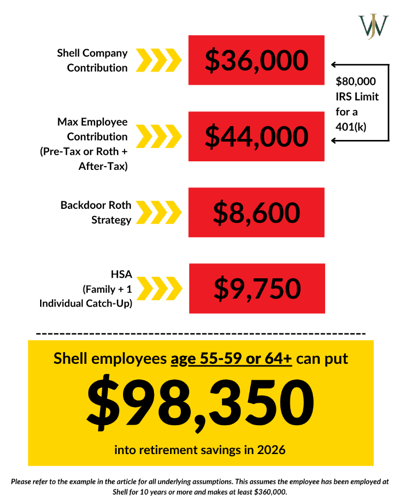
The IRS has recently released the 2026 retirement plan contribution limits, and starting January 1, 2026, many provisions under SECURE Act 2.0 are...
READ MORE
Alexis Long, MBA, CFP®
MANAGING DIRECTOR, WEALTH MANAGEMENT
401(k) Contribution Limits & How to Max Out the Chevron Employee Savings Investment Plan (ESIP) The IRS has recently released the 2026 retirement plan contribution limits. For super-savers at Chevron, this is great news. Chevron employees can now contribute $24,500-$35,750, depending on their age, of pre-tax or Roth savings to the Chevron Employee Savings Investment Plan. That means that Chevron professionals can get up to $88,250-$101,600 of retirement savings into tax-efficient vessels in 2026, depending on their age. Let's look at the breakdown below. Source Under 50 Age 50-55 55-59, 64+ 60-63 Fully maxing out all 401(k) sources $72,000 $80,000 $80,000 $83,250 Backdoor Roth $7,500 $8,600 $8,600 $8,600 HSA (family, +1 catch up where applicable) $8,750 $8,750 $9,750 $9,750 Total Retirement Savings $88,250 $97,350 $98,350 $101,600 How Much Is Chevron's 401(k) Match? Chevron offers up to an 8% match to employee 401(k) accounts. Since the annual compensation limit for 2026 is now $360,000, Chevron will cap contributions to the ESIP at $28,800. In 2026, once you begin making more than $360,000, Chevron will make its contributions to the Employee Savings Restoration Plan (ESIP RP) instead of the Employee Savings Investment Plan. If 2026 is the first year you expect to make over $360,000, check that you have an allocation and investment strategy set up for your ESIP RP. How Chevron Employees Can Max Out the Chevron 401(k) if Under Age 50 If you’re under age 50, the total IRS limit for 401(k) contributions in 2026 from employee or employer contributions is $72,000. Here's how it breaks out: In Pre-tax or Roth: Employees under age 50 can contribute up to $24,500 across the two sources. In Non-Roth After-Tax Contributions: The maximum Chevron allows for after-tax contributions is $18,700 in 2026. Chevron's Employee Contribution: Chevron contributes up to 8% of an employee's compensation to their 401(k) each year. The maximum they can contribute in 2026 is $28,800 due to the IRS' income limits. How Chevron Employees Can Max Out the Chevron 401(k) if You’re Over Age 50 If you’re age 50-59 or over age 63, the total IRS limit for 401(k) contributions in 2026 from employee or employer contributions is $80,000, broken out as follows: In Pre-tax or Roth: Employees in these age brackets can contribute up to $32,500 across the two sources, thanks to a $8,000 catch-up allowance. Following the passage of SECURE Act 2.0, starting in 2026, catch-up contributions must be designated as Roth contributions for individuals making over $150,000 in annual income. This income threshold is indexed annually for inflation. In Non-Roth After-Tax Contributions: The maximum Chevron allows for after-tax contributions is $18,700 in 2026. Chevron's Employee Contribution: The maximum amount Chevron will contribute to an employee's 401(k) in 2026 is $28,800 due to the IRS' income limits. In addition to the 401(k), there are valuable savings opportunities in vehicles such as the Backdoor Roth or HSA (which has additional catch-ups once you reach age 55). If you’re maxing out all of these sources alongside the backdoor Roth and full HSA contribution limit for families with an individual catch-up, you could save $98,350 in tax-efficient vehicles in 2026! How Chevron Employees Can Max Out the Chevron 401(k) if Aged 60-63 Employees aged 60 to 63 after January 1, 2026, can contribute even more to workplace retirement plans thanks to legislation under Secure Act 2.0. Individuals in this age group have a higher catch-up contribution amount, indexed each year for inflation. 2026 Changes to 401(K) Contribution Limits for Those Ages 60-63 Under SECURE Act 2.0 Instead of the standard catch-up amount of $7,500 for individuals aged 50-59 or 63+, savers aged 60-63 can leverage a super catch-up amount of $11,250 in 2026 to boost their retirement savings. Here's how it breaks out across sources: In Pre-tax or Roth: Employees in these age brackets can contribute up to $35,750 across the two sources. Thanks to this new $11,250 super-catch-up amount, individuals can contribute $3,250 more than if they only had the standard over 50 catch-up of $8,000. In Non-Roth After-Tax Contributions: The maximum Chevron allows for after-tax contributions is $18,700 in 2026. Chevron's Employee Contribution: The maximum amount Chevron will contribute to an employee's 401(k) in 2026 is $28,800 due to the IRS' income limits. This change provides a valuable opportunity for older employees to enhance their retirement savings as they approach retirement. Employees in this 4-year age bracket maxing out their Chevron ESIP, a family HSA with catch-ups, and backdoor Roths can save up to $101,600 in 2026! Are You Trying To Max Out Your Retirement Savings this Year? Learn how to leverage your 401(k) savings with other financial strategies here > Smart Savings Strategies After Maxing Out Your 401(k): Backdoor Roths, HSAs, and More Roth accounts are one of the most effective ways to grow wealth for the future because your money grows tax-free. Contributions are made with after-tax dollars, so when you retire, you can withdraw both your contributions and earnings without owing taxes. For many Chevron professionals, this helps create flexibility in retirement by balancing taxable and tax-free income and keeping more of what they’ve worked hard to earn. Backdoor Roth Contributions if You Can't Directly Contribute to Roth IRA The IRA contribution limit for 2026 increased to $7,500 ($8,600 if over age 50). Though many high-income earners are prevented from directly contributing to a Roth IRA, many Chevron employees can take advantage of the backdoor Roth strategy to get more saved in Roths each year. This strategy is nuanced and can cause more harm than good if enacted poorly, so be sure to discuss it with a financial advisor if you want to incorporate it into your financial plan. Using a Mega Backdoor Roth Strategy with After-Tax 401(K) Contributions The maximum amount Chevron employees can put toward after-tax contributions to get the full Chevron match benefit has increased to $18,700. Some Chevron professionals accidentally overfund the after-tax source within the 401(k), which can impact the contributions they receive from Chevron. If you are contributing after-tax dollars to the Chevron ESIP, consider rolling out the after-tax funds to a Roth IRA at the tail end of the third quarter to take advantage of the mega backdoor Roth strategy. For many Chevron employees that are contributing after-tax, the end of the third quarter is the best time to do what we call an "after-tax rollover" because Chevron will freeze all company and employee after-tax basic contributions to the ESIP for the 90 days that follow the distribution. Maxing Out Chevron's Health Savings Account for Tax-Optimized Savings A Health Savings Account (HSA) is often an under-utilized benefit that provides a unique triple tax advantage: Tax-Deductible Contributions: Contributions made to an HSA are tax-deductible, which means they lower your taxable income in the year you make the contribution. This can reduce your overall tax liability. This year, Chevron employees can contribute up to $8,750 (or up to $10,750 if both spouses are over age 55 and contributing to their respective HSA accounts) for a family. For individuals, the maximum HSA contribution is $4,400 Tax-Free Growth: The funds in your HSA can be invested, and any earnings or capital gains from these investments are tax-free as long as they remain in the account. This allows your savings to grow over time without incurring taxes. Tax-Free Withdrawals for Qualified Medical Expenses: When you use the HSA funds for qualified medical expenses, the withdrawals are entirely tax-free. When using an HSA as a retirement fund, Chevron employees can benefit from both tax deductions and tax-free growth, making HSAs a valuable tool for long-term savings and retirement planning. Source Under 50 Age 50-55 55-59, 64+ 60-63 Fully maxing out all 401(k) sources $72,000 $80,000 $80,000 $83,250 Backdoor Roth $7,500 $8,600 $8,600 $8,600 HSA (family, +1 catch up where applicable) $8,750 $8,750 $9,750 $9,750 Total Retirement Savings $88,250 $97,350 $98,350 $101,600 What If You Make Over the 401(k) Compensation Limit in 2026? The annual compensation limit for 2026 has increased from $350,000 to $360,000. If you make over $360,000 in base and bonus compensation for 2026, remember to ensure that you max out your ESIP contributions before earning $360,000. After you earn $360,000 of income, you and Chevron can no longer contribute to the Employee Savings Investment Plan. What Happens if You Make More than the 401(K) Income Limits? Chevron offers up to an 8% contribution to employee 401(k) accounts. Since the annual compensation limit in 2026 is now $360,000, Chevron will cap out its contributions to the ESIP at $28,800. Once you exceed the annual income threshold, Chevron makes their contributions to the Employee Savings Restoration Plan (ESIP RP) instead of the Employee Savings Investment Plan. If 2026 is the first year you expect to make over $360,000, check that you have an allocation and investment strategy set up for your ESIP RP. When using an HSA as a retirement fund, Chevron employees can benefit from both tax deductions and tax-free growth, making HSAs a valuable tool for long-term savings and retirement planning. Get a Tailored Savings Plan From an Advisor with Specialized Chevron Benefits Knowledge At Willis Johnson & Associates, we work with our Chevron clients to ensure they get the full 8% company contribution, take advantage of backdoor Roth IRAs for long-term tax savings, and facilitate after-tax roll-outs from the Employee Savings Investment Fund to help optimize retirement. If you have any questions about the 2026 contribution and compensation limits, please contact your advisor or schedule a free consultation with one of our Chevron specialists.
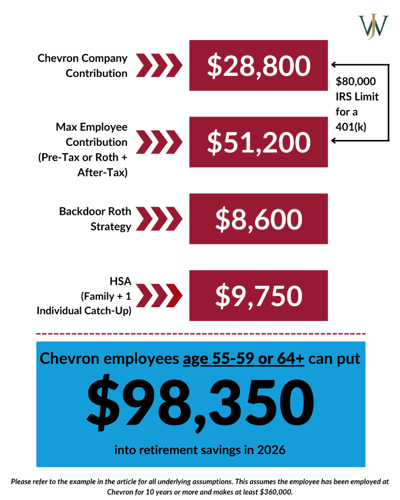
The IRS has recently released the2026 retirement plan contribution limits.For super-savers at Chevron, this is great news. Chevron employees can...
READ MORE
Alexis Long, MBA, CFP®
MANAGING DIRECTOR, WEALTH MANAGEMENT
401(k) Contribution Limits & How to Max Out the BP ESP (Employee Savings Plan) The IRS has recently released the 2026 retirement plan contribution limits. For super-savers at BP, things are looking up. BP employees can now contribute $24,500-$35,750, depending on their age, of pre-tax or Roth savings to the BP Employee Savings Plan (ESP). That means that BP professionals can get up to $88,250-$101,600 of retirement savings into tax-efficient vessels in 2026, depending on their age. Let's look at the breakdown below. Source Under 50 Age 50-55 55-59, 64+ 60-63 Fully maxing out all 401(k) sources $72,000 $80,000 $80,000 $83,250 Backdoor Roth $7,500 $8,600 $8,600 $8,600 HSA (family, +1 catch up where applicable) $8,750 $8,750 $9,750 $9,750 Total Retirement Savings $88,250 $97,350 $98,350 $101,600 What is BP's 401(k) Match? BP offers its employees a 3% 401(k) contribution with 4% additional matching contribution per paycheck. While this seems simple, ensuring you contribute at least 4% of your pay every pay period to receive the full 7% company match is crucial. The maximum amount BP will put in any employee's 401(k) in 2026 is $25,200. At BP, it is easy to miss the opportunity to receive company contributions, so make sure you do the math every year! How BP Employees Can Max Out the BP 401(k) if Under Age 50 If you’re under age 50, the total IRS limit for 401(k) contributions in 2026 from employee or employer contributions is $70,000. Here's how it breaks out: In Pre-tax or Roth: Employees under age 50 can contribute up to $24,500 across the two sources In Non-Roth After-Tax Contributions: The maximum BP allows for after-tax contributions is $22,300 in 2026. BP's Employee Contribution: BP contributes anywhere from 3-7% of an employee's compensation to their 401(k) each year. The maximum they can contribute in 2026 is $25,200 due to the IRS' income limits. How BP Employees Can Max Out the BP 401(k) if Aged 50-59 or Over Age 63 However, if you’re age 55-59 or over 63, the total IRS limit for 401(k) contributions in 2026 from employee or employer contributions is $80,000, which could be broken out as follows: In Pre-tax or Roth: Employees in these age brackets can contribute up to $32,500 across the two sources, thanks to a $8,000 catch-up allowance. Following the passage of SECURE Act 2.0, starting in 2026, catch-up contributions must be designated as Roth contributions for individuals making over $150,000 in annual income. This income threshold is indexed annually for inflation. In Non-Roth After-Tax Contributions: The maximum BP allows for after-tax contributions is $22,300 in 2026, regardless of age. BP's Employee Contribution: BP contributes anywhere from 3-7% of an employee's compensation to their 401(k) each year. The maximum amount BP will contribute to an employee's ESP in 2026 is $25,200 due to the IRS' income limits. In addition to the 401(k), there are valuable savings opportunities in vehicles such as the Backdoor Roth or HSA (which has additional catch-ups once you reach age 55). If you’re maxing out all of these sources alongside the backdoor Roth and full HSA contribution limit for families with an individual catch-up, you could save over $98,350 in tax-efficient vessels in 2026! How BP Employees Can Max Out the BP 401(k) if Age 60-63 Employees aged 60 to 63 after January 1, 2026, can contribute even more to workplace retirement plans thanks to legislation under Secure Act 2.0. Individuals in this age group have a higher catch-up contribution amount, indexed each year for inflation. 2026 Changes to 401(K) Contribution Limits for Those Ages 60-63 Under SECURE Act 2.0 Instead of the standard catch-up amount of $8,000 for individuals aged 50-59 or 63+, savers aged 60-63 can leverage a catch-up amount of $11,250 in 2026 to boost their retirement savings. Here's how it breaks out across sources: In Pre-tax or Roth: Employees in these age brackets can contribute up to $35,750 across the two sources. Thanks to the newly instated $11,250 catch-up amount, individuals can contribute $3,250 more than if they only had the standard over 50 catch-up of $8,000. In Non-Roth After-Tax Contributions: The maximum BP allows for after-tax contributions is $22,300 in 2026, regardless of age. BP's Employee Contribution: The maximum amount BP will contribute to an employee's ESP in 2026 is $25,200 due to the IRS' income limits. This change provides a valuable opportunity for older employees to enhance their retirement savings as they approach retirement. Employees in this 4-year age bracket maxing out their ESP 401(k), a family HSA with an individual catch-up, and a backdoor Roth can save up to $101,600 in 2026! Are You Trying To Max Out Your Retirement Savings this Year? Learn how to leverage your 401(k) savings with other financial strategies here > Savings Strategies BP Employees Can Use to Save on Taxes Roth accounts are one of the most effective ways to grow wealth for the future because your money grows tax-free. Contributions are made with after-tax dollars, so when you retire, you can withdraw both your contributions and earnings without owing taxes. For many BP professionals, this helps create flexibility in retirement by balancing taxable and tax-free income and keeping more of what they’ve worked hard to earn. Backdoor Roth Contributions if You Can't Directly Contribute to Roth IRA The IRA contribution limit for 2026 increased to $7,500 ($8,600 if over age 50). Though many high-income earners are prevented from directly contributing to a Roth IRA, many BP employees can take advantage of the backdoor Roth strategy to get more saved in Roths each year. This strategy is nuanced and can cause more harm than good if enacted poorly, so be sure to discuss it with a financial advisor if you want to incorporate it into your financial plan. Using a Mega Backdoor Roth with After-Tax 401(K) Contributions The maximum amount BP employees can put toward after-tax contributions to get the full BP match has increased to $22,300. If you are contributing after-tax dollars to the BP 401(k), you can roll out the after-tax funds annually to a Roth IRA to take advantage of the mega backdoor Roth strategy for additional tax savings over time. However, we often see BP professionals accidentally overfund the after-tax source within the 401(k), which can impact the contributions they receive from BP and lead to significant tax implications in retirement. BP Employees Can Maximize Benefits with a Health Savings Account for Tax-Optimized Savings A Health Savings Account (HSA) is often an under-utilized benefit that provides a unique triple tax advantage: Tax-Deductible Contributions: Contributions made to an HSA are tax-deductible, which means they lower your taxable income in the year you make the contribution. This can reduce your overall tax liability. This year, BP Employees can contribute up to $8,750 (or up to $10,750 if both spouses are over age 55 and contributing to their respective HSA accounts) for a family. Tax-Free Growth: The funds in your HSA can be invested, and any earnings or capital gains from these investments are tax-free as long as they remain in the account. This allows your savings to grow over time without incurring taxes. Tax-Free Withdrawals for Qualified Medical Expenses: When you use the HSA funds for qualified medical expenses, the withdrawals are entirely tax-free. When using an HSA as a retirement fund, BP employees can benefit from both tax deductions and tax-free growth, making HSAs a valuable tool for long-term savings and retirement planning. High earners should use both plans strategically – what do savings amounts look like if you max out the 401(k), leverage the backdoor Roth, AND max out your HSA this year in each situation? Source Under 50 Age 50-55 55-59, 64+ 60-63 Fully maxing out all 401(k) sources $72,000 $80,000 $80,000 $83,250 Backdoor Roth $7,500 $8,600 $8,600 $8,600 HSA (family, +1 catch up where applicable) $8,750 $8,750 $9,750 $9,750 Total Retirement Savings $88,250 $97,350 $98,350 $101,600 What If You Make Over the 401(k) Compensation Limit in 2026? The annual compensation limit for 2026 has increased from $350,000 to $360,000. If you make over $360,000 in base and bonus compensation for 2026, remember to ensure you max out your BP ESP 401(k) contributions before earning $360,000. After you earn $360,000 of income, you and BP can no longer contribute to the 401(k), and contributions are deflected to another savings plan, the Excess Compensation Plan (ECP), with more stringent provisions. What Happens if You Make More than the 401(K) Income Limits? BP offers up to an 7% contribution to employee 401(k) accounts. Since the annual compensation limit in 2026 is now $360,000, BP will cap out its contributions to the ESP at $25,200. Once you exceed the annual income threshold, BP makes their contributions to the Excess Compensation Plan instead of the Employee Savings Plan. If 2026 is the first year you expect to make over $360,000, check that you have an allocation and investment strategy set up for your Excess Compensation Plan. Get a Tailored Savings Plan From an Advisor with Specialized BP Benefits Knowledge The 2026 limit adjustments will be advantageous for super-savers at BP, and it is important to make the most of these changes. At Willis Johnson & Associates, we work with our BP clients to take advantage of backdoor Roth IRAs and facilitate after-tax roll-outs from the 401(k) to help optimize retirement savings. If you have any questions about the 2026 contribution and compensation limits, please contact your advisor or schedule a free consultation with one of our BP benefits specialists.
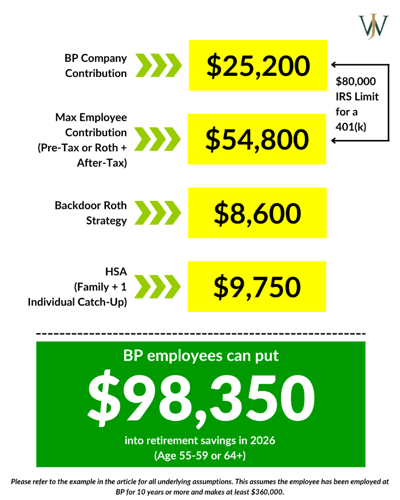
The IRS has recently released the 2026 retirement plan contribution limits.For super-savers atBP, things are looking up. BP employees can now...
READ MORE
John Siegel, CFP®, EA
SR. WEALTH MANAGER
Retirement Planning After a Severance Package & Rediscovering Purpose For decades, retirement has been painted as the finish line, the moment you step away from the demands of a high-powered job and finally get to enjoy the fruits of your labor. When people talk about retirement planning, the focus is almost always on the numbers and whether there will be enough to last. But here’s the catch, financial security, on its own, doesn’t guarantee a fulfilling retirement. What often surprises new retirees is the emotional shift. Work provides more than a paycheck, it anchors identity, supplies daily structure, and creates built-in social connections. When that’s suddenly removed, the transition can feel jarring. Even people who are financially well-prepared find themselves asking, “Who am I now? What’s my purpose? What will I do with all this time?” This hidden challenge is exactly what long-time Willis Johnson Associates client, Tim Kollatschny, a former Shell Oil executive, asked as his 30-year career ended with a severance package, launching him into early retirement. Tim’s story is deeply personal, but it reflects a reality faced by many energy professionals when they come to speak to us: Retirement readiness goes beyond more than just financial readiness. Tim is a current client of WJA and is receiving promotional consideration for his business. This creates a conflict of interest because he has an incentive to provide a favorable review. His statements are not a guarantee of results and may not be representative of any other person's experience. What Comes After Answering, "Do I Have Enough to Retire?" Retirement planning has a lot of math to it. Enough that it’s easy to let the numbers become your whole story. Do I have enough money? Will it last? How much can I spend? Can I afford things like healthcare, travel, and caring for my loved ones? Those questions are certainly fair game. In fact, they deserve your full attention, that’s why they often dominate your transition. But once your financial plan gives you the confidence you need to move forward, a new problem can emerge. What do I do now that I have the time to do it? What to Do After Retirement One of the unexpected shifts for retirees is the loss of structure. The meetings, deadlines, and goals that are organized each day can evaporate overnight. In fact, research has found that almost 50% of retirees feel lonelier after leaving the workforce, and when the role listed on your business card no longer exists, your identity built around your professional life can feel like it evaporates as well. Source: https://www.talkspace.com/blog/retired-and-lonely/ Emerging research backs what many retirees know intuitively, purpose matters to long-term well-being. Studies have associated a higher sense of purpose with a lower risk of cognitive decline, decreased anxiety, and even a longer life. In other words, a financial plan can keep the bills paid and reduce some of the financial stressors, but it can’t satisfy the human quest for meaning. Retirement Planning: How It Started Tim worked for Shell for 30 years and climbed the corporate ladder in procurement, marketing, fuels, and trading. In the 2000s, he led a global chemicals business from Shell’s Houston office before moving to another business unit. By 2017, after years of high-pressure executive leadership, Shell offered him a severance package with augmented retirement benefits. The timing was earlier than he had planned, but after meeting with his financial advisors at Willis Johnson Associates and verifying that he felt confident in his financial plan , he chose to accept. Tim's Retirement Plan After Accepting a Severance Package His initial plan looked perfect on paper. Beyond his finances, Tim’s retirement plan included: Tim and his husband would travel. He sat on a few nonprofit boards, got involved with the local arts community, and found miscellaneous activities to fill up his calendar. He imagined it was freedom at last. The time to do the things he enjoyed, but had never had time for before, free of meetings, performance pressures, or any other corporate constraints. Finding Your Purpose Amidst an Unexpected Early Retirement The reality was different. The nonprofit boards, the concerts, and volunteer work filled his calendar, but left him feeling just as empty. “Busyness doesn’t replace purpose,” Tim reflects. “Purpose never retires.” Tim is a current client of WJA and is receiving promotional consideration for his business. This creates a conflict of interest because he has an incentive to provide a favorable review. His statements are not a guarantee of results and may not be representative of any other person's experience. Without the corporate structure or identity his full-time role once provided, Tim found that life in retirement was harder than he ever imagined. Over time, a feeling of purposelessness became anxiety. During the COVID pandemic, he found himself isolated and developed an addiction to prescription medication. Tim reached a breaking point in 2022. He knew he couldn’t break the addiction on his own and entered a treatment program. The next several months were difficult, but ultimately transformative. It was there that he met his sponsor, who reframed everything for him. “If we work together,” his sponsor said, “I’m going to show you a better way of living.” Discovering Executive Coaching as a Second Career Sponsorship and service to others became his new north star. Tim realized his purpose was not bound up in his corporate accomplishments, but in walking with others on their journey toward authenticity and strength. Helping people through recovery gave him a new focus and structure he craved, as well as a new sense of identity that all the busyness never had. Over time, that led him to start the formal process to become an executive coach, helping others discover their true purpose as they enter retirement. He now works with clients to explore the very question he once struggled with, “who am I beyond my career?” Check out Tim's coaching business, Coach to Elevate, here >> Planning for Retirement Goes Beyond Financial Planning Tim’s story illustrates an important point. Financial security is a crucial aspect of the transition to retirement, but not independently sufficient. His severance package and financial plan helped Tim prepare for the next chapter financially, but exposed a gaping hole in other areas of his life. At Willis Johnson & Associates, we’ve seen that pattern time and again as clients meet with us, and help them through that journey to their next chapter. Financial Planning & Tax Considerations for Retirees Yes, we do our clients’ due diligence on the financial modeling, the cash flow analysis, tax strategies, estate planning coordination, and investment management. It’s critically important, and we take it seriously. But what we believe is a valuable component of our planning is how we help connect the financial acumen to help our clients achieve their broader lives beyond work. What stood out to Tim on reflection is that our advisors initiated the non-financial side of the planning conversation, things like, “What do you want this money to accomplish? How will it help you live out your purpose after work?” Coaching Considerations for the Retirement Transition Through these questions and reflections, Tim ultimately found himself wanting to start a second career in executive coaching, specifically for others transitioning into retirement, and worked alongside our in-house tax team to discover the nuances of becoming a business owner. Retirement coaches talk about five dimensions to the transition from work: financial, physical, social, mental, and spiritual. The financial elements can provide a sense of safety and comfort to help you get to the next phase with confidence, but the other dimensions play critical roles in feeling fulfilled. When Tim looked over his severance package with his advisors, the math said he could afford to retire. That assurance gave him the confidence to leave Shell when he did. If you are within a decade of retirement, Tim’s story is a reminder that the transition to the next phase of your life is more than a complex math problem. Yes, working with an advisor can help you create a roadmap to feel financially confident on paper. But just as important, they should be aligning your accumulated wealth to the core values and identity you plan to bring into the next chapter of life. Steps to Build Your Own Purpose-Driven Retirement So, what can you do to prepare beyond the numbers? Tim’s experience offers several practical lessons: Start with your financial foundation: Work with an advisor to confirm your retirement readiness. Peace of mind around money frees you to focus on the bigger picture. Expect an emotional transition: Recognize that leaving your career may involve grief. You are not only leaving a paycheck, you are leaving an identity and a well-rehearsed answer to the question “what do you do?” As you work through those emotions, consider talking to a professional to gain clarity on your values, goals, and how to bring those into your next chapter. Build structure: Daily routines, like exercise or volunteering, can help create stability as you adjust to your new normal. Invest in social connections: Replace the community once built into work with intentional relationships and group activities. Pursue purpose, not just pastimes: Hobbies fill hours, but purpose is what fills time with joy and satisfaction. Tim discovered fulfillment in mentorship and coaching, roles that gave him identity beyond busyness. Each of these steps is strengthened by proactive planning. The earlier you think about them, the smoother the transition will be. Tim is a current client of WJA and is receiving promotional consideration for his business. This creates a conflict of interest because he has an incentive to provide a favorable review. His statements are not a guarantee of results and may not be representative of any other person's experience. Next Steps to Take When Preparing for Retirement Retirement is a life transition that reshapes identity, structure, and purpose. At Willis Johnson & Associates, we believe in planning that goes deeper than account balances and cash flow statements. We help clients achieve the financial confidence to step away from work and then use that foundation to design and pursue the purpose-driven life they’ve worked so hard for. If you’re approaching retirement and wondering how to prepare for both the financial and personal sides of the transition, we invite you to connect with us. The conversation starts with your goals, and the outcome is a plan for a retirement that offers confidence and fulfillment on the journey ahead.

For decades, retirement has been painted as the finish line, the moment you step away from the demands of a high-powered job and finally get to enjoy...
READ MORE
Nick Johnson, CFA®, CFP®
PRESIDENT & CHIEF INVESTMENT OFFICER
Stock Market News and Investment Insights for 2026 Tariffs, interest rates, inflation, and fiscal policy remain front and center in financial headlines as we enter 2026. Despite this persistent uncertainty, market performance in 2025 demonstrated notable resilience. The S&P 500 returned 17.8% for the year, supported primarily by earnings growth rather than expanding valuations. International equities and bonds also contributed meaningfully, and several long-standing market leadership trends began to shift. As the new year unfolds, investors are navigating a market shaped by narrower leadership, renewed benefits of diversification, and a widening gap between economic sentiment and underlying data. Understanding these dynamics remains essential for long-term planning. Volatility Is the Norm, Not the Signal Market pullbacks are a regular feature of investing, not a warning that something is broken. Historically, the equity market has experienced more 10% drawdowns than calendar years, making corrections a normal part of nearly every market cycle. These peak-to-trough declines occur frequently, yet they have rarely prevented positive full-year returns. In fact, despite recurring drawdowns, the market has finished positive roughly two-thirds of the time in any given year. Periodic corrections should therefore be expected, much like seasonal events, rather than feared as indicators of recession. A 10% market decline in 2026 would not be unusual, and on its own would not imply a deteriorating economic outlook. Source: FactSet, Standard & Poor’s, J.P. Morgan Asset Management. Returns are based on price index only and do not include dividends. Intra-year drops refers to the largest peak-to-trough decline during year. Returns shown are calendar year returns from 1980 to 2025, over which the average annual return was 10.7%. Past performance is no guarantee of future results. Guide to the Markets - U.S. Data are as of January 29, 2026. Leadership Begins to Broaden One of the most important developments of 2025 was a change in market leadership. International equities outperformed U.S. stocks, returning approximately 32% compared to 17.8% for the S&P 500. A key contributor to this shift was a weaker U.S. dollar, which began declining after remaining largely flat from late 2022 through much of 2024, providing a meaningful tailwind to international returns. Source: Bloomberg, FactSet, J.P. Morgan Asset Management, ICE. Currencies in the DXY Index are: British pound, Canadian dollar, euro, Japanese yen, Swedish krona and Swiss franc. *Interest rate differential is the difference between the 2-year U.S. Treasury yield and a basket of the 2-year yields of each major trading partner (Australia, Canada, eurozone, Japan, Sweden, Switzerland and UK). Weights in the basket are calculated using the 2-year average of total government bonds outstanding in each region. Guide to the Markets - U.S. Data are as of January 29, 2026. Inflation Has Cooled, Even If It Doesn't Feel Like It Inflation peaked at 9.1% in June 2022, driven largely by post-pandemic stimulus and sharp increases across energy, goods, and services. Since then, tighter monetary policy has had its intended effect. Inflation steadily declined, reaching a low of 2.3% in April 2025, and has remained largely contained in the mid-2% range. While inflation has edged slightly higher to around 2.7%, it remains below 3%. Importantly, recent data shows that several key contributors—including dining, recreation, and other services—have begun to ease, even amid ongoing tariff implementation. Although the cumulative impact of inflation over the past several years continues to pressure household budgets, the underlying trend suggests inflation is no longer accelerating at the pace seen earlier in the cycle. Source: BLS, FactSet, J.P. Morgan Asset Management. Contributions mirror the BLS methodology on Table 7 of the CPI report. Values may not sum to headline CPI figures due to rounding and underlying calculations. “Shelter” includes owners’ equivalent rent, rent of primary residence, and home insurance. “Food at home” includes alcoholic beverages. Headline and core PCE deflator inflation shown are based on seasonally adjusted data due to data availability. *Official October 2025 data unavailable due to government shutdown, and data shown are J.P. Morgan Asset Management estimates. Guide to the Markets – U.S. Data are as of December 31, 2025. A Two-Speed Economy Shapes Consumer Behavior Another source of economic frustration is the growing divide between higher- and lower-income households. Over the past several years, the top 20% of earners have seen their net worth grow disproportionately, driven by rising asset values such as equities and real estate. While this group experienced larger losses heading into the COVID period, the subsequent asset recovery has benefited them far more than the bottom 80%. Today, the top 20% earns roughly 51% of total pre-tax income, yet account for only about 38% of consumer spending, allowing them to save more than they spend. In contrast, many lower-income households are spending a greater share of income—and in some cases more than they earn—contributing to ongoing financial strain. Looking ahead, larger tax refunds expected in 2026 following recent legislation may provide a temporary boost to confidence and spending in the spring months, potentially easing sentiment even if underlying disparities persist. Source: J.P Morgan Asset Management; (Left) Federal Reserve; (Top right) BLS, (Bottom right) IRS. (Left) Data sourced from the 2024 Consumer Expenditure Survey. (Topic right) Data sourced from the Federal Reserve’s Distributional Financial Accounts report. (Bottom right) *2026 figure is a J.P. Morgan Asset Management forecast. Guide to the Markets – U.S. Data are as of January 29, 2026 Enduring Progress and Market Adaptability Despite ongoing uncertainty, long-term trends continue to reflect economic progress and innovation. Markets have historically adapted through political change, economic cycles, and technological disruption while maintaining an upward trajectory over time. Source: FactSet, NBER, Robert Shiller, J.P. Morgan Asset Management. Data shown in log scale to best illustrate long-term index patterns. Past performance is no guarantee of future results. Guide to the Markets - U.S. Data are as of December 31, 2025. For investors, the consistent takeaway remains unchanged: short-term uncertainty is unavoidable, but long-term growth has persisted. Staying disciplined, diversified, and focused on what can be controlled remains the most reliable approach to navigating evolving market conditions. For a second look at your portfolio or investment strategy, reach out to our team.
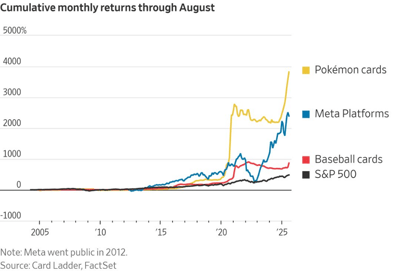
READ MORE
Nick Johnson, CFA®, CFP®
PRESIDENT & CHIEF INVESTMENT OFFICER
Navigating Shell Disability Insurance Coverage During Open Enrollment Every fall, we hear the same concerns from Shell employees about their annual open enrollment period – with so many election options to choose from, how can you know if you’ve chosen the right disability insurance coverage for your family or when you need to change your elections? Don't worry, you're not alone. It can be tough to know where to start, so we’re diving into the ins and outs of your options to help you make the most of your open enrollment period. When is Shell’s Open Enrollment Period? Every year, Shell’s annual enrollment period is from late October through the early weeks of November. During this period, you can make elections for your medical plans, life insurance, and disability insurance coverage through your employee portal here. What are the Disability Insurance Options Available During Shell’s Annual Open Enrollment? Many individuals focus on the medical plan options Shell offers, but disability and life insurance decisions come with a lot of choices to make to ensure that you and your family are protected in the case of an unforeseen event. The ones we’ll focus on in this article are short-term disability and long-term disability insurance coverage, but you can learn more about life insurance coverage here. Short-Term Occupational & Non-Occupational Disability If over the course of your working years, you become seriously injured, one of the biggest concerns is how to protect your income if you can no longer work. For those needing short-term disability coverage, Shell offers both a company-paid benefit and an employee-paid insurance plan to supplement your income if you were to become eligible for disability benefits. Occupational Disability Eligibility Shell considers you eligible for occupational disability if you: Are a full-time or part-time employee You become disabled while on the job and can no longer perform key functions of your role. Non-Occupational Disability Eligibility Shell considers you eligible for non-occupational disability if you: Have more than one year of service Are a full-time or part-time employee at the time your non-occupational disability begins If you suffer a non-occupational disability, you may be eligible to receive a combination of full pay and half pay up to a specified maximum period, up to 52 weeks, based on your completed years of accredited service at the time your disability begins. How Shell’s Short-Term Disability Insurance Coverage Options Work Whether you need short or long-term income protection in the event of a disability, Shell offers a company-paid disability benefits plan and an employee-paid income protection plan to provide income if your pay is reduced or ceases entirely. Let’s consider an example to illustrate how it works using an employee we’ll call Bob. Bob has been an employee at Shell for 25 years, and his annual base pay is $250,000 (not including bonuses or other additional income). During a previous Open Enrollment period, Bob’s financial advisor encouraged him to sign up for both the employee-paid Short-Term Income Protection Insurance Plan (IPI) and the employee-paid Long-Term Disability program. Unfortunately, Bob has a serious non-occupational health event that prevents him from working. He notifies his manager and Shell’s HR that he needs to go on disability for an undetermined period of time to recover from his health event. When he meets with his advisor, Bob wants to understand how his pay will be affected during this time. Through their Disability Benefit Plan, Shell covers the costs of Short-Term Disability for employees. The amount Shell will cover is determined by the employee’s completed years of service. Because Bob has 25 years of service and was enrolled in this plan, he can receive 13 weeks of full pay and 39 weeks of half pay for a total of 52 weeks (1 year). For the first 13 weeks where he receives full pay, Bob receives $4,807 each week ($250,000/52). If he needed to take the full 52 weeks of short-term disability, during the 39 weeks where he only receives half pay, his pay would drop to $2,403 each week. As a result, Bob’s total compensation for the full year of short-term disability would be approximately $156,241, which is a substantial decrease in his annual compensation. Supplemental Income Protection Plan If your income, like Bob’s drops below full-pay status, Shell offers employees an option to sign up for an Income Protection Insurance (IPI) plan underwritten by MetLife to supplement the missing income. There are only two options to choose from – the 50% option or the 25% option – and both options have a maximum weekly benefit of $2,500 or $1,250 respectively depending on the employee’s base pay. Let's return to our example with Bob, and assume that Bob’s advisor encouraged him to sign up for the IPI plan. Between the two options Bob had to choose from, he and his advisor agreed on the 50% option. Based on the schedule above and his annual base pay, Bob could receive an additional $2,403 a week during the 39 half-pay weeks of his short-term disability period, for a total of $4,807. By signing up for the IPI, Bob can completely supplement his annual base pay for the entirety of his health event. How is the Short-Term Disability Benefit Taxed? When Bob receives short-term disability benefits, the employer-paid portion of his weekly benefits will be taxable to him. However, because Bob paid for this IPI coverage through after-tax payroll deductions, the IPI portion of the income he receives is not taxable. Additionally, Bob is expected to apply for Social Security disability benefits during the 52-week elimination period (the time between when he first became disabled through the end of the policy’s coverage) on short-term disability. Do You Need Additional Short-Term Disability Coverage? A common question we get from our Shell clients is when it makes sense to purchase additional disability coverage or not. The answer, like with many financial questions, is: it depends. For many, adding coverage for short-term disability can be an expensive choice to augment income. Instead of purchasing the supplemental options offered by Shell or paying the employee portion of short-term disability coverage, it may be more appropriate to hold additional cash reserves instead. How Shell’s Long-Term Disability Insurance Coverage Option Works If you are disabled and left unable to work beyond the 52-week elimination period for short-term disability, Shell offers an additional income protection plan, underwritten by MetLife, for long-term disability benefits. The plan can provide a monthly benefit equaling up to 60% of your annual base pay at the time you started disability, up to a maximum benefit of $10,250 a month. Once again, let’s return to our example with Bob to illustrate how Shell’s long-term disability benefits work. At the end of the 52-week elimination period, Bob hasn’t recovered from his health event. Since Bob had signed up for the long-term disability program through Shell (also underwritten by MetLife), he will transition to long-term disability once Shell approves the benefits. His monthly long-term disability benefits can continue for up to 24 months. However, upon reaching that threshold, Bob must provide proof of continued disability. Bob’s long-term disability plan pays a benefit equal to 60% of his monthly base pay, with the maximum benefit being $10,250. How is the Long-Term Disability Benefit Taxed? Since the long-term disability premiums are also paid with after-tax dollars, the income paid out to Bob is not taxable to him. Due to Bob’s annual base pay of $250,000, his monthly pay on long-term disability well exceeds the $10,250 maximum monthly benefit. Therefore, he will receive $10,250 a month of non-taxable dollars for as long as he stays on the long-term disability program, or $123,000 annually. Additionally, if he is permanently disabled, Bob may be eligible for a disability pension through the Shell Pension Plan. Do You Need Additional Long-Term Disability Coverage? If you get injured during your working years, it seems like purchasing long-term disability insurance is a must. However, depending on where you’re at in your career and what you’ve saved, it may be a more nuanced decision. Let’s take a look at Bob’s financial situation when he gets injured. He and his wife weren’t planning on retiring for another 10-15 years and are still financially dependent on Bob’s income from Shell or disability insurance to cover their expenses. For Bob, purchasing long-term disability makes sense despite its up-front costs. However, let’s consider another example. If another injured Shell employee, whom we’ll call Ryan, is 63 and financially independent by the time he reaches long-term disability eligibility, it may not make sense for him to have long-term disability insurance. The premium costs of long-term disability insurance are high. And, between the Shell pension and Ryan’s savings, he doesn’t need the income supplementation provided by long-term disability insurance coverage. Discuss Your Insurance Needs with a Fiduciary Financial Advisor These are just a few examples of the conversations we have with our Shell clients like Bob and Ryan during Open Enrollment season. As a holistic wealth management firm, we look at every element of a financial plan to ensure that our clients have a plan in place to cover various needs during employment or on the journey to retirement. If you don’t have a plan in place for unforeseen circumstances, we strongly encourage you to talk to a fiduciary financial advisor like Willis Johnson & Associates to assess your current insurance options and needs. We offer a complimentary meeting with our advisors who can provide an unbiased second opinion without conflicts of interest you'd expect from those who sell insurance products. Schedule a meeting with our team here.

Every fall, we hear the same concerns from Shell employees about their annual open enrollment period – with so many election options to choose from,...
READ MORE
Alexis Long, MBA, CFP®
MANAGING DIRECTOR, WEALTH MANAGEMENT
How High-Income Earners Can Reduce Taxes Through Tax Planning & Financial Planning Tax planning is an essential yet often overlooked component of any financial plan, playing a significant role in wealth accumulation over time, particularly for high-income earners. We use several strategies with our clients designed to minimize their taxes over time, maximize their savings and investment growth, and help them reach their financial goals. What is Tax Planning? Tax planning is the tailored analysis of your personal income situation to minimize taxes paid over your lifetime. Tax planning takes into account numerous variables, including your investments, the timing of your income, major purchases, cash flow events, and more. Additionally, tax planning is an often-overlooked tool for achieving financial independence in retirement. Through efficient and comprehensive efforts between your CPA and financial advisor, designing a financial strategy to optimize your tax scenarios can increase the ability to contribute to retirement plans while lowering the tax burden your financial situation bears. When we develop or optimize our clients' financial plans, we start with the tax brackets they find themselves in today to uncover financial growth opportunities and look for ways we can lower the overall tax liability in the future. Benefits of Working With a Financial Advisor Who Offers Tax Planning Lifetime tax planning allows you to reinvest into yourself to pursue your financial goals. To maximize this opportunity, our team of financial advisors at WJA and in-house tax team intimately familiarize themselves with our client's financial goals and collaborate for a complete picture of each client. Depending on your situation, we can use different strategies to help you achieve your long-term financial goals: Tax Loss Harvesting: minimizes the capital gains tax by selling investments at a loss to shrink taxable income and offset your capital gains. This strategically positions you to pay less in taxes. Using tax deduction credits like foreign income credit, child tax credit, etc. Calculating tax projections minimizes the chances of a penalty targeted at high-income earners. Timing of cash flow movements: investing in Traditional IRAs in your higher tax years and converting IRAs into Roth IRAs during your low-income tax years Asset allocation in your portfolio minimizes the loss of investment to high-tax assets Proactive Tax Planning Saves Money Over Your Lifetime When it comes to taxes, most taxpayers try to avoid thinking about the topic until W-2s hit their mailboxes. Unfortunately, this approach can be costly over time and can feel like your efforts are taking two steps forward and one step back. Let's consider a typical example we see. In February, after W-2s have arrived and you start to calculate your tax estimates, you may wonder, "How can I lower this tax bill? Is there anything left I can do?" Unfortunately, the answer is no in many cases because the appropriate deadlines have passed. As you realize this, you may be frustrated and vow to get it right next tax season, but as life gets busy, the cycle continues. Instead, let's say you want to take a more proactive approach. You may start considering your annual tax picture in May, knowing that you still have seven months to make appropriate distributions and decisions before the end of the year. If you start this process by assessing your income, you may realize you're nearing the 401(k) income limits and choose to frontload or max out pre-tax contributions to your 401(k) to minimize your taxable income for the year. You could also start looking into options for charitable giving and charitable bundling to take a larger deduction in the next tax year. Perhaps you even look at your investments and capital gains to determine if there's a tax-loss harvesting opportunity. Many of these strategies can effectively lower taxes over your lifetime, but they all require proper planning and execution to see results. Utilizing Strategies Such as Roth Conversions to Maximize Tax-Free Savings When trying to be tax-efficient over an individual's lifetime, many advisors recommend strategies such as Roth conversions to their clients. Roth conversions can be a great strategy to utilize in years of low-tax rates, both before and after retirement. What is a Roth Conversion? A Roth conversion transfers funds from a pre-tax retirement account (like an IRA or 401k) to a post-tax Roth IRA. The converted funds originate from a pre-tax retirement account, meaning there were no taxes paid on the IRA (or 401k) contribution, so when the pre-tax funds move to a post-tax Roth IRA, there are taxes due on the conversion. This is why it is beneficial to utilize this tool during lower-income years. What are the Benefits of a Roth IRA? The most significant value of a Roth IRA is that the assets in the account grow tax-free. You can also utilize the backdoor Roth IRA strategy to transfer the assets of your non-deductible IRA into a Roth IRA if your income is too high to contribute directly to a Roth IRA. By doing proper tax planning, you can optimize the timing of Roth conversions or a backdoor Roth to allow your investment to compound tax-free until you need the funds. How much value can this add over time? Let's consider an example. Mark is a 60-year-old retired mechanical engineer. His only income for the year is from an investment account and his wife's pension, which brings his modified adjusted gross income to $191,516. As a Texas resident, he pays no state or local income taxes. For the 2025 tax year, Mark pays $24,469 in total income taxes. Tax Type Marginal Tax Rate Effective Tax Rate 2021 Taxes* Federal Income Tax 22% 15% $22,557 Capital Gains Tax 15% 15% $1,912 Total Income Taxes 15% $24,469 Income After Taxes $167,047 Take-Home Pay $167,047 Knowing that he'll likely be in a higher tax bracket later in retirement, Mark considers converting $85,000 from his IRA to a Roth IRA. If Mark converts $85,000 to a Roth IRA today, he'll pay ordinary income tax on the conversion alongside his existing income, which pushes his effective tax rate to 18% and raises his tax bill to $43,902. At first, you may think, "That's an increase of $19,241, so it's not a wise choice!" However, like many things in life, it's not so simple. Tax Type Marginal Tax Rate Effective Tax Rate 2021 Taxes* Federal Income Tax 24% 18% $41,798 Capital Gains Tax 15% 19% $1,912 Total Income Taxes 18% $43,710 Income After Taxes $223,806 Take-Home Pay $147,806 If he chooses to convert that $85,000 to a Roth IRA, those funds will grow tax-free until withdrawal. If we assume that Mark makes no other contributions to his Roth IRA and gets an 8% return each year, his Roth IRA will grow to $146,630 net after tax in ten years. However, if he leaves the funds in a regular IRA with the same 8% returns each year, its value would only grow to $119,281 net after-tax in the same ten years. Disclosure: The 8% return is derived from the 50-year inflation-adjusted average annualized returns for the S&P500. Impact of investing does not represent future values of any WJA account. The deduction of advisory fees, brokerage or other commissions and any other expenses that would have been paid is not be reflected in the calculation results. That's a difference of over $27,300 by simply executing a Roth conversion during a low tax year! If he chose to leave the funds within the IRA, he would pay taxes on them at withdrawal in the tax bracket of his retirement income, which may be higher than his current tax bracket. By utilizing a Roth conversion and paying taxes in a lower tax year, Mark earns the freedom to compound growth and enjoy tax-free cash flow when he's in retirement and ready to use the funds. Better Optimization of Investment Strategy and Tactics While Roth conversions are a common tax optimization strategy, they are one of many at a financial professional's disposal to use within a financial plan under various circumstances. A few of the strategies we discuss with clients frequently are: Tax Loss Harvesting, Clumping of Charitable Gifts, Asset Location, and Backdoor Roth contributions. However, knowing how to apply these strategies to clients isn't enough. Working with a team of tax and financial professionals who know when to pull certain strategic levers versus others within a thorough discussion of each strategy's benefits and costs can substantially impact an individual's portfolio over time. Audit Risk Reduction 1 in 4 Americans fears they'll be audited by the IRS, and it's a valid fear considering the common outcome of an IRS audit: paying more taxes. However, if the IRS does reach out to you, it's essential to be prepared to tackle the intensive steps required to navigate an audit effectively. Many audits stem from improper or insufficient documentation regarding various financial strategies, investment choices, or benefit plan options. When your CPA works alongside your financial planning team, they can proactively spot scenarios where additional documentation or information may be necessary to help minimize your chances of being audited. If you receive a notice of an audit by the IRS, having a tax professional, such as a CPA or EA, on your side can be similar to having a qualified medical professional at your side before major surgery. With their years of experience and subject matter knowledge, having a team of financial partners can give you the confidence and peace of mind needed to navigate the stresses of an audit. Minimize Tax Drag Across Various Areas such as Real Estate, Investments, Income Taxes, and More Each year that you file taxes, many factors, such as your tax bracket and tax deductions, affect your tax due. Timing your income to fall within years of lower taxes and your expenses in years of higher taxes can help save you money on your taxes by ensuring you are minimizing your tax bracket burden. Consider an example highlighting the value that tax planning can offer within a retiree's financial plan. Jill is 64 years old and is married to her wonderful husband, Thom. She is set to retire this year and wants to sell her rental property, using the funds from the sale to enjoy a stress-free retirement. Jill has worked for a wonderful company for most of her career and is expecting a big non-qualified benefit plan payout this year for retirement that will push her and Thom into the 32% Married Filing Jointly ordinary income tax bracket. Let's suppose that the house Jill wants to sell has appreciated in value over time, is fully depreciated, and is currently valued at $600,000, resulting in a $250,000 gain at the time of sale. If Jill sells this rental property, the gain on the sale will push her to the 35% tax bracket. The gain will be split, with $90,000 being taxed at the 35% rate and $ 160,000 being taxed at the 25% capital gains rate for Section 1250 property. This assumes an original basis in the property of $1 million, with land valued at $ 350,000, the house valued at $500,000, and Section the 1245 property valued at $ 150,000, which results in an additional $71,500 in tax. Now, let's examine an alternative scenario where Jill's financial advisor collaborates with a CPA to develop a more tax-efficient plan. The first step Jill's team recommended is to hold onto the property for a year after she retires to avoid the gain on the sale in the same year as her high-value benefit plan payouts. This collaborative team also recommends that Jill refrain from pulling out any cash from her retirement accounts in the year she sells the home. So what does this mean for Jill's retirement cash flow? By taking the steps recommended by her financial and tax planning team, Jill can live off the $250,000 gained from the sale of her rental property with no additional retirement income needed for the year of sale. With only the gain on sale for income and using the lower income tax bracket of 24%, Jill and Thom will only pay taxes of about $38,000. By making just two simple adjustments suggested by the tax and financial planning team, Jill and Thom would save about $33,500 in taxes! How Many Financial Firms & Wealth Management Firms Offer Tax Planning According to the 2024 Advisory Services Survey, by the American College of Financial Services, not all advisory firms provide integrated tax planning as part of their services. For the hundreds, if not thousands, of families working with firms that do not offer tax planning, they may be leaving money on the table by failing to capture tax savings opportunities to maximize their financial growth. Financial advisors who neglect to offer tax planning and preparation services often only look at your portfolio and investments from one perspective. However, when focusing solely on portfolio growth, a financial advisor may overlook tax-savings opportunities or make investment decisions with costly tax consequences, such as realizing excessive gains in a high-income year. Choosing the right financial advisor for your family can help ensure that your retirement and financial goals are looked at from a holistic perspective. This perspective, achieved through collaboration with in-house CPAs alongside financial advisors, allows your portfolio to evolve without fear of giving over too much of your investment returns and income to the IRS. Working with a Firm that Offers Both Tax Planning & Financial Planning Tax planning is time-consuming; it takes research and thorough knowledge of current and proposed tax laws to understand what applies to your unique financial situation. Allowing a CPA and CFP® to familiarize themselves with your situation gives them the chance to tailor a tax-efficient game plan that works for you, especially when planning for retirement. At Willis Johnson & Associates, we look at your overall financial picture and build your priorities into a long-term plan that's uniquely yours. Our fiduciary commitment helps ensure that our choices align with your goals. By simplifying your journey to a successful retirement with a focus on managing your tax burden and supporting your savings plan, we do everything to help you work toward your goals. Interested in our Services? Learn More Here>> Tax preparation and filing services are subject to additional fees.

Tax planning is an essential yet often overlooked component of any financial plan, playing a significant role in wealth accumulation over time,...
READ MORE
Emily Johnson, CPA
TAX MANAGER
How Waiting 15 Days to Retire May Save You Thousands in Taxes on Your BRP Payouts I was recently working with a Shell executive client, let’s call her Lynn, who had been putting in long hours on a challenging assignment and was ready to retire by September 30, 2025. I worked with her to optimize a number of items in her financial plan, but the election that made the biggest difference to her—a difference of more than about $64,000 in tax savings—was persuading Lynn to retire on October 15th, only 15 days later than her original September 30th retirement date. Lynn came to see me for a second opinion. She wanted to be sure that her finances were properly set up for success and that she had everything in place to be financially independent in retirement. She told me how she planned to enjoy the Thanksgiving holiday with her family at her mother’s house on the East Coast, and take her husband and grown children to Prague for Christmas. She had been with Shell for the entirety of her career, working her way up to an executive role, but had not been able to spend as much time with her family as she would have liked, for a number of years. Our goal in assisting Lynn was twofold: to grant her wish of retiring in time to spend the holidays with her loved ones, and optimizing her retirement income via strategic tax-saving moves. Understanding Shell's Excess Benefit Plans and BRP Payout Rules After many years at Shell, Lynn had a number of retirement benefit plans at her disposal. Not only was Lynn an exceptional saver throughout her career where she contributed to her Shell Provident Fund and qualified for her pension, but in doing so, Shell set aside additional funds for her retirement through the Shell 80 Point Pension BRP and Shell Provident Fund BRP non-qualified plans, which put her in great financial shape for retirement. An Overview of Shell’s Common Non-Qualified Benefit Plans For many of its high-income employees, Shell offers two non-qualified retirement plans to circumvent various rules the IRS has implemented regarding income and defined benefit plans. One of these we often discuss with clients is the IRS Section 415 income limitations. Per these income limitations, after an employee makes $350,000 of eligible income in 2025, Shell is prohibited from contributing to the qualified defined contribution plan the employee qualifies for, the Shell Provident Fund. By offering these non-qualified benefit plans, Shell is able to set aside the excess contributions for high-income earning employees into a non-qualified, or excess benefit, plan for both the 401(k) and the pension. These funds can be invested and grow until the employee’s retirement or departure from the company. Shell Provident Fund Benefit Restoration Plan (BRP) As an employee at Shell, you can receive up to a 10% contribution from Shell into your Provident Fund 401(k). The IRS limits both you and your employer’s contribution to your 401(k) to only the first $350,000 of income for 2025. This means that you and your employer can only make contributions to your 401(k) before you make $350,000 of eligible income. When your income exceeds the $350,000 limit, neither you nor your employer can contribute any more money to your 401(k). Shell’s Provident Fund Benefit Restoration Plan (or BRP, for short) acts as an additional bucket for Shell to deposit any of the contributions they would’ve made on your behalf to. Let’s consider an example: Let’s say Shell contributes the full 10% to your retirement plans. You are an employee making $450,000 a year in salary with a $50,000 bonus in February, which makes your total eligible compensation $500,000. Shell’s 10% contribution amount of $50,000 to your retirement plans would be split as such: Month Monthly Income Total Income Sum Total Sum of Provident Fund Contributions from Shell Total Sum of Provident Fund BRP Contributions from Shell Jan. $37,500 $37,500 $3,750 - Feb. $37,500 + $50,000 $125,000 $12,500 - Mar. $37,500 $162,500 $16,250 - Apr. $37,500 $200,000 $20,000 - May $37,500 $237,500 $23,750 - Jun. $37,500 $275,000 $27,500 - Jul. $37,500 $312,500 $31,250 - Aug. $37,500 $350,000 $35,000 - Sept. $37,500 $387,500 - $3,750 Oct. $37,500 $425,000 - $7,500 Nov. $37,500 $462,500 - $11,250 Dec. $37,500 $500,000 - $15,000 As you can see, when you’ve reached the income limit in August, Shell is prohibited from contributing more than 10% of that income limit to your Provident Fund. This triggers the Provident Fund BRP contributions which allow Shell to contribute the true 10% of your full income ($50,000) towards retirement plans for you — $35,000 in the Provident Fund and $15,000 in the Provident Fund BRP. Shell 80 Point Pension Benefit Restoration Plan (BRP) In the same way as the Provident Fund BRP, Shell also offers a Pension BRP. After reaching the IRS income limits, Shell is also prohibited from contributing to your pension so they have a non-qualified excess benefit plan called the Shell 80 Point Pension BRP where they place those excess contributions on your behalf. Waiting 31 Days to Retire Can Save You Several Thousands of Dollars in Your 80 Point Pension BRP. Learn how here >> Tax-Saving Retirement Strategy: Timing Your Shell Provident Fund BRP and 80 Point Pension BRP Distributions The Shell Provident Fund Benefit Restoration Plan (BRP) and the Shell 80 Point Pension Benefit Restoration Plan (BRP) are two types of non-qualified excess benefit plans that contain all pre-tax money. At Shell, both of these benefit restoration plans payout 90 days after retirement. There is an exception if you are designated a key executive at Shell. If that is the case, the BRPs are distributed six months after termination. Tax Ramifications & Timing If you retire 90 days or more from December 31st of any given year, each of your BRP’s funds will be paid out that same year (the tax year in which you retired). However, by retiring less than 90 days from December 31st, you can retire one year, and have all of your BRP funds paid out the following tax year to space out the taxes. In the year the BRPs are distributed, they are taxed at earned income tax rates. Thus, the higher your taxable annual income when your BRPs are paid out, the higher the marginal tax bracket you will fall into for that year, and the higher percentage of taxes you will pay on the Benefit Restoration Plan funds you receive as well as on whatever other income you may have for the year. Let’s go back to Lynn’s scenario. If Lynn retired on September 30th, her annual income would be $600,000 (base salary + bonus + Shell Performance Shares that vested earlier in 2025). Between her Shell Provident Fund BRP and her Shell 80 Point Pension BRP, Lynn had an excess of $1,000,000 in Benefit Restoration Plan funds (BRPs). While this is a great form of additional savings, having these funds payout in 2025 would incur a huge amount of taxes at the highest marginal tax rate. If Lynn would have received the $1,000,000 of compensation at the end of the year, the funds would have been stacked on top of the $600,000 of compensation she had already received. At $1,600,000 of income in 2025, this individual would fall into the 37% marginal tax bracket. Because of the graduated tax system, their effective tax rate is 32%, rather than the full 37% on the entire amount. In addition, they would owe the 0.9% Additional Medicare Tax stacked on top of the Medicare Rate of 1.45%. Since Lynn’s income is over the Social Security Wage Base of $168,600, in this scenario her $1,000,000 BRP distribution would not be subject to social security tax rates as the 6.2% tax is only applied to the first $168,600 of earned income. How Timing BRP Distributions Impact Your Taxes If Lynn decided to retire on September 30, 2025, her Shell BRP funds would be subject to the 37% ordinary income tax rate when distributed in 2025, as her total taxable annual income would exceed the $751,600 limit for married couples filing a joint tax return. Lynn’s Shell Provident Fund and Shell Pension BRP would be paid out in the 2025 year, given that Lynn’s retirement date is more than 90 days before the year’s end. Remember, at Shell, the BRPs payout 90 days after retirement.* As a result, her annual income would be a summation of her $600,000 in existing compensation for 2025 and her $1,000,000 Shell Provident Fund BRP and 80 Point Pension BRP payout, totaling $1,600,000 in annual taxable income. Thus, Lynn’s total annual income tax for 2025 calculated on this income would be approximately $549,492 ($503,224 in federal income tax plus $23,200 in medicare tax, $12,150 in additional medicare tax, and $10,918 in social security tax). However, Lynn’s decision to wait until October 15th to retire enabled her to push her Shell Provident Fund BRP and Pension BRP distributions from 2025 to the 2026 tax year. Postponing her retirement only 15 days allowed Lynn to utilize lower marginal rates for the first $625,700 of her Provident Fund BRP & Pension BRP distributions and save a substantial amount in taxes as a result. One consideration for Lynn is Social Security taxes. She was required to pay Social Security taxes of 6.2% up to the Social Security Wage Base, which is $176,100 for 2025 on her earned income of $634,500*. Similarly, she had to also pay those taxes on her 2025 BRP payouts totaling $1,000,000. Despite paying the additional Social Security tax on her BRP distribution, pushing the Provident Fund BRP and Pension BRP payout out to the following tax year would result in substantial tax savings for Lynn—totaling an excess of $63,946. Postponing Your Retirement Date Can Reduce Taxes on Excess Compensation Plans By choosing to retire just 15 days after her original preferred date, on October 15th rather than September 30th, Lynn’s Shell BRP payout distributions pushed into early 2026 and the funds will be taxed at a lower marginal rate. Lynn’s income for 2025 totaled at $634,500* – the extra $34,500 due to the fact she worked one more pay period than she would if she retired in September. For 2026, Lynn’s taxable income will only be the $1,000,000 payout from her Shell Provident Fund and Pension BRP. Thus, her federal income and payroll taxes for 2025 will be approximately $172,604 and her federal income and payroll taxes for 2026 will be approximately $313,362, totaling $485,996 across the 2025 and 2026 tax years ($14,500 medicare tax, additional medicare tax of $6,750 and $10,918 of social security tax respectively would also apply). By choosing to retire just 15 days later, Lynn’s taxes were reduced by approximately $63,276, and she can still enjoy the holiday vacations she planned for her family. While it’s important to understand your company’s compensation plans and benefits, it’s also important to understand how your retirement savings options can be utilized in the most tax-efficient way. As we have demonstrated using Lynn’s situation, something as simple as the date you retire can open the door to tax-advantaged saving opportunities. If you’re uneasy and think you may be missing something in your current plan, consult with your financial advisor, or contact a member of the Willis Johnson & Associates team to learn more about how to create a financial road-map that maximizes your retirement savings by strategically aligning your company benefits with your long-term financial plan.
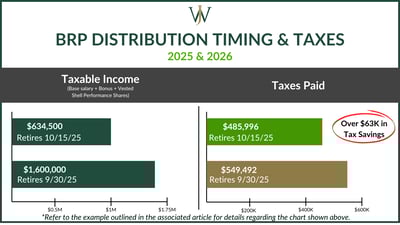
I was recently working with a Shell executive client, let’s call her Lynn, who had been putting in long hours on a challenging assignment and was...
READ MORE
Nick Johnson, CFA®, CFP®
PRESIDENT & CHIEF INVESTMENT OFFICER
Estate Planning Essentials, Documents & Common Mistakes Most people agree that certain things in life aren't fun to deal with –for visits to the dentist, meeting with an attorney, doing your taxes, or discussing your eventual death. While estate planning involves two subjects from that list, people ignore it out of fear or indecisiveness, creating significant problems for their loved ones once they've passed away. In addition, we often see people avoid estate planning entirely because they perceive it as "beyond their wheelhouse" or "only for the super-wealthy." However, the basics of estate planning are simple to understand and implementable with relative ease. Understanding the fundamental concepts, the factors that determine which documents you should have drafted, and the mistakes to avoid should provide the momentum you need to complete your estate planning. What is Estate Planning, and Who Needs an Estate Plan? Estate Planning is the execution of specified documents to reflect your wishes, both financially and physically, during your life and after your death. Regardless of net worth, social status, or quantity of assets, everyone should have basic estate planning documents in place. Specifically, it's increasingly important if you wish to leave assets to charity or loved ones after you pass away. Why Do I Need an Estate Plan? Estate planning can have many uses: it can control the transfer of wealth to those you care about, it can protect assets from creditors and others, it can minimize taxes, it can create some privacy, it can provide you peace of mind, and finally, it can create a legacy for philanthropy. In our experience, clients comment that control and peace of mind are often the two things that stand out when completing their plans. Estate Planning enables you to control how your estate is handled both during your life and after your death. Because of this, the peace of mind that follows is in knowing that you have set things up the way you want them to be and in a way that you think benefits those you love the most. What Happens If I Don't Have an Estate Plan? In 1996, 60% of householders age 50 or over had a will in place. By 2024, that number dropped dramatically to a mere 50% of households, according to AARP. Without estate planning documents in place, your assets will be distributed through the probate system and according to state law. In some states, such as New York, Alaska, Georgia, and Tennessee, the probate process can be time-consuming, expensive, and downright arduous. Meeting with an estate planning attorney to draft these documents can save your loved ones extensive back-and-forth and court fees. Let's consider an example. The musician, Prince, was famous for his control over his art. He had a very public feud with his record labels, resulting in a temporary change of name, over the management and distribution of his music. It is something he felt incredibly strongly about. However, Prince did not have an estate plan. When he passed away in 2016, the courts of Minnesota were tasked with distributing his assets and, what's more challenging, determining to whom they should be distributed. Because Prince had no will, someone is in charge of his music that he did not choose, and that individual may be making decisions about the usage of his music going forward that he may not have intended. Additionally, as the probate case continues, tens of millions of dollars in legal fees have accrued to settle the distribution of the assets. Prince could have saved his heirs a significant amount of time and money with an estate plan while maintaining control over his art even after death. Which Estate Planning Documents Do I Need? When creating your estate plan, it's essential to meet with an estate planning attorney to have the documents drafted effectively. At Willis Johnson & Associates, our advisors don't prepare these documents in-house for our clients; however, our wealth managers are positioned as strong liaisons to assist with the conversation between clients and our network of estate planning attorneys. Most individuals can benefit from having basic estate planning documents in place. The most common documents that make up an estate plan are: Last Will and Testament Statutory Durable Power of Attorney (Financial) Medical Power of Attorney (Physical) Living Will (end-of-life decisions) Depending on the state you reside in and the type of assets you possess, Revocable Living Trust Each of these documents has different purposes for different times. A Last Will and Testament drives the transfer of wealth to your survivors. The Last Will and Testament document works the opposite of your life. While you are alive, this document is considered “dead”. When you die, this document "springs to life" and is given authority through the probate process. The statutory durable and medical powers of attorney work in lock-step with your life. While you are alive, they are alive and working. The moment you die, these documents are no longer viable, and the Will takes over as the primary driver of what happens with your assets. A Living Will, also referred to as a Directive to Physicians, details your healthcare preferences if you're incapacitated or incapable of expressing them during end-of-life circumstances. Much of what we discuss regarding the Last Will and Testament in this article will apply similarly to a Revocable Living Trust. A key difference is that Revocable Living Trusts avoid probate, which can offer the family greater privacy as they handle asset distribution. While the grantor is alive, any trust income or deductions are reported on the grantor's individual tax return. Beneficiaries pay taxes on income distributions, meaning these distributions are tax-deductible for the trust to avoid double taxation. The critical thing to understand with Wills and Revocable Living Trusts is that, in some states, a vast majority of people use Wills. In others, the vast majority use Revocable Living Trusts. How Common Estate Planning Mistakes Impact Your Beneficiaries We've discussed the importance of an estate plan and the documents that help effectively transfer assets to beneficiaries. However, we see two mistakes consistently that can significantly impact who you name as a beneficiary of your assets. By transferring assets outright rather than in trust or failing to coordinate your beneficiary designations between financial accounts and your Will, the likelihood of your estate being distributed according to your intentions decreases dramatically. Transferring Assets Outright Rather Than In Trust One of the most common questions we hear is, "Why does it matter if we give our assets outright to our children versus in trust?" Again, “control” is the key term. With assets placed in a properly established and administered irrevocable trust, the trust protects those assets from outsiders or creditors. The most common threat to these inherited assets in today's society is a divorcing spouse. For example, let's say you leave your child $1 million outright. Two years later, your child goes through a divorce. That $1 million and all it has grown to can be subject to division in a divorce, effectively cutting your gift in half. However, if you leave $ 1 million for your child in a trust, the money is protected from the divorcing spouse. Does leaving money in trust for our children take away all of THEIR control? Not if you don't want it to. You can designate the child as their own trustee while the assets are in trust for them. By naming the children as their own trustees, you allow them to control the assets while protecting them from 3rd parties. Doing so does not take away any protections afforded by the trust. Of course, the trust will have to file its own tax return, but that is an issue generally far outweighed by the protection the trust provides. Failure to Coordinate Beneficiary Designations and Financial Accounts with Your Will It's vitally important to understand how various assets transfer at the death of an individual when making designations within your estate plan. The estate plan and financial accounts must be properly aligned to ensure that your desired outcomes are achievable. There are generally three ways assets are transferred at death, Bequest, Contract, and Operation of law. Asset Transfer By Bequest The first type of asset transfer is by bequest. Transfer by bequest means that the transfer of the assets follows what your Last Will and Testament indicates, and the state probate system validates the transfer. For example, if in your Will, you request your assets pass to your spouse upon your death, they would transfer to your spouse after being validated in probate. Asset Transfer By Contract However, many assets do not pass through your Will. Assets that pass by contract are assets or accounts with a beneficiary designation, including IRAs, retirement plans, pensions, life insurance, bank accounts payable on death (POD), and investment accounts that transfer on death (TOD). These assets avoid probate and pass according to the terms of the contract you signed when setting up the account. The most common mistake we see for assets passing by contract is naming minor children as contingent beneficiaries. If minor children inherit assets, the courts have to set up court-administered trusts for the benefit of the children until they reach the age of majority. While setting up a trust is beneficial, making this mistake can significantly reduce the family's control in the situation. Additionally, it can be costly and time-consuming to deal with the court until the children reach the age of majority (at a minimum). Simple wording on a beneficiary designation form in coordination with your Will can avoid this issue altogether. Asset Transfer by Operation of Law Another way assets can pass outside of your Will is by operation of law. This type of transfer is specific to how assets and accounts are jointly titled, including bank and investment accounts that have joint tenants with right of survivorship (JTWROS) or joint tenants in common (JTIC) designations. Let's consider another example. If an elderly single parent has three children and wishes all three children to inherit equally, the parent would put the provision in their Will that all three children inherit equally. But suppose one child who lives near the elderly parent is the caretaker. For simplicity's sake, the parent put that child as a joint owner on all the bank accounts, which comprise 33% of the estate. At the death of the parent, that child will take all of the bank assets and 1/3 of the other assets (as outlined in the Will). So, instead of an even 1/3 split between the children, it will be closer to ½, ¼, ¼, which is not the parent's intention. These situations are much more common than most realize. Assets passing by operation of law also include an intestate death (death without a will). Intestacy will trigger the laws of the specific state to guide where and to whom assets are distributed (as in the case of Prince). If you do not control the transfer, then state law will. While many people avoid thinking about what will happen after their death, it's vitally important that you have an updated estate plan in place to ensure your assets don't end up in the wrong hands, heavily taxed, or tied up in probate. Choosing the right attorney specializing in estate planning is much like choosing the right medical professional for open-heart surgery. Having a comprehensive estate plan that complements your existing financial plan is critical in ensuring your loved ones are properly taken care of if an unforeseen circumstance arises. At Willis Johnson & Associates, our financial advisors ensure that your estate plan aligns with your financial strategy and investments in a tax-optimized manner to give you the peace of mind that lets you live to your fullest potential. Don't wait until something disrupts your life to get a plan in place. Start the conversation with our team today.

Most people agree that certain things in life aren't fun to deal with –for visits to the dentist, meeting with an attorney, doing your taxes, or...
READ MORE
John Siegel, CFP®, EA
SR. WEALTH MANAGER
When to Hire a Financial Advisor and When You Shouldn’t Managing your finances might feel straightforward—until one day it doesn’t. For many professionals, financial planning begins simply enough: contributing to a 401(k), building some savings, and possibly automating a few investments. But as your career progresses and your compensation becomes more complex, so do the decisions tied to it. Suddenly, the stakes are higher. Mistakes become more expensive. And the margin for error shrinks. That’s when the question tends to surface: Should I hire a financial advisor? But in reality, that’s not the most important question. The better question is not if, but when: When should you hire one? Whether you're years from retirement or nearing a major career milestone, this guide will help you understand the right time to bring in a professional. We'll also explore what a financial advisor actually does, how much it costs to work with one, and—perhaps most importantly—whether it's worth the investment. What Does a Financial Advisor Do? It’s easy to assume that financial advisors are primarily focused on managing investments. And while investment strategy is certainly part of the equation, it’s just one piece of a much broader service offering—especially when you’re working with a fiduciary advisor who takes a comprehensive view of your financial life. At Willis Johnson & Associates, we often describe financial planning as the process of bringing everything together—taxes, investments, employer benefits, cash flow, retirement projections, and legacy goals—into a single, integrated strategy. Consider an energy professional who’s navigating multiple layers of compensation: base salary, a sizable annual bonus, RSUs vesting each quarter, and a growing non-qualified pension balance. Add to that a deferred compensation plan, a traditional pension to evaluate, and a target retirement date in the next five years. What might seem like a collection of financial accounts is, in fact, a complex ecosystem. Each decision—how to allocate savings, when to convert to Roth, how to handle NUA or IRA rollovers—affects the others. That’s where a good financial advisor steps in: to help clients see the full picture and make decisions with context. This is especially true when taxes are involved. Most advisory firms stop short at “tax-aware investing.” But at WJA, we go further by offering in-house tax preparation alongside the in-depth planning, something only 30% of RIAs provide as of 2024, according to Fidelity’s benchmarking data. When your financial strategy and tax strategy are developed under one roof, the result is tighter coordination and fewer costly surprises in April. Beyond technical knowledge, a financial advisor also acts as a guide. We help clients clarify goals, stress-test timelines, and adapt their strategy as life changes. Whether you’re exploring early retirement, planning charitable giving, or simply deciding when to exercise stock options, you’re not left guessing. In short, a good advisor doesn’t just tell you what to do with your money—they help you understand how every decision fits into your long-term vision, so you can move forward with clarity and confidence. How Much Does a Financial Advisor Cost? One of the most common questions we hear is: How much does it cost to work with a financial advisor? And it’s a fair one, especially when the financial industry hasn’t always been clear about how advisors get paid or what clients are actually paying for. Financial Advisor Pricing Models In general, there are a few common pricing models. The most widely used is a percentage of assets under management (AUM) — where the advisor charges an annual fee based on the size of your portfolio. This typically ranges from around 0.75% to 1.25%, depending on the firm, the complexity of your situation, and the services provided. Other models include flat annual fees or hourly planning rates, which are sometimes used for one-time advice or standalone financial plans. At Willis Johnson & Associates, we operate as a fee-only fiduciary firm. That means we don’t receive commissions for recommending products or executing trades. Instead, we’re compensated solely for the advice we provide as a percentage of the assets we manage on your behalf. It’s a structure that aligns our incentives with yours—and keeps our focus where it belongs: on your goals. Still, it’s important to look beyond the fee itself. The more important question isn’t just what does it cost, but what do I get in return? Because financial advice done well doesn’t just manage your money—it helps you make better decisions that may increase your net worth, reduce your tax bill, and protect what you’ve worked hard to build. Is a Financial Advisor Worth the Cost? If you’ve ever wondered whether working with a financial advisor is “worth it,” you’re not alone. It’s a reasonable question, especially for those who’ve done a good job managing their finances independently. What Does a Financial Advisor Do? Here's the reality: the value of advice isn’t just in what an advisor does. The value lies in what those decisions can help make possible. Two independent research reports help illustrate this. According to Vanguard’s Advisor Alpha study, working with an advisor can add up to about 3% in potential annual value through things like portfolio rebalancing, behavioral coaching, and withdrawal strategy. Similarly, Morningstar’s Gamma research shows that making more informed financial planning decisions can boost retirement income by as much as 29%, which translates to the equivalent of an extra 1.82% in annual return. These aren’t promises—they’re averages based on large data sets. Like any approximation, the actual amount of value added may vary significantly, depending on clients’ circumstances. But they do show that the value of advice adds up. And in our experience, that’s especially true when tax decisions are layered into the equation. We’ve seen clients miss opportunities simply because they didn’t realize what was at stake: forgetting to file a Form 8606 and paying taxes twice on what should've been tax-free Roth conversions; triggering higher Medicare premiums because of poorly timed withdrawals; or over-concentrating in company stock without a plan for risk reduction. A well-timed conversation with a fiduciary advisor could help prevent all of those issues. And value goes beyond numbers. Working with an advisor can also help reduce stress, eliminate second-guessing, and free up time to focus on what matters most. The financial decisions don’t go away, but they can become easier and far less lonely. So, is a financial advisor worth the cost? If you’re navigating complexity, the better question might be: What’s the cost of going it alone? Launch the Next Stage of Your Financial Journey At Willis Johnson & Associates, we believe that the decision of whether to hire a financial advisor is a personal choice that takes your long-term goals, financial acumen, time allowance, and investment philosophy into consideration. We highlighted a few of the major factors to consider before deciding on an approach that works best for your family, but there are plenty of others to consider as well. As a fiduciary, fee-only firm, you can trust that we're always working in your best interest instead of for commissions or product sales. Our commitment is to helping your family make the most of your resources at every stage of life. You can learn more about the services we offer here or contact our team for a complimentary first meeting to learn more about how we can help you achieve your financial goals.

Managing your finances might feel straightforward—until one day it doesn’t. For many professionals, financial planning begins simply enough:...
READ MORE
Sarah Sikorski, CPA, CFP®
DIRECTOR, WEALTH MANAGEMENT
Why Optimizing Your BP Pension Comes Down to Timing After decades of hard work, your retirement is just around the corner. The next few months require thoughtful planning and decisions that can affect your long-term financial future. This new chapter is a significant time in your life. You may not have considered why the actual date you choose to retire and take your pension benefit can be substantial. If you are thinking of retiring soon, you may have good reason to look carefully at how this could augment your pension benefit. As a BP employee, it's essential to understand the savings and investment options available to you and the various effects they can have on your pension. The BP Pension Retirement Accumulation Plan (RAP) presents two options: annuity and lump sum payout. In our recent webinar, "5 Benefit Elections that can Impact Your Taxes After Leaving BP," we described these options and why your benefit start date is critical. How are Segment Rates Currently Impacting BP Professionals A few months can be all it takes to affect the total pension amount you receive significantly. In this article, we'll explain how your RAP lump sum is calculated and distributed using historic examples, so you can select a retirement date that's strategic and potentially more. How to Calculate Your BP Pension BP bases your pension on your last date of employment and benefit start date. The IRS regularly releases spot segment rates that are used to calculate the RAP lump sum, and have an inverse relationship with a lump sum pension. When interest rates increase, lump sum pension values will decrease, and vice versa. While other factors are involved in calculating your pension, it's helpful to review recent interest rates to estimate how your lump sum might be affected. How rates are trending could be a definitive — and lucrative — factor in the date you choose to retire. Note, if you were a participant in the BP RAP before January 1, 2014, your lump sum pension is determined by the segment rates. If you became a participant after 2013, your lump sum is simply the balance of your cash pension account. How does BP calculate the lump sum amount you should receive? The calculation is pretty complex, but the following charts will give you an idea of the rates used to calculate your BP RAP pension lump sum and how they can affect your total pension funds. Once BP employees choose the date they would like their pension to begin, BP refers to the rate from four months prior to calculate the pension disbursement. The segments refer to distinct periods of pension distribution: The first segment rate is used to discount (calculate the present value) the first five years of pension cash flow. The second segment rate discounts years six through 15 of pension cash flow. The third segment rate discounts years 16+ of pension cash flow. Together, these rates and terms are used to calculate the lump sum pension value. Why do segment rates matter for the BP pension? When determining your retirement date, electing a month with historically higher segment rates, can significantly lower your lump sum pension calculation compared to if you chose a month with lower rates. Remember: There’s an inverse relationship between segment rates and the value of the lump sum pension. Consider if you elected to start your pension in a higher segment rate environment mirroring those we have been seeing for the last few years. The differences between these two election dates could be a significant value. Consider this example: Your estimated monthly RAP benefit is approximately $12,084. Your pension cash balance is approximately $1,975,000. You retire at 65. The life expectancy BP uses to calculate your pension is age 87.9. Below is your estimated lump sum based on the month you choose and using the segment rates listed above. (This includes the five percent annual crediting to your pension benefit.) Lump sum in July 2025: $1.975 Million* The lump sum calculation for this BP professional retiring in July 2025 results in only $1.88 million if we're only looking at the hypothetical segment rates. However, you can never receive less than your BP cash balance, which has been growing over the additional two years with the 5% interest crediting. How can you plan strategically to select the most advantageous pension calculation time frame? You can evaluate various trends to help you plan the best date for your retirement, including reviewing rates published by the Treasury Department. Segment rates correlate with U.S. Treasury rates. Therefore, when Treasury rates are on the rise, segment rates will increase accordingly. And, as mentioned, rising interest rates mean a lower pension calculation. By looking back over 12 months and reviewing predictions, you may gain perspective on potential interest rate movements, though future rates are uncertain. For example, if rates have trended upward during the past several months, pension calculations are negatively affected. Time your retirement date to take advantage of the best rate/pension scenario. The look-back window allows you to start your benefit at the most financially appealing time. For example, if you intend to retire during the fall or winter, you can review rates from July 2025 or September 2025 to determine if and when it's financially advantageous to retire. How Does the RAP Pension Interest Credit Affect this? In addition to the incredible value the BP RAP Pension has in its company funding is the 5% interest credited to the cash balance account for employees who began working for BP before 2016. This 5% exceeds most prevailing interest rates in the fixed-income market as of May 2025. As a result, we often advise BP professionals with whom we work that there is no significant cost in waiting to take their pension benefit. And, most can wait! What's the outlook on segment rates, and how should you choose your retirement date? Several factors affect the direction of interest rates and segment rates in particular. In addition to U.S. Treasury rates, another major influence is the short-term Federal Funds Rate established by the Federal Reserve. The Federal Reserve completed its first federal fund rate increase in the first quarter of 2022. Since then, the Fed has adjusted rates and kept them high to fight sticky inflation. These rate increases impact everything from mortgage costs to savings accounts, but Fed hopes that raising rates will also tamp rampant inflation while providing a soft landing along the way. As inflation decreased, the Fed made three rate cuts in 2024. Right now the Fed is examining the effect of consumer spending and tariffs to determine its next steps with regard to rate adjustments. So what if inflation does continue to drop and the Fed cuts rates? Let’s look at an example of what a BP professional could see if we fast forward to June 2027 and rates drop from where they are today. If the individual instead chooses a June 2027 retirement, the assumptions change to the following: Your estimated monthly RAP benefit is approximately $12,909. The continued annualized crediting of 5% will bring the cash balance to approximately $2,182,000 by June 2027. You retire at 67. The life expectancy BP uses to calculate your pension is age 87.9. For our example, the hypothetical segment rates for a June 2027 retirement using March 2022 rates are as follows. This professional’s lump sum value of $2,435,646 results in a difference of over $460,646! *Reference example is based on assumed actuarial factors and actual 2022 and 2025 segment rates. Actuarial Factors for the BP RAP pension will likely vary. You should obtain specific illustrations from your NetBenefits portal. We cannot be entirely sure where rates will go. Therefore, keeping an eye on these rates may help you determine the best date to retire and accept your pension benefit to maximize the lump sum payout. Making your lump sum election is not your only decision regarding retirement planning. There are many factors involved in deciding when to retire and how you elect your benefits. Our team of experienced wealth advisors provides experienced counsel to BP professionals and executives. We provide clarity and confidence, helping you to make informed choices that benefit you, your family, and your legacy. Allow us to guide you through your savings and investment options, so you're financially prepared for your retirement.
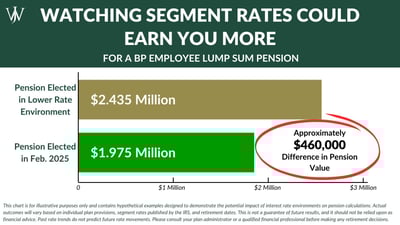
After decades of hard work, your retirement is just around the corner. The next few months require thoughtful planning and decisions that can affect...
READ MORE
John Siegel, CFP®, EA
SR. WEALTH MANAGER
BP 401(K) Changes Impacting the Company Match A big change is coming to the BP Employee Savings Plan on July 1st, 2025. Focused on maintaining a competitive retirement benefit while streamlining compliance with federal regulations, BP has announced a major change to its 401(k) company contributions. Effective July 1, 2025, the company will transition from a 7% elective matching contribution to a combination of a 3% non-elective contribution and a 4% elective matching contribution. BP Company Match & How It's Changing Under the new structure, BP will automatically contribute 3% of each eligible employee’s salary to their 401(k) plan, regardless of whether the employee contributes. In addition, the company will match 100% of employee contributions up to 4% of salary. This new arrangement maintains a potential total company contribution of 7%. Safe Harbor Rules in the BP 401(K) The introduction of a non-elective 3% contribution is being made under the “safe harbor” 401(k) provisions. Safe harbor provisions are designed to help companies meet IRS nondiscrimination testing requirements. These tests ensure that 401(k) plans do not unfairly favor highly compensated employees over other workers. By committing to a guaranteed 3% contribution for all eligible employees, regardless of their own deferral rates, the company avoids the need for annual testing and potential corrective measures, such as refunding contributions to executives. BP’s recent acquisitions of new companies changed the ratio of highly compensated workers, which necessitated making this change to keep the Employee Savings Plan compliant. Benefits of the Change for BP Employees For employees, this change has great advantages. Providing greater stability and guaranteed retirement contributions, even if they are not actively contributing to their 401(k). A 7% contribution from the company, with only a 4% contribution from the employee. Minimizing the potential overflow to the BP Excess Benefit Plan when maxing out your contributions. BP already provides a significant opportunity to save in the Employee Savings Plan. Through this shift in contributions, BP remains committed to providing competitive, equitable retirement benefits. Not all financial advisors have experience with BP's various benefit plans. We've helped several BP professionals and guided them through the nuances of BP's ESP, ECP, and EBP plans. Our advisors are fiduciaries working in your best interest and can provide you with a tailored plan designed to help you reach your financial goals. Contact us for a complimentary, hassle-free first meeting where our advisors can learn about your current goals and help you develop a tailored plan to achieve them.

A big change is coming to the BP Employee Savings Plan on July 1st, 2025. Focused on maintaining a competitive retirement benefit while streamlining...
READ MORE
John Siegel, CFP®, EA
SR. WEALTH MANAGER
6 Strategies to Reduce Taxable Income for High-Earners It's an old adage, but one that especially rings true as we gear up for tax season: if you fail to plan, you plan to fail. Tax planning is a crucial component of any comprehensive financial plan and plays a significant role in wealth accumulation over time. There are a few strategies that we've used with our clients to help reduce their tax burden and increase their savings over the years, helping them pursue their financial goals. You don’t want to miss these simple tax planning opportunities since each one can have a huge impact on your taxes. Let's dive in. Determining Your 2025 Tax Bracket is the Key to Good Tax Planning Start with identifying your sources of taxable income and any deductions you qualify for to reduce this income. It’s also helpful at this stage to project your taxable income for the upcoming year, especially if you’re expecting any big changes, like retirement 2025 Tax Brackets Tax Rate Single Married Filing Jointly Married Filing Separately Head of Household 10% Up to $11,925 Up to $23,850 Up to $11,925 Up to $17,000 12% $11,926 - $48,475 $22,851 - $96,950 $11,926 - $48,475 $17,001 - $64,850 22% $48,476 - $103,350 $96,951 - $206,700 $48,476 - $103,350 $64,851 - $103,350 24% $103,351 - $197,300 $206,701 - $394,600 $103,351 - $197,300 $103,351 - $197,300 32% $197,301 - $250,525 $394,600 - $501,050 $197,301 - $250,525 $197,301 - $250,500 35% $250,526 - $626,350 $501,051 -$751,600 $250,526 - $375,800 $250,501 - $626,350 37% $626,351 or more $751,601 or more $375,801 or more $626,351 or more 2025 Standard Deduction Amounts Year Single Married Filing Jointly or Surviving Spouses Married Filing Separately Head of Household 2024 $14,600 $29,200 $14,600 $21,900 2025 $15,000 $30,000 $15,000 $22,500 Understanding which tax bracket you fall into can be helpful when trying to determine the best strategies to pursue to get tax savings. 6 Strategies to Lower Your Tax Burden If you’re in a high tax bracket this year, you can try: Charitable Giving Options There are many ways to give to charity depending on your circumstances. And if you currently take the standard deduction, these techniques can put you in the position of itemizing your deductions. Give to the charity outright. Whether you’d prefer to write a check or swipe your credit card, giving to your charity(-ies) of choice in 2025 can yield tax benefits for you as you recover from paying for all the holiday gifts. Additionally, you can “bunch” your charitable contributions into every other year. This permits you to take advantage of the increased standard deduction ($30,000 for 2025 married filing jointly) every other year while itemizing the contributions in other years. Qualified Charitable Distributions (QCD). If you are age 70 ½ or older and receive Required Minimum Distributions (RMD) from your retirement savings, you can designate an RMD to be distributed directly to a charity. This is called a Qualified Charitable Distribution. This QCD will not be included in your taxable income, and it will also meet your RMD requirements. As a bonus, this is a charitable giving strategy that saves tax regardless of whether you itemize or take the standard deduction. Donor Advised Fund (DAF). You can make a large one-time donation to a DAF and receive a charitable deduction for the year the donation was made. Additionally, you control when the money is distributed to a charity. For example, if you contribute $100,000 to a DAF, you can receive the deduction on your tax return for the year of the contribution. You can then designate a charity to receive $10,000 per year for 10 years. Moreover, the earnings that accrue while invested in a DAF are not taxed. Donate Low-Basis Stock to Charity. Do you have a stock that has increased significantly in value, and you are in a high ordinary and capital gains tax bracket? You can donate this stock to charity, whether directly or through a DAF. The gain will be transferred to the charity, which is exempt from taxation. Additionally, you receive a charitable deduction for the value of the stock, which is a total win-win. Maximizing Your Retirement Plan Contributions If you’re still working and not contributing the maximum amount to your 401(K), you are missing out on a significant tax savings opportunity – both immediately and long-term. Pre-tax contributions are made to a 401(k), resulting in lower taxable income each year. For 2025, the maximum contribution is $23,500, with an additional $7,500 “catch-up” contribution if you are 50 to 59 years old, and $11,250 if you are 60 to 63 years old. To ensure you’re maxing out your contributions, log into your company’s benefits website and review your contribution amount. Make sure you don't make this common 401(k) mistake and miss out on contributions >> Maxing Out Your Health Savings Account (HSA) Contribution If your company offers a Health Savings Account (HSA), be sure you’re contributing the maximum amount to it. Similar to 401(K) contributions, HSA contributions can be deducted from your taxable income and can potentially get you into a lower tax bracket. The HSA contribution limit for 2025 is $4,300 for individuals and $8,550 for families. If you’re 55 or older, you can contribute an additional $1,000 catch-up for a total of $5,300 for individuals and $9,550 for families. HSA accounts are only available to individuals covered by a high-deductible healthcare plan. Tax Loss Harvesting If you have an investment that has lost value since your purchase, sell it and use the loss to offset gains you’ve made from sales earlier in the year. Similarly, you can use the loss to offset a gain from an investment you want to sell. Learn More About the Tax Loss Harvesting Investment Strategy Here >> If you’re in a lower tax bracket this year, you can try: The next two items on our list are for taxpayers who find themselves in a low tax bracket year. For example, years after retirement or a year when there is a large business loss. Roth Conversions If you have a traditional IRA, you can convert that IRA (or the after-tax portion of that IRA, depending on the type of IRA you possess) to a Roth IRA using a Roth Conversion. A Roth has the advantage that, since contributions are made after-tax, all earnings are distributed tax-free, and there are no Required Minimum Distributions at age 73. The downside is that all the tax is due at the time of conversion. Therefore, if circumstances are such that you are in a low-income year, you can convert to a Roth and pay the tax at a low tax bracket. Stepping Up Basis in a Stock If you have a low-basis stock that has appreciated substantially, you can sell that stock and recognize the gain as taxable income. Because you are in a low-income year, your capital gains tax rate will also be low (and could be as low as 0%). If you truly like this stock, you can sell it and then immediately repurchase it. This essentially “steps up” the basis by recognizing the gain in a low-income year and repurchasing at a higher cost. How Will You Lower Your Tax Burden This Year? Correctly assessing and projecting your income can have significant impacts on your tax planning and overall financial plan. Our advisors at Willis Johnson & Associates are hard at work ensuring that clients receive outstanding tax planning and financial services. To get started on pursuing your financial goals, start the conversation with our wealth advisors and CPA to see what opportunities and tax savings our team can uncover for you.
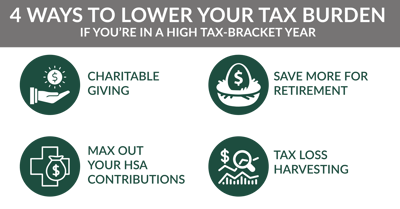
It's an old adage, but one that especially rings true as we gear up for tax season: if you fail to plan, you plan to fail. Tax planning is a crucial...
READ MORE
Leah Cessna, CPA
DIRECTOR OF TAX
Understanding Chevron's LTIPs: Restricted Stock, Performance Shares & Stock Options After years of building your career at Chevron, climbing the ladder to specific salary grades is a significant accomplishment. However, for participants in salary grades 26 (PSG-26) and above, compensation structures become more complicated as Chevron's long-term incentive plans, such as restricted stock units, performance shares, and stock options come into play. We commonly hear from the Chevron professionals we work with that these awards are confusing, and they lack clarity on how the plans are taxed. At Willis Johnson & Associates, we work to simplify these complex benefit plans so families can make well-informed choices for their financial future. Let's dive into these plans one by one. What Long-Term Incentive Plans Does Chevron Offer? Chevron's Long-Term Incentive Plans (LTIP) play an integral role in retaining top talent at the company. The LTIPs we'll discuss today are considered "stock compensation," which means an employee receives allocated company stock as the compensation in each plan. Many of these LTIPs reward employees when the company reaches specific goals and are paid out on a predetermined time horizon and vesting schedule. Restricted Stock Units (RSUs): Compensation in the form of company shares that an employer gives to employees on a predetermined vesting and distribution schedule. Performance Share Units (PSUs): Compensation in the form of company shares given to higher-level professionals such as executives and managers for reaching specific benchmarks for company performance. Stock Options (SOs): Compensation in the form of company shares where the recipient has the opportunity to purchase company shares at a predetermined price rather than the current market price. While the process for receiving each of the LTIPs at Chevron is similar, the payout formulas, vesting schedules, and taxation differ. Let's start with Chevron's Restricted Stock Units Program. Chevron Restricted Stock Units (RSUs) How Do Chevron Restricted Stock Units Work? At Chevron, the restricted stock units are one of the simplest forms of stock compensation employees may receive. For employees in PSG-26 and above, Chevron gives restricted stock units to provide a stronger link between employee compensation and company performance. RSUs are granted based on Chevron’s stock price on the last day of trading of the prior year. Grant – When Chevron awards an employee the stock Let's consider an example to describe how RSUs work. April, recently promoted to PSG-26, was granted 150 shares of RSUs in January of 2025. The number of RSUs she received were calculated by dividing the proportionate target value of her RSUs (as part of her LTIPs) by Chevron’s closing common stock price on the day her RSUs are granted. However, she will not be able to sell or otherwise use them until they’ve vested. Vest – The period shares are held, not sold, before being treated like ordinary stock After Chevron grants RSUs to employees, the employee must hold the RSUs until they are vested - one third of the granted RSUs will vest each year following the grant over a 3-year period. During this time, the employee cannot sell the RSU. When the vesting period ends, the RSUs are fully vested within the account the stock is held in. Note that there is an additional two-year holding period for RSUs granted to executive officers. To continue our example, April's 150 shares vest from January 2025-January 2028. Restricted Stock Units Vesting Schedule Total Number of Shares Granted Grant Date 150 January 2025 Vesting Schedule Number of Shares Vested January 2026 50 January 2027 50 January 2028 50 At the end of the 3-year vesting period April's RSUs would be fully vested, meaning they are now available for her to keep or sell without restrictions. Note that if April were an executive officer however, she would need to hold the shares an additional 2 years. How are Restricted Stock Units Taxed? Restricted Stock Units from Chevron are taxed at the employee's ordinary income tax brackets when the RSUs vest, not when they're granted. Additionally, the FICA withholdings applied to your salary and other compensation applies to RSUs at vesting. Taxes are realized when RSUs vest, not when they are granted. So, Chevron employees who have RSUs granted which will vest in the future need to keep in mind that when those shares vest they will be responsible for paying the applicable taxes and FICA withholdings. Restricted Stock Units Tax Treatment Grant - Vesting Ordinary Income Rates + FICA Withholding Taxed at Vesting Chevron Performance Share Units (PSUs) Stock movement may not always align with business performance. With ongoing market volatility and the transition to green energy, many energy companies are shifting how they structure employee stock compensation. These changes make it so payouts are based on more than just a company's stock performance. As an incentive to keep top talent at Chevron, performance share units (PSUs) provide a stronger link between employee compensation and company performance. How Does Chevron Calculate Performance Share Units? While RSUs use stock price at the date of shares vesting to determine the payout value, the formula for PSUs differs. For example, Chevron calculates performance share units using the 20-day average stock price rather than a single date. The company applies a "Performance Share Multiplier" to determine the final payout amount. Chevron's PSU Formula: (# shares granted + dividend equivalents)* 20-day Average CVX price * Performance Multiplier) The Performance Multiplier at Chevron, as ofJanuary 2025, is a weighted average of two criteria: 70% of the Performance Multiplier is determined by how well Chevron's total performance compares relative to its peers (i.e., BP, Exxon Mobile, RD Shell) & the S&P 500 Index 30% of the Performance Multiplier is determined by Chevron's efficiency and profitability with capital spent relative to its peers When looking to understand the PSU calculation, the critical difference is that other factors such as company performance impact the final payout. Ultimately designed to increase employee productivity, the payout for PSUs isn't affected solely by share appreciation but includes factors impacted by the employee's efforts, Chevron’s peer group performance, as well as its performance relative to the S&P 500 Index as a whole. How Do Chevron Performance Share Units Work? Grant PSUs are granted similarly to RSUs — Chevron gives them to employees upon reaching PSG-26. Let's continue our example from earlier to highlight fundamental differences between the two plans. For illustration purposes building on our example from earlier, let’s assume that upon reaching PSG-26, April was also granted 300 shares of PSUs in January of 2025. Vest You'll recall that RSUs vest over the course of 3 years, with one third of the total vesting each year after the grant date. However, it's important to note that PSUs have a 3-year cliff vesting period. This means that rather than vesting gradually over the course of 3 years, the total amount of PSUs will be vested on the same date, 3 years after the initial grant. During that time, employees can't sell the stock. As opposed to RSUs, the payout for PSUs is in cash rather than actual CVX shares. Suppose she remains employed at Chevron through December 31st, 2027. In that case, April will receive a total cash payout based on her 300 shares, the 20-day average CVX price, and the Performance Multiplier. Performance Share Units Vesting Schedule Total Number of Shares Granted Grant Date 300 January 2025 Vesting Schedule Number of Shares Vested December 2025 - December 2026 - December 2027 300 How are Chevron’s PSUs Taxed? We discussed above that RSUs are taxed at vesting; however, PSUs are more complex. Like her restricted stock units, April didn't owe taxes on her performance share units when Chevron granted them in January 2025. Instead, she will pay ordinary income and FICA taxes on the PSUs when they're fully vested and paid out. Chevron typically pays out PSUs two and a half months following the end of the performance and vesting period, so typically, this means February following the last date of the vesting schedule. For our example, April would receive her vested payout in February 2028. Her full payout amount is subject to ordinary income and FICA taxes, and federal income taxes are withheld from her grant payouts. Performance Share Units Tax Treatment Grant - Vesting Ordinary Income Rates + FICA Withholding Taxed at Vesting Chevron Stock Options (SO) How Do Chevron Stock Options Work? Stock options are the most complex of Chevron's long-term incentive plans covered in this article. Stock Options provide a way for employees to participate in the company's stock growth (or lack thereof). The initial idea was to align company performance with employee compensation. If the company does well, you will do well and vice versa. There are two types of stock options: Non-Qualified stock options & Incentive stock options. Most Chevron employees receiving stock options will receive Non-Qualified Stock Options (NQSO), so this article will focus on these. Grant Continuing our earlier example, after becoming a PSG-26 Chevron employee, April received a notice informing her of her Stock Option Award. Let’s assume that in January 2025, she was granted 1,600 stock options with an exercise price of $147 (for this example we will use Chevron stock’s closing price on January 2, 2025). Her stock options must vest for three years and expire ten years after the grant date (January 2035). Vesting Similar to RSUs, stock options are subject to prorated vesting. Unlike how PSUs vest all at once, stock options vest on a prorated basis for each year in the vesting schedule For example, one year from the grant date (January 2026), 33% of April's options will vest and become free from restrictions. Another year down the road (January 2027), another 33% will vest. Finally, in January 2028, the remaining 33% of her options will vest. Non-Qualified Stock Options Vesting Schedule Total Number of Shares Granted Grant Date 1,600 January 2025 Vesting Schedule Number of Options Vested January 2026 533 January 2027 533 January 2028 533 Exercise – When an employee can purchase shares at a predetermined price To exercise shares simply means purchasing shares (or exercising your rights to buy shares at a predetermined price). This predetermined price may be a discount to present market prices. The ability to purchase shares at a potentially significant discount is among the key benefits stock options offer compared to the other incentive plans we've discussed. As April's 533 shares vest each year, she can decide whether or not to purchase those shares. Recall that her agreed-upon exercise price was $147/share. To determine whether she wants to exercise her right or not, April will use the following formula: [Current share price – exercise price] * the number of vested shares = value from the stock option! Let's suppose that after her 533 shares vest in January 2026, April wants to exercise her option while Chevron shares are trading at $180 each (since we don’t know the price Chevron stock will be valued at, this is a hypothetical number to showcase how stock options work). By exercising her right to purchase those shares at $147 per share instead, she's receiving an additional $17,589 in value! Methods of Exercise Chevron offers four methods to exercise stock options. Same day sale Sell-to-cover Cash exercise Stock Swap Each exercise option has its advantages and disadvantages beyond this article's scope. However, it may be worthwhile to discuss each option with an advisor who understands the complexity of each one to determine the right strategy for your situation. Upon exercising shares, April has one final decision to make. She needs to decide if she will hold her Chevron shares or immediately sell them. Sale Suppose she immediately sells her Chevron shares after purchase. In that case, she will be taxed at ordinary income rates on the difference between the market value price at purchase and her exercise price. Instead, suppose she holds the shares for a year. When she sells the shares, the difference between the market value price on the day she sells and the market value price on the day she exercised the option will be taxed at long-term capital gains. Understanding how stock options are taxed is critical to minimizing taxes long-term and could be the difference in paying 40.8% vs. 23.8% in taxes! Let's consider what happens after all of April's shares vest, and she purchases the shares at the exercise price of $147 per share. As a high-income earner at Chevron, she's in the upper tax brackets, 40.8% for ordinary income and 23.8% for long-term capital gains. The market value of the shares when she exercises them is $180 each, so she's receiving a substantial discount. Suppose the market value of those shares increases to $220, and she held them for less than a year. In that case, she'll be taxed at her ordinary income rates, which will result in approximately $26,112 of tax paid on the sale. However, if she decides to hold onto the shares for at least one year, she'll be taxed at her long-term capital gains rate of 23.8% and will only pay $15,232 in tax. Simply by waiting one year to sell her shares, April can save over $10,800! Granted Shares Exercise Price Market Value at Exercise Market Value at Sale Holding Period Tax Rate Taxes Paid on Sale 1,600 $147 $180 $220 Less than 1 year 40.8% (ordinary income tax bracket) $26,112 More than 1 year 23.8% (long-term capital gains bracket) $15,232 Tax Savings: $10,880 How Are Stock Options Taxed? There are two taxable events associated with stock options: At exercise and the sale. At Exercise: The difference between the market value and exercise price is subject to Ordinary Income + FICA taxes Sale: The difference between the market value at exercise and sale is subject to either Short Term or Long-Term Capital Gains rates (described above) Continuing our example, when April exercised her options in January 2026, the discount she received is immediately subject to Ordinary Income and FICA Taxes. Non-Qualified Stock Options Tax Treatment Grant - Vesting - Exercise Ordinary Income + FICA Withholding Taxed at Exercise Sale Short-Term Capital Gains or Long-Term Capital Gains Given all this information, you may be asking: When is the best time to exercise my stock options? Should I always hold stock options to capture long-term capital gains, or are there times it makes sense to sell immediately? Determining the right time to exercise and sell one's non-qualified stock options is the key to maximizing the value of your benefit. What to Consider if You Receive Stock Options There are a few crucial elements to review before exercising, holding, or selling your stock options. Option's Leverage Stock options are unique in that they have embedded "leverage," which means small changes in the stock price can disproportionately affect the value of the option. Therefore, consider the amount of leverage associated with each one before exercising a stock option grant. Projected Taxes Another unique element to consider with stock options is the tax planning opportunities they provide. You can defer paying taxes on the spread before your stock options' expiration by simply not exercising. This flexibility opens the door for strategic planning opportunities to increase the after-tax value of your options. Diversification Accumulating Chevron stock over several years can overweight your portfolio with a concentration in energy. However, exercising your options too soon eliminates any upside leverage. The key to determining when to exercise is understanding the options' Insight Ratio. Understanding how to calculate and interpret an options' Insight Ratio is complex, but it's something we frequently discuss with our Chevron clients based on their risk tolerance and overarching financial goals. Financial Planning Considerations for Chevron Professionals with Long-Term Incentive Plans If you have any of the incentive plans discussed in this article, it's critical to have a plan in place to leverage them to their full potential so you don't leave any money on the table. A few of the topics we often discuss with Chevron professionals with RSUs, PSUs, and SOs are: Ensure Proper Tax Withholding Chevron automatically withholds 22% from each grant upon vesting for taxes. However, this withholding amount may not be appropriate for your financial situation. Therefore, it's essential to ensure you withhold the right amount to avoid overpaying or underpaying and being subject to a penalty. Tax-Efficient Planning for High-Income Years When many of these stock compensation awards vests, they can create significant bumps in your income. Tracking your awards each year and knowing when they vest allows you to plan and use financial planning strategies to reduce your taxable income. Don’t Sit on the Cash Lastly, having a plan for what you will do with the vested cash payouts is paramount. Unlike many other energy companies, Chevron pays out the value of performance share units and restricted stock units in cash (net withholding for tax purposes) rather than stock. Often we see folks accumulate large cash reserves, which lose purchasing power over time because of inflation. Intentionally investing the cash from these benefits rather than letting them sit in cash could have a substantial financial impact. What Happens with Your LTIPs After Leaving Chevron? Many Chevron professionals we work with ask us what happens if you leave Chevron before the vesting date of your awards due to severance or retirement. Like many instances in financial planning, it depends. The answer is slightly different for stock options, performance share units, and restricted stock units. Unsurprisingly, each depends on a predetermined formula from Chevron. Typically, Chevron will look at factors including your age, years of service, and the reason for leaving to determine if you will receive a full or partial payout of your unvested awards. Timing your retirement from Chevron can significantly impact the value you receive from your long-term incentive plans. Working alongside an advisor who understands the nuances and rules of your Chevron benefits can be a crucial component of ensuring you don't leave any money on the table. Working with a Financial Advisor with Experience in Chevron Employee Benefits Our WJA advisors understand the ins and outs of Chevron benefits to help you make the most of what's available to you. Whether you're trying to exercise your non-qualified stock options at the right time or need a diversification strategy out of Chevron stock upon vesting, our advisors can help you avoid common mistakes that can have substantial long-term tax impacts. Schedule a free consultation with our Chevron team if you're interested in learning about the right choices for your financial scenario with your LTIP awards.
%20-%20restricted%20stock%20performance%20share%20units%20stock%20options.png?width=400&name=educational_%20LTIPS_Chevron_Blog_2022_6_1600x900_Chevron%20long%20term%20incentive%20plans%20(LTIPs)%20-%20restricted%20stock%20performance%20share%20units%20stock%20options.png)
After years of building your career at Chevron, climbing the ladder to specific salary grades is a significant accomplishment. However, for...
READ MORE
Alexis Long, MBA, CFP®
MANAGING DIRECTOR, WEALTH MANAGEMENT
Chevron’s Relocation to Houston: What Employees Need to Know Chevron’s restructuring means big changes for many San Ramon employees. If you’ve received a relocation offer, you’re facing an important decision—move to Houston or consider alternative options. Understanding the financial, career, and tax implications of this move is critical to making an informed choice. This guide outlines who’s impacted, what’s included in the relocation package, and key factors to weigh before making your decision. Which Chevron Employees Must Relocate? Chevron’s relocation initiative primarily affects U.S. payroll-exempt employees currently working in San Ramon. These employees are expected to transition to Houston in 2025. Employees in non-exempt positions, as well as those in specific roles not identified for relocation, may not be required to move. If you’ve received a relocation offer, reviewing your options and financial considerations is essential. What’s Included in Chevron’s Relocation Package? Chevron offers a structured relocation package to help offset the costs of moving. Key benefits include: Lump-Sum Relocation Allowance: A one-time payment to cover moving-related expenses. Home Sale Assistance: Financial support for selling your home in California, including potential reimbursement for realtor fees and closing costs. Temporary Housing Support: Short-term housing assistance in Houston while you transition. Moving & Storage Assistance: Coverage for transporting household goods and temporary storage if needed. Spousal/Partner Support: Career services for spouses and partners seeking employment in Houston. What If You Decline the Relocation Package? For employees who choose not to relocate, there may be alternative options: Severance Package: Some employees may qualify for severance if they opt out of relocation. While severance packages can raise blood pressure for most people, they can also be a financial opportunity if leveraged correctly. We've helped several Chevron professionals navigate the uncertainty that severance packages bring, and you can access our insights in a simple checklist here. Internal Transfers: Opportunities to transition into other Chevron roles that do not require relocation. Retirement Planning: If you’re nearing retirement, evaluating your benefits, pensions, and tax implications is crucial before making a final decision. Tax Considerations for Chevron’s Relocation Relocating from California to Texas can have significant tax implications. Texas has no state income tax, but a mid-year move could result in partial-year California tax liability. Employees with stock options, long-term incentives, or deferred compensation plans should also consider how residency changes may impact their tax obligations. While Chevron provides tax assistance, additional planning may be needed to minimize liabilities. Making the Right Financial Decision This relocation is more than just a career move—it’s a financial decision that can impact your long-term wealth, tax situation, and retirement planning. Before accepting or declining your relocation package, it’s essential to evaluate how it fits into your broader financial goals. Moving to Houston? Make a Smart Financial Plan First. Our advisors specialize in helping Chevron professionals optimize relocation benefits, minimize tax liabilities, and plan for long-term financial success. Don't wait to get a plan in place. Reach out to a member of our team and start today.

Chevron’s restructuring means big changes for many San Ramon employees. If you’ve received a relocation offer, you’re facing an important decision...
READ MORE
Alexis Long, MBA, CFP®
MANAGING DIRECTOR, WEALTH MANAGEMENT
How to Evaluate BP Disability Insurance Costs & How Much You Need It's that time of year again — BP's benefit election time. While Open Enrollment isn't quite as exciting as the holidays or the New Year, it's likely more important than you realize. Before you get too busy and default to the same elections you made last year (and maybe the years before that), I urge you to take a minute to understand how these benefits affect you and your family. Not to be dramatic, but they could affect your financial livelihood. That is a big statement, so let's back it up with the facts of BP election options for 2025. Specifically, this article focuses on your disability insurance options. If you're interested in the other benefits to make elections on during Open Enrollment, check out our articles on BP Life Insurance and the BP HSA plan for medical. For those of you still here, we often see BP professionals overlooking their disability options and focusing more on life insurance. Of course, life insurance deserves attention for a good reason. However, becoming disabled during your working years can be financially devastating if you aren't adequately covered or prepared. But many people avoid talking about disability insurance. Why? Topics surrounding insurance are uncomfortable. You never want to imagine something happening that will prevent you from working at a job you enjoy. You don't want to imagine ongoing medical expenses and bills. You don't want to imagine being unable to work in any capacity. Are you squirming yet? You never want to need disability insurance, but if something happens, you'll be grateful to have it. Likewise, your family will be thankful you have it. However, not everyone's disability coverage needs are the same. Some can self-insure, while others cannot. The goal here is to ensure you are empowered to decide what's right for you based on the coverage options available at BP. BP Disability Insurance Coverage: Short-Term Disability & Long-Term Disability There are two general types of disability insurance: Short-term and Long-term. Per the BP Benefit Book, "The BP Short-Term Disability (STD) Plan provides income protection if you are ill or injured and unable to work," and "The BP Long-Term Disability (LTD) Plan is designed to replace a portion of your pay if you become disabled for more than six months." BP Disability Insurance Coverage As an employee, BP pays for basic disability insurance coverage. BP pays the total cost of Short-Term Disability coverage and the full cost of Long-Term Basic Disability coverage. So, one thing you can remove from your growing list of things to do during Open Enrollment is electing the basic coverage. BP does that for you! BP Short-Term Disability Coverage BP Short-Term Disability benefits begin on the first day you are unable to work due to illness or injury and can last up to 26 weeks. Your years of service and current base pay determine the amount of short-term disability benefits you can receive. BP Long-Term Disability Coverage Because BP fully covers all short-term disability coverage, let's discuss your options for long-term disability elections. Long-Term Disability benefits can provide a monthly income of up to 65% of your eligible pay if you are disabled for longer than six months. Not only does BP offer basic benefits, but it also allows employees to purchase additional insurance. But this is where many people need clarification -- How much, if any, additional coverage do you need to purchase? Out-of-Pocket Costs for Additional Long-Term Disability Coverage from BP First, let's review what BP offers complimentary. As you can see, they offer 50% of long-term disability coverage without any employee out-of-pocket costs. But you can also add 10-15% of coverage through a monthly paycheck deduction. Extra insurance sounds great, but what is it going to cost you? Let's walk through an example: Suppose you are 46 years old, and your current monthly base pay is $10,000. For no additional cost, your 50% coverage provided by BP would yield $5,000 a month or $60,000 a year for long-term disability. However, let's suppose you added the 10% or 15% of long-term disability coverage, bringing you from 50% coverage to 60% or 65% coverage instead. 60% coverage, or paying for the additional 10% long-term disability coverage, will cost you $13.80 a month. You'd get $6,000 a month and $72,000 over a year. If instead you opted for the additional 15% coverage, totaling 65% long-term disability coverage, you'd pay $25.20 each paycheck. As a result, you'd receive a benefit of $6,500 each month or $78,000 a year. While these differences may not sound like much, the right amount of insurance could mean the difference between using your hard-earned savings to cover expenses and having the cash flow from insurance to cover them. How Much Disability Insurance Do I Need? Let's consider another example to determine how much insurance is the right amount. Peter and Claire are 40 years old with two young kids. They have $300k in investable assets and only one income. As the sole breadwinner, Claire has an annual salary of $250,000 and has worked at BP for six years. Their family expenses equal $100,000 per year. If Claire becomes disabled tomorrow, the short-term disability benefits will begin to payout for a maximum of 26 weeks. Based on the short-term disability chart above, Claire and her family will receive eight weeks of full pay and 18 weeks of 50% pay. Typically, Claire's income in six months of work is $125,000. However, because she is now on short-term disability, she only receives $81,725. That's a fairly significant pay decrease, considering that Peter and Claire still need to pay tax on these earnings, and Claire has higher medical expenses now. If Claire continues to be unable to work, she will start long-term disability benefits after the initial 26 weeks elapse. She did not elect the BP supplemental offering and, therefore, will continue receiving up to 50% of her base pay on an ongoing basis. To put this into perspective, let's consider her financial situation after week 26. Her new take-home pay will be $125,000 annually from her BP disability benefits. After taxes, this will not cover their family expenses of $100,000 (this amount does not include the expenses due to disability), so Claire and Peter face some tough decisions. Can they cut annual expenses? Is Peter able to go back to work to bring home additional income? Keep in mind, the most disability insurance you can obtain is 65% of your salary, and that may not be enough for financial independence. Electing an extra 10% or 15% benefit could have left them with additional expense flexibility without putting them in a spot where they cannot cover their ongoing expenses. They could have had the extra coverage for just $20.83 or $38.13 per month. Keep in mind that through most disability insurances, the max you can obtain is 65% of your salary, and that is typically still not going to be enough, so you want to make sure to have maximum coverage available until financially independent I don't share these examples to scare you and your family into purchasing more insurance. Instead, I encourage you to take a closer look at your financial situation and ask the question: do we need the additional coverage, or can we self-insure the extra 10%-15% of coverage if something unexpected happens? At WJA, we do insurance evaluations like this with our clients to ensure that any potential gaps are covered because no one ever expects these things to happen. However, if something does happen, it's always a relief if you're prepared. Gaps like these are easy to fix during BP's open enrollment period. Take Action During BP's Open Enrollment Period BP's open Enrollment is one of the only times you can make changes to existing elections, so it's essential to start thinking about making changes to your elections now. We strongly encourage consulting with a fiduciary advisor before making insurance changes to ensure that you coordinate this strategy with the rest of your financial plan. Work with a Fiduciary Financial Advisor to Coordinate Insurance and Your Financial Plan When done correctly, this strategy can make a substantial difference in savings over time. Our firm focuses on comprehensive financial planning and ensuring that evaluating disability insurance gaps is done correctly to help our clients reach their financial goals. Unlike many other firms, we don't sell insurance, so our insurance advice comes with a lower conflict of interest. Instead, we aim to ensure that you have the proper amount of insurance to address your family's needs, not too much or too little. While correctly handling all these financial pieces may seem daunting, you don't have to do it alone. Working with a financial advisor is a beneficial way to determine if this or other tax-efficient savings strategies can help you reach your long-term goals. Start the conversation with an advisor today.

It's that time of year again — BP's benefit election time. While Open Enrollment isn't quite as exciting as the holidays or the New Year, it's likely...
READ MORE
Sarah Sikorski, CPA, CFP®
DIRECTOR, WEALTH MANAGEMENT
How Restricted Stock Works & What You Should Consider for Your Financial Plan Does your employer offer restricted stock as a form of employee compensation? If so, do you know how restricted stock works? What restrictions and tax implications accompany the restricted stock shares long-term? What happens to your restricted stock if you’re laid off? What if you decide to retire? These are all questions you should ask, and be able to answer when incorporating your company’s restricted stock offering into your financial plan. Employers offer restricted stock compensation as a means to retain and incentivize key employees, but many employees do not fully understand how restricted stock works. The fine print associated with these grants can be complex and can vary depending on the grant. Therefore, it may be effective to consult with your financial advisor or initiate a relationship with a financial planning professional, before you accept a restricted stock grant from your employer. How Restricted Stock Works: A (Very) Basic Overview Restricted stock awards are shares of company stock granted to an employee by the employer, which the employee does not have the ability to control for a specified period of time. Think of restricted stock as a conditional promise from the employer to the employee. Once the employee meets the pre-determined conditions, the promise is fulfilled. In some ways, restricted stock is a deferred bonus which pays out at an increased or decreased value depending on the price of your employer’s stock. A majority of employers require an employee to meet a specific quota(s), often a designated term of employment with the company and/or individual performance metrics, in order to achieve full ownership of the stock. If the employee meets the quota(s), the funds will ‘vest,’ meaning the employee is no longer restricted from selling, converting, or receiving dividends on the shares. Employers utilize restricted stock to align the employee’s interests with those of the firm. Ideally, the employee wants to increase the value of their restricted stock, thus increasing their compensation. Similarly, the employer wants to enhance productivity among invested employees, thus increasing the company’s stock value as a whole. The idea is that both parties are motivated to improve the long-term stock value of the company because both parties are thinking and acting like stakeholders. How Restricted Stock Works and WHEN: A General Timeline A majority of employers implement a restricted stock compensation timeline similar to the one below. 1) Grant Date: Restricted Stock is Granted to the Employee by the Employer a. Restricted stock is granted to the employee by the employer, starting the clock for the employee to fulfill the specified vesting conditions, also known as the vesting schedule. b. The employee does not pay taxes on the shares when they are granted, unless they choose to complete an 83(b) Election (see section on 83(b) Elections below). 2) Pre-Vesting Purgatory: Post-Grant Date, Pre-Vest Date, and the Policies In-between a. The length and restrictions associated with the pre-vesting period, or vesting schedule, are unique to the company granting the stock. b. The employee does not have ownership rights to the restricted stock, meaning they cannot sell the shares, or convert the shares to cash. c. At this time, the restricted stock is still considered to have a Substantial Risk of Forfeiture and is not subject to taxes. d. There are two main types of vesting schedules: i. Graded Schedule: The employer will determine a set percentage of the shares to vest each year for a set number of years. ii. Cliff Schedule: 100% of the restricted stock shares granted to the employee are vested after the specified employment conditions are met by the grant recipient. 3) Vest Date: Value…and Taxes a. Once the employee has fulfilled the criteria set by their employer, the shares are vested. This means the employee now has full ownership rights to the company shares and the stock is no longer ‘restricted.’ b. Upon vesting, the shares are no longer a ‘Substantial Risk of Forfeiture’ and are subject to taxation. The vested shares are subject to earned income tax rates unless the employee completes an 83(b) Election (see section on 83(b) Elections below). c. The cost basis for the stock is the value of the stock on the date it vests. As such, there is often little to no additional tax due if the employee sells the stock soon after it vests. How Restricted Stock Works with 83(b) Elections: The Exception to the Tax Rule A majority of employees are subject to paying earned income taxes on the restricted stock once the shares have vested and the employee officially owns the stock. However, some employees choose to make an 83(b) Election in an attempt to decrease the amount of taxes paid on the growth. Instead of paying taxes on the value of the stock when it is vested, the employee will pay taxes on the value of the stock when it is granted. Thus, if the stock basis increases from the time the restricted stock is granted to the time it vests, the employee may be able to reduce the taxes paid on the shares, as any growth that occurs after the grant date is taxed at capital gains rates instead of earned income rates. However, this strategy requires the employee to pay taxes on stock that has not yet vested, and if they ultimately do not receive the stock, the taxes paid on the shares are non-refundable. Restricted Stock Awards vs. Stock Options: Similar, But Not the Same Restricted stock and stock options are two terms often confused by employees working to understand their employer compensation offerings. Stock options were a popular choice in the past, but restricted stock awards have become the preferred compensation method for employers over the last decade. Restricted Stock A conditional award of stock to an employee once they reach the vesting date and fulfill the pre-determined conditions specified by their employer. The shares are taxed on their stock basis upon vesting, meaning the employee does not pay taxes on the grant date. The value of the promised stock is subject to market fluctuations. In other words, when the stock goes up, the award is worth more, but when it goes down, the award is worth less. Restricted stock is almost always worth something. Even if the stock value drops dramatically, the shares will almost always retain some value and will rarely be worthless to the employee. Stock Options The option for an employee to purchase a specific number of shares in company stock at a specific price for a certain amount of time. If the market price of the stock exceeds its exercise price, the employee can decide to buy the stock, thus paying a lower price for the shares than their actual market price. If the stock price is below the exercise price at expiration, the options have no intrinsic value to the employee and may end up being worthless. Common Curveballs: Pre-vesting Pitfalls, Overconcentration in Company Stock Like all financial planning, it is important to prepare for what could go wrong. Restricted stock offerings can be a valuable opportunity for employees to receive direct compensation for their contribution to the company. However, without the right information and careful consideration, an employee may unintentionally jeopardize the value of their restricted stock. Pre-Vesting Pitfalls to Avoid The most important thing to remember about restricted stock awards is that the stock shares are not guaranteed until the shares have vested. Just because an employee is granted restricted stock, does not mean they will receive the shares on the vesting date. Retirement/Resignation: For many employers, the retirement or resignation of an employee will trigger the automatic forfeiture of the individual’s unvested shares. However, this may not be the case for every employer, so be sure to thoroughly read and re-read your employer’s restricted stock grant documents to determine what policies may affect your financial plan. Employee Termination: What if you are laid off? In such a position, you have less control over the situation than you would if you decided to retire or resign. Many employers offer a severance package that allows the terminated employee’s restricted stock to continue vesting. Refer to your employer’s severance agreement to clarify how unvested shares are treated in this context. If you're facing a severance, make sure you aren't leaving any money on the table. Check out our resources here: Shell Severance Checklist Chevron Severance Checklist BP Severance Checklist Performance Shares Classification: Another variable to consider is an employer’s potential treatment of restricted stock shares as performance shares. This means the employer will adjust the amount of shares the employee receives based on a specified set of metrics. So, if an employee is granted 100 shares, they may receive more shares if the company performs well, and less if the company performs poorly between the grant date and vest date. Overconcentration in Company Stock Once the restricted stock shares are vested, what do you do next? Should you keep all of your shares? Sell everything? Sell part? If you only sell part, how much should you sell and when? Planning for the post-vesting period is just as important as planning for pre-vesting. You should have a clear understanding of how you will manage your vested shares to complement your financial plan. For example, as we begin working with new clients, we often find they are over-concentrated in their employer’s stock. They have been working for the same company for a long period of time while accumulating company stock year after year without diversifying their holdings. Suddenly, they may realize that 10%, 20%, or 30% of their net worth is invested in their employer. This is already a high concentration before these clients account for the unvested restricted stock, the fact they will continue to be employed, and additional employee-related incentive compensation that make up their portfolios. All of these components are tied to the company they work for, which can be a major risk if an unexpected event like the BP Horizon Spill, or worse, an Enron bankruptcy were to occur. Such unforeseen incidents can destroy an employee's retirement plan if their portfolio is heavily weighted in employer-associated assets, which is why a diversification strategy should be in play from the start. We work with our clients to set up a diversification strategy that takes into account their net worth, tax situation, and expected future vesting of restricted stock. A diversification strategy may include staged selling, covered calls, and/or laddered limit orders to ensure you are reducing specific company-specific risk in a tax-efficient manner. Talk to your advisor or reach out to a member of the WJA team to learn more about what strategy is best for you.

Does your employer offer restricted stock as a form of employee compensation? If so, do you know how restricted stock works? What restrictions and...
READ MORE
Nick Johnson, CFA®, CFP®
PRESIDENT & CHIEF INVESTMENT OFFICER
Benefits of Filing a Tax Extension for High-Income Earners And just like that, it's tax time again! Every spring, our in-house tax team gears up with excitement. However, most high-income professionals approach tax season with dread, exhaustion, and confusion. Typically, many individuals fall into two brackets: those who want to get taxes done as quickly as possible, and those who procrastinate because they don't want to deal with it at all. Whichever bracket you fall into, many of us can agree that we hate filing our taxes and just want it to be over and done with. Whether you're a procrastinator or an early bird, each approach can cause stress between you and your tax preparer as they work on your tax return. Those who want their tax return done as quickly as possible often tend to impose unrealistic expectations on the CPA, and those who procrastinate and provide last-minute information to the preparer – expecting it to be done by the April deadline – are creating an almost impossible situation. Neither scenario ends with a good relationship between you and your CPA. However, there's an important option to remember as we near the April deadline that can help alleviate this stress – while tax payments are still due each April, you can elect to extend your return until the October deadline by filing an extension. We don't often hear about tax extensions or their benefits, so let's dive into why this option can be a great and underrated choice for many high-income professionals. Why Should I File a Tax Extension? When discussing tax extensions with our clients, we're often met with initial hesitation or concerns. "Will I get flagged for an audit?" "Will the IRS charge me more if I turn it in at a later date?" "Can't we just rush the return to get it over and done with by April?" We'll discuss many of these concerns throughout this article, but the simple answer to these questions is that it's simply in a client's best interest to extend their returns to give the necessary due diligence and review it deserves. In the last several years, we've seen an annual decrease in young professionals pursuing tax accounting as more seasoned professionals begin to retire. Historically, tax accounting has been a grueling profession—hours upon hours of miserable overtime, demanding clients, and no work-life balance. Who can blame young CPAs for wanting to count inventory rather than prepare tax returns? While the state of the profession is an alarming trend, what it means for high-income professionals is that there are fewer experienced CPAs to handle the demand for increasingly complicated tax returns and tax planning needs. Moreso, it means that the few CPAs entrusted with these returns are stretched thin from January to April. Avoid Late Penalties and Reduce Error One benefit of tax extensions is simple—no one wants errors on their tax return, and tax returns take time to prepare accurately. Even if you think it's an easy return, you want your CPA to take time with your return to provide a thorough review of your materials and diligently prepare it. Your CPA has specific processes to decrease the risk of error in your return and usually has hundreds of tax returns to complete. These processes all take the scarcest resource available to all of us: time. These processes include but are not limited to the following - They are accessing client documents and collating them into standard work paper format. A fundamental principle is that accountants standardize everything for better documentation. This takes time, even if this process is implemented by automation software. Preparation of the return. The client information is input into the tax software. Review of the return. The tax profession's due diligence standard requires an inspection to ensure the tax return has been prepared correctly and that no information has been excluded. Your CPA also wants to ensure that any positions taken on your return will have a level of success if questioned by the IRS. Rushing these processes increases the chance of errors. Choosing an extension is an excellent way to ensure that your return is correct because your CPA will have more time to spend on your return. During my years in this profession, I've had a few clients tell me that they know how quick it is to prepare a tax return since they prepared it themselves. I always respond by pointing to our due diligence standard – for every return we work on, straightforward or complex. We have a requirement to exercise a review of the information and positions on the return. Interest & Tax Penalties in a High-Interest Rate Environment One conversation we’ve had with many clients surrounds tax penalties and interest. Remember, tax returns can be extended to the October deadline, but payments MUST be made by the April tax deadline each year. There are a few types of penalties you could see if your tax payments are late, but what’s more important is to realize that the interest you pay on any unpaid tax is the federal short-term rate plus three percent and is determined by the IRS quarterly. For tax underpayments or overpayments in the second quarter of 2024, interest will be 7% per year, compounded daily. Many people don’t realize that the higher-for-longer interest rate environment we’re seeing has widespread implications, including tax payment interest. While most understand the impact high rates have on mortgage rates or some fixed income investments, the interest charged on tax underpayments catches many off guard when the letter from the IRS arrives in the mailbox. Another surprise? The IRS will use any payment you make to cover the tax itself first, then any penalties, and finally the interest. So, interest can continue compounding at these high rates if you make partial or delayed payments. To avoid the compounding effects, our tax team works closely with our advisors to assess client’s cash flow for tax payments, projected rates, interest and penalties, and how to navigate making their tax payments in the most effective way possible. Filing an Extension Creates Extra Time to Navigate Changing Tax Laws Many changes have happened in the tax profession over the last 25 years. Most years, there are midnight December 31st laws passed that often introduce increasingly complex tax laws (even if disguised under the term "simplification") for the upcoming tax season. We've even seen tax laws change in the middle of tax season! Unfortunately for CPAs everywhere, we can assume that this pattern will continue. Being prepared with a tax extension can give you and your CPA time to implement these laws and get the most out of your tax return. Listed below are three end-of-year changes that impact you and your tax return. A law change always impacts a tax form. The IRS has to update the tax form. The software programmers have to program the form changes into the software. If there has been a tax law change, this will trickle down to a change in a tax form. As these laws inevitably change, a tax extension allows sufficient time to learn the new rules and make these changes. Advisor Insights: While these behind-the-scenes changes are happening, CPAs and advisors work diligently to understand how the changes impact existing laws, contribution limits, and financial strategies to find the best path forward for clients. In addition to these law changes, someone at the IRS has to re-design the tax form to account for the recent law change. This takes time, especially considering the IRS is understaffed. Once the IRS finalizes the form, the tax preparation software programmers burn the midnight oil on the back-end software system to ensure the form changes are implemented, tested, and calculated correctly. This process can be time-consuming and frustrating for everyone involved – CPAs, people trying to finalize their return, and everyone putting the change in place. However, rather than getting caught up in the mess of change, having an extension to fall back on can create some ease of mind. Let's take a look at an example to explain the potential timeline. On March 11, 2021, Congress enacted a law that exempted the first $10,200 of unemployment benefits from taxation and made it retroactive to 2020 tax returns. Unfortunately, by mid-March, many individuals had already filed their 2020 tax returns. To take advantage of this tax break, they needed to file amended returns, which can be lengthy and cumbersome. For those who had not yet filed, they had to wait for the following to be completed and tested before submitting their return by April 15th: guidance from the IRS on how this change was to be presented on the 2020 tax return, software programmers to put the IRS guidance into code, and final testing to ensure the software was accurately computing the law change. Only then could the tax preparer finish the returns of those impacted. Additionally, if you fell into this group of people looking to take advantage of the tax break, there was nothing your CPA could do to produce your return any quicker. The CPA couldn't call the IRS or software programmers to speed up the process. No amount of daily phone calls asking when your return will be finished or round-the-clock emails wondering if your CPA has forgotten you could get your return stamped and sent. This was simply beyond your CPA's control. Long story short, the earlier you file your tax return, the greater the risk of tax software incorrectly computing your tax return, especially as laws evolve. Here at WJA, we receive weekly (and sometimes daily) updates to our software clear into April. So, extending the time to file is an excellent solution to the flood of early-year software updates. Additional Review for Tax-Minimization Opportunities & Financial Planning At Willis Johnson & Associates, our team of in-house CPAs works year-round with our financial advisors to provide ongoing tax planning knowledge and stay apprised of the financial strategies leveraged in each client's unique financial plan. This collaborative approach has many benefits, however, in our due diligence and collaboration, it's seen most plainly. For each tax return handled by our tax team, our advisors do an in-depth review to assess opportunities for additional tax minimization or future financial planning. This collaboration enables a 360-view of a client's tax situation and gives perspective from throughout the year to incorporate into the returns: did the clients buy a house, do a Backdoor Roth conversion, or buy a rental property? What are their goals for next year? Did they see significant gains or losses this year that we can use to offset future ones? Our advisors are also cross-trained in the common tax mistakes we often see Shell, Chevron, and BP employees making, so they can identify potential issues for the tax team to watch out for before W-2s and other documents roll out. This added review increases the turnaround time for your tax return but is essential to ensure all pieces of your financial puzzle are working together. Additionally, by getting the full picture of an individual's situation rather than just what's on the documents provided, our team is equipped to ask the right questions to get the most accurate information for each return. A Tax Extension Results in More Information Available to You By delaying the filing of your tax return, you will have more information for tax planning. This enables better tax planning for your unique circumstances. Extending the time to file is an excellent solution for achieving short-term and long-term tax planning. Let's illustrate this with an example. Say that your return for 2024 has been preliminarily prepared and reflects an overpayment of tax. You can refund this or apply it to 2025 estimated tax payments. In the first quarter of 2025, you aren't anticipating any significant tax events. If you file your return before April 15, you will select a refund because you and your spouse want to take a cruise with the refund. However, your CPA requests that you obtain an extension instead. In late July of 2025, the market takes a nose dive, and your financial advisor decides that this is the perfect time to perform a Roth conversion of a portion of your traditional IRA. Doing so will create tremendous growth in the Roth over time, leading to a much larger tax-efficient nest egg at retirement. But, this conversion will generate additional tax due for 2025. Because you filed an extension, you now have the opportunity on your return to apply the overpayment of 2024 taxes to the 2025 estimated tax generated by the Roth conversion. Had you filed before April 15, opted for the refund, and taken the cruise, you would have to find extra cash to make an estimated tax payment for the Roth conversion. And, if there wasn't a readily available stash of cash to do so, you may have to forego the Roth conversion, which would be a less-than-ideal long-term financial decision. There are other ancillary reasons to postpone filing. For example, banks, lenders, and brokerages are issuing more and more corrected tax documents well into March and April. If you file your return before receiving a corrected tax document, you will have to pay your tax preparer twice: The first time — To prepare for your return the first time, and The second time — To prepare an amended return. That's double the tax prep fees. Who wants that? And if you've heard that filing an extension increases your risks of an IRS audit, I want to put your mind at ease. There are no statistics to support that rumor. Suppose your return is prepared correctly by your CPA, who has taken the time for due diligence and reported all the corrected documents with fully updated software. In that case, you have no fear even if your return is selected for audit. All the more reason to say "yes" to your tax professional when they suggest filing an extension. How to File a Tax Extension If, after reading the benefits above, you've decided to file an extension for your taxes, there are a number of ways to get started. On the IRS website, you can find several resources, deadlines, and detailed information on how to file an extension based on your filing status. A key caveat to keep in mind is that while you may file an extension for your return (typically to a date in October), the payment is still due by the April tax deadline. If you have any questions, your tax preparer should be well-versed in this process and be able to answer them. Tax Planning & Preparation Alongside Your Financial Plan At Willis Johnson & Associates, we're firm believers that tax planning is an essential component of any financial plan. Each tax season, our team of in-house CPAs and experienced contract accountants work around the clock to ensure that our clients receive the utmost level of attention and care given to our client's returns. However, extensions are a crucial part of our process to leverage tax planning and mitigation strategies over time and to ensure accuracy for each return. More than that, for some clients, we also believe it's in their best interest to extend returns so we can get additional information on their tax picture as detailed documentation rolls out in later spring months. If you're interested in learning more about our incorporation of tax planning into the financial plans we create for our clients, you can learn more about our process here or schedule a complimentary meeting with a member of our team.
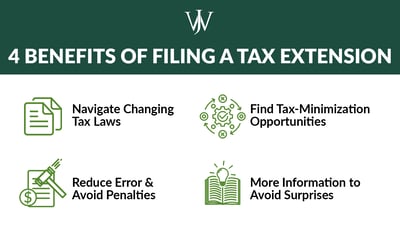
And just like that, it's tax time again! Every spring, our in-house tax team gears up with excitement. However, most high-income professionals...
READ MORE
Leah Cessna, CPA
DIRECTOR OF TAX
Understanding the FBAR: Foreign Asset Reporting & Tax Penalties There are many things CPAs may disagree on — the need for specific tax laws to change, how they want clients to submit relevant forms or documents, or whether black or blue ink is ideal for the IRS tax return process. However, one truth many CPAs agree with is that taxpayers will make mistakes on their tax returns every April. Some tax mistakes are cheap and straightforward to fix by filing a quick amendment of a prior-year tax return. However, other tax mistakes are extraordinarily costly and require CPAs or tax attorneys to jump in the ring on the taxpayer's behalf to avoid egregious penalties or legal action. As a wealth management firm CPA, I consistently have conversations with prospective clients who are either U.S. expats working overseas or engineers working in the U.S. with Green Cards whose home is somewhere else. Many of these individuals are surprised to hear that the U.S. requires reporting of their foreign accounts and assets on a tax form known colloquially as the FBAR. This article focuses on failing to report your foreign financial accounts and assets and the following penalties. While this article will highlight a few common ways this mistake arises and tactics to become compliant, tax compliance is a complicated and litigious field. As such, this article is not to be construed as or relied upon as personal tax advice. Let's dive in. What is the FBAR (Report of Foreign Bank and Financial Accounts)? The FBAR, or Report of Foreign Bank and Financial Accounts, is a U.S. tax form used to report certain foreign financial accounts or assets to the Treasury Department, which keeps records of those accounts. Who Needs to File an FBAR The foreign reporting requirements apply to all U.S. taxpayers. For U.S. taxpayers with assets overseas, a common thought is that they do not need to worry about these assets for U.S. tax returns; however, that thought has brought much trouble to many U.S. taxpayers. Who does the IRS consider a U.S. taxpayer? A U.S. taxpayer is: A U.S. citizen (regardless of where you are residing in the world) A resident of the U.S. (who is not a U.S. citizen) for any part of a tax year A U.S. taxpayer also includes U.S. corporations, partnerships, trusts, and estates While the scope of this article is limited to individuals for simplicity, it's crucial to note that if you have a business, trust, or estate that has foreign financial accounts and assets, you are responsible for complying with the filing requirements. When Do You Need to File the FBAR? You must report these foreign financial accounts and assets each year to remain compliant. Foreign asset reporting is not a "one-and-done" event. To comply with these laws, you must report the following each year: All your foreign financial accounts to the U.S. Treasury by filing a Report of Foreign Bank and Financial Accounts (FBAR). All specified foreign financial assets to the Internal Revenue Service by filing a Form 8938 with your tax return. Foreign mutual funds and interests in foreign businesses and trusts by filing other specific forms with the Internal Revenue Service. These forms have different filing requirements, which are beyond the scope of this article. Foreign Bank Accounts & Foreign Financial Assets: What's the Difference? Did you notice that you must report both financial accounts and assets? Contrary to popular belief, the IRS distinguishes the two as separate categories. The IRS defines reportable financial accounts as: Bank accounts such as savings accounts, checking accounts, and time deposits, Securities accounts such as brokerage accounts and securities derivatives or other financial instruments accounts, Commodity futures or options accounts, Insurance policies with a cash value (such as a whole life insurance policy), Mutual funds or similar pooled funds (i.e., a fund that is available to the general public with a regular net asset value determination and regular redemptions), Any other accounts maintained in a foreign financial institution or with a person performing the services of a financial institution. The IRS defines reportable financial assets as all the accounts listed previously, plus the following assets if not held in a foreign account: Stock or securities issued by a foreign entity Pensions held by a foreign employer Any interest in a foreign entity (including businesses, trusts, and estates), and Any financial instrument or contract that has a foreign issuer Signature Authority and the FBAR There are two common scenarios we see that require an FBAR. First, let's suppose you have elderly parents residing outside the U.S. for whose bank accounts you have signature authority over. You must also report those accounts on your FBAR. Yes, you read that right. Second, let's suppose you're an officer of a business with foreign accounts. You must also report the foreign accounts on your FBAR if you have signature authority over them. Exceptions for Foreign Asset Reporting Now, it may come as a relief to you that there are minimum thresholds and exceptions to filing these forms. For example, if the combined maximum balance of all of your foreign accounts is not greater than $10,000, you do not have to file an FBAR. You do not have to file a Form 8938 in the following circumstances: Type of taxpayer Single Individuals Married Individuals U.S. business entities, trusts & estates Living in the U.S. Asset's total value was $50,000 or less on the last day of the year or $75,000 or less at any point in the year. Asset's total value was $100,000 or less on the last day of the tax year or $150,000 or less at any time during the year. Asset's total value was $50,000 on the last day of the tax year or $75,000 or less at any time during the tax year. Living outside the U.S. Asset's total value was $200,000 or less on the last day of the tax year or $300,000 or less at any time during the year. Asset's total value was $400,000 or less on the last day of the tax year or $600,000 or less at any time during the year. Let's consider an example to illustrate how to calculate the filing thresholds. Isabella is married and moved from Italy to San Francisco in 2022. Her mother and siblings still live in Italy. In Italy, she has the following assets (translated to U.S. dollars) and balances as of December 31, 2025: Foreign Assets $30,000 of stock in the Italian company of Assicurazioni Generali held in a safe at her parent's house $200,000 Foreign pension for the time when she worked for Generali Group in Trieste, Italy Foreign Accounts $4,000 Checking account at Banca d’Italia $7,000 Savings account at Banca d’Italia $75,000 Investment account at Acolin Europe AG $23,000 Cash Surrender Value of her Italian Life insurance policy The total value of Isabella's foreign accounts and assets at year-end was $339,000, with foreign assets comprising $230,000 and foreign accounts comprising the remaining $109,000. The total value of her foreign accounts and assets exceeded the filing threshold for the FBAR and Form 8938. As a result, Isabella must report all of these assets by filing both forms. In addition, because Isabella is a co-signer on her 94-year-old mother's Banca d'Italia account, she must also report that account on her FBAR. Tax Penalties for Improper Foreign Asset Reporting If you are not reporting your foreign financial accounts or assets, you expose yourself to some rather significant penalties. There are separate penalties assessed for the FBAR and Form 8938 (and the additional forms required, which are beyond the scope of this article). If the IRS considers your failure to file "willful," the penalties swiftly increase. Let's take a look at the FBAR and Form 8938 penalties. FBAR Penalties for Failure to File For U.S. taxpayers required to file an FBAR and do not, the civil monetary penalties currently are $10,000 per violation. Each year, this amount is indexed for inflation, so, in 2025, the penalty is $16,117. Suppose the Treasury Department determines that there is a "willful" violation. For willful violations, you could face a penalty up to the greater of $161,166 or 50% of the account's value at the time of the violation (in 2025, however, the amount is indexed for inflation each year). Additional penalties are tossed into the mix if the Treasury Department determines a pattern of negligence or that you knowingly and willfully filed a false FBAR. United States v. Bittner: FBAR Penalties Accrue Per Report Rather Than Per Account In 2023, the U.S. Supreme Court determined that the $10,000 penalty for willfully failing to file the FBAR would accrue per report rather than per account. Let's calculate the penalties for Isabella from our previous example. Isabella has seven reportable accounts, including her mother's account, over which she has signature authority. She'd lived in the U.S. for three years and never filed an FBAR or a Form 8938. When assessing her penalties for all three years, and at a $16,117 per year penalty (indexing the $10,000 penalty for inflation in 2025), that's a whopping $96,702 penalty in addition to what she owes in tax! Tax Penalties for Failure to File a Form 8938 The failure to file a Form 8938 is $10,000 per form. If the IRS discovers your failure to file and notifies you via letter, the penalty is an additional $10,000 for every 30 days you do not file after the date of that IRS notice, up to $50,000. It's important to note that the IRS assesses penalties as if you're a single person, even if you are not. Therefore, if you are married and filing a joint return, the fines are doubled. It may be tempting to do nothing and hope the IRS never catches you. Or, you may think you can file the delinquent forms under the "radar" outside of established IRS procedures. But, if the IRS catches you in either scenario, you are looking at exorbitant penalties with little chance of negotiation. Criminal Penalties for Failure to File an FBAR and a Form 8938 I want to give a brief nod to the fact that the Treasury Department and the IRS will assess criminal penalties for failure to report your foreign accounts and assets depending on the facts and circumstances of the situation. So, if your heart is beating faster as you read this, you should consider reaching out to an attorney with a specialization in this area as soon as possible. FBAR and Foreign Account Tax Compliance I'm not particularly eager to present a problem without providing a solution, so let's talk about remedies. First, it is crucial to file your delinquent forms quickly before the IRS discovers the non-compliance. You should seek a professional with expertise in tax compliance and foreign filing immediately upon realizing the mistake. While you will have to pay some hefty professional fees because of the significant time and effort involved on the part of the professional to bring you up to date with your filings, it's often more cost-effective than paying the IRS penalties. Let's once again consider Isabella. Isabella engaged an attorney to assist her in becoming compliant for her three years of non-filing. Suppose she paid the attorney $15,000, which is a significant fee. However, let's assume the attorney was able to reduce her penalty to $47,000. By investing just $15,000 for professional fees, Isabella saved almost $49,702, arguably a pretty good investment. Who Can File a Delinquent FBAR The Treasury Department has defined specific procedures for individuals to use to become compliant, and your particular circumstances will determine which methods to use. Determining factors and circumstances include: Whether you reported the foreign income from the account or asset on your U.S. tax return, Whether you paid the tax on the foreign income on your U.S. tax return, If the IRS has contacted you regarding an audit, If the IRS has contacted you regarding the delinquent FBAR, Whether the IRS can construe your actions surrounding your disregard of the filing requirements as "willful." Typically, if you reported all the income from the accounts on your U.S. tax return and paid the resulting tax liability, and the IRS hasn't yet contacted you regarding the delinquency, you shouldn't receive a penalty. Who Can File Delinquent Form 8938 and Other Information Returns You can attach a delinquent Form 8938 to an amended return if you: are not under a civil examination or criminal investigation by the IRS, and have not already been contacted by the IRS about the delinquent Form 8938 or other information return. The IRS may abate or decrease penalties where there is reasonable cause for your failure to file. However, suppose the IRS has already contacted you regarding the delinquency or started an examination or investigation of you. In that case, you will have to use the Streamlined Filing Compliance Procedures. Through the years, we've met a variety of taxpayers whose circumstances required filing FBARs and Form 8938 (and other foreign information reports beyond the scope of this article). Often, these taxpayers are not trying to cheat the system by hiding money in off-shore accounts. Instead, these are honest, hard-working individuals who are simply unaware of the filing requirements. Here are a few examples of client scenarios we've navigated through the hoops of the foreign filing requirements: 1) A U.S. citizen who married a non-citizen and moved to his spouse's country of origin. They raised their kids, ran a business, and owned several rental properties. From his perspective, he didn't have to comply with any U.S. tax laws because he didn't live there anymore. 2) Several U.S. expats working overseas open bank and investment accounts, have pensions offered by foreign companies and invest in foreign mutual funds. 3) U.S. Green Card holders, working in the U.S. for some time, are overwhelmed by the complexity of the U.S. tax laws. They do not realize they must report their assets from home—the bank and savings accounts, investment accounts, and foreign pensions. 4) A naturalized U.S. citizen who is a beneficiary of a foreign trust set up by her father in her country of origin. 5) U.S. citizen who leaves the U.S. to start a business in a foreign country. If you take nothing else away from this article, take this: If you have financial accounts and assets located in a country other than the U.S. and haven't been reporting those to the U.S. government, get help as soon as possible to become compliant. If you don't comply with these laws, you may have to liquidate a significant portion of those assets to pay exorbitant penalties. Working Towards Compliance with a Tax Professional If you find your circumstances somewhat (or even remotely) similar to any we've discussed in this article, we encourage you to reach out to a professional to receive assistance. At Willis Johnson and Associates, we believe in simplifying the complexities of our clients' financial lives. For many taxpayers facing the scenarios discussed in this article, the steps toward compliance or remedying past mistakes are complicated. At Willis Johnson & Associates, we believe that optimizing your taxes is an essential piece of your financial plan and is vital to helping you achieve financial freedom. Learn more about the services we offer and our commitment to helping your family make the most of every element of your tax and financial plan.

There are many things CPAs may disagree on — the need for specific tax laws to change, how they want clients to submit relevant forms or documents,...
READ MORE
Leah Cessna, CPA
DIRECTOR OF TAX
Can My Unused Vacation Time Affect My Retirement? More than half of all Americans end each year with unused time off, and more than 660 million vacation days go unused every year. When you think about retirement, you might think it sounds like an endless vacation. And that makes sense, because a lot of Americans have deferred their vacation dreams with a vision of realizing them at a later date. Shell employees are no different. If you’re preparing to retire from Shell, you’ve probably accrued some of those vacation days as well. When you’re retiring, though, you have the option to capitalize on those unused days in different ways. Unlike almost everything else associated with retirement, there’s usually no specific form you need to fill out to take advantage of your vacation time. Instead, you can strategically decide how to use your unused vacation benefits in the way that makes the most sense for you. What are My Options When It Comes to Unused Vacation? You have a couple of different options available when deciding how to get value from your unused vacation time. You can either: Cash it out: This option allows you to receive a lump sum payment on or around your retirement date. Vacation it out: The “use it” option allows you to get the value of the vacation time you’ve earned by taking it prior to your official retirement date. Cashing out your vacation time may seem like the simplest and most intuitive option. When you make this choice, you can receive a nice windfall check to start your retirement — no additional planning required. Taking your vacation time, on the other hand, may require some strategic planning, but it can also provide you with additional flexibility and benefits. Your Shell retirement date can have an impact on which vacation benefit decision is right for you. The date you select can either consolidate your retirement benefits or stretch them out; both can be beneficial, depending on your specific situation. Strategic Considerations for Your Vacation Benefit Planning To better determine the most effective and efficient way to get value from your unused vacation time, here are a few things you should consider: Consideration #1: Do I Need Cash to Start My Retirement? While some people think of retirement as “winding down” or “hanging it up,” for many others, retirement means a new lease on life and new adventures. Adventurous retirees may plan to purchase a vacation home, fishing boat, or another large luxury item, and may need additional funds available for the expenditure. Receiving an immediate cash infusion to start those adventures can be one of the biggest benefits of cashing out your accrued vacation days. Consideration #2: How Can I Minimize My Tax Impact? You may be able to strategically cash out vacation to improve your tax efficiency. If you cash out without strategically considering the dates and your various income sources, this decision could be costly. Combining a sizeable cash-out lump sum with your usual paid compensation and bonuses could move you into a higher tax bracket. To avoid that, you may want to consider strategically deferring some of your income into your first year of retirement. As an example, if your salary is $273,000 and you have eight weeks of unused vacation, you can hypothetically cash it out for about $42,000. Adding that amount to your regular pay, bonus, and performance compensation increases could boost your total income to more than $350,000, pushing you into a higher tax bracket. If you defer some income into the next year by vacationing out a portion of your benefit, you could keep your income in the 24 percent marginal bracket and yield a tax savings of about $3,000. Consideration #3: Will Cashing Out My Vacation Time Help Me Make Better Investment Decisions? Consolidating earned income into one calendar year by cashing out can improve your planning opportunities by reducing your next-year income. With reduced taxable income in a particular year, you can exercise such strategies as Roth conversions or “back-door” Roths. On the opposite side, vacationing out your days can push your official retirement date into a different calendar year. Once that occurs, you’ll be eligible for a new year’s worth of 401(k) contributions, from your own savings efforts and your employer. Front-loading the year with 401(k) savings can give your retirement funds one last boost before the big day. Consideration #4: Can Cashing Out My Vacation Time Help Me Remain Eligible for Corporate Benefits? If you use your vacation time rather than cashing it out, you may retain eligibility for other company benefits as well. If you take the accrued time as paid leave, you’re still considered an employee and therefore still eligible for employer-provided health insurance — and the aforementioned employer contributions to your 401(k). You can also continue to improve your retirement outlook by earning additional service credits toward performance compensation or your pension calculation. Your accrued vacation isn’t something to take lightly. You’ve earned those days, and it’s important to strategically consider how you’ll best benefit from using them. If you’re ready to determine the best strategy to maximize your retirement benefits, the wealth managers at Willis Johnson & Associates have experience navigating Shell’s retirement options, including benefit payouts, pensions and more. Our team has helped hundreds of people evaluate their retirement options and make the choices that best fit their immediate and long-term goals. Learn more about our philosophy and how we can help, then contact us to get started with your retirement strategy.

More than half of all Americans end each year with unused time off, and more than 660 million vacation days go unused every year.
READ MORE
John Siegel, CFP®, EA
SR. WEALTH MANAGER
What You Need to Know About Employee Stock Purchase Plans Corporate professionals and executives have the unique opportunity to boost their non-retirement savings through an Employee Stock Purchase Plan (ESPP). Designed to encourage employees to “buy-in” to the success of their employers, ESPPs offer the ability to purchase company stock at a discount to fair market value. How an Employee Stock Purchase Plan (ESPP) Works Contributions to an ESPP are deducted directly from the employee’s paycheck after enrolling in the plan. At the end of the plan year, shares of the company stock are then purchased using the employee’s cumulative contributions. A specific share price valuation date is predetermined and some plans select from multiple valuation dates, ultimately purchasing shares on the lowest-cost day. In addition to receiving the lesser of two or more valuation prices, plans also offer an employee discount of up to 15% from the share purchase price. The Benefit of an Employee Stock Purchase Plan The ability to purchase stock at the lesser of two valuation dates and at a guaranteed discount is a huge benefit. Assuming a $9,000 contribution to the ESPP. Had this employee simply purchased $9,000 of company stock on the last day of the plan year they would only receive 125 shares. By participating in the ESPP however, this employee ends the year with 162 shares of company stock. This equates to a total discount of more than 30% per share! Let’s say the stock price decreased over the course of the plan year, ending the year at $59 per share. Again, stock is purchased at the lower of the two valuation dates, in this scenario $59. After the 15% discount the employee would receive stock at just $50.15 per share for a total of 179 shares. Regardless of which direction the stock price moves, shares are purchased at a lower valuation. Considerations for Enrolling in an Employee Stock Purchase Plan Before enrolling in an ESPP it’s important to understand the tax implications involved before the stock arrives in your brokerage account. There are two types of ESPPs: qualified and non-qualified. Most U.S. employers who offer an ESPP have followed the IRS code and established their plan to meet the qualified status requirements. Assuming the plan is qualified, there is a further distinction made when the stock is actually sold depending on the length of time the employee held the purchased shares. Shares held at least two years from the offer date and one year from the purchase date will receive preferential capital gains tax treatment. Shares held less than two years from the offer date or less than one year from the purchase date will be taxed at ordinary income rates when sold. No matter how long you hold the stock, the original 15% per-share-discount will be taxed at ordinary income rates. Continuously participating in an ESPP can generate significant value over time by amplifying the non-retirement savings the employee was already doing. Along the way, it’s important to consider the over-concentration risk of owning an ever-growing amount of stock in a company you also work for. This risk can be mitigated by routinely selling stock each year as new stock is purchased. This laddered approach preserves the tax benefits of holding each lot for one year while also allowing the employee to diversify their holdings to broad-market investments.
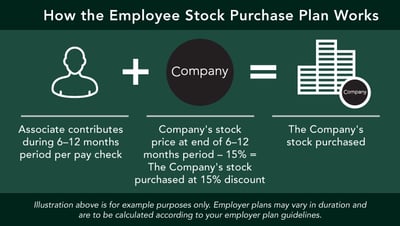
Corporate professionals and executives have the unique opportunity to boost their non-retirement savings through an Employee Stock Purchase Plan...
READ MORE
John Siegel, CFP®, EA
SR. WEALTH MANAGER
End Of Year Financial Planning Checklist for Shell Professionals It’s that time of year again when we swap out pumpkin spice for peppermint mochas and start focusing on what lies in store for the year's final months. Between the 401(k), health benefits, and charitable giving programs, Shell offers employees several financial planning opportunities that can minimize taxes in the new year while setting employees up for increased savings. As we move into the holiday season, you’ll want to check this list of strategies twice, so let’s dive in. Max Out Your 401(k), the Shell Provident Fund The first and easiest action to take before year-end is to ensure that you max out the Provident Fund's pre-tax source. Contributing pre-tax funds to your 401(k) reduces taxable income and can augment your retirement savings over time. 401(K) Contribution Limits for 2025 The amount you contribute to the Provident Fund in the pre-tax source reduces your taxable income dollar for dollar, but contributions made to the Roth or After-Tax sources do not reduce your taxable income. In 2025, you may contribute up to $23,500 if you are under the age of 50, up to $31,000 if you are 50-59 or 64+, and $34,750 for those aged 60–63 to the pre-tax or Roth source in the Provident Fund. This number changes annually based on inflation and limits set by the IRS. With Shell’s company contribution, Shell will contribute from 2.5-10% of your salary to the 401(k) every year based on your length of employment. The maximum Shell will contribute is 10% of the IRS’ income limit before moving their contributions to the Provident Fund BRP. In 2025, the IRS income limit is $350,000, which means Shell’s maximum contribution to an employee’s Provident Fund in 2025 is $35,000. Ages Pre-Tax After Tax Company Match Under 50 $23,500 $11,500 $35,000 50-54 $31,000 $11,500 $35,000 55-59 $31,000 $11,500 $35,000 60-63 $34,750 $11,500 $35,000 64 & Above $31,000 $11,500 $35,000 Consider Using Your Provident Fund for a Mega Backdoor Roth Contribution In addition to maxing out the pre-tax source in your Provident Fund, you can also max out a source known as After-Tax. Once your pre-tax or Roth contributions are maxed out, Shell offers a third savings source in the 401(k), known as After-Tax. After-Tax contributions go into the Provident Fund after taxes are withdrawn from your paycheck. The After-Tax source can be converted into a Roth each year using a strategy known as the Mega Backdoor Roth strategy. What’s the Mega Backdoor Roth Strategy? The Mega Backdoor Roth strategy, also known as an After-Tax rollover, is a process that allows you to transfer after-tax contributions out of the 401(k) to a Roth IRA where your contributions can grow tax-free for life. Unlike pre-tax contributions, your after-tax contributions do not get deducted from your taxable income. However, converting the contributions to a Roth IRA every year to avoid taxable growth in the 401(k) can keep them growing without a tax drag, and when you take the funds out during retirement, you get to take the funds tax-free. However, this strategy is not as simple as it seems. There can be significant tax implications if the process is done incorrectly or if there are any earnings in the after-tax account, so working with an advisor who has experience in this area is crucial. Advisor Tip: In order to complete the transaction with minimal tax impact, After-Tax contributions should be rolled over into a Roth IRA. If there are any earnings, they may be rolled into a Traditional IRA (or back into your Provdent Fund) to avoid paying taxes today and defer taxes on the earnings into retirement. How Much After-Tax Can You Contribute to the Provident Fund? You can contribute up to $11,500 into the After-Tax account in the Provident Fund for 2025. While this may not seem like a large amount for a given year, if you roll $11,500 of after-tax contributions over to a Roth each year for ten years, you’d have $115,000 saved in a Roth account growing tax-free. Perform a Self-Audit to See If You’re On Track to Max Out Your Provident Fund This Year Many Shell professionals believe that they have maxed out their Provident Fund by making the most of their pre-tax contributions. However, we perform a simple audit with clients that you can use to ensure you’ve maxed out the 401(k) each year in both the pre-tax and after-tax sources. To see if you’ve maxed out the Provident Fund, use the following steps to pull up your contribution summary. Log in to your Fidelity NetBenefits account Select Your Shell Provident Fund 401(k) account Under the “Summary” tab, select “Statements” Choose Year to Date to see this year’s data (or use the specific date feature to look at previous years), and click “Retrieve Statement” Scroll down to “Your Contribution Summary” and review your contributions Often, we see many Shell professionals’ contribution summaries look something like this if they believe they’ve maxed out the 401(k) for their age and their income meets the IRS 415 income limitations in a given year. You may look at this and think, “they’ve saved over $50,000, so surely this person is at the maximum in the 401(k), right?” Unfortunately, this individual left their after-tax pool empty, which means they’ve missed an opportunity to add $11,500 to their retirement savings! If you’ve already accumulated over $350,000 in income in 2025 between base and bonus, and your goal is to max out the 401(k), your summary should read as follows: Employee After-Tax: $11,500 Company Contribution: $35,000 Employee Pre-Tax (if over age 50): $31,000 So, what should you do if you notice this error in the future? If you’ve left money on the table, you can adjust your contributions for 2025 to allocate funds to the after-tax pool. However, if it looks like you will not make the maximum contributions this year, you can increase your contribution percentage over your final pay periods as a final push to increase your savings. When making your elections for 401(k) contributions in 2025, the proper formulas for maxing out the Provident Fund are as follows: If you make under $350,000 in base & bonus: (After-Tax or Pre-Tax/Roth Limit Based on Your Age) / Salary = Percentage Allocation If your base & bonus exceeds $350,000: (After-Tax or Pre-Tax/Roth Limit Based on Your Age) / $350,000 = Percentage Allocation Using the formula for someone over age 50 making $350,000 in base and bonus compensation in 2025, below is an example of what the contributions should look like in the employee pre-tax and employee after-tax contribution sources each month to be considered on track to max out. Compensation Accumulation Bonus After-Tax Employee Contributions to Pre-Tax End-of-Year Targets $350,000.00 $70,000.00 $11,500.00 $31,000.00 January $23,333.33 - $816.67 $2,100.00 February $46,666.66 - $1,633.33 $4,199.99 March $139,999.99 $70,000.00 $4,900.00 $12,600.00 April $163,333.32 $5,716.67 $14,699.99 May $186,666.65 $6,533.33 $16,799.99 June $209,999.98 $7,349.99 $18,899.99 July $233,333.31 $8,166.67 $20,999.99 August $256,666.64 $8,983.33 $23,099.99 September $279,999.97 $9,799.99 $25,199.99 October $303,333.33 $10,616.67 $27,300.00 November $326,666.63 $11,433.33 $29,400.00 December $350,000.00 $11,500.00 $31,000.00 Total Compensation $350,000 Total Contributions $11,500 $31,000 In this example, the calculation required a 9% contribution each month to pre-tax and a 3.5% contribution to after-tax. For this example, we'll use a 3.5% contribution to after-tax from the employee's base salary and bonus, which will max out the after-tax source by December. With these contribution elections, the employee maxes out both sources by the end of the year and can use the extra funds they would've put towards pre-tax and after-tax contributions in December toward holiday expenses. We frequently discuss this process with our clients when determining strategies to employ to make the most of their 401(k) contribution elections. If you’d like to learn more or realize you've left 401(k) contributions on the table, reach out to us to set up a complimentary conversation with one of our fiduciary advisors. Get the Most from Your HSA or FSA Another simple action Shell employees can take before year-end to optimize their finances is making the most from their HSA or FSA accounts. FSAs operate on a “use it or lose it” principle, so it’s important to use the funds by December 31st! Meanwhile, if you want to contribute to an HSA, you must fund the account by December 31st. Health Savings Account (HSA) In 2025, you can put up to $4,300 in an individual HSA or $8,550 in a family HSA. Like pre-tax 401(k) contributions, HSA contributions reduce your taxable income dollar for dollar. If you’re age 55 or older, you can contribute an additional $1,000 catch-up. For married households where both spouses are over age 55, this means you can put up to $10,550 into triple tax-advantaged savings this year! Additionally, Shell will contribute $500 for individuals and $1,000 for family HSAs. Within the HSA, these dollars grow tax-deferred and are distributed tax-free for qualified medical expenses. If you’re already maxing out your 401(k), maxing out your HSA can be an excellent way to get additional tax-beneficial savings for retirement, as long as you fund the account before December 31st! Let’s consider an example to see how quickly this can all add up. Suppose you’re a 55-year-old employee who has been at Shell for 10 years and wants to save as much as possible for your retirement by age 60. If, in 2025, you maximize your savings across each source in the 401(k) and the HSA, you’d save the following: Employee 401(k) Contributions to Pre-Tax: $31,000 Employee 401(k) Contributions to After-Tax: $11,500 Employee HSA Contributions for a Family: $8,550 Employee HSA Catch-Up for Age 55+ and Spouse HSA Catch-Up: $1,000 + $1,000 Combined Savings: $53,050 in 2025, not including the additional contributions from Shell. If we include the 10% company contribution Shell would make to this employee’s 401(k) in 2025, those savings would grow to $88,050 in just one year! So, look at your HSA contributions for the year to see if you’ve left money on the table and get any additional contributions in by December 31st. Flexible Spending Account (FSA) For those with flexible spending accounts, December 31st is crucial for a different reason. With an FSA, the funds operate on a “use it or lose it” basis. Before year-end, you must use any of the funds you’ve placed in the account for qualified expenses, or you’ll lose access to the funds. If you’re nearing the end of the year and don’t have any major medical expenses left to cover, you can also spend the funds on medical products included on sites such as FSA Store. Use Shell’s HERO Program for Charitable Giving Charitable giving is a wonderful way to minimize taxes late in the year. Specifically, waiting until the latter part of the year gives you an advantage in knowing how large a charitable gift you can make through Shell’s HERO program or donor-advised funds. HERO Giving Program Shell offers a HERO Giving Program for employees that matches employees’ contributions to charitable causes. Through its HERO program, Shell will match gifts made directly to qualified charities up to $7,500 annually. By giving $7,500 through this program, your chosen charity will receive $15,000 for the year, and you can do this every year you’re at Shell to compound your giving. Your $7,500 gift is deductible on your tax return when the gift is made, so your charitable giving is tax-efficient and a great way to help the causes you care about. Charitable Giving Through Donor Advised Funds (DAF) Donor Advised Funds (DAF) are great ways to leverage giving to charity. However, Shell will not match gifts made to a donor-advised fund. Donor-advised fund contributions allow for multi-year contributions to be made in one year, with the benefit of immediate tax deductions in the year the gifts were made to the DAF. Once inside the DAF, the assets are allowed to grow and given to charity over whatever time you deem appropriate. When we talk about charitable gifts, remember that they can be made in cash or stock. The transfer of cash is quick and easy. However, it can be more beneficial to gift appreciated stock into your DAF to avoid taxes on the gains. Gifting your appreciated stock allows you to not only get a deduction of the amount transferred but also avoid paying capital gains on the appreciated stock. Learn more about Charitable Giving Options for Shell Professionals here >> Reduce Taxes Through Tax-Loss Harvesting At WJA, one of the things we pay special attention to for our clients is taxes and lowering their tax burden over time. Using the tax-loss harvesting strategy, we sell positions in our client’s portfolios at a loss to offset potential capital gains and minimize their taxes for a given year. The IRS allows taxpayers to apply an offset of up to $3,000 to reduce their taxable income each year. Something we at WJA do, especially in down markets, is sell positions at a loss to offset potential capital gains. Any losses not offset by gains can be applied to reduce taxable income up to $3,000. Any additional losses may be carried over into the following years until they are used. To illustrate the benefit of this strategy, let’s consider an example. A particular Shell employee has 25 shares of company stock in three different lots, totaling 75 shares. In lot #1, the stock is at a $5,000 loss. In lot #2, the shares are at a $5,000 gain. In lot #3, there is also a $5,000 loss. Lots Lot 1 Lot 2 Lot 3 Shares 25 25 25 Gain/Loss - $5,000 + $5,000 - $5,000 Total Gain/Loss $5,000 Gain, $10,000 Loss To lower this year’s tax burden, this employee can sell lots #1 and #2 at a loss to avoid owing any capital gains tax. In doing so, the losses offset the gains from lot #2. Of the remaining $5,000 loss, the employee can apply $3,000 to their ordinary income as a loss to reduce their overarching taxable income. The additional $2,000 loss of capital can be carried over into subsequent years for additional tax savings. Working with a Fiduciary Financial Advisor For many, December is a month filled with celebration and anticipation for the new year. However, it’s also a time ripe with the opportunity to minimize taxes and set yourself on a great financial foundation for the years ahead. At WJA, we proactively educate and remind our Shell clients of the unique financial planning opportunities available to them as the year ends so that they can leverage them effectively. If you’re curious about what opportunities are available to you, reach out to our team for a complimentary discussion and discover what you can do to make the most of the season.

It’s that time of year again when we swap out pumpkin spice for peppermint mochas and start focusing on what lies in store for the year's final months
READ MORE
Brandon Young, CFP®
WEALTH MANAGER
Broker Dealer vs RIA: Types of Financial Advisors & Which is Right for You With a constantly-increasing list of financial firms in the Houston area, it’s no wonder that many consumers struggle to pick the right one. Between Financial Advisors, Financial Planners, Investment Advisors, Broker-Dealers, and dually-registered firms, there are a plethora of choices for wealth management professionals that each has its own fees, investment philosophies, pros, and cons. What’s the difference between the types of advisors? What is a Broker-Dealer? According to Kitces, “broker-dealers [are] a fundamentally sales-oriented transactional business, as the job of broker-dealers, and the stockbrokers they employ, is literally to facilitate the purchase and sale of investments (for themselves or their customers), for which they are paid a commission or mark-up for effecting the transaction. Accordingly, broker-dealers are [historically] subjected to a “suitability” standard – that in the process of selling securities to and on behalf of their customers, they only make recommendations that are not unsuitable for that customer.” In my opinion, brokers-dealers are like the muddy waters created by the new Reg BI rulings. They don’t want you to know that you’re meeting with someone in a product-sales role who can get paid in non-transparent ways including commissions, kickbacks from mutual funds, or other means. What’s a Registered Investment Advisor (RIA)? Registered Investment Advisors, like those at Willis Johnson and Associates, are held to the highest fiduciary standards in the industry. A fiduciary standard is one involving trust, or, is one to be held or given in trust. RIAs have fiduciary obligations to their clients, which means they have a fundamental duty to always and only provide investment advice that is in the best interests of their clients. Additionally, under Section 206 of the Investment Advisers Act of 1940, RIAs have a stringent requirement not to engage in “any device, scheme, or artifice to defraud any client or prospective client.” The case of SEC vs Capital Gains Research Bureau proved the need for RIAs to perform fully-fledged fiduciary duties for their clients given the relationship of “trust and confidence” that exists between a client and his/her advisor. In short, we hold the trust and confidence of our clients and prospective clients to the highest standards and only work in their best interest. As an RIA, we get paid the same way no matter what our clients invest in. We make an effort to be extremely transparent, which is why we put a fee calculator on our website and walk our clients through their investments and our strategies multiple times a year. To summarize: brokers are set up to sell (or buy) securities. Registered Investment Advisors were initially set up to give fiduciary advice to the consumer. Brokers = sales Registered Investment Advisors = advice What if my advisor is dually-registered or is a hybrid advisor? There are also dually-registered individuals or hybrids that are registered as both Broker and Investment Advisors. To me, this is even more concerning for consumers! These professionals can put down one hat and pick up the other hat at any point in time acting as either a Broker or Investment Advisor from minute to minute to serve their own financial gain. Recent SEC Rules Make It Difficult to Know Who's a Fiduciary Financial Advisor The SEC, the organization in charge of regulating the financial services industry, recently implemented a set of rules and interpretations regarding the financial advice given by brokers. This new set of rules is referred to as Regulation Best Interest, or Reg BI, and was intended to make it simpler for consumers to know if the person advising them is working in their best interest. Since the release of this new rule, XYPN, run by well-known Financial Advisor blogger Michael Kitces, seven states, and the District of Columbia have each filed lawsuits against the SEC over these new Reg BI rules. The rules are complicated and nuanced, but you can read a summary published on Barron’s by the Investment & Wealth Institute here. The 4 major obligations all financial professionals must follow to comply with the SEC are: Brokers are required to act in the best interest of the customer when recommending investment products or strategies; when making account changes, they must also do so without placing their firm’s interests ahead of the customer’s Brokers must provide full disclosures of both their recommended products as well as their status as a broker-dealer, fees, scope of services, and any conflicts of interest Brokers are required to exercise reasonable care when making recommendations of products which only requires a “reasonable basis to believe” the recommendation is in their customer’s best interest Conflicts of interest must be, at a minimum, disclosed or mitigated if related to the recommendation a broker makes to their client; however, the ruling doesn’t require that these conflicts of interest are eliminated While these rules are required to be followed in order to comply with the SEC, the flexibility in them allows for different ideological interpretations among different types of advisors. What is the Real-World Impact of the SEC’s Regulation Best Interest (Reg BI) Rulings? In our opinion, the problem with Reg BI is that it allows Brokers to more easily provide advice to consumers without being held to the same standard of care as Registered Investment Advisors, causing more confusion for the consumer. Through the Dodd-Frank Wall Street Reform and the Consumer Protection Act of 2010, Congress stated that fiduciary advisors must “provide personalized investment advice about securities to a retail customer… the standard of conduct for such broker or dealer, with respect to such customer, shall be the same as the standard of conduct applicable to an investment adviser”— meaning that, if brokers are able to provide ‘advice,’ then they must also be Fiduciaries. In reality, the SEC (through Reg BI) has now allowed brokers to provide one-time advice that is “solely incidental” and is “in connection with and reasonably related to” the sale of products. The area of ‘advice’ is clearly laid out by Congress to be under the domain of Registered Investment Advisors. According to the Dodd-Frank Act, if Brokers provide advice, then they should be held to the same standard as RIAs—but they aren’t! Another thing to note, and Kitces points out succinctly, is that “…the SEC effectively positions RIAs in Regulation Best Interest as [those who provide] ongoing advice and investment management services, implying that more ‘transactional’ advice is the domain of broker-dealers. In fact, in the original version of Regulation Best Interest, the SEC repeatedly referred to broker-dealers as the deliverers of “episodic” advice.” How Can I Tell If My Financial Advisor is a Fiduciary? For client-facing roles working for Registered Investment Advisors the most common title is “Financial Advisor.” Guess what the most commonly used title for Brokers is? You guessed it—it’s also “Financial Advisor.” How is the consumer to know whether they are working with someone in a sales-oriented role or an advisory role? They don’t. The SEC allows the title of “Financial Advisor” for dual-registrants as long as they disclose that they may act in multiple different capacities, either as an advice-giver in the client’s best interest, or as a salesman. I can tell you from personal experience that very few people read the disclosures given to them and, almost no one who does read them understands them. How To Find Out if Your “Advisor” is a Broker & What To Do Next To determine if your advisor is an RIA or a broker, look them up on the government-run website: brokercheck.finra.org. If they are listed as a Brokerage Firm or a Broker, the ‘advisors’ that work there can get paid in non-transparent ways by recommending investment products. If there are disclosures on brokercheck.finra.org, make sure to read them. These disclosures can be anything from customer disputes, criminal charges and convictions, or regulator disciplinary action. Both the firm as well as the individual can have disclosures. If they are a broker, ask that they provide a list of all the ways they get paid from working with you in writing. When working with a Broker, they may offer you something that sounds a lot like advice. Be warned that it could be “solely incidental” and “in connection with and reasonably related to” sale of products. If they provide advice, ask them in writing if they are acting in a fiduciary capacity when they are providing you that advice. Due to poor regulation, it’s difficult for consumers to know if they are working with a fiduciary or not; however, at the end of the day, most people in the financial services industry (including the majority of Brokers) are in it to help those they serve. At Willis Johnson and Associates, we take pride in acting in our client’s best interests — not just because of our fiduciary obligation, but because we think it’s the right thing to do. We believe in educating our clients on the questions they need to be asking, the answers to those questions, and giving them a road map to a successful financial future. All investment advisers have a fiduciary duty to act in their clients’ best interests. Willis Johnson & Associates is not free from all conflicts and thoroughly discloses its conflicts of interest within Form ADV Part 2A and Part 3, located on the firm's website. Get your financial roadmap in an introductory meeting with one of our advisors by filling out the form below.

With a constantly-increasing list of financial firms in the Houston area, it’s no wonder that many consumers struggle to pick the right one. Between...
READ MORE
Nick Johnson, CFA®, CFP®
PRESIDENT & CHIEF INVESTMENT OFFICER
Saving for Retirement? 7 Ways BP Executives Can Save More in the ESP They say a watched pot never boils. However, if you apply this idiom to your BP Employee Savings Plan (ESP), you may never reach a boil or quickly boil over. Unlike some 401(K) plans, the BP ESP is NOT a set-it-and-forget-it type of plan. It must be carefully watched and adjusted throughout the year to avoid taxable errors or missed opportunities. These adjustments will differ based on your age, income, and goals and can change yearly. The moral of this story is to pay attention to your BP 401(K) plan. It could mean the difference between retiring early, retiring more comfortably, or leaving your children a considerable legacy. As with everything, there are many ways to mess up your BP ESP. Maxing out the ESP contributions and getting the full company match is not easy to get right. More times than not, this is one of the first things we tackle when onboarding new clients. In this article, we'll review some of the opportunities BP employees miss out on and the common mistakes we see them make in the 401(k). Unfortunately, it's not just one type of person making these mistakes. We see errors from the "set it and forget it," the "overachiever," and the "I didn't know BP offered that" camps of employees from BP. Meet with One of Our BP Financial Planning Experts Identifying where to start to get back on the right path is tough if you fall into any of these categories. But we help clients with this daily. If you're already nervous, reach out to set up a meeting with our team to see how you're doing and, if needed, how to get back on the right track. The "Set It and Forget It" – James and Patricia James and Patricia are both 50 years old and work at BP. They have four kids, so the last thing on their mind is actively managing their 401(k)s. Max Out 401(K) Contribution Limits for 2025 For 2025, they can each contribute $31,000 between Pre-tax and Roth in their BP ESPs. Additionally, this is the first year they can utilize the catch-up provision for those 50 years and older. If they both neglect to increase their contributions to include this additional $7,500 catch-up, they will miss out on an extra $15,000 total in catch-up contributions! That's $15,000 extra that they can't deduct on their tax return. That's also $15,000 extra that they can't grow on a tax-deferred basis over their career and into their retirement years. Let's assume that this missed contribution number stays static for the rest of their careers, and they work until they are 65. That's $225,000 of missed contributions! And we haven't even grazed the surface of the tax efficiencies they're leaving on the table. Understand the Tax Impact of Contributions to a 401(K) vs. Brokerage Account If we want to dig into the nitty-gritty of how much James and Patricia are leaving on the table, let's grab our shovels. There are two items we are concerned with as we think about contributions to a 401(k) versus a brokerage account: What is their tax rate now, and will their tax rate be lower in the future? How will investment returns differ between a 401(k) and a brokerage account? Use Your 401(k) Contributions for Tax Arbitrage Avoid the Higher Marginal Tax Rate Now, and Pay a Lower Marginal Tax Rate Later James and Patricia are in the 32% marginal tax bracket during their working years and expect to be in the 22% bracket once they’ve retired and need to pull funds from their 401(k)s. During their working years, if they miss out on the $15,000 annual pre-tax payroll deductions to their 401(k), they will receive $10,200 of that money post-tax annually instead. Why? It’s simply because they are being taxed at their 32% marginal tax bracket. What if they had been more vigilant during their high-tax-rate working years and had maxed out their pre-tax ESP contributions? Instead, they'd have $15,000 per year going into the 401(k) pre-tax, and, depending on their investments, they could see growth over time. But for the sake of example, let’s assume their account value is only driven by their contributions. The after-tax value of that account when they hit age 75 (when required minimum distributions begin) would be $450,000. If you remember, the after-tax value of this 401(k) looks different once they retire because their marginal tax bracket will be 10% lower than while they were working. That's a $225,000 difference! Imagine if they had been under-contributing for their entire careers! This strategy only works if James and Patricia will be in a lower tax bracket during retirement than while they are working. This is generally the case, but not always. However, as you can see, there are obvious financial benefits to this strategy, so ensure you max out your 401(k) in your working years so you can take advantage of this future tax arbitrage. Avoid Tax Drag by Contributing to a 401(k) Instead of a Brokerage Account Annual tax payments on a brokerage account eat away at the lifetime value of the account Here’s a question I often ask my clients: are returns the same in a 401(k) as they are in a brokerage account if they are invested in the exact same things? The short answer is… no. Does that surprise you? Let’s review why that is together. We all know that your 401(k) is a tax-deferred, retirement account. This means that any market appreciation (think year-over-year returns), interest, dividends, capital gains, etc, are not taxable to you as they occur. However, the amount you withdraw in your retirement years will be taxable to you when withdrawn at your ordinary income rate. A brokerage account is structured a little differently. The brokerage account is comprised of dollars that have already been taxed. However, capital gains, dividends, and interest are all taxable as they occur – Sometimes at your ordinary income rate and other times at a tax-beneficial rate (think long-term capital gains and qualified dividends). So how does this affect you and your choice to save in a 401(k) or a brokerage account? We call the taxes that you’re having to pay on an ongoing basis on your brokerage account investments “tax drag.” Tax drag, in essence, is the reduction of a portfolio’s annualized return due to taxes. For our purposes here, let’s say the “tax drag” on James and Patricia’s brokerage account is 2%. You know where I’m going with this… Suppose James and Patricia can earn the same returns in their 401(k) and brokerage account. While 2% tax drag may not seem like much at a glance, we can look at how it impacts their the after-tax values of each account to make better financial planning decisions. Let’s change up the earlier example. Now, James and Patricia make $15,000 total in catch-up contributions from age 50 until they retire at age 65. They don’t plan to pull from their 401(k)s until age 75 when their tax bracket is 22% instead of the 32% tax bracket they’re in today. By age 65, they’ve made $225,000 in contributions. If they choose to invest for growth, those contributions in the 401(k) will grow tax-deferred until they choose to withdraw them at 75. From ages 50-75, the total tax they’ll have paid on this account is $0, even if it grows. However, if they do the same in the brokerage account, the growth from their investments will be taxed each year. The 2% tax drag will lessen the value of the portfolio each of the 15 years they’re trying to build their retirement funds AND in the additional 10 years they wait to start withdrawals. And that’s just over a short time. Imagine if James and Patricia didn't realize the impact of tax drag and their investment choices across their entire careers. BP 401(K) Match & Why Frontloading 401(K) Contributions Isn't Always a Good Idea BP matches up to 7% of your compensation per paycheck, up to $24,500 in 2025, which is 7% of the IRS'415 income limitations for the year. Many BP employees know this, and it might sound so simple that you're wondering why I'm even bothering to mention it to you. What if we look at this from another angle? Suppose James and Patricia max out their contributions, but they do so too early in the year. Let's assume James, whose salary is $200,000, wants to max out his $31,000 pre-tax contributions this year. He can contribute 15.5% of his paycheck evenly throughout the year. The reason for doing this is: BP will match contributions as long as you're also contributing. Therefore, BP will stop their contributions if you max out your 401(K) early in the year, meaning you're missing out on FREE money from BP if you try to frontload your contributions. What is the true dollar impact of missing out on those free contributions? Let’s say James finishes up his 401(k) contributions in June of this year. He’s contributed $31,000 by the end of June and cut off his contributions after that because he’s done. That’s exciting, right? Nope! BP matches 7% of each paycheck into his 401(k), so he’s only accumulated $7,000 of matching into his 401(k) by the end of June instead of the full $14,000 401(k) match. If James stops contributing to his 401(k), those matching contributions shut off. He’s missing out on six additional months of contributions simply because he didn’t plan his 401(k) contributions properly. $7,000 of missed contributions doesn’t seem like a lot for one year. But most people who make this mistake in one year continue to make it year after year. Let’s say that James made this same mistake for ten years in a row. That’s $70,000 of missed BP contributions. Not only that, but it’s also ten years of tax-deferred growth. By the end of the tenth year, those contributions would have grown to over $100,000 (pre-tax) based on an 8% rate of return (the 50 years inflation adjusted average annualized returns for the S&P500). But, let’s look at this practically since James probably won’t be touching those funds for even ten years after that. With another ten years of tax-deferred growth, those funds look more like $215,000 (pre-tax). So, the moral of the story here is. No, it’s not just $7,000 missed (also known as a nice vacation) for one year. It’s potentially $215,000 or likely more of FREE funds from BP that James (or you) might be missing out on. That’s huge. Impact of investing does not represent future values of any WJA account. The deduction of advisory fees, brokerage or other commissions and any other expenses that would have been paid is not be reflected in the calculation results. How the BP Bonus Impacts 401(K) Contributions You may not realize your BP compensation isn't evenly distributed throughout the year—for example, bonus season. Bonus time is when you need to monitor and adjust your contributions to ensure that you don't max out your contributions too early. James and Patricia need to be diligent about tracking their annual compensation (noting salary increases and bonuses) and adjusting their contribution percentages to ensure they don't miss out on the BP match in the ESP. The "Overachievers" – Susan The overachievers… you know who you are. In this example, there are two types of overachievers: the ones who overcontribute to their 401(k) and those who make too much money and get cut off from contributing to their 401(k). What Happens When You Over-Contribute to the 401(K)? Susan, 45, just started at BP last year and is making $250,000 (including her bonus of $50,000, which is paid in the first quarter). She's eager to max out her 401(K) to get the BP match. Susan decides to bump up her percentages so she maxes out quickly. As a result, Susan maxed out her pre-tax contributions well before the middle of the year. Wow! She doesn't think any of it and pats herself on the back. If she had spread out her contributions during the year, contributing 9% per paycheck would still allow her to reach the $23,500 limit for her 401(K) contributions. Later in the year, Susan notices that her paycheck hasn't increased. "That's weird," she thinks. "I already maxed out my contributions, right?" Little does Susan know that if she doesn't halt her contributions after maxing out her 401(k) pre-tax contributions, BP will continue deducting these contributions under the after-tax bucket in the ESP. After-tax contributions aren't necessarily a bad thing (as we'll discuss in the next section), but Susan may have created another issue for herself, as we will see below. Before getting into that issue, let’s rewind and take you back to your childhood. Remember Goldilocks? This is a bear of a situation because the way the BP plan works, you need to get it just right to use all your BP benefits to their full potential. So, let’s talk oatmeal…or was it porridge? Too Hot: Frontloading 401(k) contributions to max out before mid-year. Susan thought of her savings strategy more like a sprint than a marathon and contributed way too much, way too quickly. The reason this isn’t a great idea is that if she contributes too much to her ESP (exceeding the $70,000 limit for 2025), she will actually push the money from BP’s matching contributions into a non-qualified plan (the Excess Benefit Plan or EBP). She’s still getting the BP match if she overcontributes, BUT they’re not being contributed into a tax-efficient account. The EBP will be paid out after retirement and will be fully taxable at payout (likely in a very high marginal tax bracket). Because of her high salary and her bonus, she’s likely to max out the ESP by the middle of the year. By doing so, $8,750 of BP’s matching contributions will get pushed into her EBP. If she had known, she could have decreased her contributions to contribute evenly throughout the year to get her full BP match inside her ESP without the non-optimal spillover to the EBP. Too Cold: What if Susan had noticed that she was contributing more than she anticipated and decided to shut off her contributions mid-way through the year? Sounds like a pretty great option. But if we remember James’ situation from above, we know it’s not. BP matches on a per-paycheck basis, so if Susan shuts off her contributions during the year, she also shuts off the BP matching contributions. Ouch. She’s now missed out on $8,750 of BP’s contributions this year because she’s maxed out her accounts too early in the year. Because she doesn’t know she’s missing out, she might do this year over year, which can really add up. Just Right: So, what can you do to get this right? Well, it takes the most monitoring and work from you (or an advisor well-versed in all the moving parts). If the goal is to contribute just enough per paycheck to max out your ESP AND get the full BP match INSIDE of the ESP, here’s an example of how to get it right if you were structuring Susan’s contributions. Pre-tax contribution for 2025: Max of $23,500 -- 10% contributions with a change after 6/30/25 to 8% BP Matching for 2025: Max of $17,500 -- Constant, contributed by BP After-Tax Contributions for 2025: $29,000 -- 12% with a change after 4/15/25 to 11% Triggering the BP Non-Qualified Plans Excess Benefit Plan (EBP) One of the lesser-known plans at BP is the one Susan faced in the example above – the Excess Benefit Plan (or the EBP for short). Having money spill into the EBP and other non-qualified plans is less tax-efficient than a 401(k) or other tax-preferred accounts. 14 months after retirement, these plans are paid out in full at your ordinary income tax rates! If Susan already has money in the EBP, she can look at modifying her elections from the default 14 months after retirement to elect to push the payout 74 or more months so she’s in a lower tax rate when she gets it. How she proceeds and makes changes for the upcoming year to avoid the EBP isn't cut and dry. It will depend on her cash flow needs, retirement goals, and her increases in compensation. That's a lot to keep track of and calculate by herself. Excess Compensation Plan (ECP) for High-Income Earners Let's fast forward a few years. Susan understands the plan better and contributes to the ESP more evenly over the year. She's gotten a few increases in compensation, and her income is now above the IRS income limits in section 415 (for 2025, this number is $350,000). Susan's compensation exceeded this limitation in August of that year. Once her income hits the IRS 415 threshold, all future BP matching contributions go to a BP Non-Qualified Savings Plan known as the Excess Compensation Plan. This is good news and bad news for Susan. The good news: she's still getting matching contributions. The bad news: these contributions will go in a non-qualified plan, so they are not as tax-advantaged and will be fully taxable when they pay out to her after retirement. The "I Didn't Know BP Offered That" - Parker When Parker, 40, started at BP, they threw a lot of information at him, and he didn't have time to read it before diving into his busy role. What are some of the key things he might be missing about the BP ESP? After-Tax Contributions in the 401(K) & the Mega Backdoor Roth Strategy Unlike some companies, BP offers Pre-Tax and Roth contributions (up to 23,500 for those under 50) and after-tax contributions for current employees. The amount of after-tax contributions Parker can make will depend on his compensation and his other contributions. If we remember above, the IRS limitation for 2025 for Defined Compensation plan contributions is $70,000. For example, let's assume Parker makes $200,000 and maxes out his BP ESP pre-tax contributions at $23,500. Because BP matches 7% of his compensation ($14,000), Parker can contribute up to $32,500 in after-tax dollars to the ESP for 2025. After-Tax vs. Brokerage Account Contributions: Which Is Best? So Parker can make after-tax contributions. What's special about that? Is after-tax in the ESP better than after-tax in a brokerage account? You're asking all the right questions. Something else that Parker needs to know is that the BP plan allows for in-plan Roth conversions. Meaning he can roll his after-tax ESP contributions out to Roth tax-free. Not only can he move them to Roth, but these contributions will continue to grow tax-free and can be withdrawn tax-free later. That will always trump growth and distributions from a brokerage account because it eliminates tax drag on an account, like what we saw with James and Patricia in our earlier example. Roth IRA Income Limits Now, you may say: Parker is a highly compensated individual, so I thought Roth IRAs were off limits. Not quite. Parker's compensation will not preclude him from doing these conversions, which, in the industry, are referred to as Mega Backdoor Roth Contributions. Why not, you may ask? Despite his high income, Parker's Roth conversion takes place from within the 401(K), where he can contribute up to the $70,000 limit until he reaches the 415 income limit of $350,000 in 2025. By converting his after-tax dollars within the 401(K), he can get additional Roth savings that he'd otherwise be unable to get outside the 401(K). Working with a Fiduciary Financial Advisor with BP Benefits Experience These are just a handful of examples of things to consider while trying to maximize your BP ESP benefits. While the BP ESP can be confusing, at Willis Johnson & Associates, getting the most from the BP 401(K) is a conversation we regularly have with our BP clients. BP's ESP is more complex than setting and forgetting contributions. If you need additional guidance, you can take advantage of a complimentary meeting with our team to discover how to get more savings into the plan each year. Rather than waiting to see if the pot will spill over or fail to boil, I hope these examples have motivated you to hop off the couch, log in to your NetBenefits, and see how your ESP is doing. Or, if you want someone to give you a step-by-step plan, call us, and we'll help you get it right for the years to come.
%20Mistakes_BP_Blog_2023_4_1600_900_Featured%20Image.jpg?width=400&name=401(k)%20Mistakes_BP_Blog_2023_4_1600_900_Featured%20Image.jpg)
They say a watched pot never boils. However, if you apply this idiom to your BP Employee Savings Plan (ESP), you may never reach a boil or quickly...
READ MORE
Sarah Sikorski, CPA, CFP®
DIRECTOR, WEALTH MANAGEMENT
BP 401(K) Spillover Consequences: What Happens if You Over Contribute? The BP Employee Savings Plan (ESP) is an excellent resource for savings, but if your goal is to max out contributions to it, you must closely monitor your contributions to the plan. Why? The BP ESP has a unique feature that allows for contributions to spill over within the plan from one tax pool to another tax pool. In itself, this spillover is not a bad thing. However, if you do not monitor where your contributions are going, you may be missing an opportunity to maximize your savings benefit from the plan. 401(K) Contribution Sources: Pre-Tax, Roth, and After-Tax There are three tax pools within the BP plan: Pre-Tax, Roth, and After-Tax. Pre-Tax in the 401(K) When contributing to the pre-tax 401(k) sources, your contributions go to the 401(k) before any taxes come out of your paycheck. The growth of this contribution grows tax-deferred. You pay ordinary income tax on the contribution and the growth when withdrawn. Contributing to the pre-tax source is advantageous because you can defer taxes during your working years. You realize the tax benefits immediately because your effective tax rate discounts each dollar you contribute. For example, if your effective tax rate is only about 20%, a $1,000 contribution is equivalent to $800 after-tax. Making pre-tax contributions can be tax-beneficial during your wage-earning years when your income is likely at its highest. And, because this amount is deducted pre-tax from your withholding, it can be beneficial for your current cash flow. Roth in the 401(K) When making Roth contributions in your 401(K), your taxes come out of your paycheck before any 401(K) contributions. The growth on this contribution is tax-free (as long as you hold it for five or more years). Contributing to the Roth source is advantageous because you are hedging against future taxes in your retirement years. The tax benefit is realized in retirement years, not immediately. Your after-tax contribution is taxed immediately, so a $1,000 contribution costs $1,000 regardless of your tax rate. Non-Roth After-Tax Contributions in the 401(K) The third contribution source in the BP ESP is after-tax. Like Roth, your contributions come from your paycheck after taxes have been withdrawn. However, the growth of your contributions is tax-deferred, like pre-tax. So, when withdrawing from this tax pool, your contribution will come out tax-free, but any growth from the contributions will be taxable at ordinary income rates. The tax advantage here is nuanced. You pay the tax up-front on contributions during your wage-earning years, and you pay taxes on the growth during retirement. However, there is a strategy to improve this tax pool's tax advantage, which is why monitoring the contributions is essential. BP 401(K) Contribution Limits You must be aware of the IRS' annual contribution limits for each source to help monitor your contributions to the BP Employee Savings Plan. Pre-Tax & Roth - In 2025, the contribution limit for pre-tax and Roth contributions is $23,500. You can contribute up to $23,500, all pre-tax, all Roth, or any combination of pre-tax and Roth. In 2024, the contribution limit was $23,000 for funds put towards the pre-tax or Roth sources in the 401(K). Catch-Up Contribution (for pre-tax and Roth) – In 2025, those who are attaining the age of 50 this year or older can contribute and additional $7,500 in pre-tax or Roth contributions in any combination. In other words, those 50 years of age and above can contribute $31,000 to pre-tax, Roth, or a combination of pre-tax and Roth. In 2024, the catch-up contribution limit was still $7,500, which means those aged 50 and over could contribute up to $30,500 to the pre-tax or Roth source in the 401(K). (Non-Roth) After-Tax – This contribution varies based on several factors, including age, your 401(K) contributions, and BP's company match amount to your 401(K). The IRC 415(c) total contribution limit is the limit under the tax code that caps all contributions made to your 401(k) account by you and BP. 2025's limit is $70,000, not including the $7,500 catch-up contribution. With your pre-tax, Roth, or after-tax contribution and BP's 7% contribution, $70,000 can be contributed to your 401(k) account in 2025 ( or $77,500 for those 50 and older with the catch-up contribution.) BP's 401(K) Match Because one component of the contribution limits above is BP's contribution of 7% of your base and bonus cash compensation, the amount you earn can affect how much non-Roth after-tax contribution you can make to the plan. BP will make a 7% match up to when an employee earns $350,000 of cash compensation (base and bonus compensation excluding Share Value Plan stock awards). If you make $350,000 or more in 2025, BP contributes 7% of $350,000 or $24,500 to your 401(K). If you made $345,000 or more in 2024, BP's 7% match would max out at $24,150 for the year. Suppose you make more than $350,000 in cash compensation. In that case, BP puts the remaining contribution into another plan which we will discuss below. If you contribute $23,500 (net of catch-up contribution) to pre-tax or Roth, and BP contributes $24,500, $48,000 is being contributed to your 401(k) account. If the total 415(c) limit is $70,000, you can contribute $22,000 non-Roth after-tax to the 401(k). What if your base and bonus compensation is less than $350,000? If your base and bonus are $230,000, then BP's 7% match is $16,100. If you contribute $23,500, your total 401(k) contribution is $38,600. That means you can contribute $31,400 non-Roth after-tax to your 401(k). Spillover Effect in the BP ESP 401(K) Here is where you need to monitor your contribution: If you take a set-and-forget approach with the ESP, you may contribute to after-tax without electing to do so. You may also push BP's contribution out of your 401(k) account. How Does a Spillover Happen in a 401(K) If you hit the $23,500 limit for pre-tax or Roth ($31,000 with the catch-up contribution), your contribution does not cease. Without an election adjustment, your contribution continues to be made to the after-tax pool. Why is this important? Tax planning. As with Roth contributions, you contribute to the non-Roth after-tax pool with dollars on which you have already paid tax. However, your contribution will not grow tax-free. On withdrawal, you will pay no tax on the contribution, but you will pay ordinary income tax on the growth of the after-tax contribution. How To Fix an After-Tax Spillover in the BP 401(K) Refund. Apply for and receive a refund of your after-tax contribution by the primary tax filing deadline – April 15, 2026. The refund must be issued by this date, or it will be deemed a penalty-effective withdrawal. As such, you must make the refund request before the deadline for Fidelity, the 401(k) administrator, to effect it in time. In-Plan Conversion. You can elect to have the after-tax amount converted to the Roth tax pool within the 401(k). You can contact Fidelity to convert the existing after-tax balance and create a plan to convert future contributions. These steps allow your after-tax contribution to receive tax-free growth in the future. An After-Tax Rollover When executed properly, the after-tax rollover can be a helpful way to clean up the after-tax source in a 401(K) so that growth funds go into a Roth IRA and contribution funds move into a traditional IRA. We discuss this strategy more at length below. With each of these options is one significant caveat: If there is growth on the existing balance, you will have to pay tax on that amount immediately. For instance, if you have an accrued after-tax balance of $120,000 and your contribution to the pool was $40,000, you would immediately pay tax on $80,000. Avoiding this is crucial as it could throw you into another tax bracket during your earning years or subject you to net investment income tax. Benefits of an After-Tax Rollover in the BP 401(K) The third option for addressing an after-tax spillover is the one we often work with BP clients on. When our clients from BP come to us with excess after-tax funds, we work to ensure the after-tax rollover is executed properly to avoid a taxable event. While the steps seem simple at a glance, there are numerous nuances that require experienced attention to do correctly. Roll After-Tax Contributions to a Roth IRA & After-Tax Growth to an IRA Instead of doing an in-plan conversion, you can roll your after-tax contribution to a Roth IRA. While the rollover may seem more difficult, it has two significant advantages comparatively. And we help our BP clients with this procedure frequently. When doing the rollover, the after-tax pool can be bifurcated to separate the after-tax contributions and the after-tax earnings. The after-tax contribution rolls over to a Roth IRA when it is singled out. Meanwhile, the after-tax earnings roll into a regular, traditional IRA. Doing this rollover offers the opportunity to accrue tax-free growth on your after-tax contribution in the future, and you avoid the immediate realization of income tax on the transaction. Additional Investment Options for the Funds When your funds are in a Roth IRA or IRA account, you have more investment options than with the index and target funds available in the BP Employee Savings Plan platform. So, in addition to this rollover being more tax advantageous, it's an opportunity to diversify your investment pool. Because of the advantages an after-tax rollover offers, we often encourage our BP clients to make after-tax contributions deliberately. Then, we assist our clients with rollovers on at least an annual basis. In doing this, they can maximize their pre-tax option in the 401(k), which provides current tax savings, and build a strategic Roth bucket for retirement. Spillover Effect to a Non-Qualified Plan As we mentioned earlier, you can push your BP match out of the 401(k) if you contribute too much. How? In our example above, for someone earning $350,000, we showed that they could contribute $23,500 pre-tax or Roth and $22,000 after-tax maximum for a total of $45,500 total. BP contributes $24,500, or 7%, to the plan (exclusive of catch-up), bringing the 401(k) total to $70,000. What if someone contributes more than $45,500 to their ESP account? BP still matches $24,500, but not all the contributions go to the 401(k). Let's consider a BP professional, age 49, who makes a $280,000 base and $95,000 bonus for a total of $375,000 cash compensation. This professional elected an 18% pre-tax deferral to the BP ESP. After semi-monthly paychecks and the bonus payout in March, the employee would have contributed $23,500 (the limit of her pre-tax contribution and her allowable pre-tax catch-up contribution) to the 401(k) by April. She does not elect to change or stop her contribution, and her pre-tax election is now being made after-tax to the 401(k). Her take-home pay shrinks a little because her contribution is being taxed, but she is a busy BP professional and doesn't give much attention to the change. After additional contributions, she has contributed a total of $46,500 pre-tax and after-tax by the end of July, just over the $45,500 aggregate contribution limit mentioned earlier. However, her contribution continues beyond this point. Instead, the 7% match BP is making to her 401(k) is pushed out of the 401(k) into a non-qualified plan called the Excess Benefit Plan (EBP). In short, this is not optimal because this plan is less flexible for planning purposes. Additionally, because her cash compensation tops $350,000 in December, BP will contribute the additional funds to another non-qualified plan called the Excess Compensation Plan (ECP). The ECP has the same planning limitations as the EBP. While she cannot avoid the $4,500 (18% of the amount exceeding $350,000) going towards the ECP, she can monitor and adjust her elections throughout the year to avoid EBP contributions. Doing so would ensure that most of BP's contribution stays in the ESP instead of rolling into a non-qualified bucket. Monitoring and Action What can you do to make the most of your 401(k)? As we have discussed, your contribution election for the 401(k) has several ramifications due to the spillover provisions of the BP ESP. Your actions can help you maximize the benefit of the BP ESP and be more efficient in your overall financial planning. Action 1. Carefully set your initial contribution election based on your projected base and bonus for the year. You want to be sure to contribute to the plan fully, but you want to avoid unintended spillovers. Action 2. Monitor your total contributions to the plan. A significant performance factor on your bonus or a pay raise could push your original contribution election out of line with your intentions. You can see your contributions on your pay stubs. Also, in your NetBenefits portal, you can see the total of your contributions and your current election on the main page under the ESP. Action 3. Take action. Adjust your elections as necessary. Roll your after-tax contributions to a Roth. Hire a professional to help determine the best strategy, monitor the plan, and help execute the actions needed Not all financial advisors have experience with BP's various benefit plans. We've helped several BP professionals and guided them through the nuances of BP's ESP, ECP, and EBP plans. Willis Johnson & Associates demonstrates the leveraged advantage of engaging us for strategy, guidance, and action on your BP benefits. Our advisors are fiduciaries working in your best interest and can provide you with a tailored plan to reach your financial goals. Contact us for a complimentary, hassle-free first meeting where our advisors can learn about your current goals and help you develop a tailored plan to achieve them.
%20spillover%20article%20graphics%20(1).png?width=400&name=BP%20-%20401(k)%20spillover%20article%20graphics%20(1).png)
The BP Employee Savings Plan (ESP) is an excellent resource for savings, but if your goal is to max out contributions to it, you must closely monitor...
READ MORE
John Siegel, CFP®, EA
SR. WEALTH MANAGER
How to Use a Health Savings Account (HSA) in Your Retirement Savings Strategy Many of our super-saver clients come into our office wondering what more they can do to build up their nest egg for retirement. After maxing out Roth IRA contributions and 401(k)'s, they often believe they’ve saved as much as they can in traditional accounts. But have they? Many people don’t realize that their health benefits may provide them with another avenue for retirement: A Health Savings Account (HSA). While an HSA may seem like just another savings account to use for medical expenses, the truth is that it is a highly underutilized savings vehicle that can help minimize taxes and cover out-of-pocket medical expenses today or be used as an extra retirement account in the future. What is a Health Savings Account (HSA)? An HSA is a savings account available to those on a high-deductible health plan (HDHP) who can put aside money to cover qualified medical expenses without paying out of pocket. If you use an HSA for anything other than a qualified medical expense, you’ll pay a 20% tax penalty. Once you hit age 65, this penalty no longer applies to you, and you can use an HSA as a regular retirement account similar to an IRA. Using your HSA for anything other than qualified medical expenses after age 65 is still taxed as income, but you can use the fund as you wish without worrying about any other penalties. Difference between a Health Savings Account (HSA) and a Flexible Spending Account (FSA) Many corporate professionals have a Flexible Spending Account through their company’s medical benefits. If you have an FSA, you can contribute to the FSA from your paychecks each year; however, if you don’t use the entirety of the FSA, you forfeit them at year-end. An HSA is an ongoing savings account where the funds roll over year-to-year and can be used for future medical expenses. HSA funds can also be used for medical expenses from previous years as long as those expenses were incurred while you were covered by an HDHP. Also, the money you save in an HSA can be invested and grow tax-free. HSA Eligibility and Rules for 2025 A Health Savings Account (HSA) is a great way to pay for medical expenses with tax-free money. But there are a few rules as to how an HSA works: You must have a high-deductible health plan (HDHP) for an HSA. Not every employer offers an HDHP, so you must confirm that you have one before contributing to an HSA account. An HDHP is a plan with a deductible of at least $1,650 for an individual or $3,300 for a family (2025). You also cannot be enrolled in Medicare to use an HSA. Withdrawals must be for qualified medical expenses to be tax-free. The IRS outlines which expenses are considered qualified, a reasonably broad list. If you withdraw funds for non-qualified expenses, you will pay income taxes and a 20% tax penalty. Although once you reach age 65, you can withdraw funds from an HSA for any retirement expenses without facing a tax penalty; however, you will pay income taxes on the withdrawals. In one calendar year, any contributions to the HSA must be within the annual contribution limits. These contributions are tax-deductible, but going above these limits can result in penalties. Contributions above the limit mandated by the IRS are subject to income tax and a 6% excise tax every year until the excess amount is removed. HSA Contributions for 2025 Every year, the IRS sets the contribution limits an individual or family can put into a health savings account. In 2025, individuals can contribute $4,300 to their HSA, while families can contribute $8,550. The catch-up contribution hasn’t changed since 2024, meaning that those age 55 and older can contribute an extra $1,000 to their HSA, or $2,000 if they have a spouse, for a total of $5,300 and $10,550, respectively. Tax Benefits of an HSA An HSA is helpful as a retirement fund because it is “triple tax-advantaged.” What does this mean? An HSA is incredibly tax-efficient for tax-deductible contributions, tax-deferred growth, and tax-free withdrawals. Tax-Deductible Contributions If you make your contributions directly to your HSA account, you can write them off as deductions on your federal tax return for the year of your contributions. Tax-Deferred Growth Your HSA’s growth is tax-deferred, meaning that when you make contributions and invest them, you do not have to pay taxes on any of the growth in the account. Tax-Free Withdrawals for Qualified Medical Expenses If your withdrawals are for a qualified medical expense, like a deductible, copay, prescription, etc., you do not have to pay taxes. And once you reach age 65, any tax penalty other than an ordinary income tax is removed, meaning you can use your HSA funds for anything without suffering a 20% penalty. Working with a Financial Advisor for a Strategic Retirement Plan An HSA is an incredibly tax-efficient investment vehicle because of its tax-deductible contributions, tax-deferred growth, and tax-free withdrawals for qualified medical expenses. It can be especially advantageous to invest in early because, for retirees after age 65, it can be used for both retirement and medical expenses, which tend to increase with age. A successful retirement requires more than just savings strategies, though. You also need the right tax strategies to ensure you aren’t paying more taxes than you need to. At Willis Johnson and Associates, we work with you to optimize your finances and avoid leaving any money on the table. If you're seeking peace of mind for your finances, contact our team for a free consultation with an advisor.
.png?width=400&name=HSA_BP_Blog_2024_12_%20(1).png)
Many of our super-saver clients come into our office wondering what more they can do to build up their nest egg for retirement. After maxing out Roth...
READ MORE
Alexis Long, MBA, CFP®
MANAGING DIRECTOR, WEALTH MANAGEMENT
How to Compare: Roth Contribution vs. Roth Conversion There are a few common investment terms involving Roth IRAs that we have found to be frequently misunderstood by the corporate professionals we work with. The terms "Roth Contribution" and "Roth Conversion" may sound similar, but they can have a drastically different impact on your long-term financial position, depending on how and when they are implemented. How do Roth Contributions Work? A Roth contribution occurs when you put money directly into a Roth IRA from an after-tax source. For example, writing a check from your checking account and depositing the funds into your Roth IRA would be considered a Roth contribution. Age and Roth Contribution Limits: If you are under age 50, you can contribute $7,000 to a Roth IRA. If you are age 50 or older, you can contribute $8,000 to a Roth IRA. Income and Roth Contribution Limits: For single tax filers: phase-out of the allowable Roth contribution amount begins at $150,000 of AGI, and contributions are not allowed at all above $165,000 of AGI (For 2025). For married couples with joint filing, the phase-out begins at $236,000 of AGI, and contributions are not allowed at all above $246,000 of AGI (For 2025). *Note: You have until the tax filing deadline (April 15th, 2025 for taxpayers in 2024) to make a contribution.* Learn How High-Income Earners Can Make Roth Contributions for Tax-Free Savings Here >> Getting Roth Savings If You Can't Contribute Directly to Roth As we noted above, not everyone is eligible to make Roth contributions. Does that mean high-income earners can't enjoy the benefits of saving in Roth vehicles? Not quite. Benefits of a Roth IRA The great value of a Roth IRA is the tax-free growth over the lifetime of the account. Since the money is contributed from after-tax funds, you never have to pay taxes on the contribution or growth once it's in the account. In retirement, this can be hugely beneficial for diversifying your tax pools and keeping taxable income low. These benefits sound great, but you might wonder, "If I can't contribute directly to a Roth, how can I get money into a Roth IRA?" This is where a Roth Conversion comes into play. How Does a Roth Conversion Work? A Roth conversion transfers funds from a pre-tax retirement account (like an IRA or 401k) to a post-tax Roth IRA. The converted funds originate from a pre-tax retirement account, meaning there were no taxes paid on the IRA (or 401k) contribution, thus, when the pre-tax funds are moved to a post-tax Roth IRA, taxes are due on the conversion. If you were to withdraw funds from a pre-tax account, you would pay taxes on the amount you take out. Similarly, individuals are required to pay ordinary income taxes when converting the pre-tax funds to a Roth IRA. Unlike a Roth contribution, no earnings limits prevent you from doing a Roth conversion. Consider that you decide to convert $50,000 from your pre-tax IRA to a Roth IRA. You would process a conversion to move the entire $50,000 of pre-tax funds to the Roth IRA. Thus, when you file your taxes (for the tax year the conversion was made), the $50,000 will be added to your ordinary income. In other words, your taxable ordinary income for the tax year of the conversion will increase by $50,000. Therefore, it may be more tax-efficient for an individual to complete a Roth conversion during a lower-income year. While you can withhold taxes from a Roth conversion, it’s not always the best option to optimize tax savings. Generally, paying taxes from a non-retirement account is more advantageous because if you maximize the amount of funds that are moved into the Roth IRA, you keep a larger amount of money growing tax-free in a retirement account, which receives tax-preferential growth. For most people who decide to convert, the value is in moving money from a pre-tax retirement account to a post-tax retirement account in a low tax year, thus, it often makes sense to convert the largest amount possible. However, each person’s situation is unique, and you need to assess all facets of your long-term financial plan before making a sound decision. While Roth contributions and conversions are all great planning tools, they’re accompanied by their own specific rules and tax forms. It is important for you to consult with your CPA or Financial Advisor before deciding on a strategy. If you want to learn more about how these strategies compare, click here to request more information or schedule a discussion with a member of our team.

There are a few common investment terms involving Roth IRAs that we have found to be frequently misunderstood by the corporate professionals we work...
READ MORE
Nick Johnson, CFA®, CFP®
PRESIDENT & CHIEF INVESTMENT OFFICER
How to Use Donor-Advised Funds for Charitable Giving & to Reduce Taxes When trying to minimize taxable income (especially around the holidays), many investors seek ways to be charitable. 2024 was a great year with markets nearing all-time highs, which leaves many investors with capital gains inside their portfolios. The purpose of this article is to introduce a dynamic charitable giving tool that can fulfill your philanthropic desires in a tax-efficient manner and is exploding in popularity. Despite the growing popularity among financial professionals, many investors are unaware of the numerous benefits donor-advised funds present. If you have highly appreciated investments and are charitably inclined, donor-advised funds can play a strategic role in your overall financial plan. What is a Donor-Advised Fund? A donor-advised fund allows donors to establish and fund an account for philanthropic giving by making irrevocable, tax-deductible contributions to a third-party charitable sponsor. Donors retain advisory privileges and may recommend grants from those funds to other charitable organizations. Over the last several years, donor-advised fund accounts have quadrupled in size. In 2015, approximately 272,781 donor-advised fund accounts existed, and by 2019, the number grew to 873,223. In 2022, there were over 1.2 million donor-advised fund accounts in the U.S. This explosive growth is primarily due to the many tax benefits and generous Americans' response to social and fiscal events that have unfolded over the last five years. Donor-advised funds serve many different charitable organizations ranging across educational, religious, scientific, and artistic fields, as well as poverty relief or other pressing needs within communities. You can donate many different types of assets to donor-advised funds, but in this article, we will stick to illustrating the gifting of highly-appreciated securities. How do Donor Advised Funds work? Select the fund you wish to contribute to Make ongoing irrevocable contributions to the fund and receive a tax deduction Invest for growth, determine your beneficiaries, and grant the money to charities of your choice Let's illustrate through an example. Suppose an investor named Levi purchased 1,000 shares of Microsoft stock in 2020 for $40/share. In 2025, that stock grows to be worth $300/share! Assuming a 23.8% Long-Term Capital Gain Rate, Levi would owe $43,500 in taxes upon sale. Typically, Levi gives his church $20,000 in cash annually. However, instead of gifting money to his church, Levi could gift shares of his Microsoft stock through a donor-advised fund as a tax-savings strategy. Let's say that instead of gifting $20,000 of cash, Levi gifts 60 shares of MSFT, which equates to $20,000 in his donor-advised fund. From his donor-advised fund, he could either invest for future growth to give to his church or distribute the funds immediately. By gifting appreciated stock through the donor-advised fund, Levi avoids paying capital gains tax on the shares he gifts, saving him an additional $2.6k in taxes! Alternatives to Donor Advised Funds: Charitable Remainder Trusts (CRTs) and Foundations Many DIY investors want to give to charitable causes but don't know the most effective ways to do so. Besides giving directly in cash, the three most common methods are donor-advised funds, Charitable Remainder Trusts (CRTs), or Foundations. What is a Charitable Remainder Trust, and What are the Benefits? A charitable remainder trust is an irrevocable trust that allows a trustor to make contributions, be eligible for partial tax deductions, and make donations from remaining assets to the charity of their choice. Charitable remainder trusts are tax-exempt and can reduce taxable income for the trustor. This vehicle is beneficial for some financial planning situations as it disperses income to beneficiaries of the trust for designated periods before donating remaining trust assets to philanthropic organizations. What is a Foundation, and What are the Benefits? A foundation is set up as a tax-exempt legal entity by donors, typically families, who want to establish long-lasting charitable legacies. Typically, a donor makes a substantial initial contribution to the foundation, and the foundation's board of trustees or directors manages the funds and programs within it. Funds can be distributed to other charitable organizations or individuals designated by the foundation's directives, including family members. There are specific rules and tax considerations for how a group must run a foundation, which is beyond this article's scope. A key component is that the foundation must fulfill the 501(c)3 requirements set by the IRS to remain tax-exempt. How to Choose the Right Charitable Giving Strategy for You We recently met with a client whom we'll call April. She was concerned with the proposed tax law changes and what they meant for her situation. April wanted to discuss the best way to reduce the value of her estate through charitable giving. And she came prepared. During our meeting, she asked about setting up Charitable Remainder Trusts (CRTs) or a Foundation as a means to accomplish this goal. Consideration #1: Low-Interest Rates & Charitable Remainder Trusts With April, we explained how CRTs work and how they've become less appealing in today's low-rate environment. The present value of the income stream left to the non-charity beneficiary offsets the upfront tax deduction April would receive. Since rates are low, the present value of the income stream is high, making the upfront charitable deduction low for April. Additionally, April did not want to set up an "Income Beneficiary," so, given the numerous complexities of CRTs, we ruled out CRTs as a means to accomplish April's goal of tax-efficient giving. Consideration #2: Foundations vs. Donor-Advised Funds April came to us wanting to set up a foundation but with a minimal understanding of their trade-offs. Our team reminded her that while she can fund a foundation upfront for an immediate tax deduction, they are significantly more expensive to operate on an ongoing basis. Additionally, foundations may be subject to taxes on investment income, have required distributions, and require annual tax filings. Lastly, when compared to a donor-advised fund, foundations can have lower limitations on tax deductibility. After explaining the trade-offs of each vehicle and learning more about her overall charitable goals, we determined the best way to accomplish April's charitable goals was to open a donor-advised fund. Benefits of Donor Advised Funds Donor-advised funds have many benefits that make them excellent additions to your overall financial plan for philanthropic endeavors. The benefits we discuss with clients most frequently are that donor-advised funds offer triple-tax savings, are simple to set up, convenient, and investable to give more to your preferred charities in the future. Triple-Tax Savings Among the benefits a donor-advised fund offers, the triple tax-savings opportunity is significant for today's investors. The year you make a gift to your donor-advised fund, you receive a charitable deduction. If you give appreciated stock, both you and the charity avoid paying capital gains tax. Therefore, you receive a double tax advantage, and your gift goes further since the charity doesn't pay taxes on the gift — This becomes an excellent rebalancing tool as well! Gifting appreciated stock inside a taxable account is a tax-efficient way to rebalance the account without triggering capital gains. Any time you make a gift from your estate, you effectively lower the estate's value, thus avoiding paying estate taxes on the estate's full value (assuming your total estate value exceeds the exemption amount)! Let's consider another example: Levi has an estate worth $15m ( which exceeds the estate tax exemption amount by approximately $3 Million with current laws). To lower his overall estate size, he gifts all of his Microsoft stock to his donor-advised fund to avoid capital gains and future estate taxes, which gives him a tax savings of over $320,000! Simple to Implement Donor-advised fund accounts are simple to open. Most custodians (Fidelity, Vanguard, Schwab, etc.) have donor-advised fund accounts you can open and start gifting to charities right away. Opening a donor-advised fund to satisfy your charitable needs instead of creating a charitable remainder trust or a foundation can save you significant amounts of time and a considerable amount of money! Convenient If you choose to have one donor-advised fund, you can quarterback all of your charitable giving by consolidating everything in one place. Integrating your savings and philanthropic efforts like this can be a massive time-saver during tax season since all your documents are in one place. In addition, once you make a gift to your donor-advised fund, you can distribute the gift to your charity of choice at your leisure. Investable Piggybacking off of the example above, let's assume Levi gifted $330,000 of MSFT stock to his donor-advised fund. However, instead of immediately distributing 100% of the stock to a charity, he decides to spread distributions across the following 5-10 years. An immense benefit of donor-advised funds is the ability for folks to invest the funds inside the account to grow their gift! In this example, Levi decides to invest his funds in a balanced portfolio (50% stock, 50% fixed income). As a result, his $330,000 investment can grow tax-deferred within his donor-advised fund to become an even larger donation to his preferred charities! How to Use Donor-Advised Funds as a Tax Savings Strategy We alluded earlier to Levi gifting a large amount of appreciated stock to charity to lower the value of his estate and avoid estate taxes. Strategic giving through donor-advised funds is also a viable strategy in very high-income years. Let's say Levi is nearing retirement and expects a $250,000 deferred compensation payout before year-end on top of his regular salary and bonus. In this example, Levi could front-load up to 30% of his adjusted gross income into his donor-advised fund to receive a significant charitable deduction in the same calendar year. This front-loading strategy saves Levi approximately $55k in taxes in the current year by minimizing his adjusted gross income and can be done annually! Another more common scenario exists when itemized deductions are below the standard deduction threshold. For example, suppose Levi wants to receive a more significant deduction for his charitable efforts. In that case, he can front-load his contributions to the donor-advised funds by gifting five times his annual gift amount and then distributing the gift over the next five years. In Levi's scenario, utilizing this strategy could result in a tax savings of approximately $10k! Donor-advised funds can play a strategic role in your overall financial plan if you're looking for a tax-efficient way to minimize income and maximize what you gift to organizations you care about. Individuals can avoid capital gains and estate taxes or pass their assets to the next generation to continue the family's philanthropic endeavors by choosing to make contributions to donor-advised funds through appreciated securities. Our integrated team of portfolio managers, financial advisors, and CPAs helps our clients leverage strategies like donor-advised funds to accomplish their goals, but charitable giving is just one of the many goals our advisors can help clients accomplish on their road to financial independence. If you'd like to learn how we can help you position your financial plan to achieve your philanthropic goals, you can learn more about our process here.

When trying to minimize taxable income (especially around the holidays), many investors seek ways to be charitable. 2024 was a great year with...
READ MORE
Alexis Long, MBA, CFP®
MANAGING DIRECTOR, WEALTH MANAGEMENT
HSA vs. FSA vs. HRA at Chevron: How to Choose the Right One for You Chevron offers great healthcare options to its many employees. However, in my experience working with Chevron employees, many are unfamiliar with their choices and, most importantly, which option is best for them. Chevron offers a Health Care Spending Account, a Health Savings Account, and a Health Reimbursement Arrangement Account, which all sound reasonably similar but have crucial differences. If you're unfamiliar with how to optimize each of these benefits available to you, you could leave money on the table every year. If you are an active Chevron employee or thinking about retiring soon, this article will provide insight into your options so you can make an informed decision on which one is best for you. Jump ahead to: Chevron's Health Care Spending Account (HCSA) Chevron's Health Savings Account (HSA) Chevron's Health Reimbursement Arrangement (HRA) Chevron Employee Benefits for Healthcare and Medical Among the numerous benefits Chevron offers its employees, the various options for healthcare and medical plans are some of the most beneficial for employee well-being and financial planning. The main plans we'll focus on in this article are the Healthcare Spending Account (HCSA), the Health Savings Account (HSA), and the Health Reimbursement Arrangement (HRA) as well as how you can use each in varying situations. Chevron's Health Care Spending Account (HCSA) How Chevron's HCSA Works One of the plans Chevron offers is its Health Care Spending Account. While this name may seem unfamiliar, you've likely encountered a similar plan known as a Flexible Spending Account (FSA) with previous employers, and they have a lot in common. Employees can contribute to the HCSA via payroll deductions, and they can use those contributions to pay for healthcare-related expenses. The full list of eligible expenses is vast, but a few items covered include: Deductibles & Copayments Eyeglasses, including exam fees Prescription Drugs Surgical Fees You can see the exhaustive list in the Health Care Spending Account Summary Plan Description here. HCSA Eligibility & How to Enroll To enroll in Chevron's Health Care Spending Account, you must meet two simple criteria. You must be a U.S. Payroll Employee You cannot be enrolled in Chevron's High-Deductible Health Plan (HDHP) or the Chevron High-Deductible Health Plan Basic (HDHP Basic). If you elect to use a PPO plan from Chevron, you can enroll during Chevron's upcoming Open Enrollment period or the next time you have a qualifying event using the materials sent to you by HR. How Much Can You Contribute to Chevron's Health Care Spending Account? In 2025, Chevron will contribute a one-time payment of $500 to an employee's HCSA. For 2024, the contribution limit to the HCSA is $3,200 per individual and for families. So, if you and your spouse are both Chevron employees, each of you can contribute $6,400 to a Health Care Spending Account for medical expenses. Chevron does not offer a company match and will not contribute to an employee's HCSA. Despite this, the plan can still offer great benefits for Chevron employees. Tax Benefits of an HCSA Contributions you make to your Health Care Spending Account reduce your taxable income for a given year. As a result, if you and your spouse are both Chevron employees who make the maximum contribution to this plan in a given year, you can reduce your taxable household income by $6,400, which can lower your federal income and FICA taxes. Financial Planning Considerations When Using HCSA HCSA Funds are Use it Or Lose It When using a Health Care Spending Account or FSA, something to consider is that the account follows the “use it or lose it” principle. Each year, you must use the entire balance of the account or any contributions will be forfeited. At Chevron, reimbursements must be submitted to HealthEquity by June 30th of the year after you incur the expense. Any remaining balances that haven't been reimbursed after June 30th are forfeited. Plan Contributions & Spending Annually A common mistake we see Chevron professionals make with this type of account is overcontributing to the HCSA and underspending it. Unlike a typical savings account, you can only use the funds in your HCSA for certain qualifying medical expenses in a given year. It's important to understand which expenses are eligible and plan your contributions and spending appropriately. We often recommend that employees on the PPO only contribute enough to the HCSA annually to cover out-of-pocket costs to avoid missing out on their HCSA funds while receiving a tax deduction. Additionally, when you elect to begin payroll deductions for HCSA contributions, federal law states that you can't change or stop those deductions after they begin (unless you experience a qualifying event). But have no fear, there's a great website that can help use up your HCSA funds if you're not on track to use up the money by June 30th. Websites like https://hsastore.com/ provide access to health items for purchase that you can use funds from your HCSA to stock up on to get the full benefit of the plan. Chevron's Health Savings Account (HSA) Commonly confused with a flexible spending account (FSA), the Health Savings Plan (HSA) is one of the most underrated medical benefits an employee can have. How an HSA Works A Health Savings Plan allows you to make contributions from your paycheck into an account that can be used for qualified medical expenses and invested for growth over time. Unlike the Flexible Spending Account, money in your Health Savings Account can be carried over each year which means you can leverage the HSA as a possible nest egg for medical expenses when you retire without worrying about forfeiting any of your contributions. Lastly, you cannot be enrolled in Chevron's Health Care Spending Account and the Health Savings Account at the same time because of the eligibility requirements in place for each plan. HSA Eligibility & How to Enroll To enroll in Chevron's Health Savings Account, you must meet two simple criteria. You must be a U.S. Payroll Employee You must be enrolled in Chevron's High-Deductible Health Plan (HDHP) or the Chevron High-Deductible Health Plan Basic (HDHP Basic). If you elect to use a high-deductible plan from Chevron, you can enroll during Chevron's upcoming Open Enrollment period or the next time you have a qualifying event using the materials sent to you by HR. However, a crucial caveat is that Chevron considers the Health Savings Account separate from your other Chevron benefits. At many other companies, you can set up an HSA with any institution and direct employer and employee contributions to it. However, at Chevron, to be eligible for payroll deductions and federal income and FICA tax deductions, employees must enroll through BenefitConnect and BenefitWallet, not an outside institution like Fidelity. If you enroll with an outside institution, you will not be able to elect for auto-deductions from your paycheck, but more importantly, you'll miss out on Chevron's company match! How Much Can You Contribute to Chevron's HSA? Chevron contributes a specified amount to an employee's HSA plan each year, depending on the employee's elected coverage type. In both 2024 and 2025, Chevron will contribute $500 to an individual HSA through BenefitWallet, and up to $1,000 for family coverage. However, if the elected coverage type is for two adults or one adult with kids, the Chevron contribution in 2024 is capped at $750. Similar to other benefits offered by Chevron, the HSA is subject to annual contribution limits for both individuals and families. In 2024, individuals can contribute up to $4,150 to an HSA, and the limit for family coverage is $8,300. These contributions are tax-deductible and help lessen both federal income and FICA taxes by minimizing the contributor's taxable income. Tax Benefits of an HSA We mentioned earlier that the HSA is underrated, and the reason why is simple: Taxes. The Health Savings Account is a triple-tax-advantaged account, which means that when using it properly, you save on taxes in three ways. HSA Contributions are Pre-Tax & Tax-Deductible Income or Investment Growth is Tax-Deferred Distributions from the HSA on Medical Expenses are Tax-Free Let's consider a simple example to show the tax benefit of maxing out the Health Savings Account in 2024 if you are nearing the thresholds of two ordinary income tax brackets. Let's suppose your household income is $390,000. You decide to max out your HSA by contributing $8,300 this year, which lowers your taxable income to $381,700. You're taxed on your gross income for Medicare, and Social Security taxes are only applied to the first $168,600 of your income. By maxing out your HSA this year, your total tax savings on social security, medicare, and federal ordinary income taxes are approximately $2,112! Tax Savings on a $8,300 HSA Contribution Taxes Owed Without any HSA Contributions Taxes Owed When Maxing Out HSA Contributions Social Security Taxes (6.2%) $10,453 Social Security Taxes (6.2%) $10,453 Medicare Taxes (1.45%) $5,655 Medicare Taxes (1.45%) $5,535 Federal Ordinary Income Tax (24%) $72,677 Federal Ordinary Income Tax (24%) $70,685 Total Tax Savings: $2,112 In a single year, you can save more than $2,000 in taxes just on the contributions to your HSA, and that's before any potential investment growth or tax-free distributions! Financial Planning Considerations for the HSA When reviewing the tax benefits of an HSA, it's easy to get caught up in all the great things it can offer, but we know you're also wondering, what's the catch? An HSA isn't right for everyone, and there are important factors to consider before opting into the plan. You can only use an HSA with a High-Deductible Health Plan Even if you want the benefits of lifelong tax-advantaged savings, if you're going to be offsetting your gains with ongoing medical bills for chronic conditions, it's likely not the best fit for you. Under both PPO and HDHP plans, preventive care is 100% covered. The HDHP has a higher deductible, but in return, has lower monthly premiums. Therefore, under the HDHP, you will pay more out-of-pocket expenses upfront before the plan begins to pay for covered services, compared to the PPO. If you mostly visit the doctor for preventive care, enrolling in the HDHP this fall could provide you with additional tax-beneficial retirement-saving opportunities by coupling it with an HSA. Until age 65, HSA funds can only be used for qualified medical expenses. Once you reach 65 & beyond, the funds work like an IRA. Similar to a flexible spending account, money inside a health savings account can only be used for qualifying medical expenses so it's important to plan accordingly. However, unlike an FSA, the HSA funds roll over from year to year so you can save up or invest funds for a large healthcare expense like surgery or use the funds for annual out-of-pocket medical costs. Once you reach age 65, you can use the funds in your HSA like you would use the funds from an IRA or other retirement account for either medical or non-medical spending. If you pull funds out of the HSA for anything that doesn't fall under the umbrella of "qualified medical expenses," the IRS slaps an additional 20% tax penalty on the withdrawal for early distribution. Chevron makes HSA contributions If you decide to choose the HDHP and HSA during this open enrollment season, it's important to plan around Chevron's contributions. Just by setting up the HSA plan through BenefitConnect and BenefitWallet, Chevron will put in $500, $750, or $1000, depending on your HSA coverage elections. Once enough money accumulates in your HSA plan, either by Chevron's contributions or yours, there's another key planning opportunity you can leverage in the HSA: investments. Spend it now or save for the future Unlike the Flexible Spending Account, the money in your Health Savings Account can be carried over each year, even if you leave Chevron. Additionally, once your savings exceed preset thresholds, you can invest the funds for growth to use as a possible nest egg for medical expenses. Even further, at age 65, the IRS waives the 20% penalty applied when making distributions from your HSA for non-medical expenses, which means your Health Savings Account effectively becomes an IRA at age 65! The HSA is a great additional bucket to pull from alongside your Employee Savings Investment Plan (ESIP) and your Chevron Retirement Pension (CRP) when you enter retirement. Understanding the most tax-efficient place to pull funds from first is one of the most common questions we address with our Chevron clients. Because the HSA has no "use it or lose it" rule, the HSA is investable and can be used to purchase anything once you've reached age 65 (or become disabled) without the 20% tax penalty, it's an excellent additional retirement savings vehicle to complement your portfolio. Invest the funds in the market for growth Once you build up a sizeable nest egg in the HSA, most plans let you invest those funds into the stock market for tax-free growth. But a common question we get from our clients is, "how much cash should I keep in the HSA before investing the rest?" Generally, we often recommend holding up to a full year of an individual or family's deductible in cash. However, on a high-deductible plan, that may be more cash than you'd prefer to hold. Determining the right amount of cash to keep on hand is a personal decision that takes numerous factors into consideration. For some, having $1,000 in cash and investing the rest may be the right approach, but for others, having enough cash in reserves for emergencies may be the preferred option. If you don't know the right amount for your situation, discussing your cash availability needs and how much risk you're comfortable with is something we walk Chevron professionals through regularly. Set up an introductory call with an advisor here >> Chevron's Health Reimbursement Arrangement (HRA) For Chevron's retirees, the company also offers a Health Reimbursement Arrangement plan or HRA. Chevron offers this account for post-65 retirees to receive company contributions which can be used to offset a portion of the cost of medical premiums. How Does the Chevron HRA Work? The Chevron HRA is a reimbursement account, which means you pay the medical premiums for coverage out-of-pocket to your insurance carrier. Then, you can submit a claim to Towers Watson OneExchange to receive reimbursement from your Health Reimbursement Arrangement account. HRA Eligibility To be eligible for a Health Reimbursement Arrangement at Chevron, you must be at least 50 years old with 10 years of service when you retire from the company. If you're a pre-65 eligible retiree, Chevron continues to share the cost of your medical coverage by automatically factoring it into your monthly medical premium for your Chevron pre-65 retiree group medical coverage. Therefore, a Health Reimbursement Arrangement is not necessary. Chevron's Contribution to the Health Reimbursement Arrangement The amount Chevron contributes to your Health Reimbursement Arrangement account is based on a 90-point scale. Chevron employees who were retiree eligible prior to December of 2004 are grandfathered into the former 80-point scale. For employees who are not pre-65 retiree eligible (also known as post-65 retirees), Chevron will use this formula to determine their contribution to the employee's Health Reimbursement Arrangement (HRA). When looking at the points Chevron uses in the calculation, they look at your age and years of service with the company. These points correspond with the percentage used in the table below. Age plus Years of Health and Welfare Eligibility Service Points Company Contribution Under the: 80-Point Scale 90-Point Scale 60 50% 50% 65 62.5% 55% 70 75% 60% 75 87.5% 65% 80 100% 75% 85 - 85% 89 - 97% 90 - 100% Let's consider an example. Suppose you retire from Chevron at age 66 after working at the company for 23 years. You would have a total of 89 points, which means Chevron will contribute 97% of their starting company contribution amount to your HRA. Financial Planning Consideration for the HRA Retiring Later May Increase Chevron Contributions to the HRA When looking to retire from Chevron, the HRA can be a helpful benefit to have to take care of medical expenses in retirement, but there are a few factors to consider to ensure you get the most from it. When choosing the date you retire, your points for HRA contributions from Chevron can become an important part of the conversation. In the example above, you had 89 points. If you waited just one more year to retire, you'd receive the entire 100% of Chevron's company contribution to your HRA! While HRA contributions aren't the most substantial benefit to use when selecting a retirement date, no one wants to leave money on the table so it's an additional factor to consider. How to Decide Which Plan is Right for You? We've covered numerous considerations for deciding between these three plans. For current Chevron employees, it's' critical to determine your anticipated health needs before choosing to enroll in the high deductible or PPO plan. For example: Do you have chronic health-related issues? Do you regularly see your doctor for non-preventive care? Do you anticipate any significant one-time medical expenses? If your answer is yes to any of these questions, the HDHP may not suit you, and finding an alternative to saving in an HSA is likely a better option. If you're nearing the end of your employment, deciding whether an HRA is a good option for you requires similar consideration. What funds are available to you in retirement to cover medical expenses? Are you retiree medical eligible to receive additional benefits from Chevron? If not yet, are you close enough to justify pushing out retirement for a few more years? Each of these questions can seem daunting to tackle alone, but our team of Chevron advisors has helped several people in a similar position determine the right course of action for their situation. Open enrollment is right around the corner, so now is the time to talk to an advisor and start planning which health plan is best for you and your family.
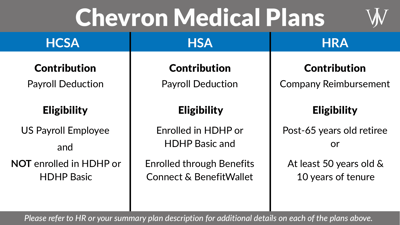
Chevron offers great healthcare options to its many employees. However, in my experience working with Chevron employees, many are unfamiliar with...
READ MORE
Alexis Long, MBA, CFP®
MANAGING DIRECTOR, WEALTH MANAGEMENT
Managing Your Chevron 401(K)? Here are 9 Ways to Get More in the ESIP One of the most common New Year's Resolutions is to save more money or save more in a tax-efficient manner for retirement. If saving smarter in your Chevron ESIP 401(k) plan is on your mind this year, you can leverage a few crucial opportunities to get on the right track. So, let's dive into the most common pitfalls and opportunities in Chevron's ESIP. Determine ESIP Contributions Early Based on Your Expected Salary & Bonus Compensation for the Year With a full year ahead of salary and bonus, the beginning of the year is a great time to check in on your contribution percentages in the ESIP. We often recommend that our Chevron clients set their Pre-Tax or After-Tax contribution percentages at the beginning of the year using their known salary and expected bonus. But once you reach bonus season, it's important to re-evaluate how much you have contributed to the ESIP and determine if you need to change the percentages. In a year when bonuses are much larger than anticipated, like we expect 2025 to be, keeping an eye on contribution elections is even more important! Setting Your Pre-Tax Contributions to Receive the Chevron Company Match To illustrate, let's take the example of a 48-year-old Chevron employee, Alden, with a salary of $246,000 and a target bonus percentage of 30%, an expected total of approximately $319,800. Alden wants to maximize his 401(k) contributions this year and get the full Chevron match to ensure he is on track for retirement. In 2025, he can contribute up to $23,500 to his ESIP's Pre-Tax source. To do so, he sets his Pre-Tax Basic contributions to 2% and his Pre-Tax Supplemental contributions to 5%, which he expects will get him to a total of $23,500 by year-end. Learn more about Chevron’s 401(K) Match here >> Determining Your After-Tax Contributions in the ESIP Alden also feels good about his income and ongoing living expenses and wants to maximize his After-Tax contributions to the ESIP. He's heard about a financial planning strategy called the Mega Backdoor Roth that allows high-income earners like him to get additional savings into a Roth each year. As such, Alden decides to set his After-Tax contributions to 10% to get as much money into his 401(k) as possible, up to the $70,000 limit for 2025. While Alden's efforts to save more in his 401(k) put him several steps ahead of many Americans in setting himself up for a secure retirement, it's more complex than it seems. Unknowingly, Alden also set himself up for mistakes we often see within the Chevron ESIP plan! Avoid These Common Pitfalls When Planning an After-Tax Rollover Let's start with the good: Alden maxed out his Pre-Tax contributions to the ESIP and got $23,500 into the plan. However, he does so by June. While in some other company 401(K) plans, frontloading contributions is advised, at Chevron, it means that Alden has made a substantial planning error. 1) Don’t Overcontribute to the After-Tax Source By June, Alden has yet to receive the full Chevron match, so his Basic contributions automatically convert over to the After-Tax source. This way, Chevron can continue making contributions on his behalf. It's no big deal, right? Not quite. Since Alden contributes 10% of each paycheck to the After-Tax Supplemental source, he overcontributes to his ESIP Plan because his After-Tax Supplemental contributions do not automatically shut off when he reaches the 401(K) limits. The overall 401(k) limit in 2025 is $70,000 for an individual under 50, but Alden contributes $84,256, an over-contribution of $14,256. Alden will have to notify the 401(K) plan immediately that he has overcontributed and have the excess removed (what a pain!). Additionally, even though the funds are After-Tax contributions, any growth on his contributions will be taxable to him. As a result, in his effort to save more, he incurs more taxes! As if that wasn't bad enough, Alden also set himself up for another double-taxation situation. Alden set his Pre-Tax contributions high to max out early in the year. However, once he hit the 401(k) limit for an individual under 50 ($23,500), his Basic contributions switched to After-Tax Basic to keep collecting the Chevron match. Any growth on these funds is also taxable. 2) Time Your After-Tax Rollover to Avoid the 401(K) Contribution Freeze As mentioned earlier, one of Alden's goals is to take advantage of the Mega Backdoor Roth strategy and start rolling his After-Tax 401(K) money over to his Roth IRA. After diligently building his after-tax source in 2025, Alden calls Fidelity at the beginning of 2025 to roll over his After-Tax. However, there's a catch. If Alden decides to roll out his Basic After-Tax source, Chevron's 401(K) contributions will freeze for 90 days! Alden wants to ensure that he receives all his company contributions to his 401(k), so he decides not to roll out his Basic source. 3) Prioritize Pre-Tax or Roth to Minimize After-Tax Contributions & Growth Another strategy he could leverage is spreading his Pre-Tax Basic contributions more evenly over the calendar year to receive no After-Tax Basic contributions. While this approach would negate Alden's ability to use the Mega Backdoor Roth strategy, it also negates the headache of managing and watching the after-tax source in the 401(K). The ESIP is a complex and unique 401(K) plan, so checking in on contributions multiple times throughout the year is crucial to avoid unnecessary taxes or overcontributions! 4) Watch Out for the Pro-Rata Rule Rule to Avoid Extra Taxes Let's suppose Alden decides ONLY to roll out the Supplemental After-Tax, as it does not freeze company contributions. He also chooses to roll the entire After-Tax Supplemental source to his Roth since the growth (taxable portion) was insignificant. Let's assume his After-Tax Supplemental source looks something like this as he starts to roll it over: After-Tax Supplemental - Contributions (Presumed Non-Taxable) $15,365 After-Tax Supplemental - Growth (Presumed Taxable) $2,305 Total Funds in After-Tax Supplemental $17,670 However, Fidelity gives him completely different numbers for which funds are taxable and non-taxable. Alden is perplexed. Here's what happened: Alden and most Chevron employees don't realize that there is a pro-rata rule on 401(K) plans for After-Tax funds. What is a Pro-Rata Rule? The pro-rata rule says all After-Tax accounts are treated as one. Therefore, Alden's two after-tax sources (Basic & Supplemental) are treated as one. Let's take a look at the funds in Alden's After-Tax Basic source. After-Tax Basic Contributions $2,551 After-Tax Basic Growth $382 Total Funds in After-Tax Basic $2,933 This pro-rata rule means that any funds Alden converts to Roth will be taxed proportionally according to the amount of pre-tax and non-deductible funds Alden converts. As a result, if done improperly, Alden could pay taxes twice on this conversion. If we look at the funds across both of Alden's After-Tax sources, they break down as follows: Tax Treatment After-Tax Basic Source After-Tax Supplemental Source Total Funds Contributions (Non-Taxable) $2,551 $15,365 $17,916 Non-Taxable Funds Growth (Taxable) $382 $2,305 $2,687 Taxable Funds Total in After-Tax Funds $2,933 $17,670 $20,603 Tax Impact of the Pro-Rata Rule Alden expects the rollover breakdown of the After-Tax Supplemental funds to be $17,670, with $15,365 being non-taxable and $2,305 being taxable, as reflected in our first chart. However, the pro-rata rule states that you must include all After-Tax funds when calculating the taxes. If we look at the second table, he still has approximately $2,933 in unwithdrawn After-Tax contributions and growth left in the Basic source which contributes to the total value of the after-tax sources. Therefore, the IRS will calculate his taxes as follows: Unwithdrawn After-Tax Basic Contributions / Total Value of After-Tax Source $2,551 / $20,603 = 12% non-taxable/taxable ratio applied to non-taxable funds in the after-tax sources unless he rolls out ALL After-Tax Funds Let's look at Alden's non-taxable and taxable split using this calculation. If he withdraws the entirety of his After-Tax Supplemental funds, totaling $17,670, the resulting split is as follows: Of the $17,670 total in After-Tax Supplemental 12% is non-taxable: $2,120 Remaining taxable amount: $15,550! He increased his tax bill by $13,245 because of the pro-rata rule on the money he already paid taxes on! However, his concern about rolling the After-Tax Basic source is that Chevron 401(K) contributions will freeze. What can he do? Time 401(K) Contributions Around Income & Contribution Limits Each Year There are a few things Chevron employees can do to ensure they get the total amount into the ESIP in a given year. Max Out Contributions Before Reaching 401(k) Income Limits, then Perform After-Tax Rollover Considering Alden's scenario, he can wait to roll out his After-Tax Basic source until he reaches the 415 income limitations ($350,000 in 2025) and fully maxes out 401(K) contributions. Once he reaches the income or 401(K) contribution limits, he won't receive additional company contributions, so the "ESIP freeze" has no effect if he performs the after-tax rollover. Monitor & Control After-Tax Growth If he wants to minimize growth in the After-Tax source, he could also invest the After-Tax contributions into a cash fund so they don't grow or wait until a negative year in the market to roll out After-Tax. Again, taking advantage of After-Tax in the ESIP is more complex than it may be in other 401k plans. If you aren't carefully monitoring and rolling out the funds in the After-Tax source correctly, you can create a substantial tax headache for yourself. We often work with Chevron professionals to get this right using a systematic approach to managing the after-tax. Learn more about how we help Chevron professionals here >> Understand 401(K) Contribution Limits Before Making Elections Let's consider another scenario we often see with many Chevron professionals. Let's consider Alden's 50-year-old co-worker, Audra. In 2025, the maximum 401(K) contribution limit for pre-tax or Roth contributions is $23,500. However, for employees aged 50 or over, there is an additional $7,500 catch-up limit in the 401(K), which makes the maximum contribution amount for a 50-year-old employee $31,000 in 2025. Audra, a diligent saver, planned to max out her ESIP for the 2025 year by making payroll deductions to get her to $23,500 by December. But, since she turned 50 this year, she unknowingly missed the additional $7,500 she could contribute to the ESIP! Frontload 401(K) Contributions Before You Reach the Income Limit The most common mistake we see from Chevron professionals is mismanaging 401(K) contributions that impact how much of the Chevron company match they receive. Let's consider Audra's scenario again. Audra received a promotion last year and expected her new salary to be $300,000 with a target bonus of 30%, equaling a total cash compensation of $390,000 for the year. To get her full 2025 match from Chevron, $28,000, and her assumed maximum of $23,500 in pre-tax contributions, she sets her Pre-Tax Basic contributions to 2% and her Pre-Tax Supplemental contributions to 5%. To max out the After-Tax source, she needs to contribute $18,500 in 2025. However, Audra was so busy with work that she only checked in on her 401(k) in August to ensure she was on track. Therefore, while Audra received the full Chevron match because she had contributed her 2% to Basic, she made a big mistake. Audra receives a bigger bonus than expected in March – instead of $90,000, she gets a $135,000 bonus. Therefore, her income significantly exceeded the section 415 limitation of $350,000 this year. Because she failed to set her contributions early in the year, she missed out on getting most of her After-Tax contributions. By the time she checked in on her 401(k) contributions in August, with her large bonus this year, she was over the income limit, and all her 401(K) contributions were frozen. Neither she nor Chevron could make additional contributions. As a result, she missed out on $17,625 of ESIP contributions this year! How to Check Your ESIP Contributions in NetBenefits To avoid this, you can review your contributions in a YTD statement in NetBenefits. The statement breaks out the Basic and Supplemental sources and the Pre-Tax, Roth, and After-Tax Sources. You can create this statement at any time with updated numbers, and it is an excellent resource for tracking contributions. How To Max Out Your 401(K) At Chevron The moral of these stories is simple: Chevron's 401(k) is complicated. You can't just set your contributions on January 1st and forget them for the rest of the year. To max out the ESIP requires ongoing maintenance each year. If you are a Chevron employee who wants to max out your ESIP fully, it is crucial to understand how the plan works and check in regularly on your contributions to ensure you are on track. Advisor Tip: Chevron employees should check their 401(k) contributions in January, after bonuses, and each following quarter to ensure they are on track to maximize the ESIP plan. Work with a Financial Advisor Who Understands Your Chevron Benefits At WJA, we rarely see Chevron professionals fully max out their 401(K) yearly. Many mistakes can be made in the ESIP plan simply because it's a more complicated 401(k) plan than most. However, those complexities are ripe with opportunity if leveraged effectively. We work with Chevron professionals to make the most of the ESIP by making the most of each contribution source, rolling out after-tax at the proper time, and effectively performing the Mega Backdoor Roth strategy to help get more savings into a tax-free retirement bucket. If you're interested in how we can help make the most of your 401(k) savings, contact us for a complimentary discussion of your financial picture.

One of the most common New Year's Resolutions is to save more money or save more in a tax-efficient manner for retirement. If saving smarter in your...
READ MORE
Alexis Long, MBA, CFP®
MANAGING DIRECTOR, WEALTH MANAGEMENT
83(b) Elections & Performance Shares: What You Need to Know Early in the COVID pandemic in 2020, oil prices briefly went negative and created massive waves of chaos for professionals in the oil and gas industry. Realizing how stressful this is for our professional and executive clients, we want to emphasize how this could be a tax opportunity for energy professionals that receive restricted stock as part of their compensation package. Some energy companies refer to restricted stock by various other names like performance shares, stock awards, or plan awards. Missing out on 83(b) elections could mean missing out on saving tax dollars, especially if you work in the oil and gas industry. Understanding How Restricted Stock Grants, Vests, and is Taxed Companies have a lot of leeway in structuring how they compensate their employees. Most large energy companies use restricted stock units to align the employee's compensation with the performance of the company over an extended period of time. Let's look at the tax ramifications of a standard non-83(b) election example: John receives a restricted stock grant of 1,000 shares of company stock in 2021. The current share price for the company stock is $50 (the current value of the grant is $50,000). The stock vests in 2024 and the company stock price is significantly higher since oil rebounded over the last three years. It is now trading at $100 per share ($100,000 value). John pays taxes at his ordinary income tax rate for $100,000 of company stock. Let's say his marginal tax rate is 35%, thus he pays $35,000 in taxes in 2024. Before getting into the potential tax benefits of an 83(b) election, it is important to understand how restricted stock units are granted, vested, and taxed. The 83(b) election allows an employee to pay ordinary income taxes when they receive the grant and then pay long-term capital gains on any growth between the grant date and the vesting date. If an individual has a high level of conviction that the granted company stock is going to be worth significantly more down the road, then he or she should consider making the 83(b) election. Let's look at an example: In this alternative scenario, John's adviser informed him of the 83(b) election, since oil was near recent all-time lows. They both believed oil would trade higher three years out, so John made the 83(b) election within 30 days of receiving his stock grant. John paid ordinary income taxes in 2021 on the value of the grant amount. $50,000 * 35% = $17,500. The stock vests in 2024 at $100 per share. John does not owe any taxes in 2024 upon the vesting date since he paid those three years earlier in 2021. John then sells the company stock soon after it vests. He has to pay long-term capital gains taxes on the growth in the value of the stock between the grant date and the vesting date ($100,000-$50,000 = $50,000). This $50,000 growth is taxed at his long-term capital gains rate of 15%, causing him to pay $7,500 in taxes upon the sale, for a total tax bill of $25,000. In this illustration, John saved $10,000 in taxes by making the 83(b) election! The 83(b) election can lead to huge tax savings, but it is not for everyone. Listed below are a few important factors to consider to determine if an 83(b) election is right for you: 1. Taxes must be paid when the individual receives the grant instead of when the stock vests. 2. The Individual must have the capital to pay the taxes upfront. 3. The 83(b) election must be made within 30 days of the stock grant. 4. If the employee does not end up receiving the company stock three years down the road, there is no way to recoup the paid taxes; they are gone. 5. Most people will need the help of a CPA to record the 83(b) election correctly. 6. Market risk must be taken into account. For more information please speak with your advisor, or reach out to a member of the WJA team.
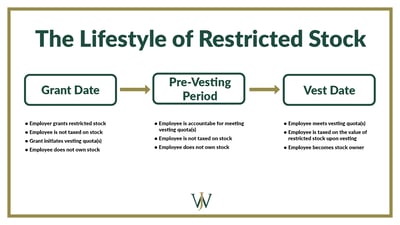
Early in the COVID pandemic in 2020, oil prices briefly went negative and created massive waves of chaos for professionals in the oil and gas...
READ MORE
Nick Johnson, CFA®, CFP®
PRESIDENT & CHIEF INVESTMENT OFFICER
End Of Year Financial Planning Checklist for Chevron Professionals Jingle bells, bright colors, twinkling lights, and the acclaimed Mariah Carey song hitting radio stations nationally all signify that the year is coming to a close. Often in December, we see Chevron professionals shift their focus towards family and time away from the office, missing out on their limited window to use opportunities to lower their tax bill and get additional savings for retirement. Before this year ends, Chevron employees can take advantage of the opportunities uniquely available to them in their Employee Savings Investment Plan (ESIP), Chevron’s Humankind Program, and their health plan options as a final push to make the most of their financial planning for 2025. Curious how much you can lower your tax bill with these strategies? Let’s review. Max Out Your Chevron 401(k), the Employee Savings Investment Plan (ESIP) The Employee Savings Investment Plan (ESIP) is the name for Chevron’s 401(k) plan. Chevron will contribute to your ESIP by matching your contributions up to 8% of your salary annually. Chevron will not contribute on your behalf if you don’t contribute to your ESIP. 401(K) Contribution Limits for 2025 If you are under 50, in 2025, the total IRS limit for your 401(k) contributions is $70,000. If Chevron contributes the full $28,000, employees under 50 can contribute $42,000 across the Pre-Tax, Roth, or After-Tax sources. However, if you are over 50 in 2025, there’s a catch-up contribution allowed in the 401(k). For individuals age 50 and over, the 2025 total IRS limit for 401(k) contributions as an employee is $77,500. If Chevron contributes the full $28,000, employees age 50 and older can contribute $49,500 across the Pre-Tax, Roth, or After-Tax sources. Are you on track to max out all of the sources available in your ESIP for 2025? Find out here >> As a Chevron employee, knowing your specific 401(k) contribution limits for 2025 helps ensure you're maximizing all of the sources available in your ESIP. However, we rarely see Chevron employees get their 401(k) fully maxed out because it requires so much ongoing maintenance. Advisor tip: The Chevron 401(k) is not a set it and forget it 401(k) plan. The best way to check if you are on track to maximizing your ESIP is to pull a year-to-date statement several times throughout the year. To see if you’ve maxed out the ESIP, use the following steps to pull up your contribution summary. Log in to your Fidelity NetBenefits account Select Your Employee Savings Investment Plan 401(k) account Under the “Summary” tab, select “Statements” Choose Year to Date to see this year’s data (or use the specific date feature to look at previous years), and click “Retrieve Statement” Scroll down to “Your Contribution Summary” and review your contributions. Often, we see many Chevron professionals’ contribution summaries look something like this if they believe they’ve maxed out the 401(k) for their age and their income meets the IRS 415 income limitations in a given year. Not on Track for Maxing Out the 401(k)? Consider this. If you are not on track to max out each source, your only option is to increase your election amounts to compensate for the shortfall. Just as important, it would be a good idea to plan your contribution amounts for 2025 to ensure you maximize your benefits. In 2023, when the IRS released its annual contribution limits, it was the largest increase in history due to recent inflation. Therefore, proper planning is critical to ensure you are not leaving money on the table going into 2025 since these numbers change every year. Discover How To Max Out Your 401(k) Before the End of 2025 Here >> Leverage the Backdoor Roth Strategy for Tax-Efficient Savings A backdoor Roth strategy allows you to bypass the IRS' income limitations on Roth contributions to save an additional $7,000 in 2025 ($8,000 if over age 50) above what you're saving in your 401(k) using the pre-tax, Roth, or after-tax sources. To do a backdoor Roth, you make a non-deductible after-tax contribution from your bank account to an IRA. Once funds are in the IRA, the backdoor Roth strategy allows you to roll over the funds to a Roth where they can grow tax-free for life, as long as your IRA had no pre-tax funds. Watch Out for the Pro-Rata Rule If you have pre-tax money in an IRA when you convert to a Roth, you will trigger a taxable event. “Cleaning up” your IRA is important before starting the strategy to avoid any taxes on the Roth conversion for pre-tax funds, which are taxed as ordinary income. Especially if you’re in a high tax bracket, this conversion can be costly, so cleaning up the IRA is essential. The deadline for making back-door Roth contributions is April 15th, 2026; however, the deadline to “clean up” your IRA to avoid paying taxes on the back-door Roth contribution is year-end. How to Clean Up Your IRA Cleaning up your IRA can seem complex, so let's break it down. Roll over the balance of your IRA into your ESIP. For Chevron employees, this is often called a “reverse rollover." Perform the backdoor Roth after the reverse rollover, which doesn’t trigger taxes on the conversion. The deadline to perform the reverse rollover to avoid paying taxes on your backdoor Roth contribution is December 31st, 2025, so act fast! Minimize Taxes Through Charitable Giving in Chevron’s Humankind Program For many Chevron employees, 2024 was a high-income year, which means your tax bill in 2025 may be higher than normal! Luckily, by using the Chevron Humankind Program, reducing your taxes and donating to the foundations and causes you care about most go hand in hand. Did you know that through the Chevron Humankind program, Chevron provides a company match to their charitably-inclined employees and retirees? This program matches charitable donations from Chevron employees up to $10,000 annually and up to $3,000 annually for Chevron retirees. With this program, giving this holiday season can make more of an impact than you think. In order to be eligible for a corporate match in the Chevron Humankind program, the organization receiving donations from a Chevron employee or retiree must be a 501(c)(3) organization. Keep in mind: The deadline to make a charitable matching gift is 12/31/2025 Offset Investment Losses Through Tax Loss Harvesting A great way Chevron employees can save money in taxes is by selling an investment that is trading at a loss inside a non-retirement account. This strategy is better known as Tax Loss Harvesting. Tax loss harvesting occurs when you sell an investment trading at a loss and use that loss to reduce your realized capital gains or offset up to $3,000 of ordinary income. Finally, with this strategy, you can reinvest the proceeds from the sale into a different security. While the strategy is pretty straightforward in theory, it has several pitfalls if done improperly. The first pitfall of tax loss harvesting is that it does not work with retirement accounts. Tax loss harvesting is not a viable strategy in an IRA, 401(k), or Roth, because you cannot deduct losses inside a tax-deferred account. Only brokerage accounts are eligible. The second and most common pitfall is the “Wash Sales Rule.” This rule states that if you sell a security at a loss and buy the same or a "substantially identical" security within 30 days before or after the sale, the loss is typically disallowed for current income tax purposes. Tax loss harvesting is a great way to save money in taxes, especially in a volatile year like 2024. Let’s look at an example to quantify the savings. Suppose April is in the 32% marginal tax bracket for 2024. She decided to sell poorly performing investments and use the $3,000 of losses to offset her ordinary income. Do Nothing Tax Loss Harvest Total Compensation (Base + CIP) $455,000 $455,000 ESIP Contribution -$28,000 -$28,000 Interest / Dividends $5,000 $5,000 Gains/Losses $0 -$3,000 Standard Deduction -$30,000 -$30,000 Taxable Income $402,000 $399,000 Total Tax Due $84,013 $83,053 By utilizing this strategy, April saves about $960 in taxes this year! When coupled with additional strategies like charitable giving and retirement savings contributions each year, those tax savings increase substantially over time! Max Out Chevron's Health Savings Plans Health Savings Account or the Flexible Spending Account Another opportunity available to Chevron professionals is saving in the company's various health accounts for paying medical expenses – The HSA or the FSA. A Health Savings Account is unique because its funds roll over from one year to the next. It is not a use-it-or-lose-it account, so there is no rush to spend it all. In fact, once you reach certain thresholds of savings, you can invest those funds for triple-tax-advantaged savings. But, to make the most of these plans, you do have to ensure you are on track to max it out each year. For 2025, the contribution limits are: $4,300 for self-only contributions, $8,550 for family contributions, and $1,000 for catch-up contributions if you are age 55 and up. It is important to note that the catch-up is per eligible individual under your plan. Therefore, if you and your spouse are over 55, you can each make a $1,000 catch-up towards a family HSA, totaling $10,550 in 2025! In addition to these contributions, Chevron contributes a company match based on plan type. Chevron contributes up to $500 for self-only plans and up to $1,000 for a family plan. With Chevron’s matching contributions, the maximum a Chevron employee can contribute in 2025 to their HSA is as follows: For a self-only plan: $3,800 ($4,300 - $500 Chevron match) For a family plan: $7,550 ($8,550 - $1,000 Chevron match) For those ages 55 or over, you can contribute an additional $1,000 to either plan. To confirm if you are on track to max out your HSA contributions, pull up your most recent pay stub and compare your year-to-date HSA contributions to the limits above. Keep in mind, Chevron does not monitor your contributions. You are responsible for tracking total contributions from all sources (payroll contributions and company match). If you overcontribute to your HSA, you may be subject to taxes and penalties, so it is important to monitor your contributions carefully! Flexible Spending Account – Use it or Lose it In contrast to your HSA, the Health Care Spending Account or Flexible Spending Account (FSA) is typically a use-it-or-lose-it account. Each year, you must use the entire balance of the account, or any contributions will be forfeited. Therefore, it is imperative to plan your contributions accordingly, so you don't leave money on the table. A common mistake we see Chevron professionals make with this type of account is overcontributing to the FSA and underspending it. Unlike a typical savings account, you can only use the funds in your FSA for certain qualifying medical expenses in a given year. We often recommend that employees contribute enough to the FSA annually to cover out-of-pocket costs to avoid forfeiting used amounts while still receiving the tax deduction associated with FSA contributions. Important note: Expenses incurred from January 1 to December 31st, 2024, must be submitted for reimbursement to HealthEquity by June 30th, 2025. Any remaining balances that haven't been reimbursed after June 30th are forfeited. Decide Whether to Exercise or Defer Exercising Your Stock Options Due to their complexity, many Chevron employees come to us with questions about their Non-Qualified Stock Options (NQSO). These stock option grants are awarded in January and vest on a prorated basis over the following three years. Non-Qualified Stock Options are taxed at exercise and at the time of the sale, but differently at each milestone. When you exercise the options, the monetary difference between the market value and the exercise price is subject to ordinary income + FICA taxes. The difference between the market value at the time of sale and the market value at the time of exercise is subject to short- or long-term capital gains depending on how long you’ve held the stocks after exercising them. For Chevron employees receiving an NQSO vest in January 2025, the spread between the market value and exercise price could be significant, given Chevron’s phenomenal year of earnings and your grant price. Before exercising, it is important to consider the tradeoffs between exercising immediately or deferring. Deferring Exercise to a Lower Income Year Sometimes we advise Chevron employees to consider waiting to exercise their options in a lower-income year when it makes sense from a tax perspective. Let’s say, for example, it is December 2025, and April has not yet exercised her vested portion of her 2024 NQSO grant, which is about 500 shares. At an exercise price of $90/share and a current market value of $185, the taxable portion of her vested shares is $47,500 ($185-$90 * 500). With a 32% marginal tax bracket, the after-tax value of her options is $32,300. Market Value at Exercise $185 Exercise Price $90 # Shares Vested 500 Tax Bracket 32% Gross Proceeds $47,500 Taxes Due $15,200 Net Proceeds $32,300 Now let’s assume April is planning on retiring in January of 2026. Besides one month of income, she is expecting a CIP payment in March and no additional income for 2026. Therefore, her projected marginal tax bracket is 12%. If April chooses to defer exercising her option in December and exercise in January, the after-tax proceeds would be $41,800. Market Value at Exercise $185 Exercise Price $90 # Shares Vested 500 Tax Bracket 12% Gross Proceeds $47,500 Taxes Due $5,700 Net Proceeds $41,800 By just waiting 30 days to exercise her stock options, she’s gained an additional $9,500 in value! Give Yourself the Gift of Great Financial Planning Don’t Leave Money on the Table for 2025 Conventional wisdom cautions investors not to let their tax worries in the short-term drive their long-term big-picture financial strategy. To illustrate this, let's continue the example above. Let's say it is January 2025, and April plans to retire in January 2026. She expects to be in the 22% tax bracket in retirement. All else equal, the tax savings from waiting one year to exercise is approximately $4,750. However, a lot could happen to the price of Chevron in one year. In fact, due to the implied leverage embedded in stock options, a 5% drop in Chevron's stock price would erode the tax arbitrage opportunity entirely. Ignoring the tax implications when making investment decisions is not wise. However, considering your entire financial picture, it may make sense to pay the tax when a good investment opportunity presents itself. You can consider many factors when evaluating charitable giving and retirement savings options, and your priorities can change yearly. However, this list only highlights a few financial planning considerations we discuss with our Chevron clients yearly. At Willis Johnson & Associates, we help our Chevron clients with their complex benefits and tax planning needs through our all-encompassing approach to financial planning. Before updating your out-of-office message this holiday season, consider starting the conversation with an advisor today who can help your family on the road to financial independence.

Jingle bells, bright colors, twinkling lights, and the acclaimed Mariah Carey song hitting radio stations nationally all signify that the year is...
READ MORE
Alexis Long, MBA, CFP®
MANAGING DIRECTOR, WEALTH MANAGEMENT
BP HSA Tax Benefits & Investment Strategies To Consider in Open Enrollment As we near BP's open enrollment period, we often talk with our clients about leveraging their company benefits to their financial advantage. An often-underestimated benefit available to BP employees is a Health Savings Account (HSA). Whether or not you're familiar with an HSA, it can be an effective tool to augment your savings while at or even after you've left BP. However, understanding the complete picture of how an HSA works and getting the most tax efficiency from it is crucial to help make sure you don't leave money on the table. What is a Health Savings Account, & How Does It Work? A health savings account is a tax-advantaged medical savings account available to taxpayers enrolled in a high-deductible health plan. For those with a high-deductible health plan (HDHP), you can contribute to an HSA on a pre-tax basis and use the funds in the account for eligible medical expenses without penalty. In the HSA, you can also invest your funds for additional savings. When you reach age 65, you can withdraw funds from an HSA for non-medical expenses like a traditional IRA! Commonly, we hear from clients, "what does it mean to be tax-advantaged?" As a triple tax-advantaged tool, health savings accounts can have three potentially significant tax benefits if utilized correctly. Contributions are tax-deductible (like pre-tax 401k contributions) Contributions also grow tax-deferred in the HSA (like a 401(K) or IRA) Withdrawals for qualifying medical expenses are tax-free How Much Can You Contribute to an HSA? Contribution limits for an HSA change annually; however, for 2026, the limits are as follows: Family contribution limits to an HSA are $8,750 for those under 55 ($1,000 additional for each over 55 years and older) Individual contributions are $4,400 BP Employee HSA Contributions Each year, BP will contribute $1,000 of funds to your HSA if you qualify under the following: Participate in the well-being program and complete and return a signed Physician Certification form certifying that three out of the five of your metabolic syndrome screening results are within the normal ranges. Or, if you cannot meet the above requirements, you may complete three calls with a StayWell health coach You have from April through December 15 of each year to submit your completed Physician Certification Form to StayWell and complete all program requirements to be eligible for BP contributions to your HSA If you are married and contribute to a family HSA, your spouse can also participate and earn an extra $1,000 contribution from BP. That's $2,000 of free, tax-advantaged dollars, which can yield tremendous savings over time! Who doesn't love free money? What's the Difference Between an HSA and an FSA? We see many people confusing the details of two benefits: the HSAs (Health Savings Accounts) and FSAs (Flexible Savings Accounts). These two accounts have similar goals but differ in their benefits and structure. Flexible Spending Accounts (FSA) FSAs also help pay for medical expenses. You can elect during open enrollment to deduct contributions to an FSA from your paycheck on a pre-tax basis. However, funds in these accounts reset yearly and are considered a "use it or lose it" benefit. Health Savings Accounts (HSA) Unlike the FSA, the funds in HSAs do not reset each year. Once in the HSA, your contributions can grow over your lifetime, which makes them great strategy additions to financial and retirement planning. Who should be Saving in an HSA? Health savings accounts are ideal for those with low medical expenses on a high-deductible health plan (HDHP). Typically, we consider low medical expenses to be those dealing mainly with preventative care rather than specialty care or chronic conditions. As the name implies, HDHPs have higher deductibles, requiring more cash on hand for those with higher expenses. However, what if your medical expenses aren't very high and you save more than you'll need in a given year? This is where the HSA and FSA differ, and the HSA has a built-in contingency plan. Benefits of an HSA While you must use HSA funds for qualifying medical expenses under age 65, the account becomes similar to an IRA after this milestone. Once you've reached age 65, you can use your HSA funds for spending, without penalty, on general living expenses beyond medical expenses. As a tax-deferred account, spending on non-medical costs will be subject to ordinary income tax after age 65. How to Avoid the HSA Early Withdrawal Penalty If you try to withdraw HSA funds before turning 65 on non-medical expenditures, you'll face a whopping additional 20% tax penalty! However, you can use your HSA dollars at the HSA store for more than you might think, including: Acupuncture Sunscreen Baby Monitors Hearing Aids BP Benefits Mistakes with the HSA As with any other financial strategy, it's crucial to help make sure you correctly save and invest if you decide that the HSA is right for you. Unfortunately, when working with BP clients, the biggest mistake we see is the failure to start the HSA plan during open enrollment. If an HSA makes sense for you, start planning now so that you're ready to sign up for the HDHP this fall. The second biggest mistake we see is that people aren't aware that you can invest funds in HSA accounts. That's right. This triple-tax-advantaged account can be invested and grow tax-free or tax-deferred, depending on how you use the funds. If you're still on the fence, "tax-free" and "tax-deferred" should be the magic words to push you from thinking about this strategy to implementing it. How to Invest HSA Funds When considering investing in the HSA, we can look at this issue from a few different angles. 1) Hold the Annual Deductible in Cash & Invest the Rest Generally, we recommend keeping at least the annual deductible in cash and investing any excess funds. Using this strategy helps make sure that money is readily available when you need it for medical expenses each year. It also helps make sure that larger accounts don't sit in cash for extended periods, losing value to inflation. If you have a significant expenditure coming up, like a major surgery, you can hold extra funds in cash in a given year to make sure you are fully covered. 2) Fully Invest Your HSA & Claim Reimbursement Later A less conservative strategy is to invest your HSA and claim a full reimbursement later. By footing the bill today while investing in the HSA, your funds can compound over time on a tax-deferred basis. While there are obvious upsides to this more aggressive approach, it requires keeping every medical receipt on file for future reimbursement, which can be onerous. Benefits of your HSA on your Portfolio While many of the benefits above are great in theory, examples often show the more effective real-world impact an HSA can have on a practical level. Let's dive into a few examples showing the difference investing in an HSA can make on an overall portfolio. Sophie and Sam, age 25, are just starting their careers at BP. They both have low medical expenses annually, so they elected the HDHP health plan during open enrollment. When looking at their annual expenditures, Sam and Sophie are considering two options: 1) Should they pay their expected $4,000 medical costs out of pocket, or 2) contribute that money to their HSA instead? If you remember, BP contributes $2,000 annually to employee HSA accounts (if you complete the appropriate steps), which means Sophie and Sam only need to contribute the remaining $2,000 to the plan this year. Impact of Using BP HSA Contributions for Investments Suppose Sophie and Sam work at BP until age 65, a total of 40 years. If they contribute $2,000 to their family HSA each year, those contributions will total $80,000 over their careers. In the same period, BP contributions will also total $80,000, bringing their HSA total to $160,000. If their average effective tax rate is 22% over their careers, they will save $35,200 in taxes on dollars spent for qualifying medical expenses! This tax savings coupled with the $80,000 in HSA contributions from BP puts them $115,000 ahead of where they would’ve been if they didn’t utilize the HSA, max it out, or invest the funds! Does $115,000 not sound all that exciting? Not worth the extra effort? Let's consider a slight revision of the same example. Impact of Maxing Out HSA Contributions & Investing Suppose Sophie and Sam still have $4,000 in medical expenses each year. Instead of only contributing what they need for medical costs, they decide to max out their contributions each year. They save $6,300 annually in their HSA, and BP contributes the remaining $2,000 to nearly max out their family HSA contributions. Sophie and Sam then invest any excess contributions over and above what they spend on medical costs ($4,300/year) with average returns of 8% annual return (the 50 years inflation adjusted average annualized returns for the S&P500). For the purposes of this example, Sophie & Sam will not elect to make catch-up contributions to their HSA. Here's where we see what an HSA can do for you as a tool to build your portfolio. Investing $4,300 per year at 8% for 40 years yields Sophie and Sam $1,113,943 when they reach age 65*. *Impact of investing does not represent future values of any WJA account. The deduction of advisory fees, brokerage or other commissions, and any other expenses that would have been paid is not reflected in the calculation results. As a reminder, they can use these funds in two ways. The funds can be used tax-free for qualifying medical expenses for the remainder of their lifetime. Alternatively, at age 65, they can choose to use this account like an IRA or 401(K). If they decide to use these funds for non-medical purposes, they will pay ordinary income tax on the distributions without penalty. However, keep in mind that these HSA funds grew tax-deferred for Sophie and Sam for 40 years. As they climbed the career ladder, they jumped into some of the highest tax brackets before they retired. However, they avoided the taxes by waiting until age 65 to use the funds! This kind of tax planning is something we look at with supersavers at BP frequently when determining where to withdraw funds for retirement. Take Action During BP's Open Enrollment Period BP's open enrollment (opening February 2026) is one of the only times you can change existing elections, so it's essential to start thinking about making changes to your elections now. An HSA could be an excellent tool for high-income earners with low medical expenses looking to save more in a tax-efficient retirement account. We strongly encourage consulting with an advisor before switching health plans to help you coordinate this strategy with the rest of your financial plan. When you enroll in the Health+Savings Option at BP during the open enrollment period, you’re automatically enrolled in an HSA. BP employees can access their Benefit Center here: https://exploreyourbenefits.com When done correctly, this strategy can make a substantial difference in savings over time. Our firm focuses on comprehensive financial planning for BP professionals to help them properly execute techniques like maxing out HSA contributions and investing the funds. While ensuring you're correctly handling all of these pieces may seem daunting, you don't have to do it alone. Working with a financial advisor is a beneficial way to determine if utilizing an HSA or other tax-efficient savings strategies can help you reach your long-term goals. Start the conversation with an advisor today.
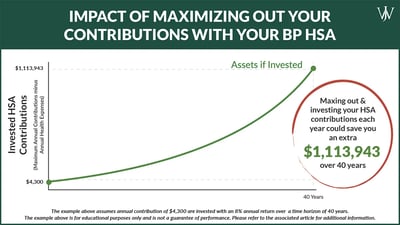
As we near BP's open enrollment period, we often talk with our clients about leveraging their company benefits to their financial advantage. An...
READ MORE
Sarah Sikorski, CPA, CFP®
DIRECTOR, WEALTH MANAGEMENT
Understanding Non-Qualified Retirement Plans at BP: ECP & EBP When viewing your Fidelity NetBenefits online, you may see some additional accounts outside your BP 401(k) and your RAP pension: ECP – Excess Compensation Plan listed together with your ESP 401(k) The non-Qualified Pension ECP – Illustrated with your RAP Pension benefit EBP – Excess Benefit Plan listed together with your ESP 401(k) These are non-qualified plans related to your BP retirement accounts, requiring some significant planning. How Do BP's Non-Qualified Plans Work? The ECP and EBP are "non-qualified" plans. Unlike the "qualified" 401(k) and "qualified" pension, these non-qualified accounts do not have the same protections in many ways. For example, they are subject to the creditor liabilities and financial health of BP, and they do not have the same personal creditor protections for the account owners. Also, the election options for these plans are much less flexible than the elections available in the 401(k) and pension plans. BP's Excess Compensation Plan (ECP) The ECP (for both the ESP and the RAP) is funded when your compensation – base and bonus (not any stock compensation) exceeds an IRS-specified dollar amount. Almost every year, these dollar amounts increase. In 2025, the dollar limit at which the ECP's funding begins is $350,000. Impact of BP Pension and 401(k) Limits When your base and bonus compensation reaches the limit, BP can no longer contribute their matching 401(k) contribution to your ESP account. Also, BP can no longer contribute their crediting amount for your RAP Pension to your pension's cash balance account. However, these contributions do not cease; BP pours these contributions over to the appropriate ECP accounts related to either the 401(k) or the pension. Let's illustrate using an example. In 2025, Susana has a base salary of $320,000 and a target bonus of 25%. So, assuming no performance adjustment in her bonus, her compensation is $400,000 for 2025. When Susana receives her paycheck at the end of July, she will cross the $350,000 compensation threshold. As a result, BP will begin contributing its 7% ESP matching contribution to the ECP instead. Additionally, BP will contribute the company's crediting amount (a percentage based on Susana's age and years of service) to the non-qualified Pension ECP instead of her pension's cash balance account. BP's Excess Benefit Plan (EBP) The EBP, related only to the ESP 401(k), is funded when your contributions to the 401(k) over-fund the account and push BP's matching contribution out of the 401(k). How does that happen? Certain limits pertain to 401(k) accounts for individual contributions and overarching contributions. First, there is the limit that you can contribute pre-tax or Roth, which is $23,500 ($31,000 for those 50 and over) in 2025. Then, there is the overarching limit for all contributions to your 401(k) account by you and BP. In 2025, the total 401(k) limit is $70,000, or $77,500 for those 50 and older. If you contribute enough such that your contribution and BP's contribution exceed these total limits ($70,000 or $77,500), BP's contribution will pour over to the EBP. Let's continue with our example from earlier. In 2025, Susana (age 48) elects to frontload her ESP 401(k). Her goal is to have her bonus primarily fund her 401(k) and to have 401(k) funding completed earlier in the year so she can benefit from compounded growth. In the first quarter, Susana contributes the following towards her ESP 401(k): $23,500 in the Pre-Tax source $36,500 in the After-Tax source As a super-saver, $60,000 seems deserving of a pat on the back for retirement contributions; however, Susana made a common mistake we see from high-earners at BP. By overcontributing to the pre-tax and after-tax sources within her 401(k), she has pushed out a significant amount of BP's 7% matching contribution to her ESP! Instead of the $24,500 BP can contribute on her behalf, she maxed out the 401(k) with only $10,000 in contributions from BP. And, Susana can't stop her contributions once she maxes out her pre-tax and after-tax source. She needs to push them to the EBP or she doesn't get the matching contributions from BP since BP's contributions are only via a match. However, all is not lost for Susana. Upon reaching the $70,000 limit for 401(k) contributions, BP directs the remaining $14,500 of their 7% contributions to the EBP. Financial Planning Considerations for BP Professionals with the ECP or EBP Monitor Contributions to the BP ESP Avoid the EBP Pour-Over during Working Years It should be noted from the above examples that the ECP pour-over is compulsory for those with compensation exceeding the limits. Therefore, there is no way to avoid the pour-over of BP's match if your compensation is too high. However, you can mitigate the pour-over to the EBP with prudently crafted contribution strategies and monitored contributions throughout the year. Using a carefully calculated formula, you can make contribution elections for the pre-tax, Roth, and after-tax sources in the 401(k). Review our guide to maximizing your BP savings here >> You should monitor your pre-tax, Roth, and after-tax pools throughout the year. Many BP employees don't realize that contributions do not cease once you max out your pre-tax Roth limit of either $23,500 or $31,000, depending on your age. Instead, the contributions roll over to your non-Roth after-tax pool. As you contribute more to the after-tax source, you increase the possibility that your contributions will push BP's match into the EBP. Therefore, you should monitor your total contributions for the year. When the employee and employer contributions hit the max limit - $70,000 or $77,500 for those 50 and over – the employer's ESP contribution pours over to the EBP. Manage Investments in the ECP & EBP Invest For Growth Now and Safety Later The ECP and EBP have the same investments available in the ESP. The default investment is a target-date fund tied to your age and prospective retirement date. The Pension ECP does not have any investment choices as it is credited with interest based on your hire date with BP. If you have an ECP for the 401k, you will have an ECP for the pension. Because the ECP for the pension receives regular interest credits and is not exposed to market volatility, you can view it as a conservative, fixed-income investment. You may want to be more aggressive with the investments in your 401(k) ECP and EBP. The default target-date funds will get progressively more conservative over time. For example, you may wish to choose more of the stock funds in the available investment choices – the S&P Index. When you get closer to leaving BP, you will want to invest more conservatively in the 401(k) ECP and EBP accounts. Consider if the stock market should drop significantly before collecting your ECP and EBP benefits. Unless you choose any other election (as detailed below), these accounts will pay out 14 months after leaving the company. Plan Elections For Income & Tax Planning Purposes The default distribution for the non-qualified plans – the ECP and EBP related to the 401(k) - is 14 months after you leave BP. Advance Distribution Elections Before accruing these benefits, you can make an election to accelerate or defer the payout of the benefit. You must make such an election by December 31 of the year before the accrual of the benefit. For instance, if you know your compensation is likely to exceed the compensation limits in 2026 and you are likely to accrue a benefit under the ECP savings plan, you could make an election to accelerate or defer the payout by December 31, 2025. The advance distribution election for the Pension ECP is not available. The default distribution for the ECP related to the pension is also 14 months following your departure from BP. If you choose to change the default or previously elected timing of the distributions from your ECP, EBP or Pension ECP, you can under the following parameters: You must submit your distribution election no less than 12 months before the distribution date. Your election applies to all your non-qualified plans (except specific pre-2005 non-qualified plans). You can elect to receive a lump sum payment or a monthly, quarterly, or annual payment stream. Your election must be pushed out a minimum of five years (74 months after you leave the company) and can be pushed out up to 15 years. What Non-Qualified Plan Elections Work Best? It depends on a variety of situations and matters pertinent to you. The key considerations are cash flow and taxes. Let's consider an example of prioritizing a BP retiree's cash flow. Chris is retiring from BP at age 54. Chris is mostly sure that he has enough non-retirement funds to last until age 59 1/2, when he can take penalty-free distributions from his retirement accounts. Still, he would like a bit more of a buffer. To ensure he has enough funds available at retirement, his most beneficial election is to distribute his non-qualified accounts 14 months past his retirement date. Let's tweak our example slightly for a BP retiree prioritizing the tax impact instead. Suppose Chris leaves BP to take another highly compensated position at another company. Chris is concerned that his non-qualified plans will drive him well into the top tax brackets when added to his salary and bonus at the new company. Therefore, Chris opts to push out his distributions for 74 months so he will receive these payouts after his expected retirement when his income is lower. Pay Attention & Have a Financial Strategy The difficulty with non-qualified plans is twofold: to maximize the benefit, you have to know the plans well enough to develop a strategy and be disciplined enough to execute that strategy. To make the most of both the ECP and EBP, you must: Correctly allocate your contributions to the 401(k) Properly manage your investment allocation Be on top of your distribution elections Partner with a Financial Advisor to Manage Your ECP & EBP Effectively Managing your ECP and EBP properly requires continued maintenance and monitoring. Willis Johnson & Associates works with BP professionals to help them plan their future, develop contribution and allocation plans, monitor progress throughout the year, and implement the best distribution strategy to capitalize on the impact of these accounts. These non-qualified plans are complex. We help make them simple. Learn more about our process and client experience here.
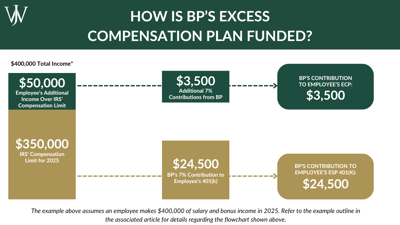
When viewing your Fidelity NetBenefits online, you may see some additional accounts outside your BP 401(k) and your RAP pension:
READ MORE
John Siegel, CFP®, EA
SR. WEALTH MANAGER
Common Tax Mistakes High-Income Earners Make That Add Up Over Time Tax season — it's a time that invokes anxiety and distress across the country until April 15th comes and goes. When advising our clients, we review their tax returns for tax-planning opportunities and often identify previously made errors that result in incorrect additional tax due. These errors range in severity and difficulty to fix, but they can be significant enough to cause sizeable tax ramifications if not addressed quickly and effectively. This article addresses three tax reporting errors that we see most often, how they've been brought about, and how they can be addressed. We'll also dive into a few of the errors we see from high-income earners that can be fixed simply, but let's start with the costliest mistakes. Mistake #1 — Getting Taxed Twice for Your Restricted Stock or Stock Options Many executives receive restricted stock or stock options of their employer’s stock as part of their compensation package. When these shares are granted, or received by the executive, the value of the shares is included in their Form W-2 as taxable compensation. This value then becomes their “basis” in the shares and should reduce the gain when the shares are ultimately sold. The error we see far too often is the use of the incorrect basis when the shares are subsequently sold, which results in incorrect tax liability from double-taxation of the gain. This error is best illustrated through the use of a simple example. Example. Under your employer’s compensation plan, in 2020, you were granted the opportunity to purchase 1,000 non-qualified stock options at $10 per share. The stock was worth $50 per share at the time of the grant. The difference between the value at the time of grant ($50 x 1,000 shares = $50,000) and what you paid ($10 x 1,000 = $10,000) is called a bargain element. The bargain element of $40,000 is considered taxable compensation to you in the year of the grant. In 2025, you sell the stock at $95 per share. To break this down: Action Year # of Shares Share Price Total Shares are granted 2020 1,000 $10 $10,000 Shares are sold 2025 1,000 $95 $95,000 In 2020, the year of grant: When your employer granted you 1,000 shares of stock valued at $50 in 2020, the bargain element ($40,000) was considered taxable compensation and was included in box 1 of your 2020 Form W-2. When you filed your 2020 tax return, you reported the amount in box 1 of your W-2 on line 7 (salaries and wages) of the return. In 2025, the year of the sale: When you sell the shares in 2025, you will receive a Form 1099-B from your brokerage company showing the sale of those 1,000 shares for $95,000. The brokerage company is required to report on Form 1099-B what you paid for the stock as a “cost basis”. You paid $10 per share for 1,000 shares, so your basis is $10,000. Therefore, $10,000 is shown as your cost basis on Form 1099-B. You report this sale on your 2025 tax return as follows: Sale ($95,000) - Cost Basis ($10,000) This results in $85,000 of income for you in 2025, which is taxable at long-term capital gain rates. All good, right? You're using the information provided on Form 1099-B for your tax return and it seems pretty straightforward. However, in doing so, you've actually made a costly mistake — Double-Taxation. You have reported the $40,000 of bargain element into taxable income twice. The Tax Impact of Incorrect Cost Basis for Performance Shares In our example, the bargain element of $40,000 was included in taxable income in 2020 as taxable compensation on Form W-2. It was again included in taxable income when the shares were sold at a long-term capital gain of $85,000. Assuming that, as an executive, you are taxed at the highest capital gains rate of 20%, plus the additional 3.8% net investment income tax, this will result in an incorrect tax liability on the sale of $20,230. The correct method of reporting this grant of 1,000 shares to you is as follows: Year Form of Income Line or Schedule of Form 1040 Amount of income 2020 Salary Line 7 of 2018 Form 1040 $40,000 2025 Long-term capital gain Form 8949 $45,000 You may be asking why only $45,000 in capital gains for 2025? You have already paid tax on the grant of the stock in 2020 because your employer included the $40,000 in your Form W-2. Any amount that you’ve already paid tax on should be added to your cost basis. Therefore, your total cost basis in the shares is computed as follows: Amount you paid for shares in 2020 ($10 per share): $10,000 Amount of income taxed in 2020 as compensation: $40,000 Total cost basis: $50,000 So you will only be taxed on the actual gain incurred as follows: Sale of 1,000 shares at $95 in 2025: $95,000 Less: total cost basis: ($50,000) Total long-term capital gain: $45,000 Most taxpayers (and sometimes their CPAs) report exactly what is shown on their Forms 1099-B when they prepare their yearly tax returns. However, a little-known regulation of the IRS is that brokers (like Fidelity, Edward Jones, UBS, Charles Schwab, etc.) are not allowed to include ordinary income on Forms 1099-B. This is why, in our example, Form 1099-B reflected only $10,000 as a cost basis. If a taxpayer is not keeping track of which shares are being sold, they will get this wrong every time. How to Prevent Double-Taxation On Your Performance Shares What is a solution? Many brokers, like Fidelity, provide important details in their Supplemental Information included with the yearly Forms 1099-B. Taxpayers (and their CPAs) need to look beyond Form 1099-B and into the Supplemental Information for information that will prevent double-taxation. Fidelity has online resources to walk taxpayers through both Forms 1099-B and the accompanying Supplemental Information. This publication can be found here. Going back to our example, when you sell your 1,000 performance shares in 2025, you will need both the Form 1099-B and the Supplemental Information section included with your Form 1099-B when you prepare your tax return. By reporting this sale correctly, you will only recognize into income the $45,000 of capital gain income resulting from the sale of the shares. Assuming you are in the 20% capital gains rate, with the additional 3.8% net investment income tax, this results in a tax of $10,710. This is $9,520 less than the tax liability incurred by the double taxation from incorrect reporting. If you're receiving performance shares as part of your executive compensation, you should consult the Supplemental Information included with your Form 1099-B when preparing your tax return. If you're using tax preparation software, this information will guide you in entering the data correctly. If you use a CPA, you should provide them with this Supplemental Information section of Form 1099-B to ensure accuracy in the preparation of your tax return. How to Address Double Taxation on Previous Tax Returns If you have made this error on a prior year’s tax return, you can amend the three most recently-filed tax returns by filing a Form 1040-X, Amended U.S. Individual Income Tax Return to get a refund of any taxes you may have overpaid. If you choose to amend a return to correct the error, it must be filed within three years of that return's original filing date. For example, if you made a double-taxation error on your 2023 return, you would need to file an amended return no later than April 15, 2026. Mistake #2 — Incorrectly Completing or Filing Form 8606 When discussing tax returns with our clients, the most common mistakes we see from corporate executives and small business owners are related to Form 8606. Form 8606, "Nondeductible IRAs," is filed with your Form 1040 and is used to report: Nondeductible contributions you make to traditional IRAs, Distributions from traditional, SEP, or SIMPLE IRAs (if you’ve ever made nondeductible contributions to traditional IRAs), Roth conversions, and Distributions from Roth IRAs. The two most common errors we have encountered are failure to complete Form 8606 and failure to report a Roth conversion correctly. Failure to complete Form 8606 and attach to Form 1040 If you make a nondeductible contribution to a traditional IRA, you should complete Form 8606 to track your basis in the IRA. The basis is composed of amounts that have already been taxed (“after-tax” amounts). Without Form 8606, you don't have the necessary or sufficient documentation to prove your basis in the IRA. This results in double-taxation when you receive distributions from the IRA. For example, Joanna’s taxable income is too high to receive a deduction for a contribution to an IRA. In 2023, when she was 64 years old and still employed, she contributed $7,500 as a nondeductible contribution to her traditional IRA. Because she receives no deduction for the contribution, the the$7,500 is considered after-tax money. She should include this into her “basis” of her IRA. Since Joanna will not receive a deduction for the contribution, she forgets to tell her CPA, and her CPA doesn’t ask her whether she made a nondeductible contribution. Therefore, no Form 8606 is filed with her tax return tracking this contribution. The IRA earns a total of $500 in 2023 and 2024. In 2025, Joanna distributes the entire balance of $8,000. She receives a Form 1099-R for the distribution of $8,000 with the “Taxable Amount Not Determined” box of Form 1099-R is checked. The CPA reports the entire $8,000 distribution into taxable income. The problem is that Joanna has already paid income tax in 2023 on the original contribution of $7,500 since it was made with after-tax money. Assuming she has no other traditional IRAs, the only amount that should be taxed is the cumulative earnings of $500. If she doesn’t correct this error, her mistake can cost her upwards of $2,700 in additional taxes if she is taxed at the highest tax bracket. To report a nondeductible contribution to your traditional IRA, use lines 1 - 5 of Form 8606. If you use a tax return preparer, make sure you tell your CPA about your non-deductible contribution. Failure to Report Backdoor Roth Conversion Taxpayers whose modified Adjusted Gross Income (AGI) exceeds certain thresholds are prohibited from contributing directly to a Roth IRA. The IRS does permit these taxpayers, however, to make a nondeductible contribution to a traditional IRA and then convert that traditional IRA to a Roth. This is called a Backdoor Roth IRA conversion. If you have performed a Backdoor Roth conversion, you must tell your CPA and provide the Form 1099-R, and Form 5498 (which details this conversion). Otherwise, your CPA will not know about the conversion. This error in not sharing information results in either 1) no Form 8606, or 2) an incomplete Form 8606. The Backdoor Roth requires all sections of Form 8606 to be completed. Parts I and II of the form report both the nondeductible contribution to the traditional IRA and the conversion to the Roth, computing the taxable portion of the conversion if any. Part III of the form tracks your basis in the Roth IRA. If you have incorrectly completed Form 8606 on previously filed tax returns, you can amend the three most recently-filed tax returns. If you have filed no Forms 8606 for nondeductible contributions, the IRS may accept a filing of Forms 8606 for all years to establish the correct basis in your Traditional IRA. Mistake #3 — failure to report foreign financial assets. Many executives live overseas as expatriates, either working for US employers or foreign employers. While overseas, they may open bank accounts, investment accounts owning mutual funds and securities, participate in the pension plans of foreign employers, own precious metals, and possibly own rental property. Many US taxpayers believe that if the asset is held outside the US, then the income does not need to be reported on the US tax return. However, this is a very costly error. Here are two general rules to know: US citizens report worldwide income and foreign financial assets on their Form 1040 regardless of where they live in the world; Non-US citizens report worldwide income and foreign financial assets on their Form 1040 if they reside in the US or within a US territory. The IRS began to scrutinize this issue several years ago and has implemented costly penalties for failure to report not only the income from foreign assets but also information about foreign assets. The penalties are costly, beginning at $10,000 per reporting violation. The Financial Impact of Failing to File Foreign Financial Assets For example, Armand is a U.S. citizen residing in Belgium working for a foreign employer. He has a bank account, a savings account, and a pension account being held in Belgium. The combined amount of the accounts is $545,000. Not understanding the U.S. foreign filing requirements, he failed to report these accounts on a yearly FinCEN 114 (FBAR), and Form 8939. His potential penalty is $10,000 per account per year he failed to file. If Armand is found by the IRS to have willfully failed to file, the penalties could be much higher. Handling Delinquent Foreign Filing Requirements If you have not been filing foreign information returns, the IRS does have procedures in place for becoming compliant. These are the Delinquent International Information Return Submission Procedures (DIIRSP), and these procedures are available for taxpayers who: have not filed one or more required international information returns, have reasonable cause for not timely filing the information returns, are not under a civil examination or a criminal investigation by the IRS, and have not already been contacted by the IRS about the delinquent information returns If a taxpayer has reasonable cause for not filing the required information returns, they may attach a “reasonable cause” statement to the delinquent information return. Be aware, however, that the IRS may still assess penalties for the failure to file these forms. Taxpayers who qualify for the DIIRSP should speak with a knowledgeable tax professional or tax attorney about becoming compliant in this area. If the IRS discovers that you have not been filing these reports, the penalties are so costly that you may have to liquidate some of those assets to pay the IRS. At Willis Johnson & Associates, we have a strong network of professionals who can guide you in this area. You can learn more about our specialized experience here. Which Foreign Assets and Accounts Need to be Reported? If you: Then file: Have financial interest or signature authority over foreign financial accounts with aggregate values at any time during the year exceeding $10,000 FinCen 114, Report of Foreign Bank and Financial Accounts. Deadline is April 15, 2026, with automatic extension to October 15, 2026. Must be filed separately from your tax return with the Department of the Treasury. Own any of the following: 1. Financial accounts (bank, investment, etc.) maintained in a foreign financial institution, 2. Foreign stock and securities not held in a foreign financial institution, 3. Any interest in a foreign entity (including capital or profits interest, and an equity or debt interest) 4. Any financial instrument or contract that has an issuer or counterparty that is not a US person, 5. Any cash value life insurance or annuity contract maintained by an insurance company or foreign financial institution, 6. A note, bond, debenture, or another form of debt issued by a foreign person, 7. An interest rate swap, currency swap, basis swap, interest rate cap, interest rate floor, commodity swap, equity swap, equity index swap, credit default swap, or similar agreement with a foreign counterparty, 8. An option or other derivative instrument entered into with a foreign counterparty or issuer. Form 8938, Statement of Specified Foreign Financial Assets, if you meet the filing threshold levels provided in the instructions to the Form 8938. File with your Form 1040. Own an interest in a Passive Foreign Investment Company (PFIC) — including foreign mutual funds — and receives direct or indirect distributions or dividends from the PFIC (including a foreign mutual fund) or recognize a gain or a direct or indirect disposition of the PFIC stock or foreign mutual fund. You may be required to file Form 8621, Information Return by a Shareholder of a Passive Investment Company or Qualified Electing Fund. File with your Form 1040. Need to report information with respect to a Qualified Electing Fund (QEF) or Section 1296 mark-to-market election You may be required to file Form 8621, Information Return by a Shareholder of a Passive Investment Company or Qualified Electing Fund. File with your Form 1040. Are an officer, director, or shareholder in a foreign corporation(s) You may be required to file Form 5471, Information Return of U.S. Persons With Respect To certain Foreign Corporations. File with your Form 1040. Own or are beneficiary of a foreign trust You may be required to file Form 3520, Annual Return to Report Transactions With Foreign Trusts and Receipt of Certain Foreign Gifts. File with your Form 1040. Receive bequests or gifts in a certain amount from a foreign individual, estate, corporation or trust. You may be required to file Form 3520, Annual Return to Report Transactions With Foreign Trusts and Receipt of Certain Foreign Gifts. File with your Form 1040. Own an interest in a foreign partnership. You may be required to file Form 8865, Return of U.S. Persons With Respect to Certain Foreign Partnerships. File with your Form 1040. Sources: https://www.irs.gov/businesses/small-businesses-self-employed/report-of-foreign-bank-and-financial-accounts-fbar, https://www.irs.gov/instructions/i8938, https://www.irs.gov/businesses/comparison-of-form-8938-and-fbar-requirements Common Tax Mistakes You Can Easily Fix This Tax Season In addition to the three biggest tax mistakes we see regularly, I want to also discuss smaller mistakes that can have a big impact. Improper Tax Withholding Something we see happening often is taxpayers ignoring how much is being withheld from their salary. Perhaps they are having too much or too little withheld out of their salaries. This is easy to check and there is really no reason to have either very large overpayments or very large payments due. For taxpayers who are thrilled to receive huge refunds from the IRS each year—this is money you would have had throughout the year had you adjusted your withholding. There are no victory laps for having huge refunds. Likewise, if you have large payments to the IRS each year because of insufficient withholding or income that is not withheld upon (dividends, business income, passive income), this too is an easy fix through either adjusting your withholding or making quarterly estimated tax payments. Poor Record-Keeping Another common mistake is poor record-keeping. IRS audits do happen and can be a significant cost if you do not have the proper documentation to support the numbers claimed on your return. For example, I’ve seen clients who withdraw large amounts from their children’s 529 plans but fail to keep the records of the expenses those withdrawals were made to cover. The same thing for Health Savings Accounts. Taxpayers withdraw from those accounts and do not keep the receipts for the expense that was reimbursed. You may think the IRS will never audit you, but how do you really know that? If the IRS audits these withdrawals and you do not have the records to support them, the IRS will consider that taxable income to you and assess back taxes, along with penalties and interest. How much easier it is to keep track of receipts? So, keep good records. Make sure you have proper documentation that supports every number and position you are claiming on your tax return. Procrastination on Tax Preparation And another mistake—waiting until the last minute to prepare your tax return, or provide your documents to your CPA. There must be time to correctly prepare a tax return, whether you are preparing or a tax professional is preparing. When you wait until the last minute, there is a great risk that: 1) mistakes will happen in the preparation due to haste and lack of well-qualified review, 2) assumptions will be made and positions will be taken that cannot be supported by facts and documentation, and 3) incorrect numbers will be used. Through the years as a tax professional, I’ve seen many a client wait until the last minute for tax preparation. This isn’t good for you, and it sure isn’t good for your tax professional. These tax mistakes are the ones we often see impacting our clients the most. Failing to report foreign assets, double taxation, and failure to include correct documentation are only a few of the many potential tax filing mistakes that can significantly impact your wealth accumulation over time, but as noted, we see many others as well. At Willis Johnson & Associates, we believe that optimizing your taxes is an important piece of your financial plan and is essential to helping you achieve your financial goals. Learn more about the services we offer and our commitment to helping your family make the most of your resources at every stage of life.
.png?width=400&name=Artboard%203%20(1).png)
Tax season — it's a time that invokes anxiety and distress across the country until April 15th comes and goes. When advising our clients, we review...
READ MORE
Leah Cessna, CPA
DIRECTOR OF TAX
5 Things to Know About Shell Performance Shares & Stock Compensation As a Shell employee, now’s the time to watch your account for your granted performance shares. In February, Shell stock awards were granted under the Performance Share Plan (PSP) and the Long-Term Incentive Plan (LTIP). What are Shell Performance Shares? This restricted stock unit plan, colloquially referred to as “Shell performance shares”, is a discretionary incentive benefit program offered to certain Shell employees based on performance, job grade, and other factors. The plan aims to align Shell professionals' compensation with the company's performance. Shell directly awards the stock, typically on a multi-year vesting schedule, as additional compensation. Through this deferred vesting schedule, the stock also acts as a retention tool, as grants may be forfeited if a Shell professional leaves the company. The original Shell stock grant comprises an estimated number of shares. The actual shares vested after three years are based on the recipient’s work status and company performance measures. The actual award is communicated to the grantee in March of the third year and shortly thereafter appears in a vested share account at Computershare. When do Shell Performance Shares become available? Each year, in February, these stock awards are granted in a restricted fashion. The stock becomes vested (fully owned) three years after the award. This can be a great employee benefit, as an enhancement to compensation and it gives recipients a stake in the success of the company. While recipients do not own the Shell stock shares outright during the vesting period, they are credited with each vested share’s dividends during that three-year period. For instance, grants awarded in 2025 vest in 2028. Each grant award specifies the timing and condition of the vesting at the time of the grant. What Happens to Shell Stock Awards After Retirement or Death? If performance stock recipients retire with immediate pension eligibility (80 points) before an award vests, the number of shares in which the recipients vest will usually be prorated to the amount of time they remain in service with Shell during the three-year period. If they retire without immediate pension eligibility, they will forfeit all their granted and unvested shares. If performance share recipients die before an award vests, the full award will be delivered to their estate. How Should I Plan for Performance Shares and LTIP Shell Stock Awards? The PSP and LTIP awards require some management for the following reasons: Taxation: Managing and paying the income tax. Timing sales to manage gains or losses. Investment: Building a strategy that best meets short- and long-term goals. Risk: Diversifying assets to reduce financial exposure to the company from which income and retirement benefits are derived. Tax Implications of Shell Performance Shares There are several income tax facets to consider concerning performance shares. It is essential to understand these factors to mitigate tax risks, such as tax underpayment penalties, and to leverage the best value from the vested awards. Taxes When Granted Shares: None In most cases, recipients are not taxed when the stock award is granted. The grantee cannot exercise the share or sell it on the market. Therefore, the IRS' control standard to determine taxability still needs to be met. Taxes When Shares Vest: Fully Taxable When the award vests, recipients are typically assessed income tax (federal, state, and local — as applicable) as well as Social Security and Medicare. (Note: Special rules apply to expatriate recipients who are on long-term international assignments). Because these shares are granted and vested in relation to your employment at Shell, the shares are considered earned income, which makes them fully taxable at ordinary income plus Social Security and Medicare. Tax Withholding When vesting, tax withholding is applied by selling a proportionate amount of shares to pay the effective tax rate. The default withholding for federal income tax is 22% in most cases. However, for those with compensation exceeding $1 million and receiving stock compensation, the default withholding rate for shares is 37%. Many Shell professionals' base, bonus, and performance shares subject them to a higher tax bracket than 22%, so a common issue arises from the default withholding. Because of these default withholdings, there is a risk of causing an underpayment penalty on this compensation. Two options for addressing this shortfall in tax payment and avoiding a penalty are (a) increase your withholding from your paycheck on your Form W-4 elections or (b) make an estimated payment for the quarter in which the shares vest (usually by April 15). Cost Basis for Performance Shares The amount of the vested award establishes the tax basis of the stock to calculate gains or losses going forward. Short-term gains/losses are realized on shares sold within one year of vesting. Long-term gains are realized on shares sold more than a one year after vesting. The value of the performance shares you receive is included in your W-2 as compensation in the year you receive the shares. However, very often, when our team reviews a Shell professional’s tax returns, we discover that the executive (or the CPA preparing their return) has used the incorrect basis when selling their Shell performance shares. When you sell your Shell performance shares, you pay capital gains taxes on the difference between the value at vesting and the price when you sell. Seems simple, right? The problem is that the 1099 you receive from Fidelity will have the cost basis as $0—making it easy to pay capital gains taxes on the whole value of the stock instead of just the gain from the vest date. If you don’t review the supplemental information on the 1099 from Fidelity (and possibly include Form 8949 for the adjusted basis on your tax return), you can end up paying taxes twice! And…who wants to pay more to the IRS than what is required? Learn how to avoid paying double tax on your performance shares here >> Investment & Risk Considerations for Shell Stock Awards When receiving stock compensation, Shell professionals heighten their financial exposure to the company. Shell is already their primary source of income and benefits. Additional exposure to Shell through excess stock ownership can be financially unhealthy. Diversifying your investments allows you to reduce your exposure to specific types of risk, including risks inherent to Shell. For many of our Shell clients, we generally recommend they sell what they receive annually in share grants (at a minimum). Especially for people with energy overconcentration, as we don't want to increase their energy exposure further. On the other hand, if energy performs well in future years, you can participate in the growth with the energy share grants you have already received when they vest. Additionally, your bonus may be more significant if the energy industry is doing well overall so you can invest that cash into other sectors to diversify your portfolio further. Working with an Advisor with Experience in Shell Stock Compensation Careful attention to your grants, vested shares, and all the implications of selling the shares can be daunting. Managing your stock holdings requires ongoing time and attention to what you hold and implementing tax-efficient and diversification strategies for the shares. Shell’s performance shares can significantly influence your financial growth if strategically managed. It is essential to realize how you should manage and monitor your shares to get the most value from them over time. As you continue your career at Shell, continually evaluating Shell stock's role in your portfolio and acting accordingly can significantly impact your financial future. At Willis Johnson & Associates, we maintain schedules and perform comprehensive tax projections for our Shell clients to develop strategies to leverage their performance shares effectively. Contact our team of Shell specialists today to find out what impact your Shell stock compensation could have on your journey to financial independence.

As a Shell employee, now’s the time to watch your account for your granted performance shares. In February, Shell stock awards were granted under the...
READ MORE
John Siegel, CFP®, EA
SR. WEALTH MANAGER
Self-Employed? How to Choose Between a Solo 401(k) & SEP-IRA Retirement Savings When building a career through self-employment or deciding to consult after retiring, a common question when starting is, "how should I save for my retirement if I don't have a company-sponsored 401(k)?" Consulting can yield substantial income even after leaving the corporate world, and there are many savings options available to you. Saving your self-employment income in tax-deferred retirement accounts, either through a Solo 401(k) or a SEP-IRA, can often be a beneficial way to continue building wealth to live off in your later years. What's a Solo 401(k) & Who's It For? A "Solo 401(k)," or "Keogh defined contribution plan," is a retirement account for self-employed individuals who are running a business where they, and their spouse (if applicable), are the sole employees. A Solo 401(k) works very similarly to a traditional 401(k), where both employers and participants can make contributions on a pre-tax or Roth basis with the contributions being taxed according to whichever contribution style you pick. The business owner, or self-employed individual, functions as both the employee AND the employer. Therefore, he or she can make contributions to a Solo 401(k) in both capacities. As an "employee," one can make elective deferrals up to the lesser of 100% of compensation or the annual limit.* As an "employer," one can make profit-sharing contributions of up to 20% of their net adjusted business profit.** What's a SEP-IRA & Who's It For? A SEP (Simplified Employee Pension) IRA is a retirement plan available to employers, including self-employed people, with businesses exceeding one employee. For SEP-IRA plans, employers must contribute on behalf of their employees to the plan because an employee's elective salary deferrals and their accompanying catch-up contributions aren't allowed. The SEP-IRA functions similarly to a traditional pension plan in that only employers can contribute to the plan on behalf of the employee participant. Suppose your business has more than one employee (spouses are an exception). In that case, you'd be better off looking into a SEP-IRA account instead of a Solo 401(k), as Solo 401(k) accounts are limited to single-employee businesses and a designated spouse. Additionally, if you are projecting to make over approximately $280,000 in income and want to defer the maximum 25% contribution of your income, a SEP-IRA contribution would be similar to what you could contribute to a Solo 401(k). Keep in mind that you will have to contribute the same percentage you are contributing for yourself for all your employees, which could be a limiting factor if you have numerous and/or highly compensated employees. Differences Between Solo 401(k) & SEP-IRA for Self-Employed Professionals Many freedoms and responsibilities come with running your own business. If you've technically 'retired,' Solo 401(k)s can enable you to take advantage of tax deductions and deferrals as you continue to cushion your nest egg for the years to come. If you're still accumulating savings to put toward your retirement goals, a Solo 401(k) offers two significant benefits compared to similar options. Key Difference 1 - Multiple Contribution Sources for Retirement Savings Solo 401(k) Contributions can be made as both employer & employee Like a traditional 401(k) plan, a Solo 401(k) allows both an employer to contribute and the participant to make both pre-tax and Roth contributions. The IRS determines annual contribution limits for 401(k)s each year. There are two ways you can contribute to a Solo 401(k): employee contribution (also referred to as elective deferral) or through employer contributions (commonly through profit sharing). As an employee, contributing to a Solo 401(k) is quite simple. Through pre-tax or Roth contributions, the maximum employee contribution amount you can put into a 401(k) in both 2025 is $23,500 if you're under age 50. If you are 50 or older, you can make an additional catch-up contribution of $7,500 for 2025, bringing your total maximum employee contribution to $31,000 each year. In your concurrent role as the employer, when contributing to a Solo 401(k), you can contribute up to 20% of your net adjusted business profit so long as you don't exceed the IRS' overarching limits for Solo 401(k) contributions (including your contributions in your role as the employee). For 2025, the overarching Solo 401(k) contribution maximum is $70,000 for participants under age 50. For participants age 50 or over, the maximum contribution to a Solo 401(k) in 2024 is $77,500 ($70,000 + $7,500 catch-up). How to Determine the Employer Profit Sharing Contribution Amount to a Solo 401(k) Above, we mentioned that a common way for employers to contribute to a Solo 401(k) is through profit sharing. A common question we get from our clients is how to determine the right contributions from profit sharing to their Solo 401(k). Let's walk through an example of how you can determine the appropriate profit-sharing contribution for your situation. Consider that you're a sole proprietor (age 52) who earned $100,000 after the deduction of business expenses. In the situation outlined below, you could allocate nearly half of your yearly earnings to a tax-deferred retirement account. Calculate Your Net Income & Self-Employment Tax The self-employment tax is 15.3% on taxable income for social security and Medicare. Only 92.35% of your self-employment income is generally subject to self-employment tax, so your total taxable income is calculated as: Net Self-Employment Income ($100,000) is only taxed for the first 92.35% (.9235) 100000 * 0.9235 = Taxable income ($92,350) Taxable Income ($92,350) * Self-Employment Tax (.153) = Self-Employment Tax ($14,129.55) You may deduct up to half of your self-employment tax amount from your net self-employment income. This calculation helps to determine your net adjusted business profit. 2. Calculate Your Net Adjusted Business Profit Net Self-Employment Income after Business Expenses ($100,000) - 1/2 of Self Employment Tax ($14,129.55/2 =$7,064.78) = Net Adjusted Business Profit ($92,935.23) From here, we can determine your maximum profit-sharing contribution alongside your maximum employee contributions. 2025 Maximum Employee Contribution Amount (for those age 50 or over): $31,000 Maximum Profit-Sharing Contribution is up to 20% of net adjusted business profit: $18,587 (20% * $92,935.23) Total contribution amount: $49,587 SEP-IRA Contributions can only be made as an employer Similar to the Solo 401(k), the SEP-IRA is constrained to the contribution limits listed above as well. A key difference is that an employer’s contributions cannot exceed those limits or 25% of the employee’s compensation, whichever is less. Remember, an employee isn’t permitted to make elective deferrals for a SEP-IRA. Similar to a traditional pension, contributions are only made by the employer. Key Difference 2 - Solo 401k Plans Often Afford An Individual More Contributions Than SEP or Traditional IRAs Compared to other tax-deferred plans available, the Solo 401(k) plan often allows a self-employed person to achieve the most funds. Many who start their own business look into alternative retirement savings plans, one of the most common is a SEP-IRA. A key caveat of the SEP-IRA is that you, as the employer, must replicate any percentage of contributions you choose to make to your plan for your employee as well. For example, if you wish to contribute 20% of your compensation towards your SEP-IRA, you, as the employer, would also need to contribute 20% of your employee's salary to their SEP-IRA as well. A SEP-IRA has different, albeit similar, contribution limits compared to a Solo 401(k). The IRS limits an employer's total SEP-IRA contribution to either $70,000 (2025) if 50 or over, or up to 25% of compensation, whichever of these contributions is lesser. For participants under 50, the maximum SEP-IRA contribution amount remains at $69,000 because there are no catch-up contributions allowed for a SEP-IRA. But again, only if it's the lesser of the two options. Let's illustrate how the Solo 401(k) plan compares against the SEP-IRA and a Traditional IRA through an example. Suppose you're self-employed (age 51) and have earned $100,000 in income that's considered for these plans. If you've maxed out your contributions as both employee and employer, the maximum amount you can save in 2025 is as follows: Plan Individual Contribution Employer Contribution Total Savings (2025) Solo 401(k) $31,000 $18,587 (Maximum Contribution is 20% of Net Adjusted Business Profit) $49,587 SEP IRA - $25,000 (25% of compensation is less than the IRS' overarching contribution limit) $25,000 Traditional IRA $7,000 - $7,000 In the example above, contributing to a Solo 401(k) instead of a SEP-IRA could help you save an additional $24,587! Important Dates to Consider When Setting Up a Solo 401(k) or a SEP IRA When setting up a SEP-IRA, you have until the date your tax return is filed (including extensions) to set it up, contribute, and receive a deduction on your tax return. For example, with an extension, the deadline to file your tax return is October 15, 2026. You have until October 15, 2026, to open and fund the SEP-IRA to receive the deduction on your 2025 return. Unlike a SEP-IRA, a Solo 401(k) must be established in the year in which you take the deduction on your tax return. For example, you must set up the 401(k) plan before December 31, 2025, to receive a deduction on your 2025 tax return. The good news is that once the plan is established, you have until you file your tax return (including extensions) to contribute to the 401(k). If you're considering using a Solo 401(k) to help save for your retirement, you should remember the following dates: You can make contributions to a Solo 401(k) for the 2025 tax year before you file your tax return as long as you opened the Solo 401(k) plan before December 31, 2025. If you are consulting in 2025 and are interested in contributing to a Solo 401(k), it's pertinent to open the plan before December 31, 2025.* How to Choose Between a SEP IRA or Solo 401(k) Based on How Much Income You Expect to Earn An important consideration in deciding your business's optimal retirement savings plan is how much income you expect to earn. Your income will ultimately determine the maximum contribution you can make. In general, if you earn less than approximately $280,000, a Solo 401(k) is the best way to maximize your contributions; Above that number, the maximum contributions will be the same for Solo 401(k) and SEP-IRA, given how the math works. Deciding to become self-employed is a significant life decision that impacts your life today as well as your retirement down the road. Keeping track of deadlines for contributions and tax deduction rules for these plans can be a nuanced and tedious task on a business owner’s seemingly endless list of to-dos. Working with an advisor with expertise in the financial and tax implications of each of these plans can offer peace of mind and allow you to focus on what matters most. We’ve helped several of Houston’s small business owners select the right plan for their long-term goals. To set yourself up for success, reach out to our team for expert guidance so your wealth can grow alongside your business.
%20%26%20SEP%20IRA%20Self-Employed%20Retirement%20Plan%20Contributions.png?width=400&name=Solo%20401(k)%20&%20SEP%20IRA%20Self-Employed%20Retirement%20Plan%20Contributions.png)
When building a career through self-employment or deciding to consult after retiring, a common question when starting is, "how should I save for my...
READ MORE
Emily Johnson, CPA
TAX MANAGER
Considering a Backdoor Roth Contribution? Don’t Forget Form 8606! If you are making nondeductible contributions or engaging in the backdoor Roth strategy, it is vitally important to fill out IRS Form 8606 each and every year, so you don’t end up paying taxes twice. When you contribute to an IRA, you are in charge of tracking the type of contributions and keeping a history of all after-tax (nondeductible) contributions year after year. This is unlike your employer’s 401(k), where your company tracks everything for you. Do I Need to Fill Out Form 8606? Form 8606 must be filed with your Form 1040 federal income tax return if you (a) make nondeductible contributions to a traditional IRA, including repayment of a qualified disaster distribution, or (b) converted assets (pre-tax or nondeductible) from an IRA to a Roth IRA. The purpose of reporting the nondeductible contributions to a traditional IRA is to establish a “basis” in the IRA that would otherwise be fully taxable on a normal distribution or conversion to Roth. This reporting aids in avoiding the taxation of an already taxed contribution. The purpose of reporting the Roth conversion is to establish the amount of the conversion that is taxable. It’s worth repeating: If you don’t fill out Form 8606 correctly, you could end up being taxed twice for the same asset. Learn more about this and other common tax mistakes we see here >> Deductible contributions to traditional IRAs and contributions to Roth IRAs are subject to income limitations based on filing status. Due to these limitations, many of our clients exercise the option of making a nondeductible contribution to a traditional IRA, which has no income limitations. Clients also convert traditional IRA assets to Roth IRAs to take advantage of the backdoor Roth strategy, an action that is also not subject to income limitations. These two steps together, referred to as the Backdoor Roth strategy, would both be reported on Form 8606. Why Tax Form 8606? Reporting the non-deductible contribution to an IRA or conversion to Roth on Form 8606 explains the transactions that occurred to the IRS. If you made a backdoor Roth contribution for the prior year, your custodian will provide you with a Form 5498 to report the IRA contribution and a Form 1099-R to report the Roth conversion. It is your responsibility — not your custodian’s — to determine if contributions are deductible, taxable, or in excess of income limitations. There is nothing to lead you to connect what is being reported by custodians to filing Form 8606. Also, for a number of years, leading tax software did not automatically produce Form 8606 as part of its normal preparation. For 2025, TurboTax software includes ways to report backdoor Roth contributions. In there, careful attention needs to be given to answering the walk-through questions like those regarding “rollovers” and “conversions.” As in other instances, using a CPA to prepare your tax return can be of great benefit. What Does a Correctly Filled Out 8606 Look Like? Let's assume you plan to fill out your Form 8606 after maxing out backdoor Roth contributions in 2025. If you were under age 50, you could make up to $7,000 in backdoor Roth contributions in 2025; however, for those age 50 or over, there's an additional $1,000 catch-up, so the maximum backdoor Roth contribution for 2025 was $8,000. For someone age 55 who contributed the maximum backdoor Roth contribution in 2025, their Form 8606 would look something like this: What If You Fail to File Form 8606? So what if you forgot to file tax form 8606? The total absence of filing can create an unnecessary tax liability. There is an opportunity to amend such an omission by later filing Form 8606 (possibly with an amended tax return). The penalty for late filing a Form 8606 is $50. There is no time limit for the amended/late filing. However, if a filing omission resulted in an immediate tax consequence (like the full taxation of a Roth conversion), the amendment must be made prior to the three-year limitation on refunds. Is This Filing Complication of Backdoor IRAs Worth It? The potential to defer taxes on earnings in a traditional IRA or create nontaxable growth in a Roth IRA can be significant. Also, this strategy can be maximized by rolling over after-tax contributions from a 401(k). At Willis Johnson & Associates, we emphasize the terrific opportunities available for after-tax contributions and backdoor Roth conversions. We also stress the importance of making the proper filings to report these savings transactions. These savings strategies can be essential to long-term tax efficiency and wealth accrual, but proper execution, including proper tax filing, is essential to their success.

If you are making nondeductible contributions or engaging in the backdoor Roth strategy, it is vitally important to fill out IRS Form 8606 each and...
READ MORE
John Siegel, CFP®, EA
SR. WEALTH MANAGER
Tax-Efficient Retirement Savings Opportunities for BP Employees What’s the ideal amount to save for retirement each year? This number could be debated without end; generally, it comes down to your typical annual expenses, personal situation, and retirement goals. Deciding on your own retirement magic number will require ongoing communication and strategy sessions with your financial advisor. Utilizing the various retirement benefits from BP, such as the Employee Savings Plan (ESP) 401(k) and the RAP pension, alongside different tax-efficient savings strategies, can help reach long-term wealth and financial success in retirement. Even for high-earning households, your 40s and 50s can be years where it’s not just an automatic given that you’ll max out your retirement savings options. However, even in these busy and high-impact years, it makes sense to understand the options provided by your employer and maximize as many retirement savings opportunities as possible. BP offers generous retirement benefits, and if you don’t take advantage of its programs, you’re leaving money on the table each year. In this article, we’ll outline some of the top savings vehicles available to you as a BP employee, as well as point out strategies to maximize tax efficiency with these savings. BP's Employee Savings Plan (ESP) 401(k): Pre-Tax or Roth BP’s main retirement savings vehicle is the 401(k), or Employee Savings Plan. The basic annual contribution limit for pre-tax and Roth contributions is based on your age; employees under 50 may contribute up to $23,500, while employees over 50 may complete catch-up contributions to bring their totals to $31,000 (2025). Beyond pre-tax and Roth contributions, you also can make after-tax, non-Roth contributions of up to $22,000 in 2025. These after-tax contributions will always be tax-free when distributed, however, any growth on the contributions will be taxed at ordinary income. The non-Roth, after-tax contributions can be rolled over to a Roth IRA so the earnings may also have tax-free treatment on distribution. Along with your personal contributions, BP matches up to 7 percent of your compensation in the ESP. At the highest level, the BP employer match could equal $24,500, which is 7 percent of the IRS limit of $350,000 eligible pay compensation for 2025. If you have the capability, taking full advantage of the employer match offered is a financially wise decision. If you earn more than $350,000, excess company contributions will be added to your Excess Compensation Plan. Should I Choose to Make Pre-Tax or Roth Contributions? Determining which type of contribution to make also depends on your age. Younger employees who are earning less may choose to take advantage of after-tax (Roth) contributions to make their savings efforts more efficient. Roth contributions are allowed to grow tax-free. If you have many years ahead to allow your contributions to grow, the tax-free growth can make a difference in your overall retirement plan. If you are a high earner and qualify for higher tax brackets, it can make sense to choose a pre-tax savings option. With this option, you can reduce your overall taxable income and minimize your current year tax payments. Maximizing Your Investment Options in the BP Employee Savings Plan Just selecting your contribution amounts and managing your contribution and rollover strategies probably seems like enough to put on your retirement planning plate. However, you still have additional decisions and options available to you and crucial mistakes to avoid; for example, you have the option to decide how you’d like to invest your funds within the ESP. Just as planning your retirement involves a lot of personal variables, choosing the best investments for your retirement plan can also vary based on your age, retirement goals, and risk tolerance. Learn about our investment approach for our clients here > BP Stock Fund in the 401(K) & Net Unrealized Appreciation While there are many options available, one that’s unique to your situation is the opportunity to invest in the BP Stock Fund. In addition to being able to enjoy the benefits of your company’s success, choosing to participate in the BP Stock Fund can make sense for tax planning purposes. Instead of being distributed as cash, the stock fund is eligible to be distributed as BP stock shares with unrealized capital gains instead of ordinary income. This distinction causes this income to fall under the distribution guidelines for Net Unrealized Appreciation instead of under ordinary income. You may decide to be more conservative when nearing retirement or to sell or reallocate funds. In doing so, you may give up your BP Stock Fund shares and the opportunity for NUA options. Making these decisions can impact your tax options and flexibility; to optimize your options, talk with your financial advisor and factor your company stock into your decision-making processes. Taking Advantage of Backdoor Roth Rollovers From Your ESP Because Roth investments grow tax-free and are not taxable, you have the opportunity to strategically use your Roth IRA to minimize your tax burden through a strategy known as the Backdoor Roth. Through a Backdoor Roth, after-tax funds you contribute to your ESP can be rolled out to a Roth IRA, where the contribution and the future earnings are not taxed. By completing transfers like this regularly, you can avoid accruing additional earnings on after-tax dollars in your ESP (which would be required to be rolled out when the initial contribution is, but will be placed in a separate IRA account instead of in the Roth option). How to Take Advantage of a Backdoor Roth You may be unable to contribute directly to a Roth IRA. However, you may be able to make an indirect contribution through a strategy called a “Backdoor Roth contribution.” Here are the rules for contributions and conversions in 2025 which make this strategy work: Roth contribution income limits/ceiling: $236,000 if married, filing jointly; $150,000 if single No income ceiling related to making after-tax contributions to a traditional IRA 2025 contribution limits for traditional IRAs: $7,000 if under 50; $8,000 if over 50 No income ceiling for converting traditional IRA assets to a Roth IRA How to Manage the Rollover You make an after-tax contribution to a traditional IRA and then make a conversion of those funds to a Roth IRA. Because you are converting after-tax money, the conversion is tax-free unless you are rolling over any earnings from the traditional IRA. It’s important to strategically time these choices to avoid generating earnings that will need to be rolled out and could affect your income/taxation levels. The Pro Rata Rule & Backdoor Roth Conversions Converting your funds from a traditional after-tax IRA to a Roth isn’t always a straightforward process. Instead, you have to break down your funds - pre-tax and after-tax - and convert them proportionally. This proportional rule can vastly affect the efficiency of making the conversion in a backdoor Roth contribution. In this example, taxes must be paid on the pre-tax funds. Depending on your desired savings strategy and income bracket, those payments can be a significant expense. BP employees can take advantage of combining their investment options and rolling pre-tax funds into their BP Employee Savings Plan (ESP). By rolling IRA funds into the plan, the after-tax contributions will be the only portion that will need to be converted. There's an important rule surrounding the Roth conversion strategy. Learn about it here >> Managing Taxation Issues When Preparing for Retirement When you’re dealing with multiple avenues for saving, as you might guess, filing your taxes can become more complicated. Additional documentation is required to notate report certain IRA and Roth IRA transactions the existence of these funds; you can learn more about the requirements here. And, as mentioned, being tax-efficient can have a significant positive impact on your retirement planning strategies. Working with a tax advisor in conjunction with your financial advisor can help you ensure you’re making wise financial decisions and avoiding paying unnecessary taxes or losing income to tax costs. As a BP employee, you have plenty of opportunities to save. By finding the right balance and using the generous matching programs and other benefits BP provides, you can save more, save smarter, and optimize your planning success. While you’ve accumulated a great deal of experience in your career, you probably still have a long way to go when it comes to retirement planning and saving. It’s not necessarily because you’re unprepared; when you’re in your 40s or 50s, you just have a lot of life and many variables left to be resolved before you know what your ideal retirement will look like or what it will cost. It can be complicated to gauge your readiness for retirement, your desired retirement income and assets, and your legacies and lifestyle when you still have a lot of pre-retirement living left to do. If you want support and a strategic partnership through the retirement planning process, our experienced team of advisors is available to provide support. Willis Johnson & Associates can help you — like we’ve helped countless BP executives and leaders — make the most of retirement planning to position yourself well for the future. Learn more about the services we offer, then reach out if you’re interested in learning more about our process.

What’s the ideal amount to save for retirement each year? This number could be debated without end; generally, it comes down to your typical annual...
READ MORE
John Siegel, CFP®, EA
SR. WEALTH MANAGER
How to Choose The Best State to Retire In Whether it's to California's beaches or Colorado's mountains, retiring in a new state is one of the most common goals we see when working with oil and gas professionals. Exploring new places to live can be an exciting adventure, but it can bring about unforeseen challenges. One thing to keep in mind before changing your address is that many states beyond Texas have state income and other taxes that can create significant tax bills as you receive your retirement income. However, by planning or pushing the big move out a few years, you can make the most of Texas' tax advantages to finance your retirement dreams in a new state. Tax Opportunities for Retirees To Consider When Living in Texas While the common saying of "everything's bigger in Texas" is true of trucks, open skies, and many other things, it's not always true when it comes to the tax burden imposed on many Texans for their income. Because of Texas' lack of a state income tax, it can be beneficial for many to pull retirement income forward and frontload their tax payments to make use of fewer taxes before moving to a different state. The ultimate goal is to pay taxes while you're in a lower bracket today and to move your income into tax-preferential vehicles so you can pay cumulatively fewer taxes over time (even when you're in a higher tax bracket or a state with additional taxes). Here are a few ways to accomplish this: Pension Distributions & Lump Sum Payouts from Excess Benefit Plans For many of Houston's energy executives, a large portion of their retirement income comes from not only their 401(k) but their pensions, benefit restoration plans, or company share plan payouts as well. Before moving to a new state, it's crucial to understand the state's tax rules to avoid handing over more of your retirement income to taxes than expected. There are no additional retirement income taxes in Texas to pay on benefit plan payouts such as 401(k)s, pensions, or benefit restoration plans. Many other states have local and state income tax alongside federal income taxes on supplemental retirement income such as Social Security. It's crucial to plan for the taxation of these large benefit payouts before changing your address to ensure you maximize their value, so let's dive into them. Pension Distributions: Annuities & Lump Sum Payouts Typically, each company that offers a pension plan dictates whether these payouts are distributed as annuities or lump sums. A pension can be a great benefit and can frequently provide a significant amount of retirement income. Before moving to another state, it's essential to understand whether your new home places additional taxes on retirement income or if it's considered typical income and taxed at ordinary income rates at federal and local levels. Excess Benefit Plan or Benefit Restoration Plan Payouts For corporate professionals in these energy companies' upper tiers, additional tax rates applied to the non-qualified plan payouts offered as part of their compensation can significantly diminish the total value. These plans are typically paid out as lump sums as early as 60 days and up to 18 months by default after retirement. The plan payouts vary by company – for example, Shell’s Benefit Restoration Plans payout 90 days following retirement while BP’s non-qualified plans payout 14 months after an employee’s retirement date. Let's take a look at the difference between waiting to move and moving to a different state such as California and how it may impact the taxes on one of these payouts. Consider if you are receiving an excess benefit plan payout 90 days after retirement, and, you stayed in Texas at the time of your retirement and for the three months following. After three months of an enjoyable retirement, you receive a non-qualified plan payout at a lump sum value of $1.5 million. By staying in Texas, you'll be taxed at Federal ordinary income rates of up to 37% and will have the remainder to use as retirement income or an investable asset. Alternatively, let's say you choose to move to California after your last day at your company. After three months of living in your new retirement home, you receive your lump sum value of $1.5 million. As a new California resident, you will be taxed in the highest Federal ordinary income bracket of 37% plus California’s state income taxes at the highest bracket (13.3%), which includes an additional 1% mental health service tax. By receiving this lump sum in your new state of residence, you’ll be taxed at almost 50% on this retirement income! Investment Income Gains Another way to make the most of Texas' tax regulations is realizing capital gains from investments before moving. While in the Lone Star State, you can take advantage of the lack of a state income tax to realize capital gains without additional taxation on the income. In some states, there is an additional state capital gains rate alongside the federal capital gains rate. Consider, for example, if you were looking to realize $50,000 capital gains for a down payment on a new home in your new state. By realizing your investment income gains in Texas, you'd be subject to an effective capital gains tax rate of 23.8% or about $11,900. By doing the same in a state like New York that taxes capital gains like regular income, the same investment income would be taxed in the highest brackets and taxed at the additional state and local taxes New York residents pay based on where they reside in the state. By pushing out your move until after you've realized these gains, you can save thousands of dollars on your tax bill to put toward your down payment or other moving expenses Save in Tax-Preferential Vehicles One of our favorite financial planning strategies for those planning to move beyond Texas is prioritizing Roth conversions before they go. A Roth conversion enables you to transfer retirement assets out of a Traditional IRA or SEP IRA into a Roth IRA for tax-free growth and distributions in the future. Doing a Roth conversion is considered a taxable event with specific rules to ensure the conversion is executed correctly. Learn more about Roth Options here >> Performing this conversion can be advantageous for those who expect to be facing a higher tax bill in the future. For those looking to retire in another state, it's important to compare your marginal income tax rates for each location to take advantage of the lowest one when utilizing this strategy. When performing a Roth conversion, individuals must pay ordinary income taxes on the pre-tax funds they wish to convert to a Roth IRA. Doing a Roth conversion in a state like Texas that doesn't have additional taxes added on top of the federal income tax rates offers preferable tax rates for this strategy compared to states like Colorado or California that have state income taxes as well. While it's beyond this article's scope, there are many other important considerations to make before moving to a new state. It's essential to know and understand the additional tax rules beyond income taxes your new state imposes – the most common ones to look at are property, estate, and sales taxes – and how they compare to Texas before making your move. For example, if you're hoping to leave a substantial amount of funds in a trust for the next generation, retiring to a state with a hefty estate tax could significantly diminish the amount your beneficiary receives. If you're looking at the retirement home of your dreams but don't stop to consider the property taxes, it could have a substantial impact on your cash flow planning for retirement. Considerations & Challenges When Moving to a State with Income Tax for Retirement After you've taken advantage of the tax-minimizing benefits discussed above and moved to a different state, there are several strategies you can use to leverage your new home's additional tax brackets or deductions to your advantage. While the techniques mentioned above all involve pulling income forward for tax optimization, when you're in a state with more tax liabilities, the strategies we use include pushing income out to maximize deductions that other states offer their residents. You can also capitalize on the higher tax brackets to compound the deductions provided to you in many other states. Here are a few strategies we like to use: Tax Loss Harvesting Tax-loss harvesting can be increasingly beneficial for your tax bill in states with additional income taxes at the local and state levels. Tax-loss harvesting is a strategy to sell off investments at a loss to offset or lower your capital gains tax liability. When you're in a state that adds local and state income taxes on top of federal capital gains rates, these losses can offset more significant gains due to the compounded taxes. Let's look at an example of an investor who has the following investment gains and losses: An investor has three stocks: Stock A (Short-Term), Stock B (Long-Term), Stock C (Long-Term) The investor is taxed for Federal Ordinary Income at 35% Stock A Gain: $30,000 Stock B Loss: $40,000 Stock C Gain: $5,000 Stock Net Loss: $5,000 Maximum Capital Loss From Offsetting Gain $3,000 Tax on Stock A Gain Without Tax Loss Harvesting $10,500 (30000 * .35) Tax Savings From Offsetting Ordinary Income with a Capital Loss $1,050 (3000 * .35) If we performed Tax Loss Harvesting in Texas, where there are no additional income taxes, this investor would be taxed at capital gains rates, and the result would be a net loss of $5,000. The IRS only allows $3,000 per year in net capital loss on a tax return against their ordinary income, but the investor can carry the extra $2,000 loss onto their next year's tax return. However, in addition to using the $3,000 to offset their ordinary income, this investor saved $11,550 in taxes by utilizing a Tax Loss Harvesting strategy. Let's consider if the same investor retired in a state like California, where the state capital gains tax bracket is the same as the state income tax rate at 13.3%. If the investor performs a tax-loss harvesting strategy, the investor's tax savings may instead look something like this: An investor has three stocks: Stock A (Short-Term), Stock B (Long-Term), Stock C (Long-Term) The investor is federally taxed for ordinary income at 35% and in California's highest state income tax bracket at 13.3% Stock A Gain: $30,000 Stock B Loss: $40,000 Stock C Gain: $5,000 Stock Net Loss: $5,000 Maximum Capital Loss From Offsetting Gain $3,000 Scenario: Tax Savings Calculation Not Having to Pay Capital Gains on Investment Gains Up to $11,130 ($30,000 (gain) X .238 (federal capital gains tax)) + ($30,000 (gain) X .133 (California’s state tax)) Tax Savings From Offsetting Ordinary Income with a Capital Loss $1,509 ($3,000 X .37 (federal ordinary income tax)) + ($3,000 X .133 (California's State tax)) By offsetting their investment gains using a tax-loss harvesting strategy, this taxpayer will have three different sources of their savings. What the taxpayer saves by not having to pay capital gains tax on their investment gains (remember, the first step to tax loss harvesting is to offset the gains against the investment losses). [$30,000 (gain) X .238 (federal capital gains tax)] + [$30,000 (gain) X .133 (California’s state tax)] Savings #1 for this taxpayer is up to $11,130 in tax savings. The tax savings for this taxpayer by getting to offset ordinary income by up to $3,000. If we assume the taxpayer is in the highest ordinary income brackets at both a federal level and for California’s income tax, it will look something like this: ($3,000 X .37) + ($3,000 X .133) Savings #2 is up to $1,509 in tax savings. In this scenario, the IRS would allow the remaining $2,000 loss to be carried forward into the following year. For this hypothetical taxpayer, waiting to utilize this strategy until they can compound state and federal taxes can give them up to approximately $14,639 in tax savings – that’s an extra $3,089 over what they’d save utilizing the strategy in a state without an income tax, like Texas. State & Local Tax (SALT) Deductions When moving to a new state for retirement, it's crucial to think about the various tax deductions you'll have access to for tax planning. An ordinary deduction many people look to take advantage of in lowering their tax bill is the State and Local Tax Deduction, commonly known as the SALT deduction. SALT deductions are common in states with high property taxes or high local or state taxes, such as California, New Jersey, or New York. Taxpayers can only claim SALT deductions if you itemize your deductions rather than take the standard deduction. SALT deductions allow you to deduct up to $10,000 of property tax payments, taxes paid on personal property such as cars or boats, and either income or sales tax payments (not both) from your taxable income to lower your tax bill. Especially in years when spending spikes (such as a moving year) and you have to pay higher sales tax than you usually would, it's advantageous to claim the SALT deduction. Upon the sunsetting of the Tax Cuts & Jobs Act, the SALT deductions will phase out as of January 1, 2026, so if you can take advantage of the SALT deductions to get up to $10,000 in deductions, it's advantageous to do so before they're unavailable. Charitable Giving & Other Tax Deductions Similar to the strategies above, pushing income out to take advantage of deductions and tax-compounding strategies is a valuable approach when you retire in your new state. As we saw in the Tax Loss Harvesting example, federal and state income taxes' compounding impact can be leveraged and timed to create positive results for the taxpayer. Waiting to take deductions for charitable contributions, for example, until you're in a state with higher tax liabilities can be an effective way to exceed the standard deduction to yield more tax savings. Let's consider an investor who wants to give to charity and take the Charitable Contribution Deduction on their tax return. If the investor donates 10% of their adjusted gross income to charity, they can deduct the exact amount and get a below-the-line deduction from taxable income on that amount. Let’s say we have a wealthy taxpayer who’s a new Colorado resident giving a charitable gift of $50,000. As a Colorado resident, this taxpayer is subject to the flat 4.63% state income tax alongside their federal income tax obligation, which we’ll say is 35% for this example. In Texas, the savings on this charitable gift would be close to $17,500, but, because of the compounding effect of state and federal income tax, as a Colorado resident, the savings are closer to $19,815. For this taxpayer, waiting to take this deduction as a Colorado resident rather than while they lived in Texas resulted in a savings of $2,315! Some various considerations and challenges come with a cross-country move, but, unlike finding the right amount of moving boxes, failing to consider the tax ramifications of retiring to a different state can have a long-term impact. Ensuring your retirement plans evolve with you as your goals shift is a core pillar of our process. When discussing retirement goals with our clients, we walk them through each of these considerations alongside our in-house tax team to fully project how their tax burden and cash flow can change in another state. Reach out to our team to set up a no-obligation consultation to get a personalized look at your retirement goals and a second opinion on how to achieve them.
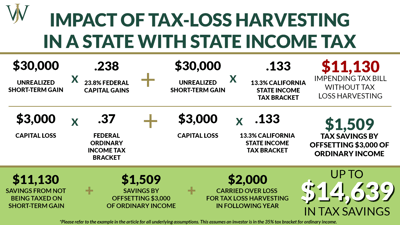
Whether it's to California's beaches or Colorado's mountains, retiring in a new state is one of the most common goals we see when working with oil...
READ MORE
John Siegel, CFP®, EA
SR. WEALTH MANAGER
How to Choose your Chevron Retirement Date You’ve worked hard for your retirement. After a long career at Chevron, you deserve to enjoy your retirement to the fullest. A big part of maximizing your retirement enjoyment depends on skillfully planning the disbursement of your benefits. To maximize your Chevron retirement benefits and efficiently minimize your overall tax burden, it’s important to strategically choose your retirement date. While no one specific date works for everyone, we’ve outlined a number of factors that could potentially affect your retirement, so you can determine the best date for you to retire from Chevron. What Factors Should I Consider When Selecting My Chevron Retirement Date? The calculations for several of your Chevron employee benefits may vary depending on the year or the time of year when you begin receiving them. Some examples of benefits to take into consideration include: Your 401(k), the Chevron Employee Savings Investment Plan (ESIP) Your bonus, the Chevron Incentive Plan (CIP) Your Qualified Pension, the Chevron Retirement Plan (CRP) Your Non-Qualified Pension, the Chevron Retirement Restoration Plan (RRP) Chevron Employee Savings Investment Plan (ESIP) No matter when you plan to retire, focus on maximizing your 401(k) contributions during your final years of work. How much you can contribute to your ESIP depends on your age. For 2025, the breakdown is as follows: If you're under age 50, the maximum amount you can save in your 401(k) is $70,000. This includes contributions you make to pre-tax, Roth, or after-tax sources as well as what Chevron contributes on your behalf. As an employee over 50, you can put $31,000 pre-tax into your 401(k) in 2025 and can also make after-tax contributions. When employer contributions are included, the threshold increases to $77,500 for 2025 if you're 50 or over. Employees aged 60 to 63 after January 1, 2025, can contribute even more to workplace retirement plans thanks to legislation under Secure Act 2.0. Instead of the standard catch-up amount of $7,500 for individuals over age 50, savers aged 60-63 can leverage a catch-up amount of $11,250 in 2025 to boost their retirement savings. If you’re expecting to retire at the beginning or middle of the year, you’ll want to boost your contribution percentages early that year. Strategically contribute higher percentages of your salary and bonuses in the first quarter to maximize your contributions and Chevron’s employer contributions. Learn how to max out your Chevron 401(k) here >> Chevron Incentive Plan (CIP) Many people consider their bonus a key factor in when to retire; it’s common to see employees decide to work through the end of the year to receive their full performance bonus. However, several different factors may influence whether it’s worth it to schedule your retirement date around your bonus. Bonuses are paid out in March for work done in the prior year. You may retire before March and still receive your full performance bonus for the previous year. If you only worked a portion of the year, your bonus amount is at Chevron’s discretion. Typically, employees receive a prorated bonus based on quarters of employment. You must have worked at least one day in the following quarter to be eligible for a prorated quarter of bonus benefits. For example, the first quarter ends on March 31; you must still be employed on April 1 to receive a 25 percent prorated bonus. Your bonus will be taken into consideration when calculating your pension, so the date you choose can have an impact on your total pension benefit. The potential impact on your pension’s value can be the biggest determining factor when deciding whether to plan your retirement date around your bonus. Chevron Retirement Plan (CRP) Your Chevron Retirement Plan pension can be paid to you as either a lump sum rollover to an IRA or a monthly annuity. Your retirement date plays a significant factor in determining the total value of your CRP. If you choose the lump sum option: Many Chevron retirees choose the CRP lump sum option so they have the power to invest their pension funds at their own discretion. The interest segment rates Chevron uses to calculate the lump sum change every month. If interest rates go down, the lump sum value goes up and vice versa. When you retire and decide to start your pension benefit determines which set of interest rates are used for the calculations, so keeping an eye on rates and factoring them into your retirement date planning can be wise. Reflecting back on the bonus discussion, delaying your retirement to boost your bonus can affect the pension calculation rates and your total pension amount; compare the two to make sure you’re choosing the wisest option. Get An Idea of Your Chevron Lump Sum Pension Calculation Using Recent Segment Rates Here >> If you choose the annuity option: The annuity pension provides ongoing income. It can be started immediately or deferred until a later date. Choosing to defer this income can often make sense, depending on the other multiple income streams you’ll receive around retirement. Depending on the time of year you retire and the date you choose to receive different funds (severance, unpaid benefits, 401(k) and IRA disbursements, etc.), delaying your annuity payments to a different calendar year may have a positive impact on your tax planning. Chevron Retirement Restoration Plan (RRP) Some Chevron employees may also participate in a non-qualified pension plan called the Chevron Retirement Restoration Plan (RRP). The default payment method is a lump sum paid during the first quarter that’s at least 12 months after your retirement. When you receive this payment, you’ll also be responsible for paying federal income taxes, Medicare taxes, and Social Security taxes. You can elect to defer payments from this fund or annuitize it. To have this option available, you must request it at least 12 months before the first payment. That means you need to decide on deferring or annuitizing these funds during your last quarter of work at Chevron. If you elect to defer or annuitize the RRP, the minimum deferral is five years; that means you’d receive your first payment six years after retirement. You can elect to receive from one to 10 installment payments, and any payments are made in January. How Does Your Retirement Date Factor Into These Calculations? The biggest impact can be related to determining your tax burden. If you’ve reviewed the benefits you expect to receive during your first year(s) of retirement and see you’ll be receiving multiple, high-value streams of income, it may make sense to defer your RRP to maximize tax efficiency. Whenever you choose to retire, it’s important to fully consider the funds available to you from various retirement sources. Balancing and maximizing the benefits of each income source is important. You shouldn’t select your retirement date in a bubble or base it on sentimental reasons like retiring on your exact hire date or finishing your career at the end of a calendar year. Instead, it makes sense to work with a financial partner to carefully choose your retirement date and select the option that gives you the greatest financial benefit. At Willis Johnson & Associates, we have experience supporting hundreds of clients through the retirement process, and we’re very familiar with the various options available to Chevron employees. To learn more about how we can guide and support you through this planning process, review what we offer Chevron executives or dive into the many resources we’ve prepared especially for Chevron professionals.

You’ve worked hard for your retirement. After a long career at Chevron, you deserve to enjoy your retirement to the fullest. A big part of maximizing...
READ MORE
Alexis Long, MBA, CFP®
MANAGING DIRECTOR, WEALTH MANAGEMENT
Understanding the Risks & Benefits of Private Market Investments A well-diversified portfolio is crucial for managing risk and maximizing returns. While many investors focus on traditional options like stocks and bonds, more are turning to private market investments. These investments allow access to high-growth companies, niche sectors, emerging industries, and unique opportunities unavailable in the public markets. Private markets are a broad category of investments, including private equity, private credit, and private real estate. Unlike stocks traded on public exchanges like the NYSE or NASDAQ, these assets are less easily accessible to the average investor. Private market investments are typically reserved for those with the financial flexibility to commit capital for longer periods and the willingness to accept higher risks. Private Markets vs. Public Markets: Key Differences Every Investor Should Know Private and public markets differ in several significant ways. In the public markets, investors can quickly buy and sell shares of companies on major exchanges, providing high liquidity. In contrast, private market investments are often illiquid, meaning that assets such as private equity, real estate, or private debt are not easily traded on public exchanges for access to their cash value if needed. Although private markets have challenges, including limited liquidity and higher risk, they can be a powerful addition to a diversified portfolio. This article explores the benefits, risks, and who private market investments may suit best, alongside Willis Johnson & Associates' (WJA) investment strategy for navigating this sophisticated asset class. Let’s dive in. Why Consider Private Market Investments in a Portfolio? One of the main reasons investors consider private markets is to access high-growth companies. Many businesses stay private longer, offering growth potential before going public. Source: Cambridge Associates, Jay Ritter, University of Florida, Russell, World Federation of Exchanges, J.P. Morgan Asset Management. Average market value is calculated by dividing the total market value at first closing price by the total number of IPOs for each period. The sample is IPOs with an offer price of at least $5, excluding ADRs, unit offers, closed-end funds, REITs, natural resource limited partnerships, small best efforts offers, banks and S&Ls and stocks not listed on CRSP (CRSP includes Amex, NYSE and NASDAQ stocks). Guide to Alternatives, Page 53 – U.S. Data are as of November 30, 2024. A prime example is SpaceX, one of the largest private companies in the U.S. by revenue. While public market investors can’t purchase shares directly, private investors can tap into high-growth companies before the company's stock reaches the public market. In addition to private equity, private credit, and private real estate, private market investments often feature sectors and companies that are less correlated with the day-to-day volatility of the public markets. This allows for a broader, more diversified portfolio, offering exposure to growth areas that aren't typically available through traditional public investments. The Benefits of Private Market Investments: Access to Private Equity, Real Estate, and More Private market investments present a unique opportunity for investors to explore areas off-limits to those solely focused on public markets. For example, private real estate and private equity investments provide avenues for growth that are not readily accessible in public exchanges. Access to Growing Investment Areas: Of the companies generating more than $100 million in revenue, only 13% are publicly traded, leaving 87% accessible only through private investments. This opens up substantial opportunities for diversification and growth. Source: Cambridge Associates, Jay Ritter, University of Florida, Russell, World Federation of Exchanges, J.P. Morgan Asset Management. *The number of listed U.S. companies is represented by the sum of a number of companies listed on the NYSE and the NASDAQ. Guide to Alternatives, Page 53 – U.S. Data are as of November 30, 2024. Reduced Volatility: Private market investments are less prone to the daily fluctuations seen in public markets. Since they aren't traded on exchanges, these assets typically experience less volatility, which can help stabilize your portfolio during periods of market uncertainty. Attractive Long-Term Returns: Many private investments—such as private equity or private credit—have historically delivered higher long-term returns compared to public market investments. While past performance doesn't indicate the future, the potential for superior returns is a significant draw for those with a long-term horizon. Source: Bloomberg, Burgiss, HFRI, NCREIF, Standard & Poor’s, FactSet, J.P. Morgan Asset Management. Alts include hedge funds, real estate, and private equity, with each receiving an equal weight. Portfolios are rebalanced at the start of the year. Equities are represented by the S&P 500 Total Return Index. Bonds are represented by the Bloomberg U.S. Aggregate Total Return Index. Volatility is calculated as the annualized standard deviation of quarterly returns. J.P. Morgan's Guide to Alternatives, Page 7 - Data are based on availability as of November 30, 2024. Who Should Invest in Private Market Opportunities? Private market investments are complex and may not be suitable for all investors. At Willis Johnson & Associates (WJA), we believe these investments are ideal for sophisticated investors with a higher risk tolerance and are comfortable with the illiquidity of private assets. Investors with Low Liquidity Needs: Because many private market investments require long-term commitments, they are better suited for those who do not need immediate access to their funds. If you rely on your portfolio for frequent withdrawals, private markets may not be the best fit. Investors Comfortable with Higher Risk: Due to less regulatory oversight and reduced transparency, private market investments have a higher risk of loss. Investors who are comfortable with these risks and have the financial ability to absorb potential losses may find these opportunities appealing. Managing Risks: What to Know About Liquidity and Fees in Private Market Investments While private market investments offer compelling benefits, they also carry risks. Some of the key challenges investors face include: Fund Lock-Ups: Private market investments typically involve long lock-up periods, meaning your money may be tied up for years. This can be a significant disadvantage for investors needing access to funds sooner. Higher Fees: Private market investments often incur higher management fees than public investments. We’ve seen fees range from 1% to 4%, significantly higher than the typical expense ratios of public market funds. It's essential to weigh these costs against the potential returns. Less Transparency: Due to reduced regulation in private markets, there is less visibility into investment performance and fewer public filings. Therefore, investors need to work closely with financial advisors who specialize in these types of assets to ensure proper due diligence is done. WJA’s Approach to Private Market Investments: A Customized Strategy for Long-Term Success At Willis Johnson & Associates (WJA), our approach to private market investments is rooted in a fiduciary responsibility to our clients. As a fee-only firm, we do not receive commissions, so our recommendations are focused on aligning with your best interests. We also place a strong emphasis on in-house research and due diligence, which helps our investment committee make informed decisions. By directly engaging with fund managers and reviewing their track records, we aim to ensure that every investment strategy we recommend is well-informed to help you reach your goals. Working with a Financial Advisor to Integrate Private Market Investments into Your Financial Strategy Private market investments provide unique opportunities for investors looking to diversify and potentially increase returns. However, their complexities, including liquidity constraints and higher fees, mean they are best approached with careful planning. At WJA, we tailor our investment strategies to each client's financial goals, ensuring private markets complement their broader investment strategy. If you're interested in adding private investments to your portfolio, our knowledgeable advisors can help guide you through the process, ensuring that you make informed decisions aligned with your long-term financial objectives. Schedule a consultation today to learn how we can help you navigate private market investments and build a more diversified, robust portfolio.

A well-diversified portfolio is crucial for managing risk and maximizing returns. While many investors focus on traditional options like stocks and...
READ MORE
Stella Hoover
INVESTMENT ANALYST
How Using NUA with Chevron Stock Can Save You Taxes in Retirement If you’re a career Chevron employee, you’ve probably heard the term NUA mentioned when your colleagues discuss their ESIP 401(k)s or retirement. It can be helpful to have a thorough understanding about what NUA means and how it can affect your retirement, so you can plan accordingly. What Does NUA Stand For? NUA stands for Net Unrealized Appreciation. It’s the difference between the cost basis of shares (what you or your employer paid for the stock) and their current market value held in a tax-deferred account. How Do I Know if I Have NUA or Whether I Can Use it to My Advantage? If you have Chevron (CVX) stock in your ESIP, you may have an NUA distribution opportunity. To evaluate whether you can benefit from NUA, you should take a look at the stock’s cost basis (original cost at purchase) and compare that sum with its current market value. If you see your stocks have made a large gain, you may have a valuable opportunity to make an NUA distribution and minimize the taxes you pay on this stock. If you have NUA, you can distribute the stock from your ESIP to a brokerage account, instead of rolling it over to an IRA. You’ll pay ordinary income taxes on the cost basis at the time of the distribution, but you won’t pay any taxes on the gain unless you actually sell the stock. When you sell the stock in the future, you will pay long-term capital gains taxes on the gain. Taking this approach can yield huge tax savings if your cost basis is comparatively low. This example shows how you can benefit from making these strategic choices: Jane, a married Chevron retiree, has $500,000 of CVX in her ESIP account. Jane has been monitoring her annual income in retirement to make efficient tax decisions. For example, she took her Chevron pension in a lump sum and she’s distributed her income in order to stay in the lowest tax bracket (12% for ordinary income). The cost basis for the CVX shares in her ESIP account is $60,000. The gain on the stock is $440,000 ($500,000 - $60,000). In one of her very low-income years after retirement, Jane decides to distribute the entire value of her CVX stock from the ESIP into her individual brokerage account. What are the Tax Implications of Jane’s Decision? Instead of paying ordinary income taxes on the entire $500,000, because of NUA, Jane will only pay ordinary income taxes on the cost basis of $60,000. She will pay $3,800 in taxes on a $500,000 distribution from her 401(k). She can then sell the stock at a long-term capital gains rate of 0% over the next seven years before she starts Social Security or required minimum distributions (RMD). Alternatively, if Jane rolled the entire balance of her ESIP to an IRA without taking advantage of the NUA opportunity, she would have to pay ordinary income taxes on the entire $500,000 of CVX stock if she distributed it from the IRA. If she took the entire $500,000 out in one year, she would be in the 35% marginal bracket and her tax bill would be about $117,000. That’s a tremendous jump in taxes and a hard hit to Jane’s retirement savings. Even if she chose to spread out the $500,000 into five years of $100,000 distributions, she still would pay a much higher tax rate than in the scenario where she takes advantage of NUA. Many career Chevron employees and retirees, like Jane, have large gains on the CVX stock in the ESIP because Chevron made employer contributions to the ESOP plan within the ESIP before 2013. Those contributions have now been discontinued, but if you were fortunate enough to enroll in this program before 2013, you likely benefited greatly and have also seen significant gains on the CVX ESOP stock you accumulated. Are There Any Challenges I Should Know About Related to Using NUA? NUA can be a valuable advantage when you’re preparing for retirement. However, you must ensure you meet and follow the qualifying guidelines for NUA; otherwise, it can have a negative impact on your tax responsibilities and your ability to do this type of disbursement. Requirements for NUA include the following: Employer stock must be distributed in-kind as shares. It cannot be liquidated before the distribution. Your entire ESIP balance must be made as a lump-sum distribution (distributed in the same calendar year). If you roll out your CVX stock to your brokerage account, you can rollover the remainder of your ESIP balance to an IRA in the same transaction or later in the same year. However, your ESIP balance must be $0 by year-end. You must experience a triggering event to qualify for NUA. Examples include death, disability, separation from service (retirement or termination) or reaching age 59½. The NUA distribution must be the very first withdrawal you take after retirement. If you take any other withdrawals prior to completing the NUA, you’ll lose the opportunity to take advantage of NUA and the tax savings that come along with it. If you take a withdrawal prior to retirement (for a loan or other reason), an NUA cannot be completed unless you wait until a triggering event has occurred. In this case, the triggering event must be either reaching age 59½ or death. NUA can provide major tax advantages. However, like many tax-related guidelines issued by the IRS, applying it can be complicated and easily misunderstood. Unfortunately, because the qualifying rules can be misinterpreted, it’s not uncommon for Chevron employees and/or retirees to attempt to make a distribution of CVX stock and also give themselves a major headache and tax bill. Chevron has actually issued some guidance highlighting a few potential scenarios that can trip up employees and affect their retirement savings and strategies. At Willis Johnson & Associates, we’ve helped many Chevron executives and professionals manage their retirement benefits and options. We know Chevron employees' options, including NUA, to make the most tax-efficient decisions regarding their retirement savings. Learn more about the many ways we support Chevron executives and our process for guiding clients through their various life stages and financial needs.
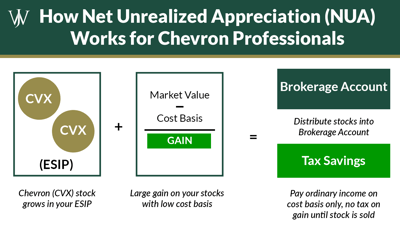
If you’re a career Chevron employee, you’ve probably heard the term NUA mentioned when your colleagues discuss their ESIP 401(k)s or retirement. It...
READ MORE
Alexis Long, MBA, CFP®
MANAGING DIRECTOR, WEALTH MANAGEMENT
Understanding Stock Compensation in the BP Share Value Plan & How it’s Taxed When reviewing the various benefits available to BP professionals, one of the most financially compelling is the BP Share Value Plan (SVP) which provides BP stock shares as compensation. Though many view these shares simply as additional cash, it's not quite that simple. To get the most value from the SVP, you must regularly monitor and manage your grant awards and shares to minimize the tax impact and render the best financial efficiency. We often work with BP professionals on these considerations and the strategies to make the most of the SVP, many of which we've detailed below. Let's get started. BP Share Value Plan & How it Works The BP Share Value Plan is a stock grant compensation program for U.S.-based employees. The plan aims to align BP professionals' compensation with the company's performance. BP directly awards the stock, typically on a multi-year vesting schedule, as additional compensation. Through this deferred vesting schedule, the stock also acts as a retention tool, as grants may be forfeited if a BP professional leaves the company. The SVP's Summary Plan Description document provides the general rules of the plan. However, many of the document's listed rules concede to BP directors' discretion. In addition, there are many common practices for the SVP shared across the company, some of which include: Vesting Typically, BP shares from the SVP vest on a one-time, three-year schedule. For instance, grants awarded in 2023 vest in 2026. Each grant award specifies the timing and condition of the vesting at the time of the grant. Eligible Employees The Share Value Plan benefit doesn't specify which employees can receive grants. Primarily, professionals in the Band-D compensation pool and above receive grants annually. Grants are sometimes awarded to employees in other compensation bands each year or as a special, non-frequent, discretionary award. Incentive Share Value Plan (ISVP) and Group Share Value Plan (GSVP) Awards Some upper-level BP professionals receive different quantities of grants based on their personal group performance. In addition to receiving regular SVP awards, some executives and professionals may receive Incentive Share Value Plan (ISVP) or Group Share Value Plan (GSVP) awards tied to personal performance or the performance of their business unit. These awards have performance factors attached to the grant, which determine the vesting of the shares and the amount of shares vested, similar to the factors used for the actual cash bonus. For instance, a BP professional might receive an ISVP grant of 2500 shares. On completion of the three-year vesting period, if that professional achieves a performance factor of 1.3, they would be awarded 3,250 shares (1.3 x 2500). Dividends. The SVP grants permit an award of additional shares based on the dividends declared during the period between grant and vest. While this is common practice, it is not obligatory under the Summary Plan Description. Forfeiture. If a BP professional leaves the company, there are a variety of considerations as to whether that employee will receive their shares that have yet to be vested. For example, an employee who retires may qualify to vest in shares, but an employee who leaves to go to another company likely may not. Likewise, an employee who is laid off may vest, but an employee fired for cause will not. How the Share Value Plan Functions EquatePlus, the custodian of the shares, tracks an employee's shares between grant and vest. At the designated time of vesting, BP affirms the vesting of the shares and the number of shares to vest based on performance factors and dividends realized before vesting. The granted shares at EquatePlus are converted at ComputerShare to BP PLC ADR's (American Depository Receipts), the form of BP stock traded on the New York Stock Exchange. Those shares then transfer into the grantee's stock account at Fidelity Investments. The employee can trade the stock at this point, subject to certain restrictions discussed below. Tax Implications of the Share Value Plan Grants There are several income tax facets to consider concerning SVP awards. It is essential to understand these factors to mitigate tax risks, such as tax underpayment penalties, and to leverage the best value from the vested awards. Taxes When Granted Shares: None There is no tax on the award grant when received. The grantee cannot exercise the share or sell it on the market. Therefore the IRS' control standard to determine taxability still needs to be met. Taxes When Shares Vest: Fully Taxable The vested shares are fully taxable as ordinary income. Additionally, because these shares are granted and vested in relation to your employment at BP, the shares are considered compensation. Therefore, they are subject to FICA (social security and Medicare tax) as compensation. When vesting, tax withholding is applied by selling a proportionate amount of shares to pay the effective tax rate. The default withholding for federal income tax is 22% in most cases, and the withholding for FICA is 7.65%, so 29.65%, in total, is withheld. However, for those with compensation exceeding $1 million and receiving stock compensation, the default withholding rate for shares is 37%. Most BP professionals' base, bonus, and SVP shares subject them to a higher tax bracket than 22%, so a common issue arises from the default withholding. Because of these default withholdings, there is a risk of causing an underpayment penalty on this compensation. Two options for addressing this shortfall in tax payment and avoiding a penalty are (a) increase your withholding from your paycheck on your Form W-4 elections or (b) make an estimated payment for the quarter in which the shares vest (usually by April 15). Taxes When You Sell Vested Shares: Tax Rates Determined by Holding Time The day the shares deposit into your Fidelity account is deemed the date of acquisition for the shares. The market value of the shares that day determines the cost basis, just as if you had purchased them at market trading. The price at which you sell the shares will render a gain or loss relative to the cost basis. The gain or loss will be considered short-term if you hold the shares for one year or less. The sale is considered long-term if you keep the shares for over a year. Long-term gains are taxed at lower preferred capital gains tax rates, while short-term gains are taxed at higher ordinary income tax rates. So should you wait one year to sell your BP stock? Not necessarily: . The stock may drop in market price after the shares are received, and your sale would result in a loss that you could use for tax purposes. If you sell your stock immediately after vesting, the market movement on the shares would typically be minimal, so the gain or loss for tax purposes would be minimal. There may be other strategic considerations with regard to the sale of the vested shares, which we'll discuss below. Strategies to Get the Most from Your BP SVP Shares Hold Shares for Tax Planning Purposes As discussed above, deciding when to sell your shares is critical due to the tax implications. One way to minimize the impact on your tax bill is to sell the shares soon after they deposit into your account. Unless something significant affects the value of the shares around the time you receive them, selling soon after the deposit should only have a minimal impact on taxes. Selling Shares by Lots If you have share lots from multiple vesting periods, you may be able to use another strategy. Each share lot will have its own cost basis based on the prevailing market price when the shares are deposited into your account. Depending on the current market price, some share lots may be at a gain, while others may be at a loss. If so, this may be an opportunity to net gains and losses against each other to minimize the tax impact of the sale of shares. Let's consider an example. Tanya has 1,000 SVP shares deposited in 2021 with a cost basis of $24, 1,000 SVP shares deposited in 2022 with a cost basis of $28, and 1,000 SVP shares deposited in 2023 with a cost basis of $40. Shares Per Year Cost Basis Total Value When Deposited 2021 - 1,000 shares $28 each 2022 - $28,000 2022 - 1,000 shares $40 each 2023 - $40,000 If BP's stock is currently trading at $35 per share, the 2021 lot is at an $11,000 gain, the 2022 lot is at a $7,000 gain, and the 2023 lot is at a $5,000 loss. Her net gain on the shares is $13,000. However, let's assume Tanya only wants to sell half of the shares in these three lots. If Tanya sold 500 shares (one-half) of the 2021 lot, she would realize a $5,500 gain. If she also sold all of the 2023 lot, she could realize the $5,000 loss. What's the effect? She could trim 1,500 shares at a modest gain of $500 for tax purposes. Conversely, if she sold the BP shares at the average cost basis ($30.67), she would realize a $6,500 taxable gain. Selling by Lot Selling at Average Cost $35 current stock price $35 current stock price If She Sells 500 shares from the 2021 lot: $5,500 gain If She Sells 1,500 shares at the $30.67 Average Cost Basis of the Three Lots If She Sells 1,000 shares from the 2023 lot: $5,000 loss Total Shares Sold: 1,500 Total Net Capital Gain: $500 Total Shares Sold: 1,500 Total Net Capital Gain: $6,500 gain Wait for the Dividend Payout Before Selling When trying to get the most value from your BP stock, you also want to ensure you can receive the dividends paid on the stock. BP pays a quarterly dividend on its shares in March, June, September, and December. The company declares the dividend payment amount for each quarter approximately six weeks before the payment date. To receive the dividend, you must hold the stock before a particular date known as the ex-dividend date. The ex-dividend date is usually one business day before the record date. The record date is when BP determines who holds shares of the company and is eligible to receive the dividend and is approximately ten days following the date on which the company declares the dividend. Let's return to Tanya to consider how dividends play into her decisions. Again, Tanya wants to sell 1,500 BP shares, but she wants to ensure she receives the next dividend before selling. On May 1, BP declared a dividend of $0.42 per share to be paid on June 22. They announce a record date of May 11 and an ex-dividend date of May 10. To receive the dividend on the shares Tanya intends to sell, she must still hold the stock on May 9. If she sells the shares on May 10 or May 11, she still qualifies for the dividend. Watch Out for Sale Restrictions While many of these considerations are relevant for all employees, some employees must follow specific company rules when determining the sale of their BP stock. Minimum Holding Requirements Because the BP Share Value Plan intends to align personal reward with the company's success, many upper-level professionals at BP must hold a minimum number of shares of BP stock. Usually, this holding requirement includes the shares in unvested grants and is easily satisfied. General Blackout Periods BP also needs to restrict insider trading on non-public information. Many upper-level professionals at BP may only be allowed to sell stock at certain times to ensure that proprietary information doesn't impact an insider's exercise of stock transactions. Often this is a period of a few weeks after the quarterly earnings announcement. Specific Blackout Periods Certain BP professionals may also have access to specific, material, non-public information about a particular BP business transaction, BP performance numbers, or other Company information which prevents them from trading even during the time permitted for sale under general blackout periods. 10b5-1 Rule These blackout periods, in particular, could pose significant challenges in selling BP stock nimbly and efficiently. One strategy we've used with our BP clients to overcome these obstacles is a trading plan under the 10b5-1 Rule. The 10b5-1 Rule under the Securities Exchange Commission's regulations allows someone potentially exposed to material, non-public information to set a pre-determined trading plan to sell the stock at certain times or market price limits. Here is how the plan essentially works: The insider shareholder enters the plan when they do not have material, non-public information They create the plan with an independent broker who manages the sale transactions according to the 10b5-1 plan. The plan must specify the price and amount of shares sold and note certain sales or purchase dates. The plan must include a formula or metrics for determining the amount, price, and date. The plan must give the broker the exclusive right to determine when to make sales or purchases if the broker does so without any material, non-public information when the trades occur. The shareholder can modify the plan if the shareholder does not have material, non-public information when the modifications are implemented. In short, devising a plan under Rule 10b5-1 creates an arms-length, systematic way for upper-level BP professionals to exercise their stock without concerns about the potential blackout periods. Consider Selling Shares for Portfolio Diversification When receiving stock compensation, BP professionals heighten their financial exposure to the company. BP is already their primary source of income and benefits. Additional exposure to BP through excess stock ownership can be financially unhealthy. We discuss strategies for diversification and managing BP stock concentration here. Working with an Advisor with Experience in BP Stock Compensation The Share Value Plan can significantly influence your financial growth if strategically managed. It is essential to realize how you should manage and monitor your SVP to get the most value from it over time. Careful attention to your grants, vested shares, and all the implications of selling the shares can be daunting. Managing your stock holdings requires ongoing time and attention to what you hold and implementing tax-efficient and diversification strategies for the shares. As you continue your career at BP, continually evaluating BP stock's role in your portfolio and acting accordingly can significantly impact your financial future. At Willis Johnson & Associates, we maintain schedules and perform comprehensive tax projections for our BP clients to develop strategies to leverage their BP stock effectively. Contact our team of BP specialists today to find out what impact BP's Share Value Plan could have on your financial journey.

When reviewing the various benefits available to BP professionals, one of the most financially compelling is the BP Share Value Plan (SVP) which...
READ MORE
John Siegel, CFP®, EA
SR. WEALTH MANAGER
HSAs at Shell: Tax Advantages, Investment Opportunities, Retirement Savings & More As Shell's open enrollment season begins, our advisors' conversations with clients shift focus from savings and tax to how leveraging benefits effectively can help clients save more. Within these conversations, we often educate folks on a fantastic yet underutilized opportunity that many Shell employees are simply not taking advantage of — using a Health Savings Account (HSA) as a retirement savings vehicle. What is a Health Savings Account, and How Does an HSA Work? A Health Savings Account is like a personal savings account for qualified medical expenses that you can contribute to on a pre-tax basis each year if you enrolled in a high-deductible health plan (HDHP). As you pay medical-related costs out-of-pocket, you can reimburse yourself from your HSA to cover those expenses each year. Health savings accounts were signed into law by President George W. Bush in 2003. By the end of 2023, there was an estimated $123 billion held in over 37 million HSAs, according to research conducted by Devenir. Tax Benefits of an HSA The beauty of HSAs is that when used for qualified medical expenses, it offers a triple tax advantage. But, you may ask, what's the triple tax advantage? When an HSA is used for qualified medical expenses and reported correctly, the contributions, investment growth, and withdrawals are tax-free. Tax-Free Contributions: HSA Limits Similar to the 401(k) contribution limits imposed by the IRS, contribution limits to an HSA are set by the IRS each year with adjustments for inflation. Contributions vary based on the type of coverage, with 2025 limits set at $4,300 for individuals, $8,550 for family coverage. Employee and employer contributions to an HSA cannot exceed these limits in 2025. Additionally, if you are 55 or older, you can contribute an additional $1,000 a year as a "catch up." This "catch-up" applies to each spouse, allowing the max contribution to be $10,550 per household. In addition, Shell provides a $500 contribution for participant-only coverage and a $1,000 contribution for any other type of coverage to help pay for medical expenses. The funds you contribute to your HSA are tax-free because you contribute them on a pre-tax basis. Like IRA contributions, HSA contributions can be deducted from your taxable income when you file your tax return. Tax-Free Growth: Investing HSA Funds When utilizing an HSA, a few critical elements are when and how you can invest the funds. Many HSA providers have predetermined thresholds you must reach before you can make investment selections. Additionally, similar to a 401(k), there may be restrictions or limitations on how you can invest your funds. Working with an advisor who can offer insight into your investment allocation and the tax implications of that decision can help you make the most of your HSA to reach your goals. Start the conversation with a Shell benefits expert >> Tax-Free Withdrawals for Qualified Medical Expenses One of the best benefits of an HSA is the ability to withdraw for qualified medical expenses at any time tax-free. However, for those under age 65 who withdraw money from their HSA for ineligible expenses, they'll face a 20% tax penalty and be taxed at ordinary income rates. Strategies to Get More from Your HSA Most folks know that HSAs are used to cover medical costs and that there are tax advantages. However, most are unaware of other crucial benefits that can provide tremendous value to one's overall investment portfolio if optimized. HSA Investment Strategy – Invest & Watch it Grow After making contributions to an HSA, Shell employees can invest the funds through NetBenefits, and they will grow tax-deferred. At the end of the year, any unused funds will be carried over to the next year and continue to grow without incurring any taxes (just like an IRA). This ability for compounding growth creates an opportunity to build a sizeable investment to compliment your existing portfolio! Investing within HSAs, however, is incredibly underutilized. According to a recent study, Denvenir discovered that only 8% of total HSA accounts are invested. Should You Max Out Your HSA or 401(K)? When it comes to saving vessels, we often hear people wanting to spread their contributions across channels to make the most of their options. However, there is often a hierarchical order for where Shell professionals should invest their savings. The investing sequence looks something like this: Step 1) Fully Max Out the Shell Provident Fund (pre-tax or Roth, and after-tax sources) Step 2) Perform Backdoor Roth for each spouse Step 3) Max out HSA Consider if you're age 55 or older and what impact this strategy could have for you. You can save up to $8,550 as a family, alongside an additional $2,000 if both you and your spouse (over age 55) do the HSA and catch-up contributions, a total of $10,550. This $10,550 is over and above what you are already contributing to your Provident Fund 401(k). If you're maxing out the pre-tax, Roth, and after-tax sources in your Provident Fund ($42,500 for 2025), maxing out your HSA contributions, and if each spouse performs a Backdoor Roth ($16,000), you could be making $69,050 of tax-favorable contributions this year! While the HSA can offer a significant benefit, the opportunities for tax-efficient savings in the Provident Fund and through Backdoor Roth Contributions are even more powerful. Therefore, if you are looking for additional tax-beneficial savings opportunities after maxing out your Provident Fund and Backdoor Roth vessels, and if you mostly visit the doctor for preventive care, you should consider switching to the HDHP during open enrollment this fall. Enrolling this fall will allow you to start taking advantage of the tremendous benefits offered by an HSA beginning in January 2026. HSA Reimbursement: Reimburse Yourself Now or Later When utilizing an HSA, many people take advantage of the benefit by reimbursing themselves annually for the expenses they accrue throughout that year. An additional strategy would be to delay taking annual reimbursements from your HSA, invest the funds in a growth-oriented portfolio, and make a one-time reimbursement sometime in the future. This strategy allows the funds invested inside your HSA compound over time while deferring taxes. Let's consider two examples to illustrate the impact this approach could have. Let's say that Jessica is an avid HSA contributor. She contributes close to the maximum amount to her HSA each year ($8,550 each year from ages 45-55, and $10,550 each year from age 55-65). She also pays $3,000 out-of-pocket for healthcare-related costs each year for 20 years. Scenario 1: Instead of reimbursing herself the year she incurs these expenses, she saves her receipts to reimburse herself down the road —It's a lot of receipts to hold on to, I know, but it can pay off. If Jessica invests her monthly contributions into a growth-oriented portfolio that grows 8% each year, after 20 years, the value of her HSA would be approximately $440,000! Let's say that, at age 65, Jessica decides to reimburse herself for the total $60,000 of medical expenses she accrued over the 20 years. By doing so at age 65, she'd have a balance of $380,000 remaining in her HSA. Scenario 2: However, let's assume Jessica invests her monthly contributions in the same growth-oriented portfolio that grows 8% each year, and she reimburses herself each year as she accrued expenses. In this scenario, her HSA balance at the end of 20 years would have been only $293,000. Jessica could take full advantage of tax-deferred compounding growth by delaying her reimbursement, which adds almost $100k to her HSA! HSA’s Withdrawal Penalty Removed at Age 65 There's one lesser-known additional benefit of an HSA hidden deep in the tax code. Let's consider what Jessica could do with the $380,000 balance in her HSA account that she earmarked for medical expenses. What if Jessica remains healthy and doesn't anticipate high medical costs in the future? At age 65, the IRS waives the 20% penalty incurred for making non-medical-related expenses, which means you can use your HSA to cover any costs in retirement. Upon making non-medical withdrawals, you’ll be taxed at ordinary income rates. In other words, once you turn 65, your HSA effectively becomes an IRA! This exception, cloaked in the tax code, creates a fantastic opportunity for high-income earners in good health to build an additional asset (alongside the traditional 401(k) / IRA) that provides additional flexibility during retirement. In retirement, you can choose to reimburse yourself each year or repay yourself in multi-year increments to extend the tax-deferred growth benefits of your HSA. At death, you can pass your HSA to a spouse who can continue to benefit from the tax-favorable features of an HSA. Shell's Medical Plan Options In 2020, Shell introduced the option of a High Deductible Health Plan (HDHP) coupled with an HSA. Many people like the idea of using an HSA, but high-deductible health plans aren't for everyone. PPO or High-Deductible Health Plan? First, let's be clear on who should consider enrolling in an HDHP and who should stay with the PPO option. Before choosing between PPO and HDHP plans, it is critical to determine your anticipated health needs. For example, do you have chronic health-related issues? Do you regularly see your doctor for non-preventive care? Do you anticipate any significant one-time medical expenses? If your answer is yes to any of these questions, the HDHP may not suit you. Under both PPO and HDHP plans, preventive care is 100% covered. The HDHP has a higher deductible, but in return, has lower monthly premiums. Therefore, under the HDHP, you will pay more out-of-pocket expenses upfront before the plan begins to pay for covered services, compared to the PPO. In addition, with the HDHP, you have access to an HSA. If you mostly visit the doctor for preventive care, enrolling in the HDHP this fall could provide you with additional tax-beneficial retirement-saving opportunities! Monthly Medical Premiums Participant Only Family US High-Deductible Health Plan (HDHP) Employee pays: $159.85 $428.76 US PPO Employee pays: $186.41 $507.00 Kelsey-Seybold Greater Houston ** Employee pays: $146.49 $398.44 HSA vs. FSA Many people confuse a Health Savings Account with a Flexible Spending Account. Many Shell employees on the PPO have been utilizing the FSA annually, which doesn't have the same opportunities as the HSA for long-term savings. While you can use both to cover costs for qualified medical expenses, a primary difference between an HSA and FSA is that HSA funds roll over each year and accumulate if you don't spend them, creating retirement planning opportunities. Action Steps for Shell's Open Enrollment Period Shell's open enrollment is the only time you can make changes to existing elections, so it's essential to start thinking about making changes to your elections now. For high-income earners looking to save more in tax-efficient retirement savings vessels who mainly visit the doctor for preventive care, we strongly encourage you to consider switching to the HDHP to start taking advantage of the tremendous benefits of an HSA. Before making any changes, it's critical to note two things: You should make your decision to switch health plans in coordination with the other areas of your finances. Understand the implications of switching plans. For example, for those currently enrolled in Shell's US PPO 90 or US PPO 90 (Out-of-Area) plan, you will not be able to re-enroll in the future if you disenroll at any time. You should make no financial decision in isolation from your other financial pieces. Therefore, we incorporate other relevant areas of your finances when making decisions to evaluate the trade-offs related to your Shell benefits adequately. When we work with our Shell clients, we provide education on their options during the open enrollment period, including determining if the HDHP is the right fit, setting up an HSA, and managing investments. The last thing anyone wants is to leave free money on the table, so start the conversation with an advisor today to review your Shell benefits and uncover any gaps or optimization opportunities.

As Shell's open enrollment season begins, our advisors' conversations with clients shift focus from savings and tax to how leveraging benefits...
READ MORE
Alexis Long, MBA, CFP®
MANAGING DIRECTOR, WEALTH MANAGEMENT
How to Maximize Savings Using Chevron Retirement Benefits in Tax-Beneficial Ways Is this you? You’re still planning to work for another 10 or 15 years, so retirement seems like a distant dream. But you’re approaching that point in your life when you wonder, am I saving enough for retirement? Where and how should I be saving? How can I save in a tax-efficient manner? AT A GLANCE: How to max out your Chevron Employee Savings Investment Plan (ESIP) every year? What’s an after-tax rollover and how can it save you taxes in the long run? How to take advantage of your Net Unrealized Appreciation (NUA) from Chevron stock What are the IRS 415 Income Limitations for contributing to a 401(K)? How using backdoor Roth Contributions can be a tax-beneficial way to increase your savings How is your Chevron Pension (CRP) calculated and how can you affect your pension amount? Chevron provides amazing benefits that all employees should be using to their full advantage. Chevron provides retirement savings plans like the Chevron Employee Savings Investment Plan (ESIP). They also provide qualified retirement income benefits through the Chevron Retirement Plan (CRP). Many corporations have moved away from providing their employees with pensions, so this is a benefit many individuals in the US no longer have. As a Chevron employee, you want to ensure you are maximizing these plans in coordination with your overall savings and retirement plan. How Do I Max Out My Chevron Employee Savings Investment Plan (ESIP)? The Employee Savings Investment Plan (ESIP) is the name for Chevron’s 401(k) plan. Chevron will contribute to your ESIP by matching your contributions up to 8% of your salary annually. If you don’t contribute to your ESIP, Chevron will not contribute on your behalf. For your 401(k) contributions, you have the option of contributing to the pre-tax, Roth, or after-tax sources. In order to receive the Chevron match, you must contribute at least 2% to the basic source in the ESIP. If you are under 50, in 2025 you can contribute up to $23,500 between pre-tax or Roth. This limit of $23,500 covers both pre-tax and Roth contributions, so if for example, you contribute $13,000 to pre-tax, you could then only contribute $10,500 to Roth. If you are over 50, you are allowed to contribute an additional catch-up amount of $7,500 for a total of $31,000 from pre-tax and Roth contributions (2025). When you contribute pre-tax, your contributions are taken from your paycheck before taxes and put into your 401(k) account, grow tax-deferred, and when withdrawn, you pay ordinary income taxes on the income. So, typically, if you think you are in a higher income tax bracket today than you will be in retirement, pre-tax is the choice for you. When you contribute to Roth accounts, your contributions to your 401(k) are made after taxes and grow tax-free. Withdrawals from the Roth source are tax-free. If you are making less income today than you will be in retirement then we typically recommend that you contribute to Roth. The 3rd source is after-tax. After-tax contributions are put into your 401(k) after taxes. These contributions grow tax-deferred within this account and once withdrawn, no taxes are due on the contributions but any earnings will be taxed at ordinary income rates. At Chevron, the max you can contribute to after-tax depends on how much you and Chevron contribute to your ESIP. Here are some examples below: If you have cash compensation of $200,000 and you are over 50, you can max out your pre-tax at $31,000 and Chevron puts in $16,000 of employer contributions (8% of $200,000). Since you are over 50, the most you can put into the 401(k) between all sources in 2025 is $77,500. To determine how much you can contribute to after-tax, you subtract $31,000 and $16,000 from $77,500, leaving you with $30,500 you can contribute to the after-tax source. If your salary increases to $305,000 a year, Chevron will now put in $24,400, leaving you with only $22,600 you can contribute to the after-tax source. What’s an after-tax rollover and how can it save you taxes in the long run? A great savings strategy to couple with the after-tax 401(k) savings is the after-tax rollover. This allows you to roll out the after-tax source from your 401(k) to a Roth IRA on an annual basis. Once the funds are in your Roth IRA, both contributions and earnings will grow tax-free! This is a great way to get additional savings into a Roth IRA, especially when you are over the income limits to contribute to a Roth IRA directly. There are some limitations on the Chevron plan regarding after-tax rollovers. Often, this type of withdrawal will suspend contributions to the plan for 90 days so you should wait until September or October to roll out the after-tax source after you have maxed out your employee AND employer contributions, but before contributions restart for the following year in January. How to take advantage of Net Unrealized Appreciation (NUA) from Chevron stock? If you were an employee at Chevron before 2013, you likely have a large amount of Chevron stock in your 401(k) as Chevron would make their employer contributions to Chevron stock only. You may have an opportunity to take an NUA withdrawal in the future after a triggering event. NUA allows you to distribute your employer stock to a brokerage account and pay ordinary income taxes on the cost basis only. Any gains on the stock will only be taxed when sold and will be taxed at your long-term capital gains rate. This can be huge tax savings if you have a very low-cost basis and a large gain on your stock. What are the IRS 415 Income Limitations for contributing to a 401(K)? The IRS places income limits on the ESIP that prevents employees and Chevron from contributing to the ESIP upon reaching this limit. The 415 income limit is $350,000 for the 2025 calendar year. This means that if you are a highly compensated Chevron employee with a salary and bonus that exceeds $350,000, your AND Chevron's contributions to the ESIP will cease once you reach this income threshold. Since Chevron contributes up to 8%, the most Chevron can contribute in 2024 is $28,000 (which is 8% of $350,000). If you are a high-income earner, you want to recognize your contributions may be cut off earlier in the year, especially once you receive your bonus. You should set your 401(k) contributions higher at the beginning of the year to max out before you reach the income limit every year. Saving in the 401(k) earlier allows for more growth over time which allows your assets to grow faster, potentially allowing for earlier retirement. We encourage our Chevron savers to contribute as much as they can to the 401(k), even when retirement is several years away, in order to take advantage of many years of compounding growth. How can using backdoor Roth Contributions be a tax-beneficial way to increase your savings? In addition to the after-tax rollover savings strategy, Chevron savers can put away $7,000 (if under age 50) or $8,000 (if over age 50) into a Roth IRA every year, even if you are over the income limit to contribute directly. A backdoor Roth contribution is a strategy in which a non-deductible IRA contribution is made to a traditional IRA and is subsequently converted to a Roth IRA. In the case of a married couple, both spouses can make backdoor Roth contributions. If you are also rolling out your after-tax, this means you can get a huge amount of tax-optimized savings into Roth IRAs a year. You must have earned income to make an IRA contribution. This means you can continue to make these contributions into retirement if you are receiving performance shares. There are some additional nuances to this strategy. Something to keep in mind is that you must not have any pre-tax money in traditional IRAs to execute this strategy and you must file a Form 8606 annually with your tax return. Taking advantage of backdoor Roth contributions over several years will allow you to have a large portion of tax-free money that you can access in retirement. How is your Chevron Qualified Pension (CRP) calculated and how can you affect your pension amount? At Chevron, you also have a qualified pension plan in which the pension formula has two variables that you have some control over. The formula is as follows: CHEVRON CRP: 1.6% x Years of Service X Average Final Compensation (AFC) As you can see, years of service and AFC are included in both pension calculations. You, as the employee, have some control over your years of service. In some situations, working a few additional years can make a big difference in the benefit you receive in retirement. Your last few years of working are often your most highly compensated. Chevron looks back at the last 10 years and picks the 36 consecutive months of your highest compensation to determine your AFC. Receiving additional months of higher income can also increase your benefit. Once you approach retirement, you have the option to take the pension as a lump sum or an annuity benefit. It’s important to educate yourself on the pension formula for your benefit and understand how you can potentially increase that benefit. Because Chevron provides its employees with a pension plan, retirement projections should take these inflows into account when projecting the assets needed for retirement. Individuals with a pension plan may not need as large of an asset base as those who are not eligible for a pension. For this reason, it’s important to understand all your retirement income and assets by reviewing and developing a solid retirement plan. As a Chevron employee, you have a full array of financial tools and benefits available to you. It’s up to you to start using them immediately, maximizing their benefits, lowering taxes, and making the most of your prime retirement savings years. However, it can become overwhelming to try to anticipate and balance multiple competing priorities. If you need guidance, our team have worked with many Chevron professionals and executives to analyze their options and build a plan that puts them on the path to a comfortable retirement. Learn more about how we can develop plans customized for high-earning Chevron employees and about how our process supports you wherever you are in your investing and retirement planning journey.

Is this you? You’re still planning to work for another 10 or 15 years, so retirement seems like a distant dream. But you’re approaching that point in...
READ MORE
Alexis Long, MBA, CFP®
MANAGING DIRECTOR, WEALTH MANAGEMENT
How to Maximize Savings Using Your Shell Employee Benefits If you’re about 10 or 15 years from retirement, you may be wondering where you stand. In particular, is your saving on track and at a point that allows you to coast through the next few years on autopilot, or do you need to be more intentional about when and where you’re saving? As a Shell employee, you have a number of valuable retirement savings vehicles available to you that you should use to your full advantage, regardless of whether you’re 35 or 65. These resources are: The Shell Provident Fund 401(k) Backdoor Roth Conversions and Mega Backdoor Roth Conversions Qualified and non-qualified retirement income benefits through the Shell 80 Point and APF pensions The opportunity to purchase Shell shares through the GESPP (discounted from market prices). With so many options, it can take some coordination and strategy to maximize your retirement planning and saving success. Shell Professionals Can Get Over $80,000 Into Retirement Savings This Year Learn how here. Maximizing Retirement Benefits Through the Shell Provident Fund 401(k) The Shell Provident Fund is Shell’s 401(k) plan. You can contribute to the plan and can do so pre-tax, after-tax, or using Roth income. In addition, Shell contributes generously on behalf of its employees, putting between 2.5 and 10 percent of your annual cash compensation into the 401(k). The exact amount depends on your tenure with the company. Your 401(k) contributions can increase slightly as you near retirement age. If you’re under 50, you can contribute up to $23,500 (2025) between pre-tax and Roth. If you’re over 50, you can contribute an additional catch-up amount of $7,500 for a total contribution option of $31,000 in 2025. Should I Choose Pre-Tax, After-Tax, or Roth Contributions to the Shell Provident Fund 401(k)? You have options when it comes to contributing to the Shell Provident Fund. Each option has its own benefits, and the best option for you will depend on your retirement plans. Benefiting From After-Tax Rollovers Within Your Shell 401(k) Savings Options An after-tax rollover can be a great savings strategy in conjunction with your after-tax 401(k). Annually, you can roll the after-tax source from your 401(k) to a Roth IRA. Once the funds are in your Roth IRA, both the contributions and their earnings will grow tax-free. This strategy can be useful for adding additional funds to your Roth IRA, especially when you’re over the income limits to contribute directly to a Roth IRA. Income Limitations on Shell Provident Fund 401(k) Contributions If you’re a highly compensated employee, you need to employ some additional strategic considerations when planning your annual Provident Fund contributions. The IRS limits contributions for people who earn more than $350,000 during a calendar year. Once you reach that point, Shell will no longer contribute on your behalf. If you expect you’ll reach that threshold, you may want to front-load your retirement contributions to maximize the funds Shell will add to your account and ensure you’re not leaving any money on the table. For example, if Shell provides their maximum contribution to your 401(k) account, the most they can possibly give you is $35,000. If you’re a high earner, you should schedule your contributions to receive the full employer contribution before you reach the $350,000 threshold. The Provident Fund 401(k) is a valuable retirement savings option, and contributing to it both early and with consistency allows for greater growth over time or for the possibility of earlier retirement. Before selecting a retirement date from Shell, ensure you're not leaving any money on the table. Learn more about the main factors to consider when selecting a Shell retirement date > Maximizing Retirement Benefits Through Backdoor Roth Contributions A backdoor Roth contribution is a strategy in which a non-deductible IRA contribution is made to a traditional IRA and subsequently converted to a Roth IRA. In addition to the after-tax rollover savings strategy, as a Shell saver, you can put $7,000 (or $8,000 if over age 50) into a Roth IRA every year, even if you’re over the income limit to contribute directly. For married couples, both spouses can make backdoor Roth contributions. If you’re also rolling over your after-tax 401(k) funds (up to $11,500 for Shell professionals this year), you can add $37,000 to your Roth IRA each year if you're both under 50 and working at Shell. There are a few stipulations and nuances tied to this strategy, including: You must have earned income to make an IRA contribution. (Shell performance shares can count as earned income, allowing you to continue making contributions in retirement.) You must not have any pre-tax money in traditional IRAs. You must file Form 8606 annually with your tax return. Taking advantage of backdoor Roth contributions over several years will allow you to increase the tax-free funds you can access in retirement. Maximizing Retirement Benefits Through Your Shell Qualified Pension Most Shell retirees have also earned funds in a qualified pension plan. What are Shell's Pension Plan Options? There are two different pension fund formulas used to calculate what you’re entitled to in retirement: the 80 Point Plan and the Alternate Pension Formula (APF). While specifically defining your pension benefits can be complicated, you do have some control over pension-related variables. For example, both years of service and Average Final Compensation (the highest-earning 36 consecutive months in your past 10 years of employment) are factors that affect your pension. Taking these into consideration as you strategically plan your Shell retirement date can increase the benefits that are available to you. It’s important to balance your desired retirement timeline with the different retirement income sources you have available as you work to create the most solid retirement plan and asset base. For example, if you’re expecting a generous pension based on your tenure and AFC, you may not be as concerned with maximizing 401(k) savings. Or, if your 401(k) is not where you want it to be, it can make sense to work and save an additional few years, especially if it puts you over an additional pension earning threshold. Maximizing Retirement Benefits Through the Shell GESPP You probably receive Shell Performance Shares as part of your bonus every year. You can also purchase additional shares of Shell stock through the Global Employee Stock Purchase Plan (GESPP). To purchase these shares, you can contribute to the GESPP (up to $6,517 in 2024) from January to November, either in monthly increments or all at once. Shell reviews the price of shares at the beginning of the plan year. For example, in 2023, the date was January 3, and the price was $55.98/share. Then, it reviews pricing again at the end of the plan year (the first trading day of 2024, which was January 3rd). Your GESPP contributions will purchase shares at a 15 percent discount. On January 3, 2024, the price of SHEL was $65.90/share. As a result, the discounted price as part of the GESPP is deducted from the lower price of the two trading days ($55.98/share on January 3, 2023), resulting in 47.58/share. Maxing out the GESPP contributions for 2023 would result in 125 purchased shares of SHEL. It’s human nature to worry about the unknown, and retirement is certainly a big unknown. However, if you’re a Shell employee concerned about your retirement income, you can take full advantage of the savings opportunities through Shell’s robust retirement plans and benefit offerings. It’s important to start saving in plans like the 401(k) and GESPP as early as possible to use time and market returns to your advantage. And it’s never too early to begin putting together your retirement strategy and preparing for the future. At Willis Johnson & Associates, we have years of experience supporting Shell executives and professionals through their retirement planning efforts. We have experience with maximizing retirement saving strategies and minimizing retirement tax burdens. If you’re interested in learning how we can support you, take a look at the resources we make available to Shell employees and at the retirement planning process we use to help our clients prepare for their futures.

If you’re about 10 or 15 years from retirement, you may be wondering where you stand. In particular, is your saving on track and at a point that...
READ MORE
Alexis Long, MBA, CFP®
MANAGING DIRECTOR, WEALTH MANAGEMENT
3 Ways to Make the Most of Your Shell Provident Fund 401(k) The Shell Provident Fund 401(k) is a valuable retirement savings option for Shell employees. It offers a variety of investment options, a generous employer match, and tax-deferred growth. However, even with these advantages, many Shell employees make mistakes when contributing to their 401(k). Let’s dive into how you can avoid these mistakes to get the most from your Shell Provident Fund and the benefits Shell offers you through it. 1) Save More in Your 401(K): 2025 Contribution Limits Every year, the IRS sets contribution limits for 401(k) plans, which determines how much you and Shell can contribute towards the Provident Fund. If you’re under age 50, the total IRS limit for 401(k) contributions in 2025 from employee or employer contributions is $70,000. For those over age 50, the limit increases to $77,500. Within those limits, employees can contribute up to $23,500 (or $31,500 if over age 50) to the pre-tax or Roth source in the 401(k). Every dollar that you contribute to your 401(k) today will have the potential to grow, either tax-free or tax-deferred, until you withdraw it in retirement. Additionally, Shell contributes up to 10% of an employee’s salary to the Provident Fund each year up to the annual 415 income limit. This year, the income limit is $350,000, so the most Shell will contribute to any employee’s 401(k) is $35,000 in 2024. There’s an additional source in the Provident Fund that not all 401(k) plans have called the After-Tax source. After-tax isn’t quite as tax-efficient as the pre-tax or Roth sources in the 401(k), but it serves as a third bucket for saving in the 401(k), and allows an opportunity for Mega Backdoor Roth conversions. Shell determines the amount each year, and for 2025, you can save an additional $11,500 in the after-tax source! Many Shell employees fail to contribute the maximum amount to their 401(k). This is a mistake because it means they're leaving money on the table. By contributing the maximum amount, you can save more for retirement and take advantage of the account’s growth over time. 2) Contribute to the Most Tax-Efficient Source: Pre-Tax, Roth, or After-Tax With our Shell clients, one of the most common questions we hear is, “What source should I save to in my 401(k)?” Like most things in finance, the answer depends on several factors. Are you earning more today than you expect to earn in the future? How long do you plan to save in the 401(k)? What other sources of retirement income are you expecting in the future outside your 401(k)? We see many Shell employees contributing to the wrong bucket, so let’s dive into how to get it right. Pre-Tax Pre-tax contributions come out of your paycheck before taxes and are taxed when withdrawn in retirement. The pre-tax contributions are deducted from your taxable income the year they’re made. Often, pre-tax contributions are best for those who expect to be in a higher tax bracket in their retirement years than the one they’re in today. Roth Roth contributions are made with after-tax dollars and are not taxed until you withdraw the money in retirement. If you expect to be in a lower tax bracket in retirement than the one you’re in today, Roth contributions may be a better option than pre-tax. There is no one-size-fits-all answer to the question of whether to contribute pre-tax or Roth dollars. The best choice for where you save will depend on your individual circumstances, such as your current tax bracket, your expected retirement income, and the time you have until you retire. After-Tax While most people are familiar with pre-tax and Roth sources in the 401(k), few understand after-tax and the financial planning opportunities it can provide. So, how do after-tax contributions in the 401(k) work? Well, contributions go in after-tax, like your Roth contributions. However, at withdrawal, the funds are taxed like both pre-tax and Roth, depending on what you withdraw: Any contribution you make is withdrawn tax-free, like a Roth Any earnings on those contributions are withdrawn as ordinary income in retirement, like pre-tax While after-tax is not as tax-efficient as pre-tax or as Roth, it serves as a great additional bucket to contribute to for extra retirement savings. After-tax contributions are not tax-deductible, but they can grow tax-deferred until you withdraw them in retirement. After-tax contributions are made with after-tax dollars, so they can be converted to Roth contributions at any time. Each year, Shell determines the maximum amount an employee can contribute to the source, and every year, employees can leverage their after-tax source for a strategy known as the Mega Backdoor Roth. Mega Backdoor Roth While many of our Shell clients make too much to contribute to a Roth directly, there is a way to get around this using Shell’s 401(k) plan. If you make after-tax contributions to your 401(k), you can convert them to Roth contributions. This is called the "mega backdoor Roth." While not all 401(k) plans allow for mega backdoor Roth conversions, the Provident Fund does. This provides Shell employees with a great opportunity for tax-free retirement savings, especially if they're looking to save for retirement while earning more than the annual income limits for Roth contributions. 3) Income Limits for the 401(k): Don’t Get Cut Off From Your Provident Fund Contributions Every year, the IRS announces income limits for 401(k) contributions. These limits, known as the 415 income limits, are indexed each year for inflation. In 2025, the income limit for 401(k) contributions is $350,000. Once you earn more than $350,000 this year, neither you nor Shell can make any additional contributions to the Provident Fund 401(k). This is a mistake we see ALL the time, especially after a big bonus payout. Here’s how. Let’s consider Ned, a 51-year-old Shell employee who makes $350,000 a year in salary and expects a 20% bonus, totaling $70,000. Ned likes to set up his 401(k) contributions in January each year, so he can set it and forget it. His math looks something like this: Total Compensation: $420,000 Total Contribution Goal to Pre-Tax/Roth/After-Tax: $42,500 Contribution Total / Total Compensation: 11% Contribution Rate to Max Out the 401(k) Seems simple enough, right? Unfortunately for Ned, no. Using this logic, Ned misses $15,937 of contributions because his income cuts off his ability to contribute to the 401(k) after October! Not only is Ned prevented from making contributions to his 401(k), but once his compensation hits the income limit, Shell can’t contribute either. Ned has unknowingly left a LOT of money on the table. And, this is the kind of mistake we often see Shell professionals make every year. But, have no fear, there are two easy answers to fix it in the future. One simple fix to get more into the Provident Fund is to ensure that he elects to have 401(k) contributions made from his bonus each March. If he’d done so in the example above, he’d be closer to the $42,500 target at $33,645 of contributions. However, we often see people like Ned who don’t have this option elected in their Provident Fund. Another way is to change how he evaluates his contribution percentage at the beginning of the year. Let’s look at how Ned should approach 401(k) contributions after learning about the 415 income limits. Annual Income Limit: $350,000 Contributions to Pre-Tax/Roth/After-Tax Total: $42,500 Contribution Total / Annual Income Limit: 12% Contribution Rate to Max Out the 401(k) By making a simple tweak to how much he contributes each month and electing to have contributions taken from his bonus, Ned can max out his 401(k) by the time he reaches the income limit in October. Once he’s maxed out his 401(k), Ned can choose to direct his efforts towards other buckets like the backdoor Roth or his HSA for even more tax-efficient retirement savings! Shell Provident Fund Benefit Restoration Plan Earlier, we mentioned how Shell contributes up to 10% of an employee’s salary to the 401(k) up to the annual income limit. But, what does that mean for employees like Ned who earn well above the annual income limit? For those making over the annual income limit, excess 401(k) contributions from Shell flow into a non-qualified plan called the Provident Fund Benefit Restoration Plan (BRP). This non-qualified plan enables Shell to circumvent the 415 limits so they can continue making 401(k) contributions on behalf of the high-income earning employee to these plans for retirement. Let’s consider what this means for Ned, who makes a total of $420,000 this year. Shell’s 401(k) Contribution for Ned: $42,000, 10% of his total compensation Annual Income Limit: $350,000 Shell’s Maximum Contribution to the 401(k): $35,000, 10% of the annual income limit Shell’s Contribution to the Provident Fund BRP in 2025: $7,000, Total Contribution – Maximum 401(k) Contribution from Shell The BRP provides a simple account where Shell can restore the benefit an employee would otherwise lose due to the IRS’ 415 limits each year. While non-qualified plans offer great benefits to high-income employees during their working years, they can also create serious tax implications when paid out at retirement. Learn more about Shell's BRPs here >> Getting a Second Opinion on Your Provident Fund from a Fiduciary Financial Advisor The Shell Provident Fund 401(k) is a valuable retirement savings option for Shell employees. However, there are a few common mistakes that Shell employees make when contributing to their 401(k). By avoiding these mistakes, you can maximize your retirement savings and reach your financial goals. If you're not sure how to max out your 401(k) fully or how to choose the right investments, you can talk to one of our financial advisors to get started. Willis Johnson & Associates is a financial planning firm with over 20 years of experience helping Shell employees reach their financial goals. We offer a variety of services, including retirement planning, investment management, and estate planning. If you are unsure how to make the most of your 401(k), we encourage you to reach out to our team for a complimentary meeting with an advisor. We can help you develop a personalized retirement plan that meets your individual needs. We offer a complimentary initial consultation to discuss your financial situation and to see if we can help you reach your financial goals. If you are interested in learning more, please contact us today.
%20Mistakes_Shell_Blog_2024_Q2_3%20ways%20to%20make%20the%20most%20out%20of%20your%20401(k)%20V2.png?width=400&name=Shell%20401(k)%20Mistakes_Shell_Blog_2024_Q2_3%20ways%20to%20make%20the%20most%20out%20of%20your%20401(k)%20V2.png)
The Shell Provident Fund 401(k) is a valuable retirement savings option for Shell employees. It offers a variety of investment options, a generous...
READ MORE
Brandon Young, CFP®
WEALTH MANAGER
Tax Impacts of Non-Qualified 401(k) & Pension Benefits for High-Income Earners Upon reaching a certain level of income, many of Houston's oil and gas corporations may provide additional employer-sponsored benefits (often known as non-qualified retirement plans) that can be significantly more complex than a typical 401(k) or pension. When your income begins to exceed the IRS' income limitations for pensions or 401k contributions, additional rules and considerations surrounding these plans need to be evaluated and planned for to make sure you don't set yourself up for a hefty tax bill at retirement. The best way to avoid this tax hit is to know how these plans work ahead of time and to choose the proper elections for your situation accordingly, which is what we'll dive into below. What is a Non-Qualified Retirement Plan? If you have a retirement savings plan with the words ‘Excess Compensation’, ‘Excess Benefit’, ‘Benefits Restoration’, or something similar in the title, you may have a non-qualified retirement plan. Employers establish these non-qualified retirement plans to circumvent the Internal Revenue Code (IRC) Section 415 limitations so that the organization can continue making contributions on behalf of the high-income earning employee to these plans for retirement. The IRS has limitations on both pension and 401k contributions, so we see many companies create non-qualified retirement plans to restore benefits for these high-income earners for both plans. Learn How To Shift Your 401(k) Contribution Strategy Around These Income Limits Here >> Non-Qualified 401(k) Plans The IRS rule limits both you and your employer’s contribution to your 401(k) based on the first $350,000 of income for 2025. This means that you and your employer can only make contributions to your 401(k) based on the first $350,000 that you earn. When your income exceeds the $350,000 limit, neither you nor your employer can contribute any more money to your 401(k). Large corporations often want to continue their matching benefit for employees who have income that exceeds this limit. They do so by establishing a non-qualified defined contribution plan and depositing the excess matching contributions there. These funds can be invested and grow until the employee’s retirement or departure from the company. The common ones we see are: Shell Provident Fund Benefit Restoration Plan Chevron Employee Savings Investment Plan Restoration Plan (ESIP-RP) BP Excess Compensation Plan (ECP) How a Non-Qualified 401(k) Is Funded After Reaching the IRS Limits Let's suppose that your employer has a non-qualified 401(k) for you, as you've been deemed a high-income employee earning $550,000 of total eligible compensation (salary & bonus) for the year. The IRS income limits for 2025 prevent both you or your employer from contributing to your qualified (or regular) 401(k) after you reach $350,000 of income. Once your income exceeds the $350,000 limit, neither you nor your employer can contribute any more money to your typical 401(k), so your non-qualified 401(k) plan acts as an additional bucket for your company to deposit any of the contributions they would’ve made on your behalf to. Let’s consider an example: Let’s say your company contributes 10% of eligible compensation to your retirement plans in a given year. You, an employee making $550,000 a year in salary, also receive a $50,000 bonus in February, which makes your total eligible compensation $600,000. When you reach $350,000 in eligible compensation, your organization will have contributed $35,000 to your 401(k) and cannot contribute more; however, as a high-income employee, you're "owed" a total of $60,000 in contributions to fulfill the 10% matching benefit. Therefore, your company would put the remaining $25,000 of contributions into your non-qualified plan to ensure that you received your full non-qualified 401(k) benefit. Non-Qualified Pension Plans In a similar way, the IRS also limits an employer's contribution to their employee's pension. The pension benefit for someone working until their full retirement age cannot generate a pension benefit exceeding $280,000 in today's dollars. Once the contributions to an employee's pension reach this threshold, the employer can no longer contribute to a qualified pension plan and must either contribute to a non-qualified plan or forego the employee's additional benefits. To understand how this works, let's look at how pensions are typically calculated. A common formula many large oil companies use to calculate pension benefits is: 1.6% * Years of Service * Average Final Compensation (AFC) Let's assume, using the same example from earlier, that your pension calculation would look like this: 1.6% * 30 * $600,000 Your pension benefit would be approximately $288,000 for 2025, exceeding the $280,000 IRS limit by $8,000. The funding for the projected $8,000 pension benefit will be contributed to the non-qualified pension plan to ensure that you receive your full benefit To retain top talent, large companies often want to continue bolstering an employee's pension after they reach the IRS threshold. Establishing a non-qualified pension plan and depositing the excess contributions there offers an employee substantial savings to draw upon in retirement. The common ones we see are: Shell Shell 80 Point Pension Benefit Restoration Plan Chevron Chevron Retirement Restoration Plan (RRP) BP Post-2004 Excess Compensation Pension Payout Excess Benefit Plan How Non-Qualified Retirement Plans Impact Taxes & Retirement While many employees with these plans get excited about the additional retirement benefits they offer, there are a few key considerations to keep in mind about how they work. Understand the Default Payout Elections & Common Payout Alternatives Typically, if an employee makes no alternative elections, non-qualified retirement plans payout immediately as lump sums and are taxed at ordinary income rates upon retirement. Receiving all of the proceeds from the non-qualified plan in the year of retirement can cause a substantial portion of this payment to be taxed at the highest marginal income tax rate. Without proper planning, you may be paying more taxes than necessary. For example, if you receive a $400,000 lump sum non-qualified payout, you will be in the higher marginal income tax brackets, especially assuming $100k of other income, either a pension, investments, etc. Annuitization A common alternative to the lump sum option is to annuitize (or distribute the payment) over several years. Annuitizing these large lump sums can be a beneficial way to space out income and lower your taxable income in high-income years surrounding your retirement. Not every company allows these plans to be annuitized at distribution, so it's important to discuss your options with your organization's Human Resources department and make the elections early if they're available to you. Let's return to our previous example. Suppose you receive a $400,000 non-qualified payout and you chose to annuitize the payment over a 10-year span. Doing so would put you into the 22% marginal income tax bracket instead of the 37% marginal income tax bracket, which would provide significant tax savings on the total payout. Annuitization & Deferral In addition to annuitization, sometimes companies will allow you to defer the payout for several years before annuitization. This can be a huge benefit that allows you to take advantage of moving large amounts of income to low-income years to further capitalize on tax savings. Effectively Timing Payout Distributions Can Lower Annual Taxable Income After Retirement From a tax perspective, non-qualified plans can be the difference between staying in the lower tax brackets or getting bumped into the highest tax brackets. For those hoping to retire near the end of the year, say the end of the third quarter or the very beginning of the fourth quarter, the tax burden from these plans can easily push an employee up several brackets. Consider this, for those retiring near the end of the year, you've earned three-quarters of your salary, you’ve probably received performance shares and your prior year’s bonus, and you’ve also probably earned a prorated bonus for the current year. Along with the other retirement payouts you’ll receive by the end of the year (including these non-qualified plan payouts, unused vacation, and potential severance payments), you could end up being taxed at the max rate of 37% on these earnings and benefits, which can devour a huge portion of your retirement income. By contrast, if you choose to retire on January 1, it may make better financial sense. By pushing out your retirement date, you don't have the high amounts of regular income on top of the non-qualified plan payouts which can put you in a better tax position by removing your base income from your tax calculations for the year. Learn More About Timing Your Retirement From: Shell Chevron BP What Should You Do When Managing Your Non-Qualified Retirement Plan? Different companies have different rules regarding payout elections for their non-qualified plans. For example, some Shell clients were required to have made their elections prior to 2009 in order to annuitize the payout of their Benefit Restoration plan. We find that other companies, such as BP, allow their employees to make the election for a payout of their non-qualified retirement benefits at the beginning of each year. We proactively assess this payout decision with our clients to create a plan that manages cash flow needs in retirement and minimizes their tax impact. With proper planning, these plans can be a very useful tool to help provide income in the first few years after retirement. If you have one of these plans, we recommend you speak with a professional advisor, like Willis Johnson & Associates, who specializes in helping corporate executives and professionals minimize taxes and maximize their company benefits.
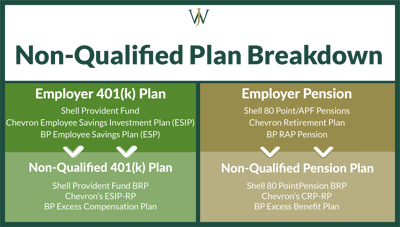
Upon reaching a certain level of income, many of Houston's oil and gas corporations may provide additional employer-sponsored benefits (often known...
READ MORE
Nick Johnson, CFA®, CFP®
PRESIDENT & CHIEF INVESTMENT OFFICER
Bridging: Strategic Steps to Keep Shell Pension Eligibility It’s no secret that the oil and gas markets have experienced considerable volatility over the past several years. When the markets take a dive, jobs in the industry often follow suit. Many oil and gas executives may subsequently experience the turmoil and uncertainty of losing their jobs, and ultimately their pensions. Losing a long-held position in a company can be very stressful. The stress can be compounded when employees have not reached the milestones required to be eligible for a company pension at the time of their severance. Some Shell executives who are released or severed may fall short of the pension eligibility threshold. However, depending on their tenure and relationship with the company, they may still have the opportunity to receive pension payments. Shell offers them the opportunity to reach these eligibility thresholds and benefit from the company’s pension plan using a process called bridging. What is Bridging Your Pension? If you are being involuntarily separated from Shell through a layoff or severance, you should inquire with your management team regarding the possibility of bridging to reach pension eligibility. If you qualify for Special Severance and your date of separation falls within a certain period of time (typically within 12 months) of your pension eligibility, Shell may give you the option of going on a special leave of absence (SLOA). This SLOA may even provide you an opportunity to be paid during the bridging time period, with payments deducted from your typical severance package or other benefits. Download our Shell Severance Checklist Now to Make Sure You're Not Leaving Anything on the Table >> The goal of the SLOA is to allow you to reach your pension eligibility and receive the payments you earned during your years of service to Shell. This SLOA will bridge the gap between your date of separation and the last day of the month when you become eligible for your pension; it will not cover additional time needed to reach other milestones, such as a specific age or an employment milestone. How Does Bridging Your Pension Work? Bridging through an SLOA offers a way to reach required pension milestones and receive optimal benefits. With most companies, employees who go on SLOAs receive a reduced salary, typically 50 percent of their base salary, during this period. These funds may be taken from other previously negotiated severance payments or from an acceleration of deferred non-qualified payouts. Because they are still officially employees of the company, those who are bridging will remain eligible for medical and dental insurance coverage, and will still be allowed to contribute to the Shell Provident Fund. However, even though employees are being paid for their time, they will not earn vacation time or bonus credits during the SLOA. Which Shell Executives Qualify for Bridging? Typically, bridging is handled on a case-by-case basis and is offered to employees at an executive job grade (or higher) with extensive tenure at Shell. Additionally, employees must be close to reaching a pension eligibility milestone for their benefits to qualify for bridging. Specifically, employees must have sufficient tenure to be within 12 months of reaching immediate pension eligibility to qualify for a SLOA; they must also be eligible for the Special Severance Plan as part of an involuntary or voluntary severance. Terms such as 80-point and 70-point can indicate thresholds of pension eligibility by combining age and years of service to reach the required number of points. What Impact or Benefit Does Bridging My Pension Have On Me? If you choose to accept an SLOA to bridge to a pension, you may receive an advanced payout of deferred non-qualified benefits. Any adjustments of your benefit payments can have an impact on your tax liability during retirement. Before accepting an SLOA offer or agreeing to specific payment options, you should consult with your financial advisor to ensure a change to expected cash flows will not cause an adverse impact. Bridging can be a very valuable tool to help you receive the payments you deserve for your years of loyalty and service to a company. If you are close to reaching a pension eligibility milestone and become involuntarily separated from Shell, consult with your employer and HR representative to see if you qualify. And, if you are interested in learning more about how severance, pensions, and bridging can affect your overall financial and retirement plans, Willis Johnson & Associates has helped many Shell executives successfully manage their financial options and optimize their retirement success. Learn more about how we can help by reviewing our philosophies and investment process.

It’s no secret that the oil and gas markets have experienced considerable volatility over the past several years. When the markets take a dive, jobs...
READ MORE
Alexis Long, MBA, CFP®
MANAGING DIRECTOR, WEALTH MANAGEMENT
How Shell Employees Can Benefit From Deferred Compensation All money spends the same. That adage is technically true. However, not all money is saved in the same way, and making strategic savings choices can have a tremendous impact on your overall saving efficiency and success. For highly compensated Shell employees, deferred compensation is one benefit the company offers to give them an additional saving and tax management option. Specific Internal Revenue Service (IRS) guidelines impact the amounts that may be contributed to a 401(k) or pension (These amounts are subject to change annually.) Employees who qualify can have up to 10 percent of their compensation in excess of IRS limits contributed to a deferred compensation plan. How Do Shell’s Deferred Compensation Plans Work? Many companies, including Shell, will contribute a percentage of high-earning employees’ excess compensation into a deferred compensation plan. Depending on the employee’s compensation margin (the amount over the IRS-defined thresholds) and the number of years earning at a high level, a substantial fund may begin to build up in the employee’s deferred compensation account. And, on top of these ongoing annual contributions, fund balances will also benefit from earning compounded interest or growing with the market during the time they’ve invested. How Does Shell’s Deferred Compensation Plan Pay Out? A deferred compensation plan can provide a very beneficial source of additional income in retirement. It’s important to consider retirement income holistically, including methods of disbursement, as funds will be received from multiple sources. In retirement, you’ll likely begin accessing your income from sources including severance, pensions, 401(k), and the vesting of stock grants. When you add a deferred compensation plan that’s been growing for many years, you may find your retirement compensation is at a similar level to your typical working salary and you need a plan to strategically manage your retirement timeline and funds. What’s the Difference Between Shell’s New Money and Old Money Deferred Compensation Plans? For some long-term Shell employees, their deferred compensation may be conveniently divided into two disbursement options: Old Money and New Money. New money is money Shell has contributed to your deferred compensation plan after 2004. This money must be disbursed within 90 days of retirement for most employees. For those deemed key employees, the distribution window expands to six months after separation from the company. Old money, on the other hand, is eligible to be disbursed in a manner similar to a traditional pension. This process, similar to annuitization, allows the old money to be spread across a number of years and therefore potentially assessed in lower tax brackets. Who Qualifies for Shell’s New Money and Old Money Deferred Compensation Plans? The only employees who qualify for both Shell’s Old Money and New Money plans are those who were making qualifying levels of income prior to 2005. Many of the employees who were earning at high levels during that time period have already retired. We occasionally see situations where employees may have experienced a high-earning year or two during the Old Money time period (traders are a good example) and may be unaware that they received deferred compensation or their funds have been steadily growing over the intervening 15 to 20 years. How Do I Know Whether I Have Old Money or New Money in My Deferred Compensation Plan? When you log into your Net Benefits account, you can review your Deferred Comp BRP. It should list the funds as either Old Money or New Money. As a general rule, only those employees who were highly compensated prior to 2005 will have Old Money in their accounts, and you would likely be aware of your earnings and of your deferred compensation benefits. However, it’s possible you might have been grouped in this category for a year or two if you had an exceptional performance factor one year, or if Shell as a whole had an excellent year. What Should I Do to Maximize the Value of My Deferred Compensation Plan? Our advisors work with Shell executives to review their retirement options and opportunities, including deferred compensation. If you weren’t aware you had deferred compensation available to you, you might be pleasantly surprised at the funds that have accumulated. Even better, working with one of our associates can help you to get the most benefit from these retirement funds. By making informed tax planning decisions, we can help you ensure you minimize the impact of taxes on your deferred compensation and other retirement funds. If you want to have an additional conversation about deferred compensation, tax planning strategies, or your plans for retirement, our team of advisors is available to help. Learn more about the many ways we support Shell executives and professionals and about how Willis Johnson & Associates serves our clients.

All money spends the same. That adage is technically true. However, not all money is saved in the same way, and making strategic savings choices can...
READ MORE
Nick Johnson, CFA®, CFP®
PRESIDENT & CHIEF INVESTMENT OFFICER
How Mega Backdoor Roth Contributions Can Boost Your Retirement Savings When thinking about retirement, a few essential to-dos come to mind as you work toward financial independence to ensure you're on track. If you're checking your investment allocations and managing capital gains, making pension elections, and maxing out your pre-tax contributions to your 401(k) each year, you'd probably say you're doing everything possible, right? By focusing on these elements of your financial plan, you're already ahead of most professionals. But many employees at large energy companies have opportunities for additional savings in their 401(k) on top of the usual pre-tax contributions 401(k) plans allow using a source called "after-tax." Using the after-tax bucket in the 401(k) can provide exciting opportunities for increased savings and financial planning strategies to enhance what's available to you in retirement. How to Save in a 401(k): Pre-tax, Roth, and After-Tax Before we jump into how you can use after-tax savings, let's review how to save in a 401(k). Most people know you can contribute to your 401(k), either pre-tax or Roth, up to an annual limit. However, many people we work with don't know about the third bucket: after-tax. Pre-Tax in the 401(k) When contributing to the pre-tax source in the 401(k), contributions move from your paycheck to the 401(k) before any federal ordinary income taxes come out of your gross pay. That's why we call them pre-tax contributions. Choosing pre-tax contributions means you can delay paying tax on these contributions until you start withdrawing from your 401(k) in retirement. Often, pre-tax contributions are the right choice for those whose income will be lower after retirement. Deferring taxes into the future at a lower income tax bracket can be beneficial to lower the total taxes owed over your life rather than paying taxes in your higher income tax bracket today. Roth in the 401(k) Contrary to pre-tax, Roth 401(k) savings occur on an after-tax basis. However, while this may seem similar to after-tax, the two are separate entities in the 401(k). Roth contributions move from your paycheck to the 401(k) from your net pay after federal ordinary income taxes are removed. Roth contributions in the 401(k) are often best for those whose retirement income tax brackets will be higher than today's income tax bracket. Generally, Roth contributions in the 401(k) work well for those just starting their career or expecting their salary to increase with their experience. Pre-Tax & Roth in the 401(k) As a reminder, Pre-tax and Roth savings are part of the same bucket of annual savings in the 401(k) and are subject to IRS contribution limits each year. For 2025, the combined contributions to these accounts cannot exceed $23,500 for those under 50 and $31,000 for those over 50. After-Tax in the 401(k) The after-tax savings bucket is a separate area of savings in the 401(k) from Pre-tax and Roth. Not all employers offer after-tax in the 401(k), but for those with this option, it can provide an excellent opportunity to save more funds in tax-beneficial accounts. How Does After-Tax Work in the 401(k)? After-tax contributions, much like Roth, are done after-tax and move from the paycheck to the 401(k) after FICA, social security, and Medicare taxes are removed. Once in the 401(k), these after-tax contributions will grow tax-free for life. However, much like pre-tax, growth from investments within the after-tax source is taxed at ordinary income rates when withdrawn. Mega Backdoor Roth Strategy: How to Roll After-Tax in the 401(k) to a Roth IRA One significant benefit of using the after-tax source is that you can do a Mega Backdoor Roth strategy (not to be confused with backdoor Roth contributions). Generally, you can do an in-plan conversion of after-tax contributions to the Roth 401(k) source. However, you can also roll after-tax contributions to a Roth IRA outside the 401(k) with no early withdrawal penalties. When available, we often recommend rolling these savings to a Roth IRA outside the 401(k) because, typically, outside Roth IRAs have more investment options than employer plans. Then, once in a Roth IRA, we can customize the investment strategy and invest funds more aggressively. Once outside the after-tax source in the 401(k), these savings can grow tax-free in the Roth IRA. However, if left in the 401(k), they would grow on a tax-deferred basis. Tax-free growth for life seems like a benefit that makes doing this strategy a no-brainer, right? Later in this article, we'll discuss why tax planning is critical to ensure that no unintended tax consequences arise when doing the Mega Backdoor Roth strategy. Is a Mega Backdoor Roth Legal? The ability to save more in the 401(k) AND roll it outside the 401(k) without penalty sounds too good to be true: is it? You're in luck. It's completely legal. The IRS blessed the Mega Backdoor Roth strategy via the IRS Notice 2014-54 in 2015, which explicitly spelled out the process details to remove any grey areas for tax planning. Mega Backdoor Roth Limits Now we know that after-tax contributions can add more retirement savings to your nest egg, but how much can you contribute to the after-tax source in your 401(k)? The IRS sets an annual overarching contribution limit for Defined Contribution plans, like your 401(k) or a Solo 401(k). For 2025, this limit is $70,000 for those under 50 and $77,500 for those over 50. This limit accounts for annual contributions to the 401(k) from both the employer and employee. So, for example, if you're over 50 (making $350,000) and maxing out your pre-tax contribution ($31,000) and your employer matches 10% ($35,000), then the most you can contribute to after-tax for 2025 is $11,500. However, some employers set limits for an employee's after-tax contributions below the IRS threshold. Therefore, reviewing your plan yearly or discussing it with a financial professional is essential to ensuring you're maxing out the 401(k) properly. Who Can Do a Mega Backdoor Roth? Ideally, this strategy is for super savers already maxing out their pre-tax or Roth contributions in a 401(k). Typically, this strategy is best for high-income individuals looking to augment their Roth savings, even if they can't directly contribute to a Roth because of the IRS' Modified Adjusted Gross Income threshold. Where Should I Save First In My 401(k)? Our clients often ask, "Where should I save first? When considering savings prioritization for high-income individuals, we usually recommend maxing out pre-tax or Roth contributions to the 401(k) first. As you evaluate your cash flow from there, if you can and want to make additional retirement contributions, we consider starting to make after-tax contributions. Beyond pre-tax and after-tax contributions, you can achieve extra savings through Backdoor Roth contributions, HSA contributions, and systematic savings to taxable (after-tax, brokerage) accounts. Benefits of Saving to a Roth IRA Some might ask: why try to get more money into Roth? Well, in the right circumstances, a Roth can provide substantial value. In addition to tax-free growth and distributions, Roth IRAs do not have the Required Minimum Distributions like IRAs and 401k(s). You don't have to withdraw at a designated time, so the funds in Roth can continue to grow and add greater value to your portfolio over your lifetime. Lastly, Roth IRAs are outstanding accounts to pass down to heirs because your beneficiaries can also make tax-free withdrawals. By contrast, IRAs and 401(k)s do not allow for tax-free distributions. Even though the intent behind a gift may be altruistic, sometimes inheriting an IRA or 401k can add a significant tax burden to beneficiaries. Tax Considerations for the Mega Backdoor Roth Strategy Just making after-tax contributions is not the end of the story. Ongoing tax planning is required to do them as efficiently as possible, getting more into Roth to grow tax-free while avoiding unintended tax consequences. Unfortunately, we often see two common mistakes when people try to implement this strategy on their own: leaving money in the plan for too long, or not adequately planning and rolling the funds out to the wrong account. Leaving Funds in After-Tax in the 401(k) Let's put what we've talked about so far into perspective. Rachel and Tim, age 60, have made after-tax contributions for the past 20 years. They have each saved $15,000 per year in their after-tax accounts. But, not realizing that they could roll these funds out to a Roth IRA, they left the funds in the 401(k), and these contributions have grown 8% per year. What would the impact have been if they regularly rolled the contributions out to a Roth IRA? At the end of 20 years, as they're retiring, Rachel and Tim's combined after-tax bucket in their 401(k)s is a whopping $1,372,858. They've contributed $600,000, and their growth totals $772,858. Rachel and Tim are thrilled because they have increased their retirement savings by over $1 million by saving more during their working years. However, because the funds are in the 401(k), the $772,858 of growth is classified as pre-tax. While they have $600,000 of tax-free savings, the investment growth of $772,858 will eventually be taxable to them as Ordinary Income. Let's extend the example to highlight something we often see from retirees. When Rachel and Tim retire this year, they decide to keep their 401(k) savings in their employer plans. They're too busy traveling and enjoying retirement to worry about it! However, even with no additional contributions to after-tax upon retirement, their contributions still grow each year. At age 70, when they start taking 401(k) distributions, their contributions are still $600,000. But, the growth on these contributions has reached $2,364,897. If their effective tax rate is 18%, that's a $474,281 tax bill that Rachel and Tim could have avoided with proper planning! Rolling 401(k) Funds to Roth IRA Annually What could these retirees have done differently? As Rachel and Tim made contributions to their after-tax bucket, they should have been diligent about rolling these funds out to their Roth IRAs. Generally, we work with our clients to roll funds over 1-2 times a year to minimize growth while still in the 401(k). To truly prevent any 401(k) growth before rolling out these funds, they can invest these funds in cash or an employer thrift fund. If Rachel and Tim had rolled out these funds once a year into Roth, their funds would grow and compound tax-free in Roth for all the years that followed! The most significant benefit of rolling these funds is that their total savings would stay the same, and they'd avoid paying additional taxes on the growth. Improper Planning with the After-Tax Rollover We've seen how an annual after-tax rollover can help minimize growth in this 401(k) source each year, but what if you already have growth in after-tax contributions? All is not lost. You can initiate a complete rollover of after-tax savings at any point, but it's not the ideal scenario. Rather than rolling everything from after-tax into an IRA, you have to split the distribution to its respective IRA or Roth IRA. Doing this process keeps the pre-tax growth from after-tax from being immediately taxed. After-tax contributions go to the Roth IRA to start growing tax-free, while the growth is sent to the IRA to continue to grow tax-deferred. Of course, the growth will eventually be taxable, but proper planning can help delay the taxability. While this complete rollover isn't a total fix, it gets the after-tax funds where they need to be so you can start taking advantage of tax-free growth. Benefits and Consequences of a Mega Backdoor Roth Strategy While the Mega Backdoor Roth seems like an intricate and complicated process to make indirect Roth IRA contributions, it can have a substantial impact. A correctly-implemented Mega Backdoor Roth contribution can be an excellent way to boost retirement contributions and savings already being done. However, if done improperly, the Mega Backdoor Roth strategy can backfire and create an unnecessary tax burden. At WJA, we focus on ensuring that complex strategies like the Mega Backdoor Roth contribution are executed correctly to help our clients reach their financial goals. While rolling out after-tax contributions may seem daunting, you don't have to go it alone. Working with a financial advisor is a beneficial way to determine if this or other tax-efficient savings strategies can help you reach your long-term goals. Start the conversation with an advisor today.
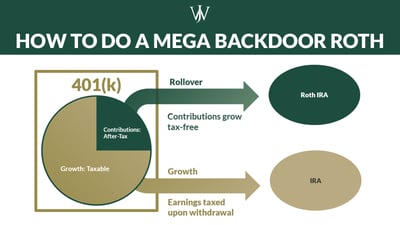
When thinking about retirement, a few essential to-dos come to mind as you work toward financial independence to ensure you're on track. If you're ...
READ MORE
Sarah Sikorski, CPA, CFP®
DIRECTOR, WEALTH MANAGEMENT
How To Use a Backdoor Roth for Tax-Free Savings When it comes to financial goals, two of the most common are: save more for retirement, and pay less in taxes. For many, a Roth IRA is a great option to achieve those goals, but for high-income earners, there are income limits prohibiting them from taking advantage of the benefits presented by a traditional Roth IRA directly. That's where the Backdoor Roth contribution strategy comes into play. What is a Backdoor Roth IRA Contribution? A backdoor Roth strategy allows you to bypass the IRS' income limitations on Roth contributions to save an additional $7,500 annually ($8,600 if over age 50) above what you're saving in your 401(k) using the pre-tax, Roth, or after-tax sources. To yield these benefits, the Backdoor Roth IRA contribution strategy marries a contribution to a non-deductible IRA with a conversion to a Roth IRA. IRA & Roth IRA Income Limits and Loopholes When contributing to a traditional IRA, there are phase-out limits for those exceeding certain income thresholds to write off these contributions on their tax returns. The tax deductibility phase-out limit in 2026 for a traditional IRA ranges from $81,000-$91,000 for Single or Head of Household filers or from $129,000 - $149,000 for those who are Married Filing Jointly, assuming everyone in either case is covered by a retirement plan through work. When making any contributions to an IRA after these thresholds, the contributions will be designated as non-deductible after-tax contributions. There are no income limits for making after-tax contributions to a traditional IRA. The income phase-out limit for married couples filing jointly to contribute to a Roth IRA (during the 2026 tax year) is $242,000-$252,000, and for Single or Head of Household, the income limit for contributing to a Roth is $153,000-$168,000. While these income limits prevent contributing to a Roth directly, there are no income limits for converting traditional IRA assets to a Roth IRA. How to Do a Backdoor Roth IRA Contribution The backdoor Roth contribution utilizes two accounts— a traditional IRA and a Roth IRA. If you are a high-income earner, you probably already know that you can’t contribute directly to a Roth IRA. The backdoor Roth contribution strategy is a way to get around the income limitation and still save money in a Roth IRA. A simplified way of looking at the backdoor Roth process is: You receive your paycheck into your checking account, which is after-tax because you've paid your income taxes on it. You set up a traditional IRA account, and you also set up a Roth IRA account. You write a check for $7,500 that you deposit into your IRA. Since the money that you are contributing to the IRA is after you've already paid your taxes, it's considered an after-tax contribution. It also is considered a non-deductible contribution which means when you file your taxes in April or October, you don't get to write-off the contribution on your tax return, so it's considered a non-deductible after-tax contribution. Perform a Roth Conversion - Since the money in your IRA is after-tax money, when you convert your contribution to the Roth IRA, you do not pay any taxes on the conversion so long as there's been no growth on the contribution from the IRA and you convert it all to the Roth. Once the money is in the Roth, you invest it, and it grows tax-free forever. The backdoor Roth strategy works especially well, coupled with the after-tax rollover strategy, also known as a Mega Backdoor Roth. Benefits of a Backdoor Roth IRA for Retirement Savings This strategy allows you to save up to $7,500 annually per person (including spouses), over and above what you are already contributing to your employer’s 401(k). Many investors can contribute $7,000 for the 2025 tax year (as long as the contribution is made before filing the 2026 tax return) and contribute $7,500 for the 2026 tax year. If you are married and under 50, that means $15,000 in additional retirement plan savings for 2026 and an additional $14,000 for 2025, for a total of $29,000 in additional retirement savings that will grow tax-free for life and are tax-free upon withdrawal. If you’re age 50 or over, you can contribute $8,600 per person (including spouses) in 2026, and $8,000 per person in 2025, so if both you and your spouse max out this savings strategy in both 2025 and 2026, you’ll have a total of $33,200 in tax-efficient savings to draw from in retirement tax-free. Challenges of Doing a Backdoor Roth Contribution Without Professional Guidance While the backdoor Roth may seem simple at a glance, some important stipulations and rules can have a significant tax impact if the strategy is performed incorrectly. Among the most important stipulations for traditional IRAs with pre-tax contributions is the pro rata rule, which treats all IRAs as one IRA. So, how can the pro-rata rule affect the outcome of using a Backdoor Roth IRA strategy? Let’s walk through an example of the consequences one may face upon completing a Backdoor Roth IRA contribution without proper planning: Max has an IRA at Vanguard that contains $93,000 of pre-tax funds. He decides he wants to do a Backdoor Roth IRA contribution, so he opens an IRA at Fidelity. Max contributes $7,500 of non-deductible money and immediately proceeds to convert the money to his Roth IRA at Fidelity. Max thinks that he will not owe any taxes on the conversion because he converted money from his Fidelity IRA to his Fidelity Roth IRA. However, he did not understand the pro-rata rule before making this financial decision. The pro-rata rule says that all IRAs are treated as one IRA for the purposes of Roth Conversions. So, in reality, Max has $7,500 of non-deductible money across his IRAs and $93,000 of pre-tax money. In other words, 7% of the funds in Max’s IRAs are non-deductible, and the other 93% of the funds are pre-tax. So, of the $7,500 Roth conversion 7% is tax-free; the other 93% is taxable at ordinary income rates! You may be saying to yourself, “I have pre-tax money in IRAs, does this mean that I cannot utilize the Backdoor Roth IRA contribution strategy without incurring negative tax consequences?" For many of our clients with a current 401(k) plan, the answer is you can utilize the strategy, with some preliminary clean-up. At Willis Johnson & Associates, many of our clients are energy executives and professionals who are still working in corporate America and have a 401(k) plan with their employer. Employer plans are not considered part of the pro-rata rule. Typically, it can be beneficial to consolidate accounts before applying the Backdoor Roth IRA Contribution strategy to your financial plan to help reduce potential tax impact. So, if Max were our client, we may decide to consolidate his pre-tax IRAs to his company’s 401(k) plan. After we consolidated the $93,000 of pre-tax money into Max's company’s 401(k), then we could assist him in making a Backdoor Roth IRA Contribution because he no longer has any pre-tax IRA money. When considering your financial goals and the strategies it takes to reach them, the backdoor Roth strategy can be highly beneficial for high-income earners to take advantage of. Discussing the backdoor Roth strategy with a financial professional early is important to take advantage of the compounded growth and future tax savings it offers. To better understand how you could leverage the backdoor Roth IRA in your financial plan, get in touch with one of our advisors who can offer guidance and additional recommendations to help you achieve your financial goals.
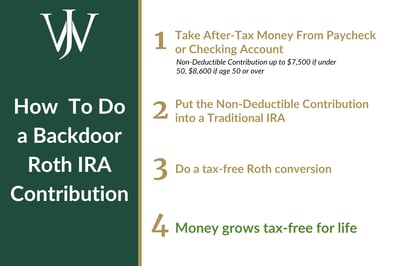
When it comes to financial goals, two of the most common are: save more for retirement, and pay less in taxes. For many, a Roth IRA is a great option...
READ MORE
Nick Johnson, CFA®, CFP®
PRESIDENT & CHIEF INVESTMENT OFFICER
How IRS Segment Rates Can Impact Your Shell 80 Point Pension BRP Payout Many of Shell’s high-income-earning executives don’t fully understand the differences between their numerous benefits, especially those related to their pension. Many who have spent their entire careers at Shell improperly manage the timing of their retirement, which impacts the calculation for their 80 Point Pension Benefit Restoration Plan. Poor retirement timing decisions often produce one of two results: The executive chooses a date that has significant tax consequences, or The executive chooses a payout date and elections that can save them hundreds of thousands of dollars—especially for those planning on retiring in the near term. To learn how to avoid these costly mistakes and get the most from these two plans, let’s dive into the details and payout considerations so you can be fully equipped when the time comes to make your elections for each. Understanding the Differences Between Your 80 Point Pension & the Pension’s Benefit Restoration Plan (BRP) Shell 80 Point Pension Many of our Shell clients are familiar with the 80 Point Pension the company offers. This defined benefit retirement plan uses your age, years of service, and average final compensation to determine a payout amount that Shell will pay you in your retirement. The Shell 80 Point Pension must pay out as an annuity. Shell 80 Point Pension Benefit Restoration Plan (BRP) If you are a highly compensated employee of Shell Oil and are on the Shell 80 Point Pension, Shell is likely making separate contributions to the Shell 80 Point Pension BRP on your behalf. The 80 Point Pension BRP is a non-qualified plan that allows Shell to restore benefits that an employee loses because of pension contribution limits set by the IRS each year. Payout Differences Between the 80 Point Shell Pension & the Shell 80 Point Pension BRP While your Shell 80 Point Pension must be taken as an annuity, your 80 Point Pension BRP is distributed as a lump sum. When you retire, Shell pays your 80 Point Pension BRP as a lump sum approximately 90 days after your retirement date (or six months if you are considered a key employee). Learning how these benefits pay out upon retirement is a crucial step in retirement planning. Learn more here >> How to Calculate the Shell 80 Point Pension Benefit Restoration Plan (BRP) Most of our Shell clients do not realize that recent interest rates can impact the value of their employee benefits for retirement. Specifically, Shell uses the segment rates from September each year to calculate the Shell 80 Point Pension Benefit Restoration Plan (BRP). To determine the value of the 80 Point Pension BRP lump sum, we need to calculate a summation of all future theoretical BRP annuity payments over the employee’s estimated life expectancy and discount it by the applicable interest rate (or in this case, the September segment rates). Thus, the lump sum value is simply the present value of future estimated monthly BRP annuity payments as a one-time summation. Here’s an example of this calculation: PV = (PMT1/(1+r)1) + PMT2/(1+r)2 … PMTN/(1+r)N PV = Present Value or “Lump Sum Value” in today’s dollars PMT = Projected annuitized payment amount R = Rate of return or “Segment Rate” N = Number of Years remaining in life expectancy When calculating the lump sum payout for the Shell 80 Point Pension Benefit Restoration Plan (BRP), Shell uses the September segment rates from the previous year. If you receive a pension BRP payout at any time in 2024, Shell uses the September rates from 2023, and if you receive a pension BRP payout at any time in 2025, Shell will use the September rates from 2024. What are Segment Rates and How Do They Impact The Lump Sum Payout of the Shell 80 Point Pension BRP Segment rates are rates provided by the IRS that companies use to determine specific payout amounts for employee deferred compensation plans. Segment rates are highly correlated to the movement of interest rates for short, medium, and long-term bonds respectively. Rates dropped in the second half of 2024. In October 2023, short, medium, and long-term segment rates reached close to and above 6% before falling in 2024 in response to cooling inflation. Almost a year later, rates for September 2024 teetered closer to 5%. This shift in segment rates plays a significant role in Shell professionals' BRP lump sum calculation. Discover Stock Market Trends & Economic Analysis in our Recent Stock Market Update Here >> To illustrate the impact of the movement in these rates, we can look at the difference between 2023 and 2024 rates. For the past few years, we’ve been in a high-interest rate environment due to the inflation from government spending and stimulus in 2020. However, as the Fed has moderately cut rates, the segment rates for September 2024 are more attractive than we've seen in the months leading up to this point. Let's take a look Segment Rates Impacting a Shell 80 Point BRP Pension Lump Sum Payout Month/Year 1st Segment 2nd Segment 3rd Segment September 2023 5.58% 5.66% 5.56% September 2024 4.17% 4.76% 5.25% Note, lower interest rates mean a higher value for your Shell 80 Point BRP Pension lump sum. So, how can changing your retirement date from November of one year to December of the same year affect your payout, given the movement in segment rates? Differences in BRP Pension Payouts in 2024 vs 2025 Shell Lump Sum Pension BRP Payout Example for 2024 Pension Elections Let’s consider an example of a Shell employee choosing to retire in November of 2024. a) 60-year-old retiring November 1, 2024 b) Pension starting December 1, 2024 c) Average Final Compensation is $600,000 d) Thirty Years of Service with Shell e) The value of both the traditional 80 Point Pension and Pension BRP is worth $24,000/month f) Net benefits is showing a traditional 80 Point Pension of $11,000/month g) Life Expectancy is 83.4 years If we run the example with a November 1, 2024 retirement date and a pension start date of December 1, 2024, Shell will use the segment rates from September 2023. The September 2023 segment rates were 5.58%, 5.66%, and 5.56%. In this scenario, the value of the lump sum for a December 2024 pension BRP election is worth approximately $2,027,816 Shell Lump Sum Pension BRP Payout Example for 2025 Pension Elections Let’s fast forward and assume you want to retire at year-end. In September 2024, the Fed began dropping interest rates across each segment. The resulting segment rates were 4.17%,4.76%, and 5.25%. This decrease in segment rates greatly impacts the lump sum calculation even if no other factors change. For this example, we’ll change the Shell employee’s retirement date to just one month later than in the previous example. a) 60-year-old retiring December 1, 2024 b) Pension starting January 1, 2025 c) Average Final Compensation is $600,000 d) Thirty Years of Service with Shell e) The value of both the traditional 80 Point Pension and Pension BRP is worth $24,000/month f) Net benefits is showing a traditional 80 Point Pension of $11,000/month g) Life Expectancy is 83.4 years If we run the math on the above example using the September 2024 rates, then the value of the lump sum BRP Pension paid out on January 1, 2025, is worth around $2,252,377. That’s a difference of over $220,000! Why the vast difference? Segment rates in September 2023 were approximately .75% - 1% higher in each segment than those in September 2024. Let’s briefly walk through how the math works to perform a rough calculation of the estimated value of the BRP Pension lump sum. Essentially, it comes down to the basic time value of money. First, we must calculate a summation of all future theoretical 80 Point Pension BRP annuity payments over the employee’s estimated life expectancy discounted by the applicable rate (segment rates). This calculation gives us a lump sum value equivalent to these theoretical annuity payments. Remember, the 80 Point Pension is taken as an annuity, but the 80 Point BRP Pension must be taken as a one-time lump sum payment. PV = PMT1/(1+r)1 + PMT2/(1+r)2 … PMTN/(1+r)N. PV = Present Value or “Lump Sum Value” in today’s dollars PMT = Projected annuitized payment amount R = Rate of return or “Segment Rate” N = Number of Years remaining in life expectancy For our example, an overly simplified version of this equation might look something like this: $2,252,377 = (13,000)1 / (1+4.17)1 + (13,000)2 / (1+4.76)2 … (13,000)13.4 / (1+5.25)13.4 The subscripts reflect each year remaining in the individual’s life span, and the calculation is run per month in each year over the 13.4 years used to calculate the lump sum. Remember, as interest rates go up, the pension value will decrease, and vice versa. Looking forward, segment rates today are lower than in September of 2023, and we expect that they could continue to drop through the rest of 2024 and into 2025 if the Fed can get inflation to its desired threshold in the coming months. It’s essential for Shell professionals to keep an eye on these rates to make educated decisions about when to start their pension and receive BRP payouts without leaving money on the table. Understanding the impact of appropriately timing your Pension BRP payout can significantly affect your retirement income. Still, there’s another dark horse to keep in mind when doing your financial planning around it – Taxes. Tax Impact of Your 80 Point Pension Benefit Restoration Plan Payout The Shell 80 Point Pension Benefit Restoration Plan is a non-qualified pension plan, meaning it does not receive the same preferential tax benefits as your qualified pension, the Shell 80 Point Pension. The Shell Pension BRP is immediately taxed at distribution, which means the Shell 80 Point Pension BRP is paid out within 90 days of retirement and immediately taxed for most retirees. You cannot roll your pension BRP into your 401(k) or IRA. Additionally, you cannot elect to defer receiving proceeds from your Pension BRP over time (unless you have an Old Money contribution or made benefit elections before 2007). Learn How You Could Save Over $50,000 in Taxes on Your BRP Payout>> Who Can Benefit from This Shell 80-Point Pension BRP Strategy? For Shell employees considering retiring within the next 18 to 24 months or those who can retire earlier, looking at segment rates to maximize your 80 Point Pension BRP payout can be a great strategy to utilize. We help our Shell clients looking at retiring in the next couple of years to analyze today’s segment rates to make the best election decision for their situation. Don’t overreact if you are looking at retiring in two to five years or are concerned about how rising rates may affect your Pension BRP payout. The value of your pension will increase by working longer, and no one knows exactly how rates will change over time. This strategy may not fit those taking voluntary severances as Shell may have requirements for their termination date, and the severance can also be worth a substantial amount. Before you make any decision, we recommend you work with a fiduciary financial advisor and seek confirmation about your various pension benefits and choices from Shell HR. Numerous employees at Shell have varying pension rules due to acquisitions, obtaining U.S. citizenship, being on the APF pension plan instead of the 80 point, and additional factors. Therefore, it is best to confirm how your retirement date affects your pension before making any decisions. Of course, taxes, other financial assets, personal goals, and financial needs all come into play. That’s why we perform a comprehensive assessment with our clients instead of simply looking at one item. If you have questions about your Shell benefits and want a second opinion, contact one of our advisors who specialize in helping Shell employees make the most of these retirement savings tools.
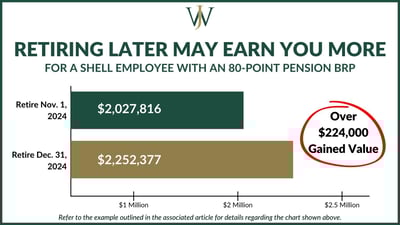
Many of Shell’s high-income-earning executives don’t fully understand the differences between their numerous benefits, especially those related to...
READ MORE
Nick Johnson, CFA®, CFP®
PRESIDENT & CHIEF INVESTMENT OFFICER
How to Increase Your Charitable Giving Using the Shell HERO Program A common phrase in many of today's professional circles is "work smarter, not harder." However, when it comes to giving to the causes people care about, we see them either missing out on tax-minimization opportunities or overcomplicating the process of trying to take advantage of various tax deductions and strategies. Utilizing Shell's HERO (Helping Employees Reach Out) Program gives employees a simple platform and company match for their charitable donations. In addition, strategically giving through appreciated Shell stock or Donor Advised Funds (DAF) can provide additional leverage and take those charitable donations one step further. Charitable Giving through Shell's HERO Program As a Shell employee or retiree, you likely know Shell regularly gives back to the local communities and supports many non-profit organizations. However, Shell's philanthropic efforts expand beyond just its corporate efforts. Shell also provides a company match to their charitably-inclined employees and retirees through the Shell HERO program. The Shell HERO (Helping Employees Reach Out) program is Shell's corporate giving program that matches employees' and retirees' charitable contributions. How Much Does Shell Match for Charitable Donations? Shell's HERO Program matches charitable donations from Shell employees each calendar year, up to $7,500 in 2024. For Shell retirees eligible to receive company benefits, Shell will match up to $5,500 in 2024. Suppose you give $7,500 to the charity of your choice. Then, through the HERO program, Shell will match your $7,500, which means that your chosen charity will receive $15,000. That is leverage, but wait, it gets even better! Shell Doubles the Company Match for Charitable Donations in September In addition to the regular company match, the Shell HERO giving program allows for a double company match for two weeks of the year. In 2024, these double days are September 1-15. Note: The doubled company match applies to current employees only, not retirees. Qualified retirees will receive the regular company match only. Consider this: if you make a $7,500 charitable gift, Shell, through their double match contributions, will give $15,000. By timing your charitable contributions effectively, the charity of your choice can receive a total of $22,500! How to Give Through Shell HERO Program Participating in Shell's charitable match program is simple. If you're an employee or retiree with full benefit eligibility, you can follow the steps outlined in this guide to request your match from Shell to the charity of your choice. The organization you select to receive donations must be a 501(c)(3) organization to be eligible for Shell's corporate match. Charitable Giving Through Donor-Advised Funds While many people like to write a check or give cash online, we often discuss another option with our clients. By using a Donor Advised Fund (DAF), you can often increase what available funds you can give to your preferred charity in a tax-efficient manner. However, while the Shell HERO Program and Donor Advised Funds (DAF) are great ways to leverage giving to charity, Shell will only match contributions to the HERO program, not those made through a DAF. What's Best for Charitable Giving: Using Donor-Advised Funds or Shell's HERO Program To qualify for Shell's matching gift, you must make the gift through the HERO Program. Unfortunately, giving to your Donor Advised Fund is not eligible for a Shell match. Because of this caveat, Shell professionals face a unique trade-off when making their charitable gifts. If individuals contribute through Shell's HERO Program, their chosen charity receives additional funds because of Shell's match. However, if an individual donates to charity through a DAF, Shell won't match contributions, but the individual could receive a better tax advantage. Benefits of Using a Donor-Advised Fund for Charitable Giving When contributing to a donor-advised fund, you can receive an immediate tax deduction the year of your contribution. In the DAF, you can invest these funds and make distributions at a later time. Investing within the fund enables your gifts to grow and can potentially increase the money going to the cause you care about. Let's consider an example. Suppose you make a $10,000 contribution to your DAF in 2024. For the 2024 tax year, you will get a charitable deduction for your donation amount. Instead of immediately distributing the funds, you could leave them inside the DAF and invest aggressively. Those funds could grow to $15,000 or $20,000 over time, depending on the market and your investment choices. After they’ve grown, you can utilize a strategy called “charitable clumping” to contribute several years of gifted funds to your preferred charity. Donor-advised funds, in this case, enable you to give more while remaining tax-efficient and getting deductions each year you contribute! Benefits of Using Shell's HERO Program for Charitable Giving A donor-advised fund strategy sounds great, right? Let's consider the alternative if you leveraged Shell's HERO program over time. With Shell's company match, a gift made through the Shell HERO Program of $5,000 yearly turns into a $10,000 annual contribution. If you contribute the same amount each year for five years, your charity of choice receives $50,000, of which you only gifted $25,000. Even in a stellar market, receiving growth on contributions at the same rate as Shell's match is unlikely. Evaluating your cash flow and tax deductions is crucial to deciding which strategies are best for your charitable efforts. Evaluating Charitable Tax Deductions And Maximum Charitable Contributions Many people are still below the standard deduction threshold with a $7,500 or $5,000 charitable gift. However, you can make substantial donations in a given year to receive a larger deduction using a donor-advised fund. For example, if you put $25,000 into your DAF, you'll receive a larger itemized deduction the same year you contribute and can plan to take the standard deduction in future years. While this strategy can potentially lower your taxes in a given year, a lower sum of funds will go to charity than if you'd leveraged the HERO program and Shell's charitable matching. Gifting Cash vs. Gifting Shell Stock When making contributions to a Donor-Advised Fund or the HERO program, you can make gifts in either cash or stock. Often, we believe that gifting appreciated stock is better than giving cash to either the HERO program or a DAF. Benefits of Gifting Shell Stock When meeting with our Shell clients to discuss philanthropic strategies, most don't realize gifting stock is an option. However, donating appreciated stock is often better than cash because of the tax arbitrage. When you donate your appreciated stock to a charity or DAF, you avoid paying the long-term capital gains on the stock's appreciation. Additionally, as a 501(C)(3) organization, the charity doesn't pay taxes on the gift either! Let's consider a final example. Suppose you want to give $50,000 to charity. If you paid $30,000 for your stock and it's appreciated up to $50,000, you'd have a few options. Option 1: You can sell the stock and pay a 20% long-term capital gains tax of $4,000. You can donate the rest of the cash to charity, which would be a gift of $46,000. Option 2: Instead, you could directly transfer your $50,000 of stock to the charity. The charity receives the entire $50,000 tax-free, and you pay no capital gains. However, despite avoiding long-term capital gains, you can still receive a significant tax deduction in the amount of the stock you donated. Over time, gifting appreciated stock while claiming a deduction over the standard deduction threshold can have substantial tax benefits. When evaluating charitable giving options there are many factors to consider, and your priorities can change from year to year. While using a donor-advised fund can help you make a larger charitable contribution one year for a sizable tax deduction, you may face a trade-off in what you can give to your preferred charity. If you decide to leverage the HERO program, the charity you choose can receive more funds than you could give on your own, but you may not cross the standard tax deduction threshold. These are only a few of the factors to consider when deciding how to incorporate charitable giving into your financial plan. At Willis Johnson & Associates, we help our Shell clients with their philanthropy through our all-encompassing approach to financial planning and our in-depth understanding of Shell's benefits. For those who are charitably inclined, now is an excellent time to consider utilizing the HERO program to capitalize on Shell's double match for your preferred charitable organizations. For a better understanding of how your philanthropic endeavors, Shell benefits, and tax strategies interconnect, start the conversation with one of our advisors today.

A common phrase in many of today's professional circles is "work smarter, not harder." However, when it comes to giving to the causes people care...
READ MORE
Brandon Young, CFP®
WEALTH MANAGER
How to Pick Your Retirement Date to Optimize Your Chevron Pension Your retirement date can evoke a multitude of emotions. Your last day of work may make you feel excited, nervous, nostalgic, or a combination of all three. You may not be thinking about strategically choosing your retirement date. As a Chevron employee, you should be aware of the impact various savings and investment options have on your retirement planning. Your Chevron Retirement Plan (CRP) Lump Sum pension is one of the many tools at your disposal. You should be aware and knowledgeable regarding the way your CRP Lump Sum is distributed, so you can make a wise, strategic decision regarding the date you set for your retirement. In some cases, adjusting your date by a few weeks can make a significant financial impact when it comes to the total pension amount to be distributed. What Data is Your Chevron Retirement Plan Pension Calculation Based on? Your pension will be calculated based on your last date of employment and benefit start date. The IRS regularly releases spot segment rates that are used to calculate the CRP Lump Sum. Your CRP Lump Sum — “your pension” — is not solely based on interest rates. However, looking at recent interest rates over time can give you an idea of how your lump sum will be affected in the calculation and better educate your decision on when to retire. Interest rates have an inverse relationship with a lump sum pension. When interest rates increase, lump sum pension values will decrease and vice versa. How Does Chevron Calculate the Total Amount of Pension Funds You Should Receive? While the calculation is fairly complex, the following charts can provide you with an idea of the rates used to calculate your CRP Lump Sum and how they can affect the overall pension funds available to you. When Chevron employees elect the month they would like to begin their pension, Chevron looks back three months to calculate the rate used for the pension disbursement. For example, if you are planning to retire and start your pension in June 2024, Chevron would use the blended rate available through March 2024 (three months prior to your month of retirement). This example shows three months of rates and how they are blended to determine your rates for various segments of your pension. In our June 2024 retirement example, the average of March 2024, February 2024, and January 2024 rates comprise the blended rate. The segments refer to distinct periods of pension distribution: The first segment rate is used to discount (calculate the present value) the first five years of pension cash flow. The second segment rate is used to discount years six through 20 of pension cash flow. The third segment rate is used to discount years 21+ of pension cash flow. Together, these rates and terms are used to calculate the lump sum pension value. How Might Recent Interest Rates Affect Your Chevron Pension Lump Sum? Because pension pricing is based on interest calculations, making a slight adjustment in your retirement date may have a significant financial impact on your pension. As a basic example, consider the following scenario: Your single life annuity pension amount is $10,000/month. You retire at 65. The life expectancy Chevron uses to calculate your pension is age 85. Based on this information and the segment rates above, your expected lump sum pension value would be approximately $1.79 million if you started your pension in June of 2024. However, your pension calculations will shift depending on the month you choose to retire. As a comparison, if you decided to start your pension in January 2024 (just six months earlier than the June 2024 scenario), Chevron would use the segment rates through October 2023. Those rates look back on the time period from August 2023 through October 2023: In this instance, the lump sum decreases to approximately $1.67 Million. That’s a difference of over $122,000 by waiting six months to retire. The pension lump sum value increased for a June 2024 retirement because of the decrease in segment rates that was factored into the blended rate equation. (Remember, when segment rates increase, your pension lump sum value decreases.) Let's consider a different example from a hypothetical lower interest rate environment a year from now. Suppose you decided to start your pension in June 2025. For this example, the numbers shift slightly given the extra year of service to look like this: You retire at 66, after 34.5 years of service at Chevron. Your single life annuity pension amount increases to $10,060/month because of the additional year of service. The life expectancy Chevron uses to calculate your pension stays the same – age 85. Let’s assume that we see a 1% drop in each segment for interest rates that mimic the numbers we saw in the summer of 2022. For this hypothetical June 2025 retirement, the rates may look something like this: Using the same calculation from the previous example with our updated considerations, the hypothetical expected lump sum pension value in June 2025 would be approximately $1.96 million. If you chose to retire 18 months later with lower interest rates, in June 2025 rather than January 2024, you could have earned an additional $291,000 in your CRP payout. Why? It all comes down to interest rates. Depending on your pension numbers, the changes in interest rates may have a significant impact on the lump sum value you receive in retirement and could impact your overall retirement planning. What are the 6 Most Common Chevron Retirement Mistakes? Find out here. How Can You Plan Strategically to Take Advantage of the Best Pension Calculation Time Frame? There are various trends you can evaluate to help you plan the best date for your retirement, including reviewing rates published by the Treasury Department. Early in 2022, the Federal Reserve raised interest rates to fight persistently high inflation following COVID-19. For over two years, interest rates have been a topic of concern as housing prices, inflation, and other elements of the U.S. economy have stayed higher than expected. According to Morningstar, CPI inflation data peaked in the summer of 2022 and, more recently, posted 3.5% year-over-year growth in March 2024. While the declining inflation numbers seems to be a good sign, Fed Chairman Jerome Powell has indicated that we could be in a higher for longer rate environment if sticky inflation continues since it’s taken longer than expected to get here. We don’t foresee rates coming down substantially anytime soon, however the market projects a 55% chance of a rate cut this year. But there’s a real chance we won’t get any. Market expectations also believe the Federal Funds Rate will drop to about 3.5% by the end of 2025. Upon the Fed’s decision to stop raising rates, whenever it may be, we’re optimistic that we’ll see the economy and stock market take off as we shift away from a “tightening” market. Segment rates correlate with US Treasury rates; when Treasury rates are on the descent, segment rates will decline accordingly. And, as mentioned, lowering interest rates means a higher pension calculation. By looking back over a 12-month period and reviewing their projections, you may be able to get an idea of which direction rates will head in the future. As an example, if we continue to see rates trending downward in the coming months, that has a positive impact on pension calculations and could give you a reason to postpone your pension election date to get a larger lump sum pension payout. Time your retirement date to take advantage of the best rate/pension scenario for you. Consider Retiring Now & Deferring Your Chevron Pension One strategy to consider for your financial planning is retiring now while deferring your pension. Contrary to popular belief, you don’t have to take your lump sum pension immediately after retiring. You can choose to delay when your pension starts to take advantage of the look-back window and choose a start date when interest rates are more beneficial for your pension payout. For example, if you intend to retire in the summer of 2024, you will be able to review rates from the spring to determine if it is financially advantageous to retire in June or July 2024 or to wait until later in the year. While in this example, we've determined that a June retirement would equate to a larger lump sum pension than if you’d retired in January, if rates continue to decline, it may be more advantageous to delay your retirement into late 2024 rather than accelerating it to receive an even larger lump sum. What's the outlook on segment rates, and how should you choose your retirement date? Before the rise in rates in 2020, segment rates had been coming down since November 2018. Upon the release of March 2022 rates, we saw the intermediate and long-term rates jump significantly. Rates drastically rose throughout 2022 and reached a two-decade high at 5.3% in May 2024. With continued and substantial concerns about rampant inflation, we expect to be in a high interest rate environment for the coming months. Segment rates are based on broad market interest rates, which declined sharply throughout the COVID-19 lockdowns— whether you’re looking at short-term rates (segment 1) or long-term rates (segment 3) — but have stayed persistently high since 2022. The Federal Reserve Chairman, Jerome Powell, announced in March of 2022 that the Fed would be raising interest rates and bumping the federal funds rate to combat inflation as it rose to over 9% in the summer of 2022. While today’s inflation rate is closer to 3.5%, only time will tell if the Fed’s efforts to combat inflation will yield the soft landing they’re hoping for and lead to lower rates by early 2025. With that, it may be more attractive to prolong your retirement into the later months of 2024 instead of accelerating your pension election date. The primary reason for this increase is the economic outlook. As concerns surrounding inflation remain top of mind, the Fed faces continued pressure to raise interest rates to alleviate pressures on the everyday consumer. Remember, segment rates and lump sum pension amounts have an inverse relationship. Segment rates are far from the decade lows we saw in 2020, and trends and leading indicators point to potential tapering in the coming months. It’s crucial to be keeping an eye on these rates to determine which retirement date can maximize your lump sum pension amounts. For many executives at Chevron, taking their lump sum pension in June could mean a substantially higher payout than if they decided to retire earlier in 2024. However, interest rates could remain high for many months while the Fed fights inflation, so if you have flexibility in your retirement planning, waiting until interest rates drop again may be more beneficial. As you prepare for retirement, your pension is designed to provide a valuable means of ongoing support. It’s important to ensure you’re maximizing the value it provides. Our financial advisors can offer advice and feedback on your pension planning dates, as well as on additional avenues for making the most of your pension, such as tax-planning strategies. Review our process and the ways we can support you in preparing and positioning yourself for retirement.
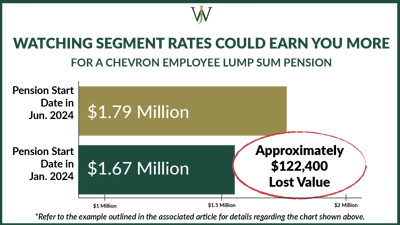
Your retirement date can evoke a multitude of emotions. Your last day of work may make you feel excited, nervous, nostalgic, or a combination of all...
READ MORE
Alexis Long, MBA, CFP®
MANAGING DIRECTOR, WEALTH MANAGEMENT
How To Use the Chevron Humankind Program for Charitable Giving & Tax Planning As a Chevron employee or retiree, you likely know Chevron regularly gives back to the local communities and supports many non-profit organizations. However, Chevron's philanthropic efforts expand beyond their corporate efforts. Chevron also provides a company match to their charitably-inclined employees and retirees through the Chevron HumanKind program. What is Chevron's HumanKind Matching Gift Program? The Chevron HumanKind program is a corporate giving program that allows employees and retirees to maximize their charitable contributions and give more to the organizations they support. The program matches charitable donations from Chevron employees up to $10,000 annually and from Chevron retirees up to $3,000 annually. To be eligible for a corporate match from Chevron, the organization receiving donations from a Chevron employee or retiree must be a 501(c)(3) organization. You can find a list of additional guidelines here. Chevron will also contribute grants for an employee or retiree's volunteered time. An employee or retiree may apply for up to two $500 grants for every 20 hours of volunteer time served to a 501(c)(3) organization, potentially earning the organization an additional $1,000 per year. How to Make Donations Through the Chevron HumanKind Program? Chevron employees can make charitable donations through payroll deduction, cash, check, credit card, or stock. The employees or retirees can also make donations through their Donor-Advised Fund (DAF), as long as the employee or retiree directly contributes to the DAF and are the only ones funding the DAF. The deadline to submit a match request to Chevron is by January 31 of the following year, i.e., up to January 31, 2025, for any gifts made in 2024. Using Your Donor-Advised Funds for Chevron's HumanKind Match Can Minimize Taxes Since Chevron matches charitable donations from an employee or retiree's Donor-Advised Fund, this provides a fantastic opportunity to give more AND be tax-efficient. Front-Loading Contributions to a DAF for a Larger Charitable Gift Deduction A Donor-Advised Fund (DAF) allows an individual to front-load multiple years of charitable donations into an investment account during one calendar year, investing funds within the DAF, and distributing them across several years. In addition, the DAF donor receives a tax deduction the year they make donations to the DAF. DAFs are one of the 6 Tactics High-Income Earners Can Use to Reduce Taxable Income. Get the Rest in this Checklist >> Donating Appreciated Stock to a DAF to Minimize Capital Gains Taxes Donor-Advised Funds can accept donations of appreciated stock. We often discuss bundling charitable contributions with our clients to maximize the itemized deductions and mitigating capital gains taxes on the appreciation of stock they may own. Chevron employees or retirees may consider front-loading several years of charitable donations in a year of high income into a DAF to maximize their itemized deduction. Despite front-loading contributions, employees and retirees can still receive a match from Chevron when they make distributions from their DAF in future years. For those looking for a tax-efficient retirement strategy from Chevron, we can help. Learn how you can maximize your Chevron benefits while minimizing your taxes here >> Consider the example below: Jennifer is a Chevron employee who is charitably inclined and gives upwards of $10,000 in cash a year to organizations she supports. She and her husband are in the 35% tax bracket with $550,000 of income, own a home with expenses of $10,000 mortgage interest and $15,000 property taxes annually. Jennifer could bundle her charitable deductions for five calendar years to take advantage of a significant itemized deduction one year and take the standard deduction the following four years. After five years of making $10,000 in annual donations, Jennifer's total tax bill equals: $655,000 If she bundles $50,000 of stock into her DAF in year one, Jennifer's total tax bill over five years: $641,000 That's a difference of $14,000 in ordinary income taxes! But, let's take it one step further. Let's suppose Jennifer donates her appreciated stock that has a $25,000 gain. By mitigating taxes that would have otherwise been taxed at the 18.8% long-term capital gains rates, she saves an additional $4,700 in taxes. By using these tax savings strategies over the five years, Jennifer saved $18,700 in taxes and can still give $100,000+ to the charities of her choice! Jennifer can also invest the funds inside her Donor-Advised Fund so that growth can compound over time, which enables her to give even more to the organizations she supports. Chevron will match donations from her DAF up to $10,000 annually as a Chevron employee. And once she retires, they will match any donations from her DAF up to $3,000 annually. After a year where so many non-profit organizations need all the support they can get, we're encouraging many of our Chevron clients to leverage Chevron's HumanKind program to maximize their charitable gifts. At Willis Johnson and Associates, we assess our client's philanthropic goals as part of our ongoing financial and tax planning to ensure that we optimize each component of their financial situation on the journey to financial independence. We work with each client to create an in-depth tax analysis that we review annually to decide on a tax strategy for the year ahead, whether through bundling deductions or strategically taking losses or gains to achieve long-term tax efficiency. Thinking about the year ahead and the options available to maximize your philanthropic efforts is an integral part of a comprehensive financial plan if charitable giving is important to you. At WJA, we look at all of your financial pieces together so that no opportunity gets overlooked. Don't hesitate to reach out to our team to discover how we can help you coordinate your philanthropic efforts with the unique financial assets available to you.

As a Chevron employee or retiree, you likely know Chevron regularly gives back to the local communities and supports many non-profit organizations....
READ MORE
Alexis Long, MBA, CFP®
MANAGING DIRECTOR, WEALTH MANAGEMENT
Shell Pension Transfer to Prudential: A Guide for Shell Retirees This spring, many Shell retirees have asked us questions about the recent transfer of their pension benefits to Prudential. To address these, we’re outlining the key changes, addressing common concerns, and highlighting the action items that can help ensure a smooth transition for you. What's Happening with Your Shell Pension & Who’s Impacted? As of May 1st, 2024, Shell transferred responsibility for paying pension benefits to Prudential Financial. This means Prudential will handle your monthly payments and manage the pension plan going forward. Who’s affected? If you were already receiving annuity payments before August 31, 2023, you're directly affected by this transfer. How Does The Shell Pension Transfer Impact You? The changes to your Shell pension will likely not have a significant impact on your day-to-day life. The biggest change you'll notice is where your pension check comes from. Starting May 2024, your payments will arrive from Prudential, not Fidelity. You'll also receive two 1099 tax forms for 2024 – one from Fidelity for the first four months and another from Prudential for the remaining months of the year. This is just an administrative difference, but it's important to be aware of it for tax filing purposes. Another change involves how your healthcare premiums are handled. Previously, Fidelity deducted these premiums from your pension payment. However, now that Prudential manages the pension, these deductions will stop. You'll need to log in to Fidelity's NetBenefits platform to choose how you want to pay your healthcare premiums going forward. Is My Shell Pension Safe with Prudential? A common concern we heard immediately following the transfer announcement was one about the pension’s security under Prudential rather than Shell. Both Shell and Prudential have strong credit ratings, indicating a low risk of default. However, the guarantee backing your pension has changed. Previously, the Pension Benefit Guarantee Corporation (PBGC), a federal agency, provided a safety net to ensure the benefits paid out to you. Now, the Texas Life and Health Insurance Guarantee Association (TLHIGA), a state-based organization, offers protection. While the PBGC generally has a larger financial backing than TLHIGA, the chance of either guarantee being needed is extremely low. Both Shell and Prudential are financially stable companies with a long history of meeting their obligations. What Will Change Under Prudential’s Pension Management? Shell used to offer discretionary inflation adjustments to pensions, but these haven't been provided in over ten years. Unfortunately, this practice is unlikely to resume under Prudential's management. There will also be some minor administrative adjustments. You may need to create a new login for Prudential to access your pension information. While this might be inconvenient, it shouldn't significantly impact your experience. What Action Do You Need to Take Monitor your mail for tax documentation: You will receive two 1099s for 2024, one from Fidelity (first 4 months) and another from Prudential (last 10 months). Adjust tax withholdings through Prudential if desired: If you withhold tax from your pension, you’ll need to log in to Prudential to elect the same withholdings. The elections don’t transfer from Fidelity. Manage healthcare premium payments: Since Fidelity will no longer handle healthcare administration, you will need to log in to their NetBenefits platform to choose how you want to pay your healthcare premiums going forward. Fiduciary Financial Planning for Shell Retirees The Shell pension transfer to Prudential is a significant change, but it shouldn't be a cause for alarm. Your pension payments remain secure. If you have further questions or concerns, we recommend consulting with a financial advisor like those at Willis Johnson & Associates, who specialize in retirement and financial planning for Shell retirees. We can help you understand the implications of the transfer for your specific situation and ensure your retirement income remains on track.

This spring, many Shell retirees have asked us questions about the recent transfer of their pension benefits to Prudential. To address these, we’re...
READ MORE
Nick Johnson, CFA®, CFP®
PRESIDENT & CHIEF INVESTMENT OFFICER
Understanding Your Chevron Retiree Medical Benefit Plans At Any Age One of the biggest concerns for Americans nearing retirement is if they will be able to maintain their standard of living in retirement. A significant part of that worry is affording health care. However, there’s great news on that front for Chevron employees! Chevron’s Retiree Medical Benefits provide a number of options to ensure you have the benefits to keep you covered. Retiree Medical has a lot of moving parts and can be challenging to understand. So, let’s dive in and explore everything you need to know about how the benefits work, which plan is right for you, and what financial planning you should do to optimize your benefits. Chevron’s Medical Benefits in Retirement Eligibility If you are at least 50 years old with 10 or more years of service, then you have met the key requirements for Chevron's retiree health benefits. However, you must meet all the criteria below to be eligible: You’re age 50 or older You have 10 or more years of health and welfare service Your last rehire date must have been at least five years before you retired You are not a member of a union or group that was ineligible for retiree coverage Costs While you’re employed by the company, Chevron covers 100% of the company's medical contribution, and you are only responsible for the employee portion of the contribution. The difference in retirement is that Chevron will cover a percentage of the company contribution based on the number of points you have at the time of your retirement. Number of Points = Age at Retirement + Years of Service The amount Chevron contributes is based on a 90-point scale. Chevron employees who were retiree eligible prior to December of 2004 are grandfathered into the former 80-point scale. All the following information will be based on the 90-point scale. Age Plus Years of Health & Welfare Eligibility Service Points Company Contribution Under the: 80-Point Scale 90-Point Scale 60 50% 50% 65 62.5% 55% 70 75% 60% 75 87.5% 65% 80 100% 75% 85 - 85% 89 - 97% 90 - 100% Chevron's Contribution to Retiree Medical Benefits Let's consider an example to see how Chevron would calculate its contribution to medical costs under the 90-point scale. Suppose Julie has 75 points (age 55 with 20 years of service). She decides to retire from Chevron, which means she would be eligible for 65% proration of the company contribution for retiree medical coverage. To be eligible for 100% of the company contribution to retiree medical coverage, Julie would need to remain an eligible employee until she is 63 (age 63 plus 28 years of service equals 90 points). Let's consider another common example scenario. Bruce has 69 points (49 years old plus 20 years of service). However, he is not eligible for retiree health benefits because he doesn’t meet the eligibility requirements of 50 years old with at least 10 years of service. If Bruce waits one more year to leave Chevron, he would have 71 points (50 years old plus 21 years of service). This means he would be eligible for a 61% proration of the company contribution for retiree medical coverage. Options Beyond Chevron's Retiree Health Benefits If you aren't eligible under Chevron's 90-point scale for medical benefits in retirement, have no fear. There are other options available to you to consider. COBRA, Subsidized by Chevron Chevron-subsidized COBRA continuation coverage allows eligible employees and their covered dependents to continue participation in company-sponsored health care plans beyond the time when it would normally end, such as with a termination of employment. COBRA coverage is typically available for up to 18 months. But, In some cases, like disability or subsequent qualifying events, coverage may be available for up to 29 or 36 months. How Much Does COBRA Cost? The cost for COBRA coverage is 102% of the total group cost. The total group cost includes both of the following: The employee contribution (i.e., the same amount an active employee pays) The company contribution Let’s look at a hypothetical example: Edmund decides to leave Chevron to pursue his passion of extreme mountaineering. He was 36 at the time of his departure with 10 years of service, which means he didn’t meet all the eligibility requirements for Chevron's retiree health insurance. So, Edmund decides to enroll in COBRA Continuation of Benefits. Given the nature of his hobbies, Edmund enrolls in the Medical PPO Plan. His monthly premium is $344, and the company premium is $1,400. Under COBRA, Edmund’s total monthly premium is $1,784 ($344 + $1,400) + 2% administrative premium. Affordable Care Act If COBRA coverage is not a viable option. You can explore coverage on the open market through your state’s Affordable Care Act marketplace. Chevron Retiree Health Insurance Plans for Pre-65 Retirees Chevron offers four medical plans for retirees younger than 65. Medical PPO Plan High Deductible Health Plan (HDHP) High Deductible Health Plan Basic (HDHP Basic) Medical HMO Plan There are three costs to keep in mind when selecting which plan is best for you. The costs will vary based on your medical plan and coverage type (e.g., You Only, You and Family, etc.). Monthly Premiums Deductible Max Out-of-Pocket Costs You + Family (Medical) HMO PPO HDHP HDHP Basic Monthly Premiums* Varies $344 $74 $23 Deductible Varies by Plan Most common option is $600 $3,000 $6,000 $10,000 Out-of-Pocket Maximum $5,000 $10,000 $10,000 $13,100 *Chevron provides exact premium amounts, and premiums are subject to change at the company’s discretion How to Pick the Right Retiree Health Insurance Plan For You The two primary considerations when determining which plan is right for you are 1) your health situation and 2) the plan cost. Primary Concern: Costs If you are in relatively good health and want to keep your monthly premium as low as possible, the HDHP/HDHP Basic could be the best fit. But it’s important to understand that a higher deductible is the tradeoff for a lower monthly premium. The HDHP Basic plan is the lowest premium medical plan, but it has the highest deductible. If you enroll in the HDHP, you may also be eligible to open and contribute to a health savings account (HSA), as long as you are not enrolled in Medicare. However, this may not be very beneficial in retirement unless you have earned income. Learn more about Chevron's Health Benefit Plans here >> Primary Concern: Ongoing Illness or Health Issue The PPO may be the most appropriate option if you visit the doctor more frequently due to an ongoing or chronic illness. With a lower deductible, your coinsurance would be triggered sooner. Keep in mind that higher monthly premiums are the tradeoff for a lower deductible. Do I need to find a new doctor if I switch medical plans? You may continue to use any provider you choose, network or out-of-network, under the Medical PPO Plan, HDHP, or HDHP Basic. This means you aren’t required to find a new provider if you switch plans. Chevron Retiree Health Insurance Plans for Post-65 Retirees The process of enrolling in medical insurance post-65 is slightly different as it combines coverage from the company's health insurance plans with Medicare. How to Combine Company Health Insurance Plans With Medicare Chevron partners with Towers Watson OneExchange to provide access to their private Medicare Exchange. This private exchange allows post-65 eligible retirees to shop for an individual Medicare plan that best fits their medical needs. You must be enrolled in Medicare Part A and B to participate in OneExchange’s individual health coverage. Plan additions to Medicare Part A and B: Medicare Advantage Medicare Supplement (Medigap) Prescription Drug (Part D) Dental and Vision Medicare Advantage is part C of Medicare and is only issued by private insurance carriers approved by Medicare. Those carriers usually bundle Medicare Part A, B, and C benefits. Medicare Supplemental Insurance, commonly referred to as Medigap, is designed to fill in the “gaps” of your Medicare Part A and B insurance coverage. Original Medicare will pay for some but not all of your medical bills, and Medicare Supplemental is designed to cover any needs that Medicare doesn’t. Determining Contributions for Post-65 Retiree Medical Plans from Chevron Much like the pre-65 programs from Chevron, premiums after age 65 are still determined by how many points you have at retirement. However, instead of Chevron directly paying for their portion of the premiums, they reimburse you for them via the Health Reimbursement Account (HRA). Since the Chevron HRA is a reimbursement account, that means you pay the medical premiums for coverage out-of-pocket to your insurance carrier. Then, you can submit a claim to Towers Watson OneExchange to receive reimbursement from your Health Reimbursement Arrangement account. How Premiums Are Determined for Mixed Pre-65 and Post-65 Families? If your family includes pre-65 and post-65 eligible participants, company contributions are determined based on age. Pre-65 eligible participants will receive a premium reduction, while post-65 participants will receive reimbursement via TowersWatson Exchange. Let's consider another example, this time with John, a post-65 retiree with pre-65 dependents. John is currently 67 years old. He retired from Chevron with over 90 “age plus years of service” points. This means John is eligible for 100% of the company contribution amount to his retiree medical coverage. John met all eligibility and enrollment requirements, so his final company contribution amount is currently being applied to his Retiree HRA Plan account. John’s spouse, Heike, is 55 years old. John’s son, Norbert, is 25 years old. Heike and Norbert are covered as John’s dependents in pre-65 retiree group medical coverage because both are under age 65. Chevron contributes to Heike and Norbert’s group medical coverage through monthly premium reduction instead of through a designated plan account. What Happens to Your Medical Insurance When You Pass Away? It’s important for families to consider how their medical insurance may change after the primary medical coverage recipient passes away. Pre-65 & Post-65 survivors may continue coverage in their existing plans. However, survivors must report the death to the HR service center within 31 days of death. If survivors are on the Post-65 plan, they must report it to OneExchange. Advisor Tip: It is essential to note that if the survivors miss the 31-day deadline, they will become permanently ineligible. Do Medical Insurance Costs Change? Per the Plan Summary, Chevron may pay a portion of the cost of survivor coverage. Contact the HR Service Center or OneExchange for information as it pertains to your specific situation. How Long Does Survivor Medical Coverage Last? Coverage lasts until the survivor dies or until the survivor reaches age 26 (unless incapacitated). Coverage is dependent on continual timely payments from the survivor. Navigating Your Options After Retiring from Chevron Chevron offers various plans and options for Chevron employees with special situations not discussed in this article. If you or a loved one has a unique medical situation and are unsure how to navigate your options from Chevron after retirement, contact our team to start the conversation. We've helped several Chevron professionals understand the options available to them and make the choices to transition into retirement effectively, and can help you do the same.

One of the biggest concerns for Americans nearing retirement is if they will be able to maintain their standard of living in retirement. A...
READ MORE
Alexis Long, MBA, CFP®
MANAGING DIRECTOR, WEALTH MANAGEMENT
What You Need to Know About Shell Retiree Health Insurance A Quick Guide to Shell Retirement Benefits for Hire Dates Between 2006 and 2017 During the working years of life, healthcare premiums are a familiar part of the regular routine. Monthly costs are automatically deducted, and Open Enrollment periods allow workers to review and make necessary adjustments each year. Understanding retirement healthcare benefits become a little more convoluted. When it comes to understanding Shell retiree health insurance, rumors, and water cooler talk won’t cut it. Employees need a clearer understanding so they can plan accordingly and maximize their benefits. You need to plan for many things around the transition to retirement, and healthcare is just one of them. This article is intended to clear up confusion for Shell employees or retirees who were hired or rehired between January 1, 2006, and January 1, 2017. For those that were hired or rehired prior to January 1, 2006, please see this article. When Does Shell Retiree Health Insurance Start? Shell offers medical, dental, and vision benefits to retirees that meet one of the following criteria at termination: Be at least 50 years old and have 80 points (years of eligible service + your age) or Age 65 or older and eligible for a Regular Pension or Eligible for disability pension (any age) or Satisfy 70-point Eligibility rules To uphold the 70-point rules, you need to be at least 50 years old, possess 20 or more years of eligibility service, and have your termination attributed to specific circumstances such as severe illness, the sale or closure of a facility/ office/plant, the sale or dissolution of a participating company, or the restructuring of the workforce of a participating company. See Summary Plan Description, pages M-10, for details Health Insurance Options Beyond Shell Retirement Benefits What happens if your employment is terminated and you do not meet one or more of the eligibility requirements? If you don’t meet the plan requirements, you have alternative options for healthcare coverage in retirement. Using COBRA for Insurance Coverage The Consolidated Omnibus Budget Reconciliation Act of 1985 (COBRA) allows you and your dependents to continue medical, vision, and dental coverage for a limited time if you experience a qualifying event that causes the loss of company health insurance. Retirement and termination (except in cases of gross misconduct) may qualify as events. To take advantage of COBRA, you must choose it within 60 days of receiving notice. The maximum coverage period is typically 18 months, but certain circumstances, such as disability, can extend the timeframe. Under COBRA, you are responsible for the entire cost of coverage (Shell does not provide a subsidy), and there’s an additional 2% administration fee. Here is what you need to know about COBRA coverage: Can continue medical, vision, and dental coverage. Must elect COBRA within 60 days of notice. Time-limited coverage of 18 months, except in certain circumstances. The cost of coverage is your full responsibility, plus 2% fee. Purchasing Insurance Through the Healthcare Marketplace Another option available is purchasing coverage for yourself and your dependents through Healthcare.gov, the US Government Healthcare Marketplace established by the Affordable Care Act. It provides private health care coverage. When you choose this option, you will be responsible for the entire cost of coverage. However, depending on income level, you may qualify for “premium tax credits” the federal government offers. These tax credits can help reduce the cost of coverage. Here is what you need to know about marketplace insurance: Multiple options are available through the Healthcare Marketplace. Offers private healthcare coverage. You pay the premium. Premium tax credits may reduce costs. When comparing the options, it’s important to note that COBRA coverage may come with higher costs compared to purchasing coverage on the Marketplace. However, it can still be a viable choice if you’ve already met your deductible on Shell’s plan. It’s also worth mentioning that the Marketplace offers potential benefits, especially for individuals with lower incomes who may qualify for federal subsidies. These subsidies can help alleviate the financial burden of healthcare coverage. What Does Shell Retiree Health Insurance Look Like Before Age 65? Assuming you meet the retiree company health insurance criteria, it’s important to understand what the coverage entails. In many ways, it resembles the medical coverage you had while working. Until you’re eligible for Medicare, typically at age 65 (but may vary depending on certain medical situations), you and your dependents remain eligible for the same medical coverage as active employees. This includes the option to make changes during open enrollment periods. During pre-Medicare coverage, your insurance benefits look the same as when you were employed. The continuity of coverage helps provide a smooth transition into retirement, ensuring that your healthcare needs are met. Options include: Medical Plan Options (before Medicare) PPO – United Healthcare High Deductible Healthcare Plan (HDHP) - United Healthcare Kelsey-Sebold Greater Houston Plan Regional Health Maintenance Organization (HMO) and PPO options are available in some areas Paying Your Premiums Similar to when you were working, your premiums can be deducted from your pension payment or, in certain cases, paid by invoice or an automatic bank withdrawal. Healthcare Savings Accounts (HSA) Like when you were employed, upon retirement, you can still pair the High Deductible Health Plan (HDHP) with an HSA. If you are covered by an HDHP until the age of 65, you have the opportunity to make tax-deductible contributions to an HSA (up to $7,350 family contribution annually). Unlike a Flexible Spending Account (FSA), the HSA does not have a use-it-or-lose-it policy. Contributed funds can be withdrawn and used for qualified medical expenses without incurring tax. Investing HSA Funds: Alternatively, you can choose to invest the funds for potential tax-free growth as long as the withdrawals are used for qualified medical expenses. This presents an advantage for those who find high-deductible plans suitable. Withdrawal Penalties: Withdrawing HSA funds for non-medical expenses will likely result in taxes on the distribution, along with a 20% penalty for those under age 65. However, at age 65, the HSA functions similarly to an Individual Retirement Account (IRA) without an early withdrawal penalty. Despite being relatively lesser-known and underutilized, the HSA can serve as a valuable financial tool. For more information on whether the HDHP and/or HSA align with your specific circumstances, click here. Company Health Insurance and Medicare After 65 Once you are eligible for Medicare (which is typically at age 65, but could be earlier under certain circumstances), your coverage will change in several important ways. Medicare Becomes Your Primary Coverage Visit SSA.gov/Medicare to apply for benefits starting 3 months prior to your 65th birthday. You have a 7-month enrollment window. If you fail to sign up during this period, you risk permanently increased premiums that may continue to go up if you wait to enroll. Advisor Note: You will need to be enrolled in Medicare Part A and Part B BEFORE enrolling in one of the Shell plan options as your Shell coverage will be secondary to Medicare. Change in Shell Medical Options The following plans are available to Medicare-eligible retirees: Shell Medicare Advantage PPO KelseyCare Advantage PPO Other Regional Medicare Advantage and Supplement options may be available in some areas. Please note the Shell Medicare Complementary plan is no longer available to new enrollees No Longer HSA-Eligible Once you become Medicare eligible, you lose eligibility for coverage under a high-deductible health plan. As such, you can no longer contribute to an HSA account. Who's Financially Responsible for Insurance Premiums After Your Shell Retirement? As a Shell employee, the payroll department probably took care of your premiums. Now that you’re not on a payroll, figuring out who pays for what can be confusing. Here’s a basic rundown of financial responsibility. Vision & Dental Coverage Contributions When it comes to vision and dental, you will be responsible for covering the full cost of these services. This means that the premiums for vision and dental plans remain your sole financial obligation. Medical Coverage Contributions For Shell employees hired or re-hired after January 1, 2006, Shell will establish a Retiree Medical Supplement Account (RMSA) at the time of your retirement to help defray the cost of medical coverage premiums. Determining Shell’s Contributions - The contribution, often referred to as ‘credits,’ from Shell’s end will be determined at the time of retirement. Several factors influence this calculation, including the current cost of the US PPO plan, recent premium rate increases, and years of service. Exceptions for Disability Pension: If you retire on a qualified disability pension, Shell extends additional support. You will receive the maximum company subsidy for retiree medical premiums until age 60. At this point, your Retiree Medical Supplement Account will be established, and credits will be determined as if you worked until age 60. Making the Most of Your Shell Retiree Medical Supplement Account (RMSA) The credits in your RMSA are only available to subsidize the cost of retiree Shell Medical coverage for you or your dependents and cannot be passed to an estate or beneficiary. The credits will not increase in value over time (non-interest bearing), so use them! Each year, during Open Enrollment, you will select how many credits you would like to use in 10% increments (from 0% to 80%) toward your retiree medical premiums. The percentage is in relation to the total premium cost. For example, let's assume coverage costs $600 per month, and during Open Enrollment, you elected to use your RMSA credits to pay for 80%. Each month, $480 worth of credits would be withdrawn from your RMSA, and you would be responsible for the remaining $120, or 20%. Once your RMSA credits are exhausted, you will be responsible for 100% of the retiree medical premiums thereafter. The length of time your credits last will be dependent on which coverage plan you select (for example, the HDHP has a lower premium cost than the PPO option) and what percentage you elect to use each year (the higher the percentage, the fewer years your credits will last). How Immediate Eligibility Impacts Medical Coverage at Retirement Retirement planning from Shell involves many factors beyond your control, such as healthcare costs and the rate of premium increases. However, what you can (typically) control is your years of service at Shell. Let’s consider Roger, who is 60 years old and started with Shell later in his career at age 43 in 2007. He will have completed 17 full years of service at the end of 2023. If he leaves Shell this year, is he able to enroll in medical coverage under the Shell plan? Maybe – the answer isn’t straightforward. Unless Roger qualified for a disability pension, he may not meet the age requirement for other eligibility criteria. However, in the event that he does qualify for a disability pension, Shell would take into account his entire 17 years of service when calculating his RMSA credits. Without the disability pension, the earliest age at which Roger could retire with eligibility for Shell retirement benefits is 62. This is the point at which Roger has accumulated a total of 80 points, combining his age and now 19 years of service. It’s worth noting that beyond age 62, Shell’s contribution to Roger’s retiree medical coverage would not increase. How a Fiduciary Financial Advisor Can Help Optimize Your Retirement Timing from Shell The retiree medical benefit plan is just one of many factors that play into your retirement planning strategy after Shell. Balancing health insurance premiums and coverage needs against your other savings and goals for retirement in a tax-efficient manner can play a huge role in your satisfaction during your golden years. Willis Johnson & Associates has extensive experience collaborating with Shell professionals and executives to provide expert guidance in aligning all factors associated with retirement. Learn more about the ways we support Shell employees through the retirement journey, or contact us to see how we can help you get started.
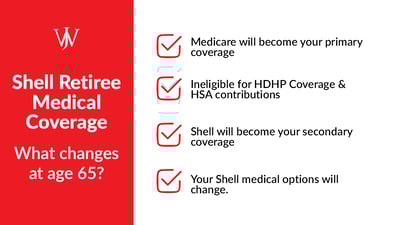
A Quick Guide to Shell Retirement Benefits for Hire Dates Between 2006 and 2017 During the working years of life, healthcare premiums are a familiar...
READ MORE
Nick Johnson, CFA®, CFP®
PRESIDENT & CHIEF INVESTMENT OFFICER
Understanding Shell Retiree Health Insurance Benefits for Anyone Hired Before 2006 Healthcare is one of the most common benefits for working employees. And for Shell retirees with a hire date prior to 2006, these benefits can continue well into your golden years. However, healthcare benefits change slightly when you leave the workforce. This article covers everything that you need to know about healthcare options for Shell retirees. Specifically, we’ll discuss benefit options for retirees with a hire date before January 1, 2006. For those hired after this date, please see this article. Who Is Eligible for Shell Retiree Coverage? Shell offers medical, dental, and vision benefits to retirees that meet one of the following criteria at termination: Be at least 50 years old and have 80 points (years of eligible service + age) Age 65 or older and eligible for a regular pension Eligible for disability pension (any age) Satisfy 70-point eligibility rules For example, if an employee is at least 50 years old and they have 20+ years of eligible service, they may receive retiree benefits coverage when termination is due to factors like poor health, the closing of a facility, or the participation in a workforce reduction layoff. Please note: Shell retiree coverage is not available for those hired or re-hired after January 1, 2017. What Are Your Options if You Don’t Qualify for Shell Retiree Healthcare Coverage? If you do not meet one of the criteria at termination, you may still receive healthcare coverage through COBRA temporary coverage or by purchasing a plan on the Healthcare Marketplace. COBRA Temporary Coverage The Consolidated Omnibus Budget Reconciliation Act of 1985 (COBRA) allows terminated employees to continue employer-sponsored healthcare coverage for a limited amount of time following a qualifying event. Retirees must make a COBRA election within 60 days of termination. In most cases, the maximum coverage period extends up to 18 months. This may be extended during periods of special circumstances or as the result of a disability determination. Individuals are responsible for the entire cost of coverage, including a 2% COBRA administration fee. Shell does not subsidize COBRA premiums. Healthcare Marketplace Coverage Through the Affordable Care Act A variety of individual and family plans are available through the Healthcare Marketplace. This US government-subsidized coverage is provided through the Affordable Care Act (ACA), which aims to make healthcare coverage more accessible and affordable to all. Marketplace plans are private insurance plans. Individuals are responsible for all costs, including premiums and administrative fees. Shell does not subsidize marketplace plans. However, some individuals may be eligible for an income-based subsidy or tax credit from the US government. What Does the Shell Retiree Healthcare Plan Cover? The Shell Retriee Healthcare plan is designed to bridge the gap between your termination date and the date when you become eligible for Medicare. In most cases, this is your 65th birthday but may vary based on individual circumstances. The Shell Retiree Healthcare Plan works like the employee plan you are most familiar with. There is an Open Enrollment period where you can make changes to your coverage, plan options to meet specific needs, and a healthcare savings account to help you cover the cost of care. Medical Plan Options (before Medicare) PPO - United Healthcare High Deductible Healthcare Plan (HDHP) - United Healthcare Kelsey-Sebold Greater Houston Plan Regional Health Maintenance Organization (HMO) and PPO Options Premiums for elected coverage can be deducted from pension payments or paid by invoice or automatic bank withdrawal. Health Savings Accounts Another similarity is the option to participate in a health savings account, often paired with the High Deductible Health Plan (HDHP). Any year(s) you are covered by an HDHP before age 65, you may make annual tax-deductible contributions to your health savings account, or HSA. HSA funds can be withdrawn and used for qualified medical expenses, making them completely tax-free. Or, these funds can be invested for tax-free growth. You will pay taxes on the distribution and up to a 20% penalty if making withdrawals before age 65, effectively making the HSA operate like an IRA. Please Note: There is an annual maximum for individual and family contributions. Please check the maximums for the current tax year. How Shell Retiree Healthcare Coverage Changes at Age 65 Once you are eligible for Medicare (which is typically at age 65, but could be earlier under certain circumstances), your coverage will change in several important ways. Medicare Becomes Your Primary Coverage at Age 65 When you turn 65, Medicare becomes your primary coverage, and the Shell Retirees plan becomes secondary coverage. You will have a 7-month enrollment window around your 65th birthday (3 months prior, your birthday month, and 3 months following) to apply for Medicare. Visit SSA.gov/Medicare to enroll online. Advisor Tip: Be sure to apply within the three months prior to your birthday month in order to avoid any lapse in coverage. If you fail to sign up after your initial 7-month enrollment window (and do not have other primary coverage), a penalty applies, which will permanently increase your Medicare premiums. You will need to be enrolled in Medicare Part A and Part B before enrolling in one of the Shell plan options. You Will Select a New Shell Retiree Medical Plan Your coverage options change when the Shell Retiree coverage becomes your secondary plan. Here are the plan options available to Medicare-eligible retirees: Shell Medicare Advantage PPO KelseyCare Advantage PPO Other Regional Medicare Advantage & Supplemental Options (Regional Availability) Please Note: Shell Medicare Complementary Plan is no longer available to new enrollees. You are No Longer Eligible to Participate in an HDHP (or HSA) Once Medicare becomes your primary coverage, you are no longer eligible to participate in a high deductible health plan (HDHP) and will also no longer be able to contribute to a health savings account. Who Pays for Shell Retiree Health Coverage? Now that you know how to qualify and what coverage is included, comes the big question – who pays the premiums? Vision and Dental Coverage The individual pays for the full cost of vision and dental coverage premiums. Shell does not subsidize these plans. Medical Shell will share in the cost of the premiums for medical coverage for retirees hired or re-hired prior to January 1, 2006. Shell’s contribution depends on the maximum value of company subsidy and your years of service. For non-Medicare-eligible retirees, the maximum value of company subsidy is calculated based on 80% of the US PPO plan cost For those eligible for Medicare, the maximum value of the company subsidy is calculated based on 80% of the Medicare Complementary option. Your full years of accredited service determine how much of this maximum company subsidy you receive. Full Years of Accredited Service Shell premium Contribution Participant’s Portion* (of US PPO premiums) Shell’s Portion* (of US PPO premiums) 30+ 100% of maximum subsidy 20% of premiums 80% of premiums 29 95% of maximum subsidy 24% of premiums 76% of premiums 28 90% of maximum subsidy 28% of premiums 72% of premiums 27 85% of maximum subsidy 32% of premiums 68% of premiums 26 80% of maximum subsidy 36% of premiums 64% of premiums 25 75% of maximum subsidy 40% of premiums 60% of premiums Over 10, but less than 25 70% of maximum subsidy 44% of premiums 56% of premiums Less than 10 None 100% of premiums None *Participant’s portion could be a smaller percentage, and Shell’s portion could be a larger percentage if using the HDHP plan, as the premiums are less compared to the PPO plan. Retirement Planning & How to Time Retirement to Maximize Benefits There are many factors that are out of your control. The cost of healthcare, premium increases, and coverage all factor into the value of Shell Retiree Health Plan coverage. One factor that employees can often control is their length of service and when they retire, which directly impacts plan coverage and cost. For example, a 49-year-old employee leaving the company after 27 years of service may not be eligible for a retiree plan. But if that same employee waits two more years to leave at age 51, he or she will likely meet the eligibility criteria of being at least 50 years old and 80 points for years of service. Working with a Fiduciary Financial Advisor When Starting Your Shell Retiree Health Plan The decision on when to retire is complex. There are many factors to consider, including how long you have been employed and whether or not an additional year or two will make a difference in your eligibility. If you need help balancing your insurance, pension, and other benefits, we can help you evaluate your options to make sure you are not leaving anything on the table. The advisors at Willis Johnson & Associates have worked with hundreds of Shell professionals and are experts at helping align the competing factors that come along with retirement.

Healthcare is one of the most common benefits for working employees. And for Shell retirees with a hire date prior to 2006, these benefits can...
READ MORE
Alexis Long, MBA, CFP®
MANAGING DIRECTOR, WEALTH MANAGEMENT
6 Things Expats Need to Know About Taxes Before Moving Abroad When you become a U.S. expatriate, or “expat,” for an oil and gas organization, it can be an exciting new venture for you and your family. Whether you’ve been transferred to a new office or chose to live internationally, moving overseas is no simple endeavor. An expat’s financial planning is complex, nuanced, and can have substantial costs if implemented incorrectly. Before hopping on a plane, it’s important to understand the various tax rules and benefits that apply specifically to expats as well as the consequences. Expats Must Still Pay U.S. Taxes For starters, just because you leave the United States does not mean that you leave the Internal Revenue Service behind. A U. S. citizen living anywhere in the world must still file a U.S. tax return reporting his or her worldwide income. Additionally, some very important forms must be included in the U.S. tax return. Failing to comply with these tax laws could result in costly penalties, and you could miss tax benefits that are exclusively for expats. When you relocate internationally, you should strongly consider hiring a local professional who is knowledgeable in the tax regime of the country you reside in. You should also have a tax professional back home in the U.S. who can advise you regarding the IRS requirements for expats. Don’t forget—upon relocating, you will be required to file two tax returns, one for the U.S. and one for the country you now reside in. Foreign Earned Income Exclusion A significant tax benefit available for expats is the Foreign Earned Income Exclusion (FEIE). This is a U.S. tax benefit built upon the premise that you are already paying income taxes to the country in which you are residing. To pay taxes again to the U.S. on the same income would be double-taxation. To avoid this double-taxation, the IRS permits an exclusion of foreign earned income by an inflation-adjusted amount that changes each year. For 2023, the FEIE is $120,000 per individual. This means that the first $120,000 of earned income per individual is excluded from U.S. taxable income. Since the FEIE is per individual, a married couple filing jointly could exclude up to $240,000 of their earned foreign income in 2023. There is an additional exclusion available for qualifying housing expenses. Two things to keep in mind here: First, the FEIE is only on earned income, which is income you earn while employed or self-employed. The FEIE does not apply to rental income, interest, dividends, capital gains, or passive income. Second, you cannot just automatically use the FEIE. You must qualify for it. Qualifications for the Foreign Earned Income Exclusion Bona Fide Residence Test: You are a bona fide resident of the country in which you are residing. You meet the bona fide residence test if you are a legitimate resident of a foreign country for an uninterrupted period that includes an entire calendar year. To understand more about the bona residence test, please refer to the IRS website. Physical Presence Test: You are physically present in the foreign country(ies) for 330 full days. The physical residence test is met if you are physically present in a foreign country(ies) for at least 330 full days during a 12-month period that includes the current tax year. You can count all the days you spend internationally for any reason, as long as your tax home is in a foreign country. If you do not meet either of these tests, then you are unable to use the FEIE against your U.S. taxable income. As an expat, you will want to plan your travels to and from the U.S. to ensure that you meet either of these tests. Otherwise, you will not qualify for the FEIE, leaving tax dollars on the table that could be saved. Foreign Tax Credit To prevent being taxed on income in both the U.S. and your new country of residence, the IRS permits a foreign tax credit (FTC). Basically, this foreign tax credit amount equals some portion of your foreign tax liability credited against your U.S. tax liability. As previously stated, you will want to have tax professionals both in the U.S. and the foreign country you are residing so that you are confident that both tax liabilities are computed correctly. Reporting Foreign Income and Financial Assets on U.S. Tax Return Each year when you file your U.S. tax return, you must report your worldwide income. For example, Julie, a U.S. citizen, moves to the Netherlands to work for a Netherlands-based oil and gas company. While in the Netherlands, she opens a local bank and investment account, in which she invests in shares of stock in foreign-based corporations. She also purchases a home that she rents to a local couple. Julie must report all her foreign income on her U.S. tax return. This includes her salary from her employer, along with interest and dividends from her foreign investments. She also must report the rental income and expenses from her rental home. If she meets either the bona fide residence test or the physical presence test, she will qualify for the FEIE and housing exclusion. She may even qualify for the foreign tax credit. Julie must also report her foreign bank and financial accounts on her U.S. tax return using different forms, depending on the type of asset and the value of the account during the year. Following is a general listing of financial assets that must be reported, depending upon the value of the asset. Bank and savings accounts Investment accounts Ownership in foreign stock and mutual funds Foreign pensions and retirement plans Cash value in foreign-owned life insurance Ownership in foreign corporations, partnerships, and trusts Receipt of foreign gifts or as beneficiary of a foreign trust There is a different IRS form depending upon the type of asset being reported. We encourage you to reach out directly to our tax experts if you have specific questions about reporting these assets. The U.S. Treasury also requires a separate filing in addition to the forms included with your tax return. This filing is a Report of Foreign Bank and Financial Accounts (FBAR) and must be filed electronically with the U.S. Treasury. Financial Impact of Failing to File Foreign Financial Assets Several years ago, the IRS began to scrutinize U.S. citizens’ failure to report their foreign financial assets. As such, the IRS implemented costly penalties for failure to report not only the income from foreign assets, but also information regarding foreign assets as well. To report your foreign assets in alignment with IRS guidelines, you must report any foreign financial accounts that you have financial interest or signature authority over with aggregate values exceeding $10,000 at any time during the year. The FinCen 114, Report of Foreign Bank and Financial Accounts, must be filed separately from your tax return with the Department of the Treasury by April 15, with an automatic extension to October 15. The penalties for failing to file are costly, beginning at $10,000 per reporting violation. For example, Joe is a U.S. citizen residing in England working for a foreign employer. He has a bank account, a savings account, and a pension account in England. The combined amount of the accounts is $545,000. Not understanding the U.S. foreign filing requirements, Joe failed to report these accounts on a yearly FinCEN 114 (FBAR), and Form 8939. His potential penalty is $10,000 per account per year he failed to file. If Joe is found by the IRS to have willfully failed to file, the penalties could be much higher. Handling Delinquent Foreign Filing Requirements Throughout the years, the IRS has implemented various amnesty programs to help taxpayers comply with the delinquent foreign filing requirements without becoming bankrupt from IRS penalties. One of the simplest programs is the Delinquent International Information Return Submission Procedures (DIIRSP), and is for taxpayers who: have not filed one or more required international information returns, have reasonable cause for not timely filing the information returns, are not under a civil examination or a criminal investigation by the IRS, and have not already been contacted by the IRS about the delinquent information returns Taxpayers who qualify for the DIIRSP should speak with a tax professional or tax attorney about the proper procedures for filing the delinquent information returns. At Willis Johnson & Associates, we have a strong network of experts who can guide you in this area. Deciding to move overseas or start a new chapter as an expat can be an exciting venture when done correctly. If done incorrectly, there can be several legal and financial ramifications. Don’t overlook the importance of filing your U.S. tax return, reporting your foreign income, and properly reporting your foreign financial assets—the results of ignorance add up. A simple example illustrates how these costs can add up quickly: A U.S. citizen named John moved his family to Australia 10 years ago to work for an Australian company. His children enrolled in schools and adjusted rapidly. The entire family loved Australia so much they decided to stay. After a time, John and his wife decided to start a jointly–owned business and became self-employed. They also began to purchase small homes as rental properties. All this time, John never filed a U.S. tax return because he thought you only needed to file a return if you actually resided in the U.S. When at last John realized his failures, he sought a tax attorney to become compliant with the IRS. To do so required him to file delinquent tax returns and pay the tax liabilities, plus penalties and interest on the amount due. Additionally, he faced exorbitant penalties for not filing specific forms that report his foreign financial assets and for not filing his yearly FBAR with the U.S. Treasury. To settle the tax liabilities, penalties, attorney costs, and CPA fees, John had to sell some of his rental properties to afford it all. This was extraordinarily costly for John, so make sure you don’t make the same mistakes. While moving overseas is an exciting opportunity, there is much to consider in making the transition. We encourage you to seek a professional when you move overseas as an expatriate so that you protect the assets you have worked so hard to accumulate.
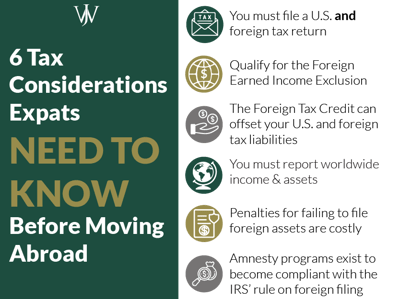
When you become a U.S. expatriate, or “expat,” for an oil and gas organization, it can be an exciting new venture for you and your family. Whether...
READ MORE
Leah Cessna, CPA
DIRECTOR OF TAX
How Shell Retirees Can Make the Most of the Shell Medicare Advantage PPO Plan You are about to celebrate your 65th birthday. You’ve heard from friends and colleagues that you need to sign up for Medicare… but what is Medicare? Who is eligible for Medicare, and what does it cover? Medicare is federally provided health insurance available to U.S. citizens that are 65 years of age or older. In some cases, Medicare is provided to those with special needs. There are 4 available parts of Medicare: Hospital Insurance (Part A) – Provides coverage for hospital stays, skilled nursing facilities, hospice care, or home health services. Medical Insurance (Part B) – Provides coverage for doctor’s services, outpatient care, medical supplies, and preventive services. Medicare Advantage Plans (Part C) – Part C provides both your Part A and Part B benefits. These are plans offered by private companies that contract with Medicare. Some private companies offer this type of plan to their retired employees. (See the sections at the end of this article regarding the Shell Medicare Advantage PPO Plan) Prescription Drug Coverage (Part D) – Adds drug coverage to Medicare plans. What Do You Need to Do for Medicare Enrollment When You Turn 65? When do I enroll in Medicare? Your initial enrollment period begins 3 months before you turn 65 and ends 3 months after that birthday. Am I required to enroll in Medicare? You are required to at least sign up for Medicare Part A. You can sign up for Part B but you will pay a premium for Part B coverage. Can I enroll in Part A Medicare coverage when I turn 65 and sign up for Part B Medicare coverage at a later date? You can turn down Part B coverage and sign up for it later, but you may have to pay a late enrollment penalty. Who should turn down Part B Medicare coverage and when? If you are still working upon turning 65 (or your spouse is still working) and you are covered by group health, you might turn down Part B coverage at that time. If I choose to postpone enrolling in Part B Medicare, how do I enroll at a later date? You will be able to sign up for Part B later during a Special Enrollment Period. This gives you the option to sign up for Part B while you are still employed or you can sign up within an 8-month period after your group health coverage ends. Medicare Enrollment Costs: What Will Medicare Cost You Each Month? Now that you know when you should sign up, you are probably wondering how much Medicare will cost you per month. How much do Medicare Part A premiums cost? Part A premiums can range between $0 to a maximum of $471 monthly, depending on your income and the amount of Medicare taxes you have paid in the past. How much do Medicare Part B premiums cost? Part B premiums start at $148 monthly and increase based on your adjusted gross income. A two-year lookback period will be applied to your income to determine your Part B premium. How much do Medicare Part C and D premiums cost? Part C and D premiums will vary based on the type of plan you choose to sign up for from a private company. There are also deductibles and co-pays for the various plans in addition to the monthly premium. What Do Shell Employees Need to Know About the Shell Medicare Advantage PPO Plan? Shell recently began offering their Medicare-eligible employees a new Medicare Advantage PPO Plan through UnitedHealthcare. This plan combines your Part A and Part B coverage into one plan (Part C Plan). Am I eligible to participate in the Shell Medicare Advantage PPO Plan? You must be enrolled in both Part A and Part B in order to be eligible for participation in the Shell Medicare Advantage PPO plan. A Part C Advantage plan will coordinate payment for medical needs between Part A and B and may offer additional coverage over and above what you receive through Medicare. Note, you cannot have a Medicare Advantage plan in conjunction with a Medigap policy (also known as a Medicare Supplement Plan). What Benefits Are Included in the Shell Medicare Advantage PPO Plan? The chart below shows some of the benefits available through the Shell Advantage plan. What Do The Shell Medicare Advantage PPO Benefits Mean For Shell Retirees? You receive higher-level coverage with a lower monthly premium contribution You will receive the same benefit level in-network or out-of-network You can continue to see your current health care providers as long as they accept Medicare and the Shell Medicare Advantage PPO plan When and Where Do I Enroll in the Shell Medicare Advantage PPO Plan? Medicare Advantage plans have specific enrollment periods. You will want to contact the Shell Benefits coordinator to determine when the next enrollment period is and what your premium for this plan will be. You can apply for Medicare online here or find additional information about your specific situation on Medicare.gov. Each person’s situation will be different depending on their coverage needs, income, and retiree benefits offered by their employer. That’s why cookie-cutter advice rarely works for our clients who have above-average life goals and unique company benefits. Consult with a trusted advisor or contact a member of the Willis Johnson & Associates team to better understand your Medicare options.

You are about to celebrate your 65th birthday. You’ve heard from friends and colleagues that you need to sign up for Medicare… but what is Medicare?...
READ MORE
Alexis Long, MBA, CFP®
MANAGING DIRECTOR, WEALTH MANAGEMENT
BP Pension Crediting: How It Works & When You Should Take or Defer It If you are considering leaving BP soon, you need to consider how interest rates may affect your plans. The BP pension, "The Retirement Accumulation Plan" ("RAP"), is a valuable benefit, but how you use it may vary widely on the prevalent interest rate environment. We have seen a significant rise in interest rates since the beginning of 2022. This may shift what we at Willis Johnson & Associates see as the preferred strategy for exercising your benefit under the RAP going forward. Funding for the RAP The RAP is an employer-funded retirement-defined benefit plan. It is a unique benefit as only about 15% of U.S. private sector employees have such a benefit option. Pay Crediting More specifically, the RAP pension is a cash balance plan. Each participant has a funded account. BP funds the accounts based on pay credits structured around each participant's age and years of service to the Company, as shown below. Pay Credit Formula (whichever provides the greater percentage): Credits as a percentage of Your Eligible Earnings (up to ¼ of the Social Security Wage Base) Credits as a percentage of Your Eligible Earnings (above ¼ of the Social Security Wage Base) Years of Vesting Service Age Under 10 and Under 40 4% 7% 10, but less than 20 or 40, but less than 50 5% 9% 20 or more or 50 or more 6% 11% Let's consider an example. Candace is 45 years old and has worked for BP for nine years. Her salary and bonus amount to $200,000. The social security wage base (the amount that is taxed for social security) for 2023 is $160,200. Therefore, Candace will receive pay credits as follows. 5% of ¼ of $160,200 ($40,050) = $ 2,002 9% of $39,800 ($200,000 less $40,050) =$14,395 Total Pay Credits for Candace for 2023: $16,397 Candace has fewer than ten years of service. Therefore, she received crediting based on her age. The pay credits are annualized and paid on a monthly basis based on monthly compensation. As a result, additional pay credit is usually applied to the pension account in the month of the bonus. Interest Crediting In addition to the pay credit, the accounts receive a monthly interest credit. The interest credit paid is based on the current 30-year treasury rate and a certain minimum interest rate based on when the participant has dollars in the plan. Beginning Participation in the Plan Interest Credit Before January 1, 2016 30-year treasury or a minimum of 5% January 1, 2016, and after 30-year treasury or a minimum of 2% Let's consider another example to see how this accrues. Don started at BP in 2012, and Joanne started at BP in 2017. The current 3-year treasury rate is 3.75%. Don will receive crediting of 5%, the minimum interest crediting, because he was a pension participant prior to 2016. Joanne will receive 3.75% interest crediting, the 30-year treasury amount, because she became a participant in the RAP pension after January 1, 2016. It should be noted that years of vesting service for ex-patriots who have worked for BP overseas can vary by the individual employment agreement. However, non-U.S. service can be ascribed for calculating the pay credits. However, years of service do not affect the interest credit. Let's consider one more example using an ex-pat named Nigel. He's 48, and he joined BP in the U.K. when he was 23. He transferred with his group to the U.S. and became "patriated" under the U.S. benefit plans in 2018. As a result, Nigel will receive pay credits commensurate with his having over 20 years of service with the Company (6% of ¼ of the social security wage base and 11% of wages above the ¼ of the social security wage base). However, Nigel will only be guaranteed a minimum 2% interest credit because he did not have funds in the RAP pension until after January 1, 2016. Interest Rates & The BP Pension Calculation In the interest crediting above, we can see one-factor interest rates have. For example, when the 30-year treasury rate hovered around 1.3% during the beginning of the COVID-19 crisis in 2020, all RAP pension participants received either 2% interest crediting or 5% interest crediting based on their pension initiation date. The low-interest rates were a much more significant factor in planning for the benefit because of the effect on the lump sum calculation. Therefore, for those participants who initiated their RAP pension benefit prior to January 1, 2014, a calculation of their eligible lump was made with the prevailing interest rates – more particularly, the segment rates representing the short-, medium-, and long-term rates of the corporate bond yield curve. The rates are published by the IRS monthly. BP uses the rates from four months before the elected lump sum distribution to determine the lump sum amount. When interest rates are low, as during the pandemic, the lump sum amount can increase based on a calculation applying those interest rates. But conversely, as interest rates rise, the lump sum amount will decrease. This interest rate effect on the lump sum pension distribution is sometimes called the "whipsaw calculation." As a basic example, consider the following scenario: You have a $1,000,000 cash balance in your pension account. You have a life expectancy of 22.9 years[2]. The Lump sum calculation is generated on a benefit beginning at age 65 That renders an estimated annuity of around $6,200 per month Take this same cash balance example; we apply it to compare different segment rate environments at the time of retirement and see the results. Scenario 1: Retiring when interest rates are very low (similar to 2021) Approximate Lump Sum $1.262 Million (Based on segment rates) Segment 1 Segment 2 Segment 3 Low Rates 0.70% 2.55% 3.06% Scenario 2: Retiring when interest rates are more elevated (similar to 2023 or years past) Approximate Lump Sum $1Million (Your cash balance) Segment 1 Segment 2 Segment 3 Elevated Rates 3.71% 5.05% 5.42% Here is the crucial thing to note in these calculations. In scenario 2, if you apply the elevated segment rates in the example, the actual calculated amount is less than $1 million. However, no matter how high rates climb, you will never get less than your cash balance as a lump sum distribution. This is a vital consideration because if you have an augmented lump sum with lower interest rates, there is a strong advantage to taking the lump sum immediately. However, if the cash balance is not augmented, the 5% pension crediting can be very attractive, and you may wish to defer your distribution election. You do not have to take the pension immediately, and you can continue receiving the 5% interest credit. That is why understanding your pension interest crediting is essential. Financial Planning Strategies & Decisions To Consider Regarding the RAP Pension There are several things to consider in making the pension election. Annuity v. Lump Sum First, consider whether you want to take an annuity payment stream or a lump sum. You can take the pension completely as an annuity with regular payments. You can take the pension entirely as a lump sum. Or you can take part of the pension as an annuity and part as a lump sum. We generally favor our clients taking the lump sum for two key reasons. Inflation. The annuity amount you receive in the annuity stream will always be the same. It will not increase. By taking the lump sum and re-investing it in your IRA or 401(k), your pension benefit can keep pace with inflation. You can pass on the benefit. Once you and your spouse pass away, there is no longer a benefit if you take the annuity. In contrast, if you take a sum, you have the benefit as a fully owned asset to pass on to children, grandchildren, charity, or whomever. We recognize that there are other factors to consider in determining whether to take a lump sum or annuity. The amount you have on which to retire. The amount you need in retirement Your investment risk tolerance Whether you desire to leave your pension to somebody Working with a financial planner like the advisors at Willis Johnson & Associates can help analyze and weigh all the factors without putting pressure on you to roll over the pension, so it can become an asset for the advisors to manage. It would help if you planned with your RAP pension in mind, which can be a reason to defer taking the pension. Asset Allocation: Using the RAP Pension as Fixed Income Most people consider the stable part of a portfolio to include bonds. This is because bonds have less volatility than the stock market over time. A stable "fixed income" portion of a retirement portfolio can provide a cash flow for living expenses and maintain portfolio value throughout all market and economic conditions. The cash balance RAP Pension is a stable part of your retirement portfolio. The cash balance does not lose value It has a guaranteed interest rate. Recognizing the RAP as a fixed income part of your greater allocation is prudent because it can determine how you allocate your investable assets. For example, you can invest more in less stable, higher-growth stocks because you have the RAP pension. Let's consider a BP employee, Emma, who wants to keep a 70% stock/30% fixed income allocation in her portfolio. Her BP ESP 401(k) has a $2 million balance, and it is allocated 80% stock/ 20% fixed income. Her brokerage account has a $1 million balance, and it is allocated 50% stock/50% fixed income. Therefore, she is maintaining her desired allocation across the $3 million in the two accounts. However, Emma also has a $1 million cash balance in her BP RAP pension. If she includes her pension in the allocation, Emma has a 52.5%/47.5% allocation across the $4 million of her accounts - far more weighted to fixed income than Emma desires. If Emma were to invest her BP ESP in 100% stock, she would have the 70%/30% allocation she desires. You do not have to take your lump sum pension right away. You can defer it until you reach the minimum distribution age. Having the benefit of a very regular part in your investment allocation planning can be one reason to defer taking your RAP benefit. Also, for whatever reason you defer your RAP pension benefit, you should consider it as part of your allocation. Deferring the RAP for savings strategies. In the years following your retirement from BP, you may continue to receive income – severance payouts and Share Value Plan vesting, for example. You may even commence a new work assignment with another company or independently. This additional income allows for some additional savings. One of the critical savings strategies we implement is the Backdoor Roth– making after-tax contributions to a traditional IRA and converting the contribution to a Roth IRA. To execute this strategy effectively, you cannot have any existing pre-tax assets in an IRA account. If you were to roll over your RAP Lump sum benefit to an IRA, this would defeat this strategy. How a Fiduciary Financial Planner Can Help You Secure More for Your Future At Willis Johnson & Associates, we recognize the value of the BP RAP Pension crediting. Many advisors focus on how segment rates affect the lump sum with the goal of performing an immediate rollover of the lump sum benefit to an IRA they can manage. Instead, we focus on what is best for you. Because WJA is a fee-only firm and does not receive commissions or compensation from the financial solutions it offers, we are considered a fiduciary – serving our client's best interests. Only 12% of financial firms, including WJA, are considered fiduciaries or RIA-only firms. However, WJA takes being a fiduciary to a higher level. We advise our clients to defer pension elections when it is in our client's best interest to do so. We also segregate certain investments instead of immediately divesting and bringing the assets under our management when it is in the client's best interest to do so. For us, planning and initiating a strategy is dictated by what is best suited to you - your financial future and your goals. We look forward to discussing and evaluating your financial future and your goals. Please contact us to schedule a complimentary session to discuss your benefits, tax situation, investment portfolio, family's needs, and objectives.

If you are considering leaving BP soon, you need to consider how interest rates may affect your plans. The BP pension, "The Retirement Accumulation...
READ MORE
John Siegel, CFP®, EA
SR. WEALTH MANAGER
Understanding the Chevron Retirement Restoration Plan (RRP) When Chevron employees meet with our team of experts, we are often asked: "I have not one but two lump sum pension estimates when I run my pension projections on BenefitConnect – what is this second lump sum?" What is Chevron's RRP? Chevron employees at a certain income level will have two lump sum pension projections – one for the qualified pension (the Chevron Retirement Plan or CRP) and a second for the non-qualified pension (the Chevron Retirement Restoration Plan or RRP). Chevron created the RRP to provide additional retirement benefits due to IRS-imposed income limitations on qualified pension plans like the CRP. How do Non-Qualified Pensions Work? First, let's discuss what a non-qualified pension (like the RRP) is and how it works. A non-qualified pension is a type of employer-sponsored retirement plan that is tax-deferred but is not under the same financial protections as a qualified pension. Non-qualified pension plans typically come into play when an employee reaches a certain income threshold. These plans allow those high-income employees to defer more money for retirement than they can through their qualified pensions, which are subject to IRS income limitations. Non-qualified pensions often have limited distribution options, and unlike qualified pensions, you cannot roll over non-qualified pensions into other retirement accounts like an IRA. They are fully taxable at or near separation. Eligibility for the Chevron Retirement Restoration Plan If you are a high-income earning employee at Chevron, you are likely eligible for the Chevron RRP, the non-qualified pension. The rules for determining eligibility for the RRP are complicated and based on contributions to and annual benefits from the qualified plan, the CRP. IRS Limit for Pensions The IRS states the following when it comes to all qualified pension, or "defined benefit," plans: Contributions to a defined benefit plan are based on what is needed to provide definite determinable benefits to plan participants. Actuarial assumptions and computations are required to figure out these contributions. In general, the annual benefit for a participant under a defined benefit plan cannot exceed the lesser of: 100% of the participant's average compensation for their highest three consecutive calendar years, or $245,000 for 2022 ($230,000 for 2021 and 2020; $225,000 for 2019) These guidelines offer some guidance on the income levels that top out Chevron's contributions to the CRP (qualified pension plan) and initiate contributions into the RRP (non-qualified pension plan). We tend to see Chevron employees become eligible for the non-qualified RRP at around $240,000 of compensation, but this income level adjusts annually with inflation. Just like the CRP, only Chevron makes contributions to the RRP, and the employee is not eligible to make contributions. Additionally, the RRP is an "unfunded" plan, meaning Chevron pays out these funds from company cash flow when an employee receives payment. Chevron Non-Qualified Pension Distribution Options There are two distribution options: lump sum or, up to 10 annual installments, paid in January every year. As soon as a Chevron employee becomes eligible for the Retirement Restoration Plan, Chevron will send an email requesting a decision on a distribution election via NetBenefits. Chevron will elect the Lump Sum option if an eligible employee fails to make a timely distribution election. Changing RRP Distribution Elections Regardless of the chosen distribution option, all payouts begin in the first quarter or first January, which is at least one entire year from the date of service separation. Eligible Chevron employees can make changes to the initial election if the change is made at least 12 months before the scheduled payout. However, any changes to the initial election will further defer a payout to 5 years from the previously scheduled payment date! What do Chevron Employees See in NetBenefits for the RRP? Chevron calculates an employee's RRP benefit amount following separation on the first of the month. An account is set up within NetBenefits to view the benefit around 60-90 days after separation. When Chevron establishes an employee's RRP account, they withhold FICA taxes. However, until the benefit funds are distributed to the employee, Chevron does not withhold federal taxes. Until they pay out RRP funds to an employee, Chevron places the money into a 10-year Treasury bond fund with interest crediting quarterly. Other investment options are not available in the plan while waiting for the benefit to pay out. Chevron RRP Calculation & Interest Rates If Chevron hired you before 1/1/2008, changes in interest rates directly impact your Retirement Restoration Plan payout. Interest rates and Lump Sum values are inversely related. The lump sum value declines when rates rise, and we project continued rate increases throughout 2022. What impact are recent interest rates having on Chevron pensions? Find out by clicking here. Tax Impacts of the RRP at Distribution The Retirement Restoration Plan payout is made in cash and is taxable for federal tax purposes in the year of distribution. Therefore, strategic tax planning is crucial to understanding your tax situation and determining the appropriate year for distribution. Failing to consider the tax impact of benefit payouts is one of the most common retirement mistakes we see Chevron professionals make. Discover the five other common mistakes here. RRP Estimates in Chevron BenefitConnect Many Chevron professionals elect the Lump Sum distribution for their qualified pension, the CRP, and typically roll the lump sum benefit into an IRA to defer taxes to a later time. However, its structure makes a similar strategy with the RRP impossible. Therefore, Chevron employees are encouraged to log into BenefitConnect and run a projection to see what Retirement Restoration Plan payout to expect based on their desired retirement date. How the RRP Impacts your Financial Plan Understanding the potential payout value allows you to assess the potential tax impacts of each distribution method so that you maximize the after-tax value of the benefit! For many Chevron employees, the RRP lump sum election is the appropriate election. However, installments may make sense in some circumstances. For instance, if your spouse plans to continue working after you retire, receiving the RRP lump sum in a presumably high-income year could cause a more significant portion of that payout to be taxed at the highest tax bracket. Working with a financial planner to understand retirement cash flows and assess rising rates' impact on your Retirement Restoration Plan could help reduce fear and provide confidence on the optimal retirement date. Connect with us to see the WJA difference and start your journey to financial freedom with the peace of mind you deserve. Our team of Chevron-focused advisors understands your benefits' complexities and can help you retire confidently without leaving money behind.

When Chevron employees meet with our team of experts, we are often asked: "I have not one but two lump sum pension estimates when I run my pension...
READ MORE
Alexis Long, MBA, CFP®
MANAGING DIRECTOR, WEALTH MANAGEMENT
5 Ways to Re-Invest BP Stock to Limit Concentration Risk As a BP team member, you have several opportunities to invest in BP stock through the Share Value Plans, Restricted Share Units, the Reinvent Shares, and the BP Stock Fund in the Employee Savings Plan. However, having such easy access to company stock means you also risk becoming overly concentrated (or too heavily invested) in the stock and more widely exposed to the company. At Willis Johnson & Associates, our advisors frequently see overconcentration in BP stock within portfolios of several BP professionals. As a result, we've developed essential insights into how the stock accumulates and strategies to manage it effectively. What Risks Come with Company Stock Concentration? Portfolio theory scholars, market analysts, and securities regulators have long touted the benefits of a diversified stock portfolio and warned of the risks of over-concentration in a single stock. This risk is an increasingly important consideration with your BP stock because, as a BP employee, you already have significant financial exposure to the company, which means that your income and financial health are dependent on BP. Consider this: you already have financial exposure to BP through your paycheck, your employer retirement contributions to the 401(k) and the RAP Pension, and your employer-provided benefits, so should you really invest your additional savings in BP too? Are you getting the most from your BP Retirement Benefits? Find out in our BP Benefits Checklist >> Company Stock Risks with BP Stock Before investing further in your company's stock, it's vital to understand the additional risks that come with BP stock. Market Volatility: Is the Risk Worth the Reward? First, let's look at the volatility of BP stock compared to the overall market. In the chart below, we see a comparison of BP stock vs. the S&P 500 index, a leading index of the broader market. This graph, provided by Morningstar Research, measures the volatility of BP stock and the S&P 500. The standard deviation in this chart is a statistical measure of the securities' volatility of returns in relation to the mean return. Simply put, the larger the standard deviation (or further to the right on this chart), the greater volatility of the returns (compared to the mean return). What are the key takeaways here? BP's standard deviation has been almost twice that of the S&P 500 over the last ten years. Additionally, the mean return of BP (measured on the vertical scale) was 4.9% over the previous ten years vs. 14.4% for the S&P 500. In short, BP stock has underperformed against the market over the last decade and is more volatile. Past performance isn't indicative of future results, but history can provide a helpful lens to provide perspective. BP Stock Exposure & Sources of Concentration Employment at BP As noted above, you are already financially vested in BP through your compensation and benefits. Many people pose the issue of risk with company stock concentration by pointing to the case of Enron. When Enron's stock was at its highest price, around $90 per share, in 2001 – nearly 58% of the employees owned stock in the 401(k). When the company declared bankruptcy amidst a major financial scandal, the stock plummeted to near zero, and employees lost their jobs. Enron was a case of financial mismanagement and misrepresentation and is a dramatic example of company stock concentration. However, even BP employees have experienced the pains of financial overexposure to the company stock. For instance, in 2007, over 30% of the company's 401(k) investments were in the BP Company Stock Fund. In the wake of the Horizon oil platform disaster, BP stock plummeted significantly, impacting the 401(k) accounts of BP employees. If we look at a more recent instance, the drop in energy demand at the beginning of the COVID epidemic eroded BP's share price by more than half. At the same time, BP's reorganization put many job positions at risk, which indicates the augmented financial risk in BP's company stock for employees. BP 401(k): The Employee Savings Plan A recent study by the Employee Benefits Research Institute and the Investment Company Institute found that over 50% of employees whose 401(k) plans include company stock as an investment option choose to invest in it. Currently, about 9.5% of the assets in the BP Employee Savings Plan (ESP) 401(k) are investments in BP stock. This 9.5% is significantly less than the immediate post-Horizon era, as BP no longer contributes stock to the 401(k) as part of its company match. However, this 9.5% represents both participants with no BP stock in their 401(k) accounts and participants who heavily invest in BP within their 401(k) accounts. Our advisors have seen some ESP accounts with over half of their investments in the BP Company Stock Fund! BP Share Value Plans & RSUs The BP stock grant plans wholly vest stock annually into participant accounts for Level F and above. BP also requires some higher-level employees to hold a certain amount of stock for a specified time. However, this holding requirement usually includes unvested shares and doesn't pose a significant obstacle to selling shares to avoid concentration. Whether you sell your shares often or accrue large amounts of vested shares, our advisors work with BP employees to create a tailored strategy to deconcentrate stock and diversify investments within their portfolios. BP Employee Behavior & Psychology So why are some BP employees concentrated in BP stock and others are not? While company benefit plans can generate many shares in BP stock for many employees, a few psychological traits and behaviors can make the difference in having just enough or too much stock in a portfolio. Over-Confidence: This behavior occurs when employees feel they have a more intimate knowledge of the company and can evaluate its performance better than the market. Anchoring: By remaining focused on or "anchored" to a particular piece of information or belief, many professionals fail to consider alternative options on when to buy or sell their company stock. One thing we often hear from clients is their "anchored" belief that they should only sell company stock when oil is trading at over $100/barrel, which is driven by loss aversion discussed below. Loss Aversion: This phenomenon asserts that people react more strongly to the pain of loss than to the satisfaction of gain. Loss aversion can emotionally leverage an individual's unwillingness to accept losses and move on to a more productive alternative. For example, when BP stock prices are low, we see many professionals refuse to sell to avoid the discomfort of selling at a loss. Euphoria: Alternatively, many choose to hold on to an investment or strategy because it performs well. Let's suppose you invested in Netflix in 2014 before the rise of online streaming when its stock price was selling at around $50 a share. If you got to ride it up to its all-time high of $664 a share in 2021, it's easy to understand why you'd want to hold on to it. However, if you chose to hold it through 2021 and into 2022, you'd miss out on those incredible gains at $664 per share and only be able to sell it at $190 a share (as of July 18, 2022) because you held on to it too long. The same seasonality can happen when investing in company stock, so it's important to be objective in your investment strategy. As part of our diversified investment approach, we believe the various asset classes go through both seasons of success and lackluster returns. For example, tech stocks did well in 2021, but in 2022, tech stocks incurred some of the most significant market losses. Likewise, we have witnessed the seasonality of energy stocks, including BP. Many energy stocks are doing well, especially with the WTI exceeding $100. As a result, several energy professionals are averse to trimming company stocks in this environment and enjoy riding the wave of their positive returns. How to Diversify Your BP Stock Concentration 1) In Your 401(k) & With Net Unrealized Appreciation (NUA) An advantage of BP stock in your Employee Savings Plan account is that any decision regarding its sale in your 401(k) account is tax-neutral. Therefore, you do not have to worry about incurring a capital gain or having a functional loss. Net Unrealized Appreciation (NUA) can be a beneficial strategy for managing BP stock concentration inside your 401(k) account. We particularly look at this strategy for those ESP 401(k) participants near or in retirement. Essentially, NUA is a unique election distribution specific to the BP stock in your ESP account that can provide an opportunity for preferential tax treatment. Learn more about NUA here. 2) Selling at Vest In Your Individual Stock Account at Fidelity The simplest strategy to manage how much BP stock you have from the Share Value Plan (SVP) and RSUs is to sell the shares immediately from your individual account when vested. There is little tax consequence as the shares have had little time to appreciate or depreciate. While it’s simple to implement, immediately selling stock may not be the right choice for everyone. It’s important to discuss your long-term strategy with a financial professional to discern if there’s any benefit to holding the stock. 3) Harvesting Gains or Losses for Tax Benefits If you hold company stock long enough to incur gains or losses, there may be tax-minimizing strategies available to you. For example, one tax strategy is gain/ loss harvesting. In this strategy, you sell your shares with the lowest basis at a gain and your shares with the highest basis at a loss to help neutralize the effect of taxable capital gains. Let's consider an example. Suppose you have 2000 SVP shares from 2020, which vest at $22 per share in 2022, and you also have 2000 SVP shares that vested in 2018 at $40 per share. Number of Shares Share Price Vest Year 2000 $40 2018 2000 $22 2022 What happens if BP's stock price is currently $31 per share (close to where it has been trading over the last few months)? If you sell the 2020 and 2018 share lots, your $9 loss per share on your 2018 share lot offsets your $9 gain per share on your 2020 share lot. Number of Shares Share Price at Vest BP Stock Price at Time of Sale Result from Sale Total Gain or Loss 2000 $40 $31 $80,000 - $62,000 $18,000 Gain 2000 $22 $44,000 - $62,000 $18,000 Loss In addition, you get to sell shares well above the average analyst target price. Analyst's current target prices are near $36 per share, so your other share lots could rise in value to that target as they continue to vest. 4) 10b5-1 Plan at BP For some higher-level executives at BP, insider knowledge and blackout periods can be a challenge for divesting BP shares. If you are limited from selling your BP stock during these times, strategies such as 10b5-1 Plans can provide a regulation-approved forward strategy. These plans allow you to navigate blackout periods and sell your BP stock in a way that is agnostic to the business of BP or the market of its stock, and may be a good choice for those stock-selling windows are restricted. 5) Diversification in Energy Stock When you have a substantial amount of BP stock, it's normal to get nervous about losing value on some of your higher basis shares or excited to see where the energy market is taking BP's share price. However, one thing is critical to remember – BP is not the only big player in the energy industry. It may be challenging to sell BP stock in the current market environment where it outperforms the major indexes. But, to minimize your equity exposure to BP while staying invested in energy, you can reinvest your BP proceeds into other major companies like Shell or Exxon if you believe energy will continue to perform. Alternatively, you can buy an energy mutual fund or energy exchange-traded fund, a basket of energy stocks including significant producers, midstream companies, and field service companies. Understand Your Risk Exposure to BP & What to Do Next The risk of company stock concentration varies widely among individuals. There is an opportunity to recover for someone with 15 to 20 more years left in their career, but for someone closer to retirement, there may not be. For some people, a fall out of BP stock plus a forced early retirement could be devastating. However, for those with a lesser portion of their investment portfolio in company stock, a diversified approach to the remainder of their assets is likely more than adequate to support their lifestyle. Ultimately, you have to quantify your long-term risk in your company stock, evaluate efficient strategies to deconcentrate it, and monitor and execute those strategies. Willis Johnson & Associates delivers such risk determinations, plans, and implementations, to provide our clients the confidence of a more optimal risk/reward balance. Reach out to a member of our team to discuss your BP stock strategy today.

As a BP team member, you have several opportunities to invest in BP stock through the Share Value Plans, Restricted Share Units, the Reinvent Shares,...
READ MORE
John Siegel, CFP®, EA
SR. WEALTH MANAGER
Remote Work & Taxes: The Cost of Working from Home in a Different State With the rise of the pandemic also came the rise of remote working. While remote working existed before 2020, the shift to working from home became commonplace after the COVID-19 pandemic. Fast forward a few years, and remote work is now a pretty common occurrence. For many companies, remote work is a staple in reducing overhead costs. Given the flexibility remote working offers to employees, many people have jumped at the opportunity to travel and work in different locations while exploring new areas in the United States or across the world! Exciting, right? Unfortunately, many people fail to realize that this could create profound tax implications in multiple states or subject you to double taxation on your income! How Can You Owe Taxes When Working Remotely from Another State? When you work in a new state for a specified period, you create a “nexus with that state.” Nexus is a fancy term used when someone creates a link with a state which allows said state to impose its laws upon them. The length of time spent in a state before it imposes a nexus varies from state to state. Best States to Work Remotely From: Lower Chance of Additional Taxes Each of the states below charges no state income tax on earned income, which makes them a great option for remote workers looking to work from a new place. Alaska Florida South Dakota Tennessee Texas Washington Wyoming Worst States to Work Remotely From: Higher Chance of Additional Taxes Each of the states below imposes taxes on any and all earned income from your time within the state, even if your time there is extremely short. Many of these states charge both state and city income taxes. California Colorado Michigan New York Rhode Island There are multiple tests for states to calculate if a nexus exists with you, but the test that applies most to remote working is the physical presence test. What the Physical Presence Test Means for Remote Workers & Consultants Have you been traveling around working a month here or a month there across the United States to make the most of your remote working experience? Your physical presence while working in a state can link you and that state, which would make you subject to the state’s laws — including you owing state or local income taxes on the income earned while working in that state. How the Physical Presence Test Impacts a State's Nexus The Physical Presence Test also impacts those who travel for work or client meetings, including consultants. No matter why or how you are traveling, if you are working anywhere other than your home state of residence, you may be creating a link with new states. Therefore, you need to report any income you earn during your travels. Let’s consider an example. Suppose you live and work in Texas, but during the year, your employer announces you are going fully remote for two months for health and safety reasons. You decide to go to Colorado to work remotely and stay with family during that time. By working in Colorado for two months, you would create your nexus tie to Colorado and be subject to the following: Filing a nonresident income tax return for the state of Colorado, and Paying any state and local income taxes on income earned during your time in Colorado. Expiration of COVID-Related Tax Safe Harbors for State Income Tax During the pandemic, many companies pivoted to a remote workforce, and many states put safe harbors in place regarding income taxation. States largely put these in place to either protect the state’s residents from a double taxation situation or create ease for employers when filing for income taxes so they wouldn’t have to keep records from multiple places. As of mid-2021, most states have let this safe harbor expire, including, but not limited to: California, Maine, Massachusetts, Pennsylvania, Iowa, Maryland, Oregon, Rhode Island, and South Carolina. While some states are stricter with the enforcement of nexus rules, other states are beginning to collaborate on the best ways to tax people who live and work in different locations. There are even some states offering incentives to remote workers. For example, in early 2022, Louisiana offered a 50% tax credit on a nonresident Louisiana income tax return for remote workers. With the ongoing changes to the tax rules and the upward trend for continued remote work, many states are attempting to recoup the losses they took during the safe harbor times on the taxes they could have potentially collected. In fact, by the end of 2021, we saw that some states looked to enforce their nexus rules for collecting income taxes with added gusto in 2022 and beyond. How Much Could Working from Another State Cost You in Taxes? Many people do not realize that if you travel and work in a state, you could be creating a link to that state and, in return, exposing yourself to tax liability. While the income earned in a state could produce a relatively low tax you would need to pay, the potential accrual of penalties and interest from not filing a return or paying your tax could add up to a significant number. Let’s suppose you and your spouse worked in California for two months during December 2021 and earned $55,000 in income from consulting services while there. Because of this, you would need to file a California income tax return for 2021. If you were unaware of your tax filing obligations and never filed a return, you would still be on the hook for the tax owed initially, a late filing penalty, a penalty on not paying your tax, and interest on the amount owed. Based on the $55,000 of income earned during those two months in California, your tax bill would be roughly $745. If you do not file this return or pay this tax bill for one full year, your tax bill will increase to approximately $877 after factoring in penalties and interest. While this may not seem like a huge tax bill at first, the interest continues to collect on your tax amount until you file the return and pay the bill so it can add up quickly. Double Taxation Consideration When Working from Home in Another State In addition to simply worrying about where you are conducting your business, you should also be wary of potential double taxation that could occur. While many states have adjusted laws for how remote workers will be taxed, some neighboring states have contradictory laws that could potentially cause you to be double taxed. A recent case was sent to the Supreme Court to review double taxation in some states. Massachusetts announced that they would tax employees if the company they work for has their office located within the state, regardless of where the taxpayer lives. In contrast, New Hampshire taxes people based on their working location, so you will pay state income tax to them if you are working in New Hampshire. Because of their proximity, it is not uncommon for taxpayers to live in New Hampshire but work in Massachusetts. Therefore, remote workers who live in New Hampshire with their principal office in Massachusetts would face taxes from both states. Unfortunately, the Supreme Court would not review the case, so the taxpayers that fit into this scenario will be taxed in both states unless either New Hampshire or Massachusetts releases new laws or credits! How to Avoid Tax Mistakes of Working Remotely from Another State Before choosing to remote work in a new location, the taxpayer should know that their choice could have state income tax implications. Remote working taxpayers could be liable for reporting income in multiple locations and under numerous jurisdictions by working from other states. In addition, if improperly completed or not completed at all, these filings could cause severe penalties and interest to be imposed in addition to the tax already owed. In this new age of digital working, it Is more important than ever to understand the potential tax consequences of remote working. Suppose you are considering working in multiple locations in the upcoming year, or you have been traveling around while working in the past year. Consulting with your financial advisor and tax team about the implications of doing so and planning how to report your multi-state earnings properly can make a substantial difference in taxes over time. Start the conversation with an advisor today.

With the rise of the pandemic also came the rise of remote working. While remote working existed before 2020, the shift to working from home became...
READ MORE
Emily Johnson, CPA
TAX MANAGER
Tax Planning for Retirees: Navigating the Medicare and Social Security Tax Rates There's a right and wrong way to make withdrawals to maximize tax efficiency when you retire. If you plan for your withdrawals and income properly, you can efficiently and effectively implement tax strategies like Roth conversions and utilize the 0% capital gains bracket. Tax planning needs to be done on an ongoing basis to be tax-efficient. Continual tax planning will inform how you fund living expenses while in retirement and where to pull funds from each year, whether from pre-tax or after-tax accounts. While you need to do tax planning regularly, how does it change as you progress further into retirement? Key Tax Brackets Retirees Need to be Aware Of While you may be most familiar with the Income and Capital Gains tax brackets, did you know that Medicare and Social Security brackets also play a prominent role in tax planning? Appreciating the Medicare and Social Security brackets and how they influence ongoing tax planning is imperative to ensure that one is truly tax-efficient. Why is this important? Without considering the Medicare Premium and Social Security tax brackets, you risk decreasing or even erasing the efficiencies you gained through proper tax-savings strategies and income planning elsewhere. Medicare and Social Security are commonly associated with retirement. However, it's essential to know when to start thinking about their associated taxes and how they affect you. Medicare Tax Brackets Most begin Medicare at age 65, but did you know that your Medicare premium is based on your Modified Adjusted Gross Income from two years prior? That means that Medicare brackets matter as early as age 63. Social Security Tax Brackets Many retirees begin taking Social Security benefits at Full Retirement Age in conjunction with beginning Medicare. Still, there is also an option to delay your Social Security benefits up to age 70 to receive a more significant benefit amount. However, did you know that Social Security benefits are up to 85% taxable? Because of this, additional income, or the combined income of over $44,000 for married filing jointly, could increase the taxability of your Social Security benefits from 50% to 85%, further increasing total income and, therefore, total taxes due. As we look at Medicare premium brackets and income each year, there's an additional complexity to be aware of. Medicare premium brackets are based on Modified Adjusted Gross Income (MAGI), which means they are unaffected by the standard or itemized deductions. As a result, income planning becomes more critical in Medicare brackets because you cannot offset your MAGI with mortgage interest, property tax, or charitable deductions. Income Planning for Medicare Premium Brackets So, we know this is an important consideration, but let's quantify just how important by looking at the Medicare premium brackets. The lowest monthly premium for Medicare is $170.10 per month per person, but the highest Medicare bracket is $578.30 per month. So, that's a $9,796.80 annual cost variance between the bottom and top bracket for those married filing jointly. Unlike income tax brackets where only the marginal dollars are taxed at the next tax bracket, when considering Medicare brackets, even just one additional dollar of MAGI will push your premiums to the next bracket for an entire year. Is Social Security Taxable? It depends -- Social Security benefits' taxability is based on a formula to calculate your combined income. It considers your Adjusted Gross Income (AGI) and one-half of your Social Security benefits. Taxability ranges from 0% to 85%. The good news is that 15% of Social Security benefits are always tax-free. Still, a lack of income planning when making withdrawals or implementing tax-savings strategies could push you from 0% to 85% taxability, inadvertently adding to your tax bill and creating tax inefficiencies quickly. Notice that while MAGI determines your Medicare brackets, your Adjusted Gross Income determines your Social Security tax. If your brain is spinning thinking of all of these variables of tax planning, you aren't alone. Tax planning isn't easy, but it's necessary, and it will help minimize your taxes in retirement and add value to your portfolio so that you can do more of the things you enjoy when you retire. Effective tax planning can also help you leave more to your beneficiaries. Roth Conversions Impact on Medicare Premiums Let's look at an example: Amy and Matt are both 63 years old, and they both have retired after successful careers. They do annual tax planning and make withdrawals from their after-tax accounts to fund living expenses so that they can do Roth conversions annually. Last year, at age 62, the only brackets they had to worry about were the income tax and capital gains tax brackets. However, at age 63, we need to start looking at their Medicare bracket. After retiring, Amy and Matt each receive pension benefits of $80,000 annually which puts them in the 22% income tax bracket for 2022. In addition, they take the standard deduction of $25,100. They also have substantial savings in IRAs and expect to have significant required minimum distributions at age 72 without taking any action. Previously, they converted IRA savings to Roth to max out their 22% income bracket, converting about $43,250 per year, which will reduce the size of their RMDs at age 72 and beyond). If they fail to think about Medicare brackets and Amy and Matt convert the same amount this year ($43,250), they will increase their Medicare premiums at age 65 from $170.10 per person per month to $238.10 per person per month. The annualized difference is approximately $1,600, but the effective tax rate on the conversion of $43,250 is now 25.7% instead of 22%. While this is only a $1,600 increase annually, it can add up year-over-year to a relatively significant number. The Common Mistake of DIY Tax Planning Many choose to be even more aggressive to take advantage of the tax arbitrage provided by Roth conversions. For example, let's say that Amy and Matt know that their tax bracket will be significantly higher in the future than it is currently (22%). Therefore, they have been maxing out the 22% bracket and the 24% bracket, paying increased taxes now for lower required minimum distributions and associated taxes in the future. By doing this in 2022, they blow through the first few Medicare premium brackets and find themselves paying $442.30 each per month, an almost $5,000 annual increase in premiums per year. The effective tax rate on this conversion of $194,949 is 26.05% (24% ordinary income plus the additional Medicare premium of 2.05% ($5,000/$194,949). In this example, if Amy and Matt converted just $25,000 less, they could find themselves in a lower premium bracket with a lower effective tax rate of 25.6%. By properly planning their Roth conversions with a professional, they could save on premiums and taxes while also reaping the advantages of Roth conversions. These premiums may not be excessive enough to outweigh the benefits reaped from Roth conversions. Still, it is worth discussing converting slightly less in a given year to put them in a lower Medicare premium bracket. As noted, if you don't do this type of planning annually, the total premium increase year after year can add up! Remember, one dollar of MAGI can make the difference between a lower and higher Medicare bracket. Proper Tax Planning: Leveraging Roth Conversions for Medicare Premiums & Social Security Taxes Let's change up this example slightly. When Amy and Matt retired, they both chose to take their pension as a lump sum and rolled it into their pre-tax accounts. Therefore, they have no consistent income stream after retirement. However, even with low to no income each year, they are conscious of the sources from where they pull money to fund their expenses, knowing that increased income can limit their ability to implement specific tax strategies. Fast forward a few years. Amy and Matt are now 67 and have decided to take Social Security. Amy's and Matt's total annual Social Security benefits are $72,000. They have historically converted IRA funds to Roth each year up to the top of the 12% bracket (or around $82,000 per year) since they have little to no annual income. If Amy and Matt continue with their Roth Conversions this year without considering Social Security, they will inadvertently increase their Social Security taxability from 0% to almost 85%. Therefore, instead of a marginal tax bracket of 12%, their marginal tax bracket will be 22%, which comes with a significantly higher tax bill than anticipated. What are their options in this situation? Tax Planning Strategy #1: Defer Taking Social Security One option is to consider whether it makes sense to defer taking Social Security until age 70. Deferring would not only allow them to take advantage of doing more significant Roth conversions for a few more years, but it would also allow them to increase their Social Security benefits while they wait. Tax Planning Strategy #2: Modify Roth Conversion Amount to Minimize Social Security Taxability Another option, if they want to begin to take Social Security at Full Retirement Age, is to modify the amount of Roth conversions they do each year. For example, instead of maxing out the 12% bracket, they could convert $44,000 instead of $80,000. Minimizing the conversion amount and overall income would keep the tax on their Social Security benefits to 50% rather than 85%. Tax Planning Strategy #3: Utilize Cash Flow Projections to Make Tax-Efficient Choices What if Amy and Matt used their IRA for spending and paying expenses while taking advantage of these tax strategies? Planning out spending during retirement is also crucial because withdrawals from pre-tax accounts are subject to ordinary income. Too much accumulation of taxable income from withdrawals could increase their Social Security taxability and increase their Medicare premium. There are many moving parts in effective tax planning, so understanding where you'll make withdrawals in retirement is of the utmost importance. The Medicare Premium and Social Security tax brackets don't determine every decision you'll make in retirement. However, our examples show what can happen if you aren't mindful of them while making financial and tax decisions. There will be instances where recognizing additional income or implementing tax strategies might be valuable enough to warrant an increase in your Medicare bracket or Social Security taxability. As they become relevant, you need to carefully consider your Medicare and Social Security tax brackets during ongoing tax planning. Often, we see these brackets overlooked by individuals and even their advisors or accountants. At Willis Johnson and Associates, we do tax planning with our clients continuously to ensure that we see and optimize each piece of their tax situation. We help our clients plan efficient retirement withdrawals and decide the best times to recognize income. We also implement tax strategies after looking at a comprehensive view of their tax situation in a given year, considering all tax brackets before deciding on the best tax-saving strategies to take advantage of every year. We firmly believe taxes are an integral part of a comprehensive financial plan. Therefore, we hold that you and your advisor should always review taxes in coordination with your overall financial plan. While tax planning seems like a complicated and time-intensive process, it can make a substantial difference in taxes and savings over time when done correctly. Working with a financial advisor is beneficial to determine if this or other tax-efficient savings strategies can help you reach your long-term goals. Start the conversation with an advisor today.

There's a right and wrong way to make withdrawals to maximize tax efficiency when you retire. If you plan for your withdrawals and income properly,...
READ MORE
Sarah Sikorski, CPA, CFP®
DIRECTOR, WEALTH MANAGEMENT
Election Options for the BP Pension - Retirement Accumulation Plan (RAP) The BP Retirement Accumulation Plan ("RAP") pension is a significant benefit for BP employees. When a BP employee is leaving the company, there are many decisions to make – decisions about your 401(k), healthcare and other benefits, and decisions about your pension. In many cases, you do not need to decide about your pension benefit immediately upon leaving. Current law does not require you to take distributions from the pension until age 72. However, your decision's timing could be a significant factor in reaping the most from your benefit and the most suitable benefit for you. BP Pension: Lump Sum or Annuity Payout BP contributes and credits interest towards your pension account's cash balance during your time with the company, which comprises your pension's total. When you leave the company, you have a choice between taking the pension as a lump sum cash amount or a regular annuity – a monthly payment for the remainder of your life (and the life of your beneficiary). Lump Sum Pension Considerations Not all company pensions have a lump sum option like the BP RAP Pension. You can take the lump sum option in essentially two ways – cash out or in a rollover. If you simply “cash out," you will be subject to ordinary income tax and, if you are younger than 59½, a 10% early withdrawal penalty. Most people who take the lump sum make a qualified rollover to either a personal IRA account or their 401(k) account to defer taxes on the distribution and continue growing the funds. BP bases its lump sum amount on the cash balance amount in your pension account. Therefore, depending on your tenure with BP, the lump sum amount will be equal to or greater than the cash balance. How To Determine The Payable Amount For BP RAP Lump Sum Participants hired before 1/1/2014 Participants hired on or after 1/1/2014 Participants rehired on or after 1/1/2014, but before 1/1/2016 who have maintained their participant benefit in the plan from before 1/1/2014 The greater of the cash balance of your pension account or a calculation based on applicable interest rates The cash balance of your pension account The greater of the cash balance of your pension account or a calculation based on applicable interest rates In your Fidelity NetBenefits portal, you can view the cash balance of your account by selecting the RAP Pension from the account menu and clicking on the “Balance View” tab on the pension summary page. Based on your tenure, as noted above, this may be your lump sum amount. Lump Sum Pensions & Interest Rates If you worked from BP before January 1, 2014, though, you likely have a lump sum based on interest rates; This is referred to as the "whipsaw calculation" by some BP veterans. Interest rates have an inverse effect on the lump sum: The lower the prevailing interest rates, the higher the lump sum payout amount available. Because interest rates have been meager in recent years, those who have recently elected BP lump sum distributions based on interest rates at retirement or severance have had significantly larger lump sums than their pension account cash balances. Learn more here >> Which Interest Rates Does BP Use for Pension Calculations? There are two categories of interest rates used to determine the lump sum pension payout. First, there are the monthly 30-year treasury rates (“30-yr TSR” published monthly by the IRS ) and segment rates (Minimum Present Value Segment Rates published monthly by the IRS). The applicable rates are those published for the month four months before the elected distribution date. For instance, the applicable rates for a January 2022 distribution would be the 30-yr TSR and Minimum Present Value Segment Rates published for September 2021. The IRS publishes segment rates around the 20th of the following month. There can be a bit of a timing strategy around electing your distribution. You must make your pension distribution election 30 days before the distribution date in most circumstances. If you plan to elect a distribution effective January 1, for example, you must submit your election by December 1. As mentioned before, your January lump sum distribution would be based on September interest rates. What if you wanted to see if applicable interest rates drop in October, rendering a more significant lump sum amount for a February distribution? You will not have this data until the segment rates get published around November 20. If the rates in October rose, rendering a smaller lump sum for February, you would have ten days to lock in your September rate for a January distribution. This is important to understand because while rates will generally rise in the coming months, economic factors ranging from the supply chain, employment, and the status of the pandemic could trigger occasional pullbacks along the way. Annuity Pension Payout Considerations The annuity option under the BP RAP Pension is to receive a regular payment every month for the rest of your life and a beneficiary's life. BP employees can elect an annuity in a few ways. The annuity is an amount determined by your pension account cash balance, your age, your beneficiary's age, and the amount you elect to leave to your beneficiary. Single Life Annuity If you have no beneficiary or choose not to designate a beneficiary for your pension annuity, your Single Life annuity amount will be more significant. Joint & Survivor Annuity If you designate a beneficiary and elect to have the total pension amount paid to that beneficiary should you predecease them, your 100% Joint & Survivor annuity amount will be smaller. You can choose to have a 75% Joint & Survivor, 50% Joint & Survivor, or 25% Joint & Survivor annuity paid to your survivor. These options provide a larger benefit than the 100% Joint & Survivor while you are alive compared to the smaller benefit your surviving beneficiary would receive. In most cases, the annuity option includes the employee’s spouse of a relatively similar age. Choosing a beneficiary such as a substantially younger child will significantly reduce your pension annuity amount. Cons of an Annuity Pension Payout So why would you not choose the regular annuity versus the lump sum? Typically, the biggest drawback to the annuity option is that what you are paid monthly does not change. This fixed payment means your annuity will become a smaller part of your retirement income with inflation over time. Another drawback can be control — Once you and your beneficiary die, your pension lapses. Conversely, with the lump sum, you can pass the annuity on in a retirement account. Choosing Both the Annuity and Lump Sum You also have the option of electing both annuity and lump sum: 50% lump sum amount and 50% of your annuity. This option is only available to those who elect a single-life or 100% Joint Annuity. One important note: If you are married and choose an annuity or lump sum option other than the 100% Joint & Survivor annuity, your spouse will have to make a sworn (notarized) waiver. Not Making a Pension Distribution Election As mentioned before, you do not have to make an election about your BP RAP pension until you reach the required distribution age of 72. Several financial advisors will overlook this and advise immediate rollover of the lump sum. However, there can be some benefits of deferring your pension election, and there can also be some costs in delaying. Here are some primary considerations: If you became a BP employee before 1/1/2016 If you were a participant in the RAP pension before 2016, you have a guaranteed interest credit to your pension account of 5%. In the current low interest rate environment, this is an outstanding crediting rate. While the crediting rate can benefit your pension amount, deferring your election could mean that your lump sum pension is determined by higher interest rates and be tapered (if you were a participant before 2014). You could lose the effective benefit of the 5% crediting to a reduction in the lump sum calculation. Suppose you elect to defer taking the lump sum due to the 5% crediting. In that case, you should consider investing your other assets more aggressively since your pension is all effectively in fixed income. If you became a BP employee on or after 1/1/2016. If you became a participant in the RAP pension in 2016 or later, your interest crediting amount equals the 30-year treasury rate. The current prevailing rate is around 2%. It may not be beneficial to defer with such low crediting and instead reinvest your lump sum in your IRA or 401(k). The future of the pension. The BP RAP pension is very well funded. As of January 1, 2021, the actuarial assessment of BP’s pension determined the Retirement Accumulation Plan had a funding ratio of 133%, meaning that BP adequately funds the pension plan to cover potential benefits for all participants at this time. However, BP has reduced pension benefits over time with the lump sum calculation and the account crediting. Also, the future crediting of the RAP pension relies highly on BP’s financial health. As such, there is no assurance in the relatively new BP Net Zero strategy or another single, impactful event like the Horizon accident. Therefore, you may not have to decide about your pension, but you may want to ensure you receive the best benefit available to you. When the advisors at Willis Johnson & Associates work on the pension decisions of BP employees retiring or severing from the company, we analyze the full scope of options, present the pros and cons of such options, and develop a plan for the pension benefit that makes the most sense. How to Make Your Personal Pension Decision Beyond how the pension works for you based on your participation and tenure, there are infinite, personal considerations concerning the pension. Following are some considerations based loosely on some of the matters Willis Johnson & Associates Advisors have worked with our BP professional clients. If you’re— Mid-Career, taking Severance: Lump Sum If you are many years from retirement, your long time horizon allows you to invest your retirement funds in a manner that should provide you with better than a 5% return over the long run. Taking the lump sum, particularly if you benefit from the low interest rates, could be most beneficial. Later Career and Taking Severance: Defer decision until retirement. If you are severing from BP and plan to work a few more years, it may make sense to allow your pension account to remain in place with continued crediting. However, this only makes sense if you are a pre-2016 with the 5% minimum crediting and should be weighted with the lump sum available in the current interest rate environment. Ensure you watch the appropriate interest rates and be prepared to quickly initiate the pension lump sum if rates begin rising swiftly. Worried about the markets: Annuity If you are concerned about having all your investments in the market, then having some amount of your retirement income remain in the relatively stable pension can help manage the risk of your losing sleep. Retiring with just enough, except for maybe inflation: Annuity or Lump Sum If you have accrued a substantial amount in your BP ESP 401(k), BP RAP Pension, and other accounts for retirement, then either pension option may work for you. However, you should consider the effect of inflation-adjusted expenses in your calculation. The BP Pension annuity will always be the same and may not maintain your purchasing power. Retiring with more than enough: Annuity If every analysis shows that you have accrued more than enough for retirement, keeping part of your pension benefit inside the pension could be an exercise in healthy diversification. Retiring, not married, and wanting some market safety: Single life annuity Assuming you have enough to keep up with inflation, the single life annuity offers the largest of the annuity payouts and may offer the feeling of security as markets change. Retiring, not married, and committed to charity: Lump sum You would have the flexibility to leave the pension to any organization or individual upon your death. Retiring early: Annuity or lump sum If you plan to retire before you can tap into your retirement funds without penalty, then an annuity might make sense to cover your income needs. However, there are special elections that can avoid the early withdrawal penalties and make the lump sum more attractive. These are examples of several personal factors that should be analyzed and considered along with the pension options available to you based on your service tenure with BP. In addition, there may be several personal factors which you need to consider. Whether retiring or departing BP mid-career, you should carefully weigh the options available to you. You should also understand that, in most cases, there is no immediacy for a decision to be made when you depart. However, evaluating the decision is crucial because it is irrevocable once you put your choice in motion. Expertise in financial planning and BP benefits can help you in all of this evaluation and planning. Willis Johnson & Associates’ advisors are knowledgeable about BP benefits and how they can work together. We help BP employees and retirees clarify their goals and resources, evaluate and educate them on the best opportunities for meeting those goals, and implement and maintain the strategies to achieve those objectives. We are a fiduciary and work in your best interest. Your BP RAP pension benefit is a significant component of your retirement planning and deserves careful and committed examination in making the election. Please call WJA for a complimentary consultation.

The BP Retirement Accumulation Plan ("RAP") pension is a significant benefit for BP employees. When a BP employee is leaving the company, there are...
READ MORE
John Siegel, CFP®, EA
SR. WEALTH MANAGER
How to Rollover After-Tax Contributions from Chevron's 401(k) to a Roth IRA If you are already saving into your Chevron ESIP 401(k), you’re off to a good start in preparing well for your retirement. Most Chevron employees know that in 2022 they can save up to $20,500 if they are under 50 or $27,000 if they are over 50 in their 401(k). However, many do not have a good understanding of the different sources available in the ESIP 401(k) for saving and how to make the most of them. Chevron 401(K) Contribution Sources There are 3 sources available in the ESIP 401(K) plan at Chevron: Pre-Tax: Contributions are made before taxes, grow tax-deferred, and, when withdrawn, you will pay ordinary income taxes. Roth: Contributions are made after taxes, grow tax-free, and can be withdrawn tax-free. After-Tax: Contributions are made after taxes, grow tax-deferred and when withdrawn, the contributions are tax-free but any earnings are subject to ordinary income taxes. Pre-Tax and Roth Contributions to Chevron’s 401(k) The contribution limits stated above ($20,500 and $27,000) apply over both Pre-Tax and Roth contributions. For example, if you are 40 and you contribute $8,500 to your ESIP 401(K) Pre-Tax source, you would only be allowed to contribute $11,000 to your ESIP 401(K) Roth source. Whether it's preferable to make Pre-Tax or Roth contributions depends on your unique personal income and tax situation. But, if you are maxing out Pre-Tax contributions in your ESIP 401(K), and you want to save more for retirement, you can start making contributions into the After-Tax source. After-Tax contributions are in addition to the contributions you can make to Pre-Tax or Roth sources. After-Tax Contributions in Chevron’s 401(k) After-Tax contributions, while an excellent way to save more in the ESIP 401(k), are not as tax-efficient as the other two sources, Pre-Tax or Roth. The earnings on After-Tax contributions become Pre-Tax in the ESIP 401(k). But there is a strategy that can be utilized to make your After-Tax contributions more tax-efficient through an in-service distribution After-Tax rollover to a Roth IRA. Tax Impact of Rolling Over After Tax in the 401(k) to Roth IRA In the Chevron ESIP 401(K) plan, you are allowed to roll over After-Tax contributions to a Roth IRA where your contributions can grow tax-free! This rollover transaction can also be completed on an annual basis OR for After-Tax balances that are already in the ESIP 401(K) plan. Advisor Tip: In order to complete the transaction with minimal tax impact, After-Tax contributions should be rolled over into a Roth IRA. If there are any earnings, they may be rolled into a Traditional IRA to avoid paying taxes today and defer taxes on the earnings into retirement. To illustrate the value of this type of rollover, let’s take the example of Sarah, age 40, who has total cash compensation of $200,000 annually. She maxes out her Pre-Tax source of $20,500, Chevron contributes 8% of her compensation at $16,000, which allows her to contribute $24,500 to her After-Tax source (overall contribution limit to the ESIP 401(k) is $61,000 for under 50, $67,500 for over 50). Sarah plans to retire from Chevron at age 60. At her age 60, assuming a 3% annual compensation increase and an 8% annual return on her After-Tax contributions, Sarah would have saved approximately$1.68 million in her After-Tax source. Her contributions would total approximately $702,500 over those 20 years, and the earnings on her After-Tax contributions would total approximately $977,000, which are now subject to her ordinary income tax rate at withdrawal. If she had rolled over her After-Tax contributions annually to a Roth IRA, the $977,000 she accumulated in earnings would be tax-free. How to do an After-Tax Distribution in the 401(k) to a Roth IRA Now that we have illustrated the immense value of rolling out the After-Tax contributions to a Roth IRA, it’s also important to understand the logistics required for this type of transaction in order to process it correctly and without impacting your savings and taxes. In the Chevron ESIP 401(K) plan, an employee is allowed to roll out their After-Tax Supplemental contributions to a Roth IRA at any time in the year. This can be done on a monthly basis or once a year after the ESIP 401(k) contributions are completely maxed out. Once rolled into the Roth IRA, the funds should be reinvested to allow for long-term tax-free growth. Contribution Freeze in the ESIP from After-Tax Distribution in the 401(k) Many Chevron employees have After-Tax Basic contributions in their ESIP 401(K) plans. If an employee rolls out Basic contributions, it can freeze your Chevron employer contributions (the 8% match) for 90 days and you may lose out on these company contributions. Therefore, you must understand how you can set the percentages of your contributions to maximize your After-Tax Supplemental contributions over your After-Tax Basic contributions. Getting the Full Chevron Match Isn’t as Simple as “Set & Forget” Learn How to Avoid this Common Mistake Here >> If a Chevron employee is a high-income earner (cash compensation over $305,000) and they max out all ESIP 401(k) contributions before September 30, they may have the opportunity to roll over the After-Tax Basic contributions, since they are already not receiving any company contributions for 90+ days after they max out and their company contributions will start back up in January of the following year. This can be a very valuable strategy to move all the After-Tax funds out of the ESIP 401(K) into a Roth IRA for tax-free growth. At Chevron, both the ESIP 401(K) contribution choices and the in-service distribution After-Tax rollover strategy are more complex than they may appear at face value. Partnering with an advisor who understands how to maximize your savings through the ESIP 401(K) as well as minimizing your tax burden can add tremendous value over time to help you accomplish your retirement goals. Get started today by discussing your financial goals and Chevron benefits with the advisors at WJA who can offer tailored guidance to help you reach financial independence.
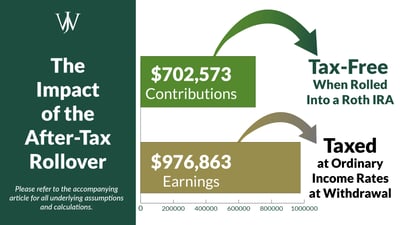
If you are already saving into your Chevron ESIP 401(k), you’re off to a good start in preparing well for your retirement. Most Chevron employees...
READ MORE
Alexis Long, MBA, CFP®
MANAGING DIRECTOR, WEALTH MANAGEMENT
BP Pension (RAP) Decisions to Make Long Before Retirement When you think about your BP retirement benefits, your BP 401(k), the Employee Savings Plan (ESP), probably comes to mind first. Like many company's 401(k) plans, you get to make contributions, determine where to invest those contributions, and BP matches a designated percentage of contributions for you as well. However, the BP Retirement Accumulation Plan ("RAP") pension is a significant benefit for BP employees that can have a substantial impact on your overall financial picture. The RAP is interest-credited and entirely funded by BP. As a result, you don't have to make any contribution or investment decisions to receive the benefit when you retire. But, you should not just ignore your pension until retirement. It's essential to understand how the pension calculation works and what impact your decisions will have. Let's dive in. What is a Pension? A pension is a retirement savings tool where an employer regularly contributes a set amount of funds to a designated pool of money that will make payments to an employee upon retirement. Pensions are a unique offering these days. According to a recent study by Willis Towers Watson, only 14% of the largest companies in the U.S. offer pensions, also referred to as "defined benefit plans." The study notes that this is a significant decrease from the 59% of large companies which offered pensions in 1998. The 2021 Milliman Pension Study showed that many employers did not fund pensions to cover 100% of the plan participants' benefits. However, the actuarial assessment of BP's pension fund determined that as of January 1, 2021, the Retirement Accumulation Plan had a funding ratio of 133%, meaning that BP can fund its pension plan to cover potential benefits for all participants at this time. How Does the BP Pension (RAP) Work? BP Pension is Funded Through Pay Credits Under the RAP pension, BP employees have individual cash balance accounts to which BP contributes based on (a) years of service or age and (b) base and bonus compensation (excluding stock and spot compensation). BP credits the employee's pension account using two percentages. The first is a percentage applied to the employee's earnings up to the designated "Eligible Earnings Threshold," which the Social Security Wage Base determines (more on that below). The second is a credit percentage applied to the employee's earnings that exceed the "Eligible Earnings Threshold" but below the pension contribution limit. Pay Credit Formula (whichever provides the greater percentage): Credits as a percentage of Your Eligible Earnings (up to $35,700 in 2021) Credits as a percentage of Your Eligible Earnings (above $35,700 in 2021) Years of Vesting Service Age Under 10 and Under 40 4% 7% 10 but less than 20 or 40 but less than 50 5% 9% 20 or more or 50 or more 6% 11% Using the chart above, we can look at two hypothetical BP employee scenarios to illustrate how BP contributes to the RAP Pension. Example 1: 35 years old with base and bonus equal to $100,000 Because the Participant is under 40, BP contributes: 4% of $35,700 = $1,428 7% of the amount above $35,700 up to $100,000 = $4,501 Total: $5,929 for 2021 Example 2: 45 years old with 20 years of service with base and bonus equal to $200,000 Because the participant is over 40 with 20 years of service, BP contributes: 6% of $35,700 = $2,142 11% of the amount above $35,700 up to the 2021 annual social security threshold ($142,800) = $11,781 Total: 13,923 for 2021. Social Security Thresholds The eligible earnings thresholds change annually based on the social security wage base. BP's eligible earnings threshold is one-fourth of the social security wage base for the year. For example, since the social security wage base for 2021 is $142,800, the eligible earnings threshold used to calculate the BP RAP Pension contribution for 2021 is $35,700 as applied above. Pension Limits & BP's Excess Compensation Plan (ECP) The IRS limits how much of an employee's compensation BP can use to formulate its contribution to the RAP pension. In 2021, that limit is $290,000. BP directs the contributions beyond the compensation limit (including base and bonus) to the Excess Compensation Plan (ECP). The ECP is a non-qualified plan which means that it does not have the legal protections that the RAP pension or ESP 401(k) have. The ECP also has more rigid distribution requirements. Learn more about the ECP and its distribution rules here >> Let's look at another hypothetical BP employee scenario to illustrate how BP contributes to the Excess Compensation Plan. Jake is a 45-year-old employee with 20 years of service whose base and a bonus equal $300,000. Because the participant is over 40 , has 20 years of service, and makes over $290,000, BP contributes: 6% of $35,700 = $2,142 11% of the amount above $35,700 up to $290,000 = $27,983 Total: $30,115 for 2021 to the RAP Pension , and: 11% of amount above $290,000 = $1,100 Total: $1,100 for 2021 to the Excess Compensation Plan (ECP) BP Funds Pension Through Interest Crediting In addition to the contribution BP makes to the pension, BP also credits each participant's account with an annualized interest amount. Participants hired prior to 1/1/2016 Participants hired on or after 1/1/2016 Participants rehired on or after 1/1/2016 Monthly crediting of the greater of 30-year treasury rate* or a minimum 5% annualized interest Monthly crediting of the greater of 30-year treasury rate* or a minimum 2% annualized interest Monthly crediting of the greater of 30-year treasury rate* or a minimum 5% annualized interest on amounts accrued prior to 1/1/2016, and a minimum 2% on amounts accrued after 1/1/2016 *Monthly 30-year treasury from September of the prior year. The effective rate for 2021 is the September 2020 rate of 1.42%. How Interest Rates Impact Pensions We are amidst an unusually low interest rate environment. As shown in the chart above, the minimum applicable crediting rates of 5% and 2% are well above 2021's applicable treasury rate of 1.42%. The applicable rate for 2022 is 2.10%, just above the minimum crediting rate for those hired post-2015. These current low interest rates are a consideration you should incorporate in your more extensive planning, which we will address next. BP Pension Election Options Under the BP RAP pension, you have two main options for how your pension will pay out to you: an annuity or a lump sum. Annuity: an income stream paid monthly based on the date you decide to start the income stream and your expected life expectancy. Lump Sum: A lump sum derived one of two ways based on your years of service with BP; You can roll these into an IRA after leaving the company How to Choose for Your BP RAP Pension: Lump Sum or Annuity Participants hired before 1/1/2014 Participants hired on or after 1/1/2014 Participants rehired on or after 1/1/2014, but before 1/1/2016 who have maintained their participant benefit in the plan from before 1/1/2014 Choose the greater of: a) the cash balance of your pension account b) a calculation based on applicable interest rates The cash balance of your pension account Choose the greater of: a) the cash balance of your pension account b) a calculation based on applicable interest rates The chart above illustrates a simplified way of determining how to choose between the lump sum or annuity options for your pension payout. For participants in the BP pension who became BP employees through corporate mergers with Amoco, ARCO, and Castrol, there are additional calculations for the RAP Pension benefit where the chart above may not be sufficient. One of the key determinations with your pension is which payout option – annuity or lump sum – works best for your situation. We Discuss the Pros & Cons of Each Option in Our Timing BP Retirement Webinar. Watch it Now >> Investment and Savings Strategies for BP Pension Participants Your BP RAP pension accrues during your employment at BP through BP's pay credits and interest crediting without any participation from you. However, that does not mean your pension exists in a silo of its own — you still have other decisions requiring your attention. How to Invest if You Have a Pension While the crediting amount might be slightly variable, the value of your pension account is stable and growing over time. There is no market risk in the account. As such, your RAP Pension account acts as a fixed holding within your broader financial picture. If you look at your pension fund alongside your other accounts or, at least, your other retirement accounts, it may change how you wish to consider the investment allocation of your other accounts. For example, let's assume you have $900,000 in your BP 401(k). You want to take a moderate amount of risk in your investments, so you direct your 401(k) assets to a 60% stock and 40% fixed income allocation. Let's assume your projected lump sum benefit within your RAP Pension is $400,000. If you view the pension as part of your retirement portfolio, you have $1.3 million in retirement savings. As a result, you also have a fairly conservative portfolio — with over 55% of your portfolio in fixed income, which isn't the moderate risk you may have intended. Additionally, with the current, historically low interest rates, you may be greatly diminishing your opportunity to accrue by being less exposed to stock. At Willis Johnson & Associates, our advisors look at our client's broader picture when discussing allocation to ensure that their asset allocations align with their risk tolerance and financial goals. Where to Save for Retirement If You Have a Pension The BP RAP pension is pre-tax, just like other traditional retirement plans like a traditional IRA or 401(k). After you leave BP, your funds can remain in the pension plan for future distribution (the pension must be distributed by age 72), or you can roll your pension funds over to another pre-tax plan like your 401(k) or IRA, where it remains tax-deferred. Once you take a distribution from the pension, that distribution is taxed at ordinary income rates, just like distributions from a 401(k) or an IRA. Because your pension account functions similarly in distribution to a traditional 401(k) or traditional IRA, you should incorporate it with your tax pool planning. Tax Pool Planning When determining how to allocate your investments in accounts, you should also decide how to allocate across tax pools – taxable (after-tax) accounts, tax-deferred (pre-tax) accounts, and Roth accounts. Typically, a person's highest-income years will be when they earn a salary, not when they retire. Based on this circumstance, we usually emphasize pre-tax savings for retirement during working years. However, as you near retirement, you may find that you have more pre-tax savings than is efficient. Over many years, as you contribute to pre-tax savings and they accrue with investment, your pre-tax pool can add up quickly when combined with the pension — This can be particularly true for people later in their careers. Using the same example above, let's say 15% of your $900,000 401(k) is in Roth. Your $400,000 RAP pension lump sum is still all pre-tax. If you incorporate the pension when looking at your retirement funds, your Roth savings are closer to 10% than the originally anticipated 15%. Incorporating the pension is vital to overall financial planning. In several instances, Willis Johnson & Associates' advisors have developed projections for BP professionals showing that required pension distributions will far exceed a client's expenses in retirement. Without proper planning, these professionals will pay ordinary income tax on distributions they do not need! Therefore, we start looking for opportunities to build after-tax or Roth savings either before or immediately post-retirement. Incorporating Your BP RAP Pension Into Your Financial Plan Your RAP pension, with BP's contribution and crediting, has the potential to accumulate into a significant benefit for you. However, viewing your pension as simply a surplus to your retirement savings in the BP ESP 401(k) plan will limit your potential for strategic planning. The best financial planning is about framing and evaluating your entire financial picture, weighing your options, implementing the best strategy, monitoring results, and staying nimble to pivot when necessary. Expertise in both financial planning and BP benefits can help you in all of these strategies. Willis Johnson & Associates (WJA) advisors know the complexities of BP's retirement benefits and how they can effectively work together. We help BP employees and retirees clarify their goals and resources, evaluate and educate them on the best opportunities for meeting those goals, and implement and maintain the strategies to achieve their objectives. As fiduciary advisors, we always work in your best interest to help you reach your financial goals. Thinking about your BP RAP pension is about more than making the necessary elections as you prepare to leave BP. Your pension is a unique benefit and a critical consideration for the decisions you'll make in other parts of your financial life today. You can learn more about how we help BP professionals here or connect with our team for a complimentary benefits and financial planning review.
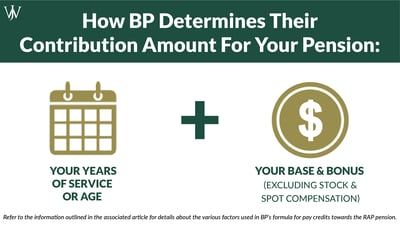
When you think about your BP retirement benefits, your BP 401(k), the Employee Savings Plan (ESP), probably comes to mind first. Like many company's...
READ MORE
John Siegel, CFP®, EA
SR. WEALTH MANAGER
How to Get the Full Chevron 401(k) Match (and Why People Miss Out) Contributing to your 401(k) can be one of the easiest ways to save for retirement. You set your contributions, the funds come out of your paycheck every month, and you’re done! Easy, right? Well, not all 401(k) plans are the same, and it’s not always as simple as “set it and forget it.” At Chevron, employees are provided with the Employee Savings Investment Plan (ESIP) to make contributions for retirement. Chevron's 401(k) offers employees the option to contribute to a Pre-Tax, Roth, or After-Tax source directly from their paychecks. Chevron matches employee contributions to the ESIP as well, up to 8% of compensation. Understanding the Chevron Employee Savings Investment Plan (ESIP) 401(k) Chevron makes a company match to the ESIP if an employee is making Basic contributions. Chevron will make a 4% matching contribution for every 1% an employee contributes to Basic. Suppose you max out your Pre-Tax employee contributions halfway through the year. In that case, you will switch to the After-Tax source within the 401(k) to make Basic contributions to continue receiving company contributions. When setting your ESIP contributions at the beginning of the year, you need to understand your expected cash compensation for the year (meaning what do you expect your base salary and target CIP to be for the year). You cannot use stock compensation for 401(k) contributions. Additionally, you need to understand the IRS limitations for contributions to a 401(k) plan. 401(k) Income Limits for 2021 If you are under age 50, you may contribute up to $19,500 between the Pre-Tax and Roth sources within your 401(k), and the overall contribution limit on a 401(k) plan is $58,000 this year. If you are over age 50, you may contribute up to $26,000 between the Pre-Tax or Roth sources within your 401(k), and the overall contribution limit is $64,500. Regardless of age, all 401(k) contributions cease once you reach $290,000 of cash compensation in the 2021 calendar year. If you are a high-income earner, you must calculate your 401(k) contributions to maximize your Pre-Tax and company contributions BEFORE you reach the IRS 401(k) income limitation. Learn more here >> In addition to the Pre-Tax contribution limits, you can contribute to the Employee After-Tax source. After-tax contributions are in addition to the Pre-Tax contribution limits. Therefore, you may switch your contributions mid-year from Pre-Tax to After-Tax to maximize your employee contributions and company contributions. Maximizing Your Employee Contributions to Chevron’s 401(k) It is essential to remember that, with an employer match, employees must contribute to receive the company contribution. Typically, an employee needs to contribute throughout the year or up to the IRS’ compensation limit of $290,000 (2021) to receive the full company match. Chevron will match employee contributions as long as the employee is contributing 1-2% into Basic contributions. Employee contributions can be to Pre-Tax, Roth, or After-Tax Basic within the 401(k). Chevron also provides their employees with an opportunity to contribute more than 1-2% by contributing to Supplemental contributions for Pre-Tax, Roth, or After-Tax contributions. However, Chevron does not match any Supplemental contributions. How Employees Miss their Chevron 401(k) Match Contributions It is not unusual to see Chevron employees missing out on company contributions because of the complicated rules around the match, especially when the employee’s compensation is over the IRS limitations. Let’s look at an example to illustrate the ESIP contribution issues we often see with Chevron employees. Brian, a 45-year old Chevron employee, has a base salary of $250,000 and a CIP target of 30%. His total cash compensation this year is expected to be $325,000. Brian wants to max out his 401(k) Pre-Tax contributions to ensure he minimizes his income this year, and he knows the Pre-Tax contribution limit is $19,500 for anyone under the age of 50. Brian also realizes he needs to contribute 2% into Pre-Tax Basic to get the 8% company match. Therefore, he sets his Basic Pre-Tax contributions to 2% and sets his Supplemental Pre-Tax contributions to 10% to fully max out his Pre-Tax contributions before he reaches $290,000 of income. Brian maxes out his Pre-Tax contributions by reaching $19,500 in May. Upon reaching this limit, he decides to stop contributing to the ESIP since he can no longer make additional Pre-Tax contributions. When he stops contributing to Basic contributions in May, Chevron ends the company match as well! Month Basic Pre-Tax Contributions (2%) Supplemental Pre-Tax Contributions (10%) Chevron's Contributions All Employee After-Tax Contributions January $416.66 $2083.34 $1666.66 0 February $416.66 $2083.34 $1666.66 0 March Bonus $416.66 $1,500 $2083.34 $7,500 $1666.66 $6,000 0 April $416.66 $2083.34 $1666.66 0 May $208.33 $291.67 $833.33 0 Total ESIP Contributions as of May $19,500 $13,500 0 Annual Limits $19,500 $23,200 $15,300 Missed Contributions $9,700 $15,300 Brian could have received $23,200 in company contributions (8% x $290,000) by adjusting his contributions to the after-tax Basic source after maxing out the Pre-Tax source, which would have happened automatically had he not stopped his contributions. Instead, he only received $13,500 – he missed out on $9,700 of Pre-Tax company contributions! Through his own and Chevron’s contributions, Brian only got $33,000 into his ESIP this year when he could have maxed out at $58,000. Brian made an excellent choice to maximize his Pre-Tax contributions to minimize his annual tax burden and save money for retirement down the road. However, he missed out on additional employee retirement savings in the ESIP, including his company match! Chevron employees may make After-Tax contributions in addition to their Pre-Tax contributions. Brian could have put away additional retirement savings by switching his contributions from Pre-Tax into the After-Tax Basic & Supplemental sources to maximize his own personal savings and receive the additional company match. How Chevron Employees Can Max Out their 401(k) If Brian came in to meet with us, here is how we would have recommended he set up his contributions to maximize his Pre-Tax and After-Tax contributions while also receiving the full company match: At the beginning of the year, Brian would set his contributions to Basic Pre-Tax at 2% but increase his Supplemental Pre-Tax contributions to 13%. He would max out his Pre-Tax contributions of $19,500 in April. At this point, he would allow his 2% Basic contributions to switch over to After-Tax and set his 13% Supplemental contributions to the After-Tax source. To maximize the full company match, we also realize that Brian needs to contribute to Basic contributions until he reaches the IRS income limitation of $290,000. Therefore, in September, we would turn off Supplemental contributions and have him continue contributing to After-Tax Basic until he caps out at $290,000 of income. This way, he doesn’t risk overcontributing to the Supplemental source. If he overcontributes to the After-Tax Supplemental, he will be unable to max out his Basic contributions and lose out on the Chevron company match. So, how much does Brian end up with? $19,500 of Pre-Tax contributions $23,200 of Company Match Contributions (fully maxed!) $15,300 of After-tax contributions Month Basic Pre-Tax Contributions (2%) Supplemental Pre-Tax Contributions (13%) Chevron's Contributions Basic After-Tax Contributions Supplemental After-Tax Contributions January $416.66 $2708.34 $1666.66 $0 $0 February $416.66 $2708.34 $1666.66 $0 $0 March Bonus $416.66 $1,500 $2708.34 $7,062.50 $1666.66 $6,000 $0 $0 April $208.33 $1354.17 $1666.66 $208.33 $1354.17 May $0 $0 $1666.66 $416.66 $2708.34 June $0 $0 $1666.66 $416.66 $2708.34 July $0 $0 $1666.66 $416.66 $2708.34 August $0 $0 $1666.66 $416.66 $2708.34 September $0 $0 $1666.66 $416.66 $195.84 October $0 $0 $1666.66 $416.66 $0 November $0 $0 $533.33 $208.33 $0 Total Source Contributions as of Reaching $290,000 in Income $2,958.31 $16,541.69 $23,199.93 $2916.62 $12,383.37 Each Contribution Source in the ESIP is Fully Maxed Out for 2021 Pre-Tax Contributions $19,500 Chevron Contributions $23,199.93 After-Tax Contributions $15,299.99 In total, Brian fully maxes out his 401(k) contributions at $58,000 this year. He can also take these retirement savings strategies one step further by rolling out his After-Tax contributions to a Roth IRA (the mega-backdoor Roth strategy), which allows them to grow tax-free. By taking some time to understand his compensation, IRS 401(k) limitations, and how the Chevron company match works, Brian can fully maximize his retirement savings this year. Because incomes change annually, or sometimes even mid-year, the ESIP contributions must be reviewed frequently, especially for high-income earners. We work with our Chevron clients to adjust their contributions throughout the year to ensure they max out their retirement plans. However, it’s not always as easy as set it and forget it, so discussing your benefits with a financial advisor is critical. Learn about which employment and retirement benefits we help Chevron professionals navigate and optimize here >>.
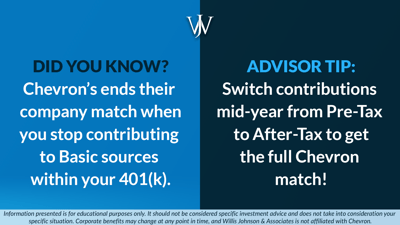
Contributing to your 401(k) can be one of the easiest ways to save for retirement. You set your contributions, the funds come out of your paycheck...
READ MORE
Alexis Long, MBA, CFP®
MANAGING DIRECTOR, WEALTH MANAGEMENT
The Importance of Diversification: How Much Company Stock is Too Much in Your Portfolio? Earning restricted stock from your company can be very rewarding, figuratively and literally. In a figurative sense, stock options give you a stake in the company and encourage long-term loyalty. And in the literal sense, they are awarded with faith that the company’s value will grow over time and increase wealth for the purchaser. But can you have too much of your own company’s stock? Working at one of the many large energy corporations in the Houston area has its benefits. Whether you're accruing Shell Performance Awards or earning stock in Chevron's Long Term Incentive Plan, gaining access to restricted stock options is one of the most valuable employee perks at companies like Shell, Chevron, and BP; they can make up a significant portion of professional staff members’ annual bonuses. Risks of Company Stock Overweighting Your Portfolio For many Houston companies, the memory of Enron’s downfall continues to loom large. Executives and business leaders still recall many Enron associates who lost their jobs and devastated their retirement savings because their 401(k) investments were overly laden with, or exclusively comprised of, Enron stock. Employees can accumulate stock through many different channels, including Restricted Stock Grants, Restricted Stock Options and Employee Stock Purchase Plans. While these programs allow you to maximize your purchasing power, they can also over-concentrate your overall portfolio with company's stock. Overweighting a portfolio with a single type of investment, including company stock, can increase your risk. Taking a diversified approach can help you ensure you’re benefiting from the stock options your company provides, while at the same time mitigating risk. How Can Diversification Help Protect Your Investments? Diversification is a technique that mixes a variety of investments (stocks, bonds, real estate, mutual funds) in a portfolio to minimize risk. Diversifying your investments allows you to reduce your exposure to specific types of risk, including risks inherent to your specific company. Diversification and Asset Allocation Diversification is a common approach to an investor's asset allocation. While it's important to invest across various stocks to be diversified across industries, diversifying across asset classes (stocks, bonds, mutual funds, real estate, etc.) can be a beneficial way to bolster a portfolio as well. Leveraging various types of investments rather than focusing on a select few can help keep you afloat during years of volatility while still helping you achieve your long-term financial goals. Learn how asset classes are performing in the markets here >> While all companies face exposure to different types of risk, if your portfolio includes a disproportionate amount of your industry or company’s stock, your exposure to these risk factors is amplified. What Specific Steps Can You Take to Diversify Your Investments? The following strategies can help you avoid an excessive concentration in company stock and the risk that comes along with it: 1. Target Band Rebalancing Target band rebalancing, or "opportunistic rebalancing," is a strategy that uses market shifts to reallocate funds within your portfolio to your target asset allocation. As your portfolio runs up or dips, this strategy enables you to trim profits from winners and add funds to losers by triggering trades when your asset allocation reaches a trigger point too far from your desired allocations. Expert Advice: No investor or strategy can perfectly time the market — that requires correctly guessing when to sell at the top AND when to buy back in at the low. Especially in times of market volatility, target band rebalancing is a proactive way to take advantage of real-time market shifts to leverage buying or selling opportunities in your portfolio as they arise. 2. Limit Orders A limit order allows you to set a target price to sell your stock. Once the stock reaches your target price, your broker will execute the trade automatically. By automating the process and shifting responsibility to your broker, you save yourself time and effort. Rather than tracking the price movement of your company stock, then scrambling to sell it at the right time, the process is seamlessly managed for you. Limit orders are not intended to provide income; instead, they focus on selling shares at the right time to efficiently diversify your holdings. The upside of limit orders is that they reduce your workload when it comes to managing your portfolio and allow your broker to continue assisting you in diversifying your investments. One potential shortfall related to limit orders is that you may not be able to ensure maximum returns in the same way as if you manually managed the selling process. However, that caveat implies you’d be able to dedicate enough time to rigorously track stock data and make sales anytime you saw prices spike. When you work with a knowledgeable broker or advisor, you should feel comfortable that it’s tracking price distributions of company shares frequently, then working with you to make changes as new pricing data is available. Expert Advice: We typically advise you spread out sales of company stock, so you can space potential tax obligations over multiple years. You can stage the sales to coincide with the acquisition of additional stock, and can sell a specified percentage of your stock at each juncture. 3. Covered Call Options Instead of selling stocks automatically like a limit order, covered call options are a more involved and complex approach. Covered call options allow someone else to buy your stock at a specific price for a set period of time. In return, you’ll be paid a premium for allowing this privilege, which means you receive an additional income source by using this diversification strategy. Covered call options provide a two-pronged benefit: they allow you to collect an option premium while simultaneously setting a comfortable exit price for your sales. The income from the covered call premium alongside the income from the stock’s dividends provides a decent income for the stock owner. Covered calls allow you to set prices the stocks are likely to sell at, so we typically recommend staggering the sell prices for call options to account for stock price volatility over time. This strategy is typically used when a stock isn't likely to significantly increase or decrease in the near-term, which makes it a good way to diversify company stock over time by getting rid of the overweight stock in your portfolio and providing income to re-invest in alternative stock options. There are a few things to keep in mind with call options. One disadvantage of this strategy is that there’s no guarantee the stock will sell prior to expiration. The potential buyer is under no obligation to purchase the stock at the end of the call period if the market price is below the call price. On the other hand, if the value of the stock rises during a covered call period, the stock owner won't receive the full value of selling the stock at market price because they agreed to sell it at a lower price to someone. Expert Advice: Plenty of people are buying and selling stocks, but fewer people are buying and selling call options. If you try to sell call options without the help of a qualified professional and do so incorrectly, you could be taken advantage of. With low liquidity in the options market, you're at risk of getting offered a low premium where your options contracts could’ve been worth a higher premium value. Covered call options are tricky to execute without previous education or experience in options trading. They can be highly beneficial for your financial strategy and for diversification, but it’s essential to connect with a financial advisor to get the maximum benefit from the strategy. 4. Net Unrealized Appreciation Limit orders and covered call options are common mechanisms for divesting company stock and diversifying investments you hold in a taxable brokerage account. For stock that’s held inside your 401(k), you may be able to take advantage of Net Unrealized Appreciation (NUA). This advanced financial management strategy involves evaluating the difference in value between what you or your employer paid for the stock (cost basis) and the current market value of stock held in your 401(k). Expert Advice: If there is a large gain on the stock upon your retirement, it may be more sensible for you to distribute the stock to a brokerage account. Using NUA will allow you to pull highly appreciated company stock out of your 401(k) and sell it in a more tax-efficient manner than leaving it inside the 401(k). While there are a number of strategies that can help you diversify your investments and make wise financial decisions, it’s important to weigh multiple factors while making decisions. A financial advisor can help you make sense of your options, while also taking into account which decisions will be most tax-efficient. If you’re interested in discussing the best way to diversify your investments, take a minute to learn more about our investment philosophy and how we can help you reposition your finances for a successful retirement.

Earning restricted stock from your company can be very rewarding, figuratively and literally. In a figurative sense, stock options give you a stake...
READ MORE
Nick Johnson, CFA®, CFP®
PRESIDENT & CHIEF INVESTMENT OFFICER
How U.S. Expatriates Can Avoid Costly Tax Penalties or Double-Taxation Abroad Whether you seek to retire in a lower cost environment or move as required by your employer, moving overseas as a U.S. citizen can be an exciting adventure. Amidst all the excitement and the flurry of activity, it's essential to pause, make a checklist of the critical to-do items, and begin thinking about the unique considerations that impact an expat's finances. Not tending to these details, or making the wrong decision about something, could result in costly mistakes. Before moving overseas, there are a few topics you, a U.S. citizen, should think about before the big move. Expats Should Work With Tax Professionals In Their Home And Residing Countries Having a team of knowledgeable professionals in both the U.S. and your residing foreign country is an absolute must to ensure that you comply with both countries' tax regimes and local and national laws. Lack of compliance on any level is costly to repair. You don't want to leave money on the table due to ignorance of the laws impacting U.S. expats. Expats must pay social security taxes In another article, we discuss the U.S. income tax implications of working overseas and how to avoid double-taxation of your income by both countries —But what about social security taxes or self-employment tax if you are self-employed? Like the U.S., many countries also require the equivalent of social security taxes. So, how can you avoid getting taxed twice for social security? U.S. Social Security and Medicare taxes apply to income you earn overseas if you work for a U.S. employer. The definition of a U.S. employer is a bit complicated and includes individuals who are residents of the U.S. The definition also includes trusts, partnerships, and corporations with U.S. ownership. If there is joint U.S. and foreign ownership of your employer, you will need to take a look at the total U.S. ownership to determine whether your employer is considered a U.S. employer. For individuals performing services on or in connection with an American aircraft or vessel, there are additional requirements to pay U.S. social security and Medicare taxes; This also applies to those working for a U.S. employer's foreign affiliate under a voluntary agreement between the U.S. employer and the U.S. Treasury Department. These are beyond the scope of this article, and if you have questions about these circumstances, please reach out to us so we can point you in the right direction to have your questions answered. Totalization Agreement's Impact on an Expat's Tax Bill You will also be responsible for U.S. social security and Medicare taxes if you are working in one of the countries with which the U.S. has entered into a bilateral social security agreement. These agreements provide that your foreign employment is subject to U.S. social security and Medicare taxes and are known as Totalization Agreements. The U.S. has Totalization Agreements with 26 countries. Such agreements avoid double-taxation in both the U.S. and the residing country concerning social security and Medicare taxes. A Totalization Agreement ensures that you pay social security taxes to only one country, thus eliminating dual coverage and dual contributions for the same work. Under a Totalization Agreement, your employer (whether the U.S. or foreign employer) is required to secure a certified statement from the appropriate agency to verify which country your pay is subject to social security coverage. For U.S. employers, the Social Security Administration provides the statement, while the appropriate agency for foreign employers. This certificate should be kept by your employer because it establishes proof of which country is authorized to tax you for social security. If you are self-employed in a foreign country, you (as your own employer) are responsible for securing the Social Security Administration certificate. More information can be found on the IRS and SSA websites, or reach out to us at WJA, and we can put you on the right path. Considering self-employment or consulting? Here's how to get started Legal and Tax Considerations for Self-Employed Expats Just like the U.S., foreign companies have various legal structures through which you should operate your business. Seek a business attorney or counselor in your residing foreign country who has expertise in setting up businesses. Across various countries, each business entity differs as far as legal liability and taxation. You will also need to ensure that you comply with all laws applicable to businesses within your residing country. As stated previously, you will be subject to self-employment taxes, including social security and Medicare taxes. Just like in the U.S., having expert foreign counsel will save you untold mistakes and costs navigating a terrain with which you are not familiar. Depending on how your business is legally defined, you will be required to file a reporting form with your U.S. tax return every year. There are stiff penalties for failing to file these forms , so educate yourself and secure a well-versed team of expert advisors WJA can assist you in putting together such a group. Another important consideration for U.S. expats is that all foreign business and investment transactions are subject to calculating a foreign currency gain or loss. For business transactions, foreign currency gain or loss is considered a business gain or loss. If the transaction is an investment transaction, foreign currency gain or loss is treated appropriately as an investment gain or loss. Reminder: For U.S. purposes, worldwide income is taxable and financial assets must be reported. Failing to File Foreign Assets on Your U.S. Tax Return As a U.S. citizen residing overseas, you must still file a tax return and report all of your worldwide income from both your U.S. and foreign income. The penalties for failure to comply are far costlier than any tax you will pay. The U.S. tax law provides several provisions to avoid double-taxation of your income. We see U.S. expats making these 6 tax mistakes ALL the time. Learn more here In light of this, all foreign income must be reported on your U.S. tax return, which includes: Income earned from foreign employment and/or self-employment Foreign interest and dividends Gains or losses resulting from the sale of foreign assets Foreign rental income and expenses Income from foreign partnerships, S corporations, estates, and trusts Taxable foreign retirement plan distributions Taxable foreign pension distributions Any other income Tax Rules Regarding Foreign Real Estate Ownership When you purchase real estate overseas, you will receive the same tax breaks as you do with U.S. real estate ownership. For a home that is your principal residence, you can deduct your property taxes and your mortgage interest. Property Depreciation If you purchase real estate for rental purposes, you can offset your property expenses against the rental income. Please note, for a foreign property, you must depreciate the foreign residential rental property over 30 years and commercial rental property over 40 years-- This is different from U.S. rental property depreciation. Foreign Real Estate & the U.S. Tax Forms Keep in mind that property taxes paid on foreign real estate do not qualify for the U.S. foreign tax credit. You are only permitted a deduction for these taxes, whether as a personal residence (limited to $10,000 currently) or as rental or investment. On the FBAR you are filing with the U.S. Treasury (which reports all your bank accounts and other financial accounts), it's unnecessary to include your foreign real estate. Your foreign real estate also does not need to be included on your Form 8938 that you must file yearly with your tax return reporting your foreign financial assets. Before plunging into the foreign real estate market, make sure you do your homework and find answers to the following questions: Do you need to purchase real estate through a legal business entity? If so, what are the tax implications when you sell? What is the equivalent in that country of a U.S. realtor? How much do they charge? What is the history of the property? Many properties sit on old fuel storage tanks that must require remediation to meet environmental regulations, which can be exceedingly costly. What are local zoning laws, environmental laws, and other laws or codes you must comply with? Are there any filing requirements in your residing country related to the real estate? Are there property taxes, and approximately how much? What is the potential gain on the fluctuation in foreign currency rates? You will want to consult a tax professional before you purchase property to determine the taxation of gain upon sale. Real estate can be personal, residential rental, commercial rental, or investment. The taxation upon the sale is different for each. Don't wait until you are ready to sell the property to know how it impacts you from both the U.S. and foreign tax standpoints. The Foreign Currency Exchange Rate Gain When you sell foreign real estate, you must report on your U.S. tax return the gain from the sale and the foreign, or functional, currency exchange rate gain. How the gain from the sale is treated depends upon the type of real estate (whether it's a personal residence, investment, or rental). However, the functional currency exchange rate gain is the gain that catches most real estate owners by surprise. The U.S. tax laws treat foreign currency as property rather than a medium of exchange. Considering this, when a mortgaged foreign asset is disposed of, two property types are disposed of: the actual asset and the mortgage. Let's illustrate by way of an example. Example. Annie is a U.S. citizen working in the United Kingdom for a UK-owned employer. She and her spouse purchased a home in the U.K. as their personal residence in January of 2010 for £375,000, which was equal to $603,750 (exchange rate 1.61). At the time of purchase, Annie took out an interest-only £350,000 mortgage from a U.K. bank, equivalent to $563,500. Annie resides there for ten years and sells the house in July of 2020 to move back to the U.S. (exchange rate 1.259) In 2020, the gain is calculated as follows: In UK Pound Sterling In U.S. Dollars Sales Price £850,000 $1,070,150 Purchase Price £375,000 $ 603,750 Total Gain £475,000 $ 466,400 For U.S. tax purposes, the gain qualifies for the principal residence gains exclusion and is not taxable. However, be aware that the gain is considered foreign-sourced income, which will impact the foreign tax credit calculation on Form 1116. If Annie had sold rental or investment real estate instead, the gain would have been taxable. Now, let's continue this example to compute the foreign currency exchange rate gain. Annie financed the U.K. home's purchase with an interest-only mortgage of £350,000, which translated to $563,500 due to an exchange rate of 1.61. At the time of sale, this same mortgage was equivalent to $440,650 due to an exchange rate of 1.259. The IRS views that Annie received value at the time of mortgage of $563,500, which she had only to repay $440,650 10 years later. The difference of $122,850 is entirely due to fluctuations in the currency exchange rate and is considered taxable income in the U.S. This gain is regarded as ordinary income instead of capital gain; therefore, preferential capital gain rates do not apply to this gain. Each time a foreign mortgage amount is reduced, you must perform this gain calculation, whether making monthly payments on the mortgage, paying off the mortgage, or refinancing the mortgage. And as a heads up—if the calculation goes the other way and results in a loss, you cannot deduct the loss on a U.S. tax return; for example, when personal assets (like a principal residence) result in a loss from the exchange rate calculation, it is considered a personal loss. These are just a few issues to consider when moving overseas as a U.S. citizen. The importance of teaming up with quality accountants and attorneys on both sides of the pond cannot be over-emphasized. If you have questions, contact our team at Willis Johnson & Associates. We will put you on the right path to finding quality advisors to help protect your assets.

Whether you seek to retire in a lower cost environment or move as required by your employer, moving overseas as a U.S. citizen can be an exciting...
READ MORE
Leah Cessna, CPA
DIRECTOR OF TAX
Tax Loss Harvesting: How to Benefit From Your Investment Losses Occasionally, we all regret an investment decision. We purchase a security thinking it is going to be a high performer, but it sinks in value instead. We hold on to the security, thinking that surely the value will rebound at some point. But the rebound never happens. Is there any way to make this situation less painful? Yes — we can “harvest” those losses against our income, using the loss to bring us valuable tax savings. How Can Tax Loss Harvesting Offset Investment Losses When stock is sold from a taxable account, the investor incurs either a gain or a loss, based on whether the value has increased or decreased from the purchase price. If you’ve held the stock for less than a year, the nature of the gain or loss is short-term and is taxed at ordinary income tax rates. If you’ve held the stock for more than a year, the gain is long-term and is taxed at capital gains rates, which is oftentimes more favorable. Tax loss harvesting requires the investor to know which positions in his/her portfolio are in a gain or loss position. You can use your investment losses to lower your tax liability if you are savvy about which stock you sell and when you decide to sell it. 3 Common Mistakes We See Investors Make How Does Tax Loss Harvesting Work Let’s look at an example. An investor, who is in the 35% ordinary income tax bracket, has the following stocks included in his portfolio: Stock A (Short-Term) Stock B (Long-Term) Stock C (Long-Term) Number of Shares Purchased 1,000 1,000 500 Price Per Share When Purchased $70 $90 $30 Price Per Share At Current Value $100 $50 $40 Result $30,000 Unrealized Gain $40,000 Unrealized Loss $5,000 Unrealized Gain Our investor wants to sell Stock A to capitalize on its performance. However, the $30,000 short-term gain will be taxed at the investor's ordinary income tax rate, which is 35% in our example. This tax bite is $10,500, almost ⅓ of the gain! What if the investor decides to also sell Stock B and C during the same year to harvest these losses to offset the gain? The IRS requires investors to report gains and losses in the following manner on their tax returns: Net short-term losses against short-term gains; Net long-term losses against long-term gains; If there are any excess gains/losses after steps 1 and 2, net excess short-term gains or losses against excess long-term gains or losses. Putting this rule into practice, the investor would net gains and losses as: Short-term gain from Stock A: $30,000 Long-term gain (loss) from the sales of both Stock B and C Stock B loss ($40,000) Stock C gain $5,000 Net long-term loss ($35,000) Net long-term loss against short-term gain: Short-term gain $30,000 Long-term loss $35,000 Net loss ($ 5,000) Now, be aware that the IRS will only allow $3,000 per year in net capital loss. Consequently, our investor will be able to include $3,000 loss on his current tax return to offset his other ordinary income. The remaining $2,000 loss will carry forward to his next year’s tax return. What is the tax result of an investor “harvesting” his losses against his short-term gain in this example? Now, recall that if the investor had not sold Stocks B and C, his tax bill on the gain would have been $10,500. Not only does the investor eliminate his short-term gain, but he is also able to offset other ordinary income (such as salaries and interest) by the $3,000 excess capital loss. This results in additional tax savings of $1,050 ($3,000 x 35% tax rate of the investor in this example). The total tax savings in our example is $11,550! If an investor has already realized gains from previous sales during the year, as this example illustrates, tax savings are made available by taking these two loss-harvesting actions: Before the end of each year, investors should take a look at the unrealized gains and losses of their holdings. Investors should determine the tax benefits of selling stocks in loss positions to offset the realized gains and up to $3,000 of ordinary income. IRS Rules That Affect Tax Loss Harvesting While there are significant tax benefits to harvesting losses on investments, it’s important to understand the IRS’s wash sale rule to ensure that your loss harvesting is allowed. The IRS “wash sale” rule disallows the recognition of a capital loss on the sale of a security if “substantially identical” securities are purchased 30 days before or 30 days after the date the loss-generating security is sold. A security is “substantially identical” if it is: The same stock as the stock that was sold. A different class of stock, but issued by the same corporation. An ETF tracking the same index, even if offered by different investment firms. A loss could be excluded, in whole or part, if the wash rules are not followed. (Note that inadvertent violation of the wash sale rules can occur if a dividend reimbursement election is in place on a particular security and a reinvestment takes place within 30 days of the loss transaction.) When Should You Do Tax Loss Harvesting? Tax loss harvesting remains a relevant strategy, particularly for investors in higher tax brackets, those holding concentrated stock positions, or those who realize gains from equity compensation or portfolio rebalancing. Especially when the stock markets are volatile, there can be a tremendous opportunity for investors to rebalance their portfolio and realize losses for future use and benefit. For example, in April 2025, when President Trump announced tariffs, the S&P 500 dropped 12% in a single day. These sudden losses, while scary for most investors, created a tax loss harvesting opportunity. Let's consider another example where you have vested company share grants and may be reluctant to sell those shares at the prevailing market price. If you sold some shares this year, you could realize losses to offset realized gains from future sales. With a well-guided strategy regarding the cost of stock holdings and a clear investment outlook, you can begin to execute a plan for rebalancing your portfolio and deconcentrating from stock holdings. There are many reasons and potential applications for investors to employ tax loss harvesting. You should seek the counsel of your tax advisor and financial advisor when implementing a loss harvest to maximize the benefits of this strategy. The wealth managers and in-house tax team at Willis Johnson & Associates implement tax-loss harvesting strategies for our clients to proactively find tax-efficient solutions. If you have any questions, please don't hesitate to contact a member of the Willis Johnson & Associates team for more information.
Occasionally, we all regret an investment decision. We purchase a security thinking it is going to be a high performer, but it sinks in value...
READ MORE
Leah Cessna, CPA
DIRECTOR OF TAX
How to Find the Right Financial Advisor for You Whether you’re deciding on your next career move, your second home, or where to vacation next summer, research is a key contributing factor to a successful outcome. Similarly, when it comes to hiring a financial advisor or selecting a wealth management firm to work with, researching the team you’ll be working with can be the key difference between a positive experience and one that isn’t well-suited for your situation. Entrusting your finances to the right financial advisor is a major decision, but there are a few key considerations you need to be well-versed on to simplify your search – red flags to avoid, credentials and characteristics to look for, and key factors, such as specializations and service offerings, that can help narrow your options to select the right financial advisor for you. Step 1: Eliminate Firms with These Common Red Flags What to Avoid When Hiring a Financial Advisor When you’re faced with the hundreds of options for financial advisors in Houston, it can be overwhelming. Oftentimes, after creating a list of available options, it’s helpful to start your research by eliminating firms that have red flags off the bat. If a firm’s values don’t align with your own, or if their services and specialties don’t fit your needs, trying to make an ill-fitting client-advisor relationship work only results in wasted time and disappointment for both parties. When considering an advisor, be on the lookout for these red flags: Advisors Working in Their Best Interest, Not Yours Though many financial professionals tout the title “financial advisor,” it can be difficult to identify what differentiates them all. A crucial step to identifying the type of “financial advisor” you want to work with is understanding whose interest they’re working in. For example, many investment brokers call themselves “financial advisors,” however, their product sales-focused approach is what many believe has given advisors a bad reputation. When a firm highlights a “fee-based” approach or refers to its advisors as “brokers,” it can be a strong indication that the primary motive of the business is to sell products for commissions. Many brokers in these types of roles have a Series 7 license which enables them to get paid in non-transparent ways (commissions, kickbacks, etc.) so it’s important to check FINRA’s BrokerCheck site as part of your due diligence before working with someone. Additionally, many of the large brokerage firms that offer investment funds (Ameriprise, Baird, Merrill Lynch, etc.) charge hidden fees that result in a kickback on their behalf. During your research phase, look for terms such as “fiduciary,” “RIA (registered investment advisor,” or “fee-only” to indicate that the financial professionals are working in your best interest rather than their own. These terms are important in the financial services industry to disclose that the advice given to clients or prospective clients is given without a conflict of interest or in pursuit of commissions. Not all advisors are the same. Learn More About the 3 Types of Financial Advisors Here >> Single-Specialty Advisors When it comes to your finances, hiring a one-focus firm can add major complications to the other areas. As soon as a family’s assets begin encroaching on the $1 million mark, the potential for numerous tax forms, investment fees, legal or insurance needs, and savings opportunities compounds in-kind, and often on a recurring annual basis. If the firm you’re looking at specializes solely in investments, they’re likely making decisions with only investment returns (and potentially, their commissions) in mind, but those investment decisions can have a significant tax impact later in the year. Oftentimes, your investments, taxes, and other financial planning strategies need to work together to get you the best results. By working with a firm that only looks at one piece of the puzzle, you could be missing out on opportunities that could have significant long-term benefits for you and your family. Slow to Communicate The old colloquialism “no news is good news” may apply to certain areas of your life, but it’s rarely applicable to your finances. When entrusting someone with your hard-earned savings, be on the lookout for advisors who are slow to respond to emails, calls, or other forms of communication. Consider this: During a market pullback, would you rather log into your 401(k) account and be caught off-guard when seeing a significant drop in its value or would you prefer to get a call from your advisor as they’re implementing strategies for recovery and tax loss harvesting from the drop, which offers you an opportunity to ask questions for deeper understanding? When you’re evaluating advisors, these expectations of professionalism and proactive communication aren’t “nice-to-haves,” they should be minimum requirements. If an advisor isn’t proactive or communicating with you as major market events arise, we recommend looking elsewhere. Step 2: Familiarize Yourself with Industry Terms, Services, and Credentials to Evaluate Motive & Expertise After crossing firms with red flags from your list, the next step to finding the advisor for you is educating yourself on the various terms, designations, and service offerings available to you. While this may seem tedious, it can empower you later in your search and help you focus on your top priorities for selecting a financial advisor to work with long-term. Understanding an Advisor’s Credentials Offers Insights Into Their Expertise & Motive When researching financial advisors, you’ll likely encounter a series of letters following their name which indicates their professional designations. Many of these designations have stringent requirements such as difficult exams and ongoing education to give advisors key updates and best practices in their specialization area. A few of the key ones to look out for are below: CFA — Chartered Financial Analyst Area of Specialty: Financial Planning with a Focus on Portfolio Construction CFP — Certified Financial Planner Area of Specialty: Financial Planning across multiple focus areas (insurance, estate, retirement planning, tax, investment portfolios) CIMA — Certified Investment Management Analyst Area of Specialty: Investment advising, portfolio construction, and risk management CPA — Certified Professional Accountant Area of Specialty: Tax Preparation & Planning EA — Enrolled Agent Area of Specialty: Tax Research with the authority to represent an individual before the IRS Series 7 — License that entitles its holder to sell investment products and securities with few exceptions Area of Specialty: Investments and product sales Series 65 — Designation required for someone to act as an investment advisor to make investment recommendations for clients Area of Specialty: Investments, laws, and topics as they relate to financial advising During your research, it can be helpful to keep an eye out for these credentials. If an advisor or firm you’re considering working with boasts only investment-focused designations, you may end up missing out on valuable tax and financial planning expertise. When Choosing a Wealth Management Firm, Look for Cross-Discipline Expertise to Achieve the Most Value When trying to find the best financial advisor for you, it’s important to consider each aspect of your financial picture and your long-term financial goals — how do you want to live in retirement? Do you want to set aside money for the next generation or donate to charity? What opportunities do your company benefits offer you in retirement? An advisor’s job is to give you the advice and strategies you need to actualize your goals. With a diverse team of experts in various fields of financial services, the access to advice you have compounds and makes your financial plan more all-encompassing. When you’re looking to work with someone, make sure to ask them about how your investments, financial planning strategies, and taxes will impact one another. Step 3: Focus on Finding the Right Fit For Your Situation Once you’ve done your research and eliminated firms down to the shortlist, you reach the hardest and most subjective part of your research — finding the right fit. The “right fit” has a different meaning for everyone, so it’s important to identify what’s most important to you upfront: Is it the cost? What guidance and service offerings add the most value for your family? Is it important to you that an advisor’s personality and individual values align with your own? When you’re trying to compare advisors, there are a few factors you can measure side-by-side to find the best fit for you: Look for Objective & Tailored Guidance Instead of a One-Size-Fits-All Approach When first meeting with your advisor, pay attention to the questions you’re asked: Does the advisor ask about your goals or are you told to pick from a few generic options? Can the advisory team give you advice regarding your company’s specific benefit packages or is it a “roadmap to retirement” with generalized information about savings strategies? After learning about your family, does the advisor ask about your plan to protect your loved ones and get an estate plan in place, or do they neglect to focus on long-term planning for the next generation? Does the advisor understand your long-term needs for investment income or focus on immediate short-term returns in the market? Your financial situation is a compilation of your savings, insurance needs, company benefits, and so much more. When working with an advisor to get the best value, it’s crucial that they take your unique blend of financial needs, goals, and current assets into consideration when creating your financial plan. What works for your colleagues, friends, or extended family may not be the right solution for you, even if your portfolios are similar, so focus your efforts on working with someone who gives you tailored fiduciary advice. Consider What Level of Financial Accountability You’re Comfortable With One of the major benefits of having a financial advisor is financial accountability. A financial planning professional can build a long-term financial plan suited to each stage of your life’s journey and hold you accountable if you begin to wander from your set plan. Like your health, your financial well-being is not something you can wait until the last minute to address. You want to begin the financial planning process early on, well in advance of retirement so you’re ready to overcome whatever curve-balls life may throw your way. If this level of accountability raises concerns or hesitation, you may want to consider if hiring an advisor is the right next step for you. Find the Right Financial Planning Approach for You Here>> Ask About A Firm’s Succession Plan if Your Advisor Retires A key component necessary to be a proactive and competent financial advisor is the continued dedication to making adjustments to a client's financial strategy in response to life-changing situations. The reality is that your wealth manager should regularly be asking key questions to determine what stage of life you are in today and what major events are taking place soon to make the proper recommendations to adjust your ongoing financial plan. Similarly, a financial planning professional should be considering their own stage of life and creating a succession plan for who will be there for you when they retire. This issue is compounded when reviewing advisor demographics. The Certified Financial Planner Board of Standards shows that 47.5% of CFPs are age 50 and older. A study by JD Power in 2019 indicated the average age of advisors to be 55 years of age. What does this mean for you? Not only do most advisors not have a backup plan, but many of them are likely to start retiring in the near-term. Source: CFP Board of Standards, 2019. The CFP® professional demographic data below is drawn from information self-reported by CFP® professionals as part of the initial certification and two-year certification renewal cycle. These two data points should jump out as a chief concern for anyone utilizing financial advisory services! If you’re evaluating firms, you should be asking questions about who is going to be there for you when your advisor retires or can no longer provide the quality advice that you need. One of the things we emphasize at Willis Johnson & Associates is our team-based approach. Every client of ours gets two members on their team, a senior advisor, and a supporting advisor to ensure that more than one person is intimately familiar with each client's financial situation. Finding the Right Financial Team for You When it comes to choosing financial advisory services, there are several paths available to you, and doing your research and due diligence is a crucial first step to deciding on the best financial advisor to work with. Before scheduling initial meetings with your shortlist of advisors, download our guide, 5 Things to Ask Before Hiring a Financial Advisor, to make sure you’re fully prepared, and look up the advisor on FINRA’s BrokerCheck to see if there are any disciplinary grievances against them. Whether you’re looking to supplement your existing strategy or looking for someone who can take the financial stress off your hands entirely, finding the right financial planning team can offer security and peace of mind for you and your family’s future. Could We Be The Right Team For You? We offer a complimentary initial meeting to anyone interested in working with us. Schedule yours today.
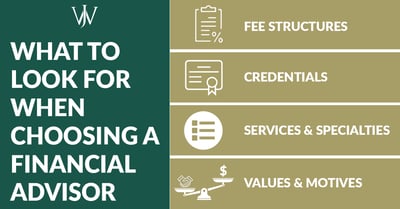
Whether you’re deciding on your next career move, your second home, or where to vacation next summer, research is a key contributing factor to a...
READ MORE
Alexis Long, MBA, CFP®
MANAGING DIRECTOR, WEALTH MANAGEMENT
How is Saving for College Different for High Income Families? Do you have an appropriate education savings plan? If you plan on providing funds for your children to go to college, you should think about incorporating the cost of education into your financial plan. While the same tenets regarding saving for retirement apply, earlier is better to maximize the potential for growth, even though it can be difficult to save for college while you’re in the trenches of early parenthood and have a number of other expenses vying for your attention. Watch the full presentation now by filling out the form below. Savings Methods for College Education In this webinar, you’ll learn about the average costs of higher education beyond college tuition, as well as various methods and strategies for saving, including the 529 savings plan and more. Why Early Saving Makes Sense For Higher Education Plans Starting an educational fund while a child is young gives your money the most time to grow and allows you to save the most efficiently. The webinar covers the reasons a lump sum contribution to a college fund when a child is very young can be an extremely effective savings option — because your full investment will have many years to grow and compound, thus reducing your overall financial contributions. For most young families, balancing college funding and present-day expenses can be difficult, and generating that initial lump sum may seem an insurmountable effort. However, monthly contributions from a young age are also extremely valuable in your efforts to plan for future education expenses. Why You Might Not Need to Plan for the Full Cost of your Student’s College Education Education can be expensive, and thankfully, you may not need to cover the entire amount. Instead, the webinar explains, aiming for 70-75% might be sufficient, once you factor in the potential for financial aid, scholarships, work-study programs and contributions from other family members. The webinar also covers how over-funding college expenses can actually be more costly and time-consuming in the long run. What Methods for Education Savings are Available The webinar covers the pros and cons of various educational savings options, including: UTMAs (uniform transfers to minors), which are irrevocable savings programs that make funds available to your children once they reach age 21 Prepaid tuition programs, which lock in today’s tuition rates and decrease the impact of inflation on your college savings efforts 529 plans, which allow tax-deferred growth and tax-free withdrawals for qualified education expenses How Contributions from Grandparents can be Valuable Education Savings Planning Tools The webinar discusses another benefit of 529 plans established by grandparents, which is the fact that these savings plans aren’t factored in to your child’s ability to receive federal student aid. How to Prioritize your Savings Methods to Ensure Sufficient Short- and Long-Term Assets are Available to You and Your Family While you may be focused on offering your child or grandchild the gift of education, this webinar explains which other financial goals you should work toward first, to be most efficient in your savings. In addition, the webinar explains how saving for retirement first can also contribute to your college savings goals if needed. Education funding is just a piece of an overall financial plan. You and your family will encounter different needs in each phase of your life, and it’s important to create a long-term financial plan that takes each life and savings goal into consideration. At Willis Johnson, we focus on helping you identify your savings goals throughout each life stage, then work with you to create a plan that maximizes your opportunities for success. Learn more about the financial services we offer and our commitment to helping your family make the most of your resources when it comes to education and the future. Access the full presentation now by filling out the form below.

Do you have an appropriate education savings plan? If you plan on providing funds for your children to go to college, you should think about...
READ MORE
Alexis Long, MBA, CFP®
MANAGING DIRECTOR, WEALTH MANAGEMENT
How to Plan for Health Care after Retiring from Chevron The average 65-year-old couple will need $280,000 to cover healthcare-related expenses in their retirement. If you’ve been an employee at Chevron, you have options. No matter how well you’ve planned and saved for retirement, $280,000 is a lot of money. It’s important to take seriously any expense that threatens to consume more than a quarter of a million dollars from your hard-earned retirement fund. Moreover, securing the right healthcare coverage is important because maintaining your health and well-being is integral to your enjoyment of your retirement. Chevron provides retirees with opportunities to secure ongoing healthcare coverage through the company. And, depending on your tenure with Chevron, the company provides varying degrees of premium cost coverage. Health Coverage Options for Chevron Retirees Younger Than 65 Prior to turning 65, you may continue to participate in Chevron’s group medical coverage. Under this coverage, you and your spouse/domestic partner have coverage options including: Medical PPO plan High deductible plans Medical HMO plans Coverage rates are dependent on your age and time spent serving the company. Health Coverage Options for Chevron Retirees After 65 After reaching Medicare eligibility at age 65, Chevron retirees and their dependents are eligible for a healthcare private exchange, OneExchange. Your primary healthcare coverage will be through Medicare. However, OneExchange can replace the coverage under Medicare Part A (hospital, surgical, skilled nursing, home health) and Part B (outpatient care, diagnostic, medical supplies, ambulance services). It can also allow you to add Part D (prescription) coverage, and provide other enhanced benefits. Under this OneExchange program, you can choose from a few different coverages and many insurance companies based on your needs and preferences. Your OneExchange services are funded through reimbursements to a Health Retirement Account (HRA). These funds have a specific deadline for use and are not as flexible as funds in a Health Savings Account (which can be converted to an IRA after age 65 and used for general financial planning). Another key difference between HRAs and HSAs is that HRA’s earn no additional interest on the funds in the account and there is a time limitation for using the HRA funds. Therefore, we highly recommend that clients with HRA’s and HSA’s use the HRA funding for reimbursement before using any HSA funds. How Much of My Retirement Healthcare Premiums Are Covered by Chevron? Chevron uses a point system to determine its contributions to retirees’ medical coverage. The point system takes the following factors into account: Current age Age at retirement Eligible years of service Sample percentages as set forth in “Company Contributions to Health Benefits: Supplement to Summary Plan Description” effective January 1, 2017 (see full description here). Can Choosing an Alternate Retirement Date Have an Impact on My Healthcare Benefits? For some of your Chevron retirement benefits, the retirement date you choose can have a critical impact on your financial standing. Your pension is the most likely to be impacted by a specific date, because of the complex, date-based calculations used to determine your payout. Your healthcare benefits don’t specifically factor in a day or month into the calculations. However, your age and years of service are taken into consideration. If you’re due to celebrate a significant birthday or work anniversary, you may want to discuss the financial impact of delaying your retirement to take advantage of increased healthcare benefits. What Dental and Vision Coverage Options Will I Have Following My Chevron Retirement? Dental and vision coverage options undergo minimal changes following retirement from Chevron. However, there are a few differences in their availability depending on your age. For Retirees Younger than 65 If you retire prior to becoming eligible for Medicare, you and your dependents will have access to dental coverage options through an HMO or PPO plan. Chevron will contribute to your plan at the same scaled contribution level as your medical coverage. Vision coverage is not available to Chevron retirees pre-65. For Retirees After Age 65 Dental and vision coverage is available for retirees through the OneExchange private health exchange program. These costs are also reimbursable through your HRA. Because the reimbursements come from the same pool, you may be able to allocate unused funds from your medical expenses to cover vision/dental costs and vice versa. While it’s important to get started on the right foot with your retirement healthcare expenses, it’s also reassuring to know you have the ability to make changes in the future. As in your working years, you have the option to change your coverage enrollment on an annual basis, as your life and health circumstances change. Building your career with Chevron has many advantages; receiving retirement health benefits is just one of them. As you sort through the many decisions related to retirement, you may feel overwhelmed with the many selections that need to be made, options that need to be reviewed and forms that need to be completed. If that’s the case, or if you just want a second opinion as you go through the final pre-retirement steps, Willis Johnson & Associates is here to help. With years of service as trusted advisors to Chevron retirees, our team has intimate knowledge of Chevron’s retirement programs. We’ve worked with many long-term Chevron employees to support their retirement decision-making process and move them closer to their goals. Learn more about how we help and support Chevron professionals and executives in all stages of retirement planning.

The average 65-year-old couple will need $280,000 to cover healthcare-related expenses in their retirement. If you’ve been an employee at Chevron,...
READ MORE
John Siegel, CFP®, EA
SR. WEALTH MANAGER












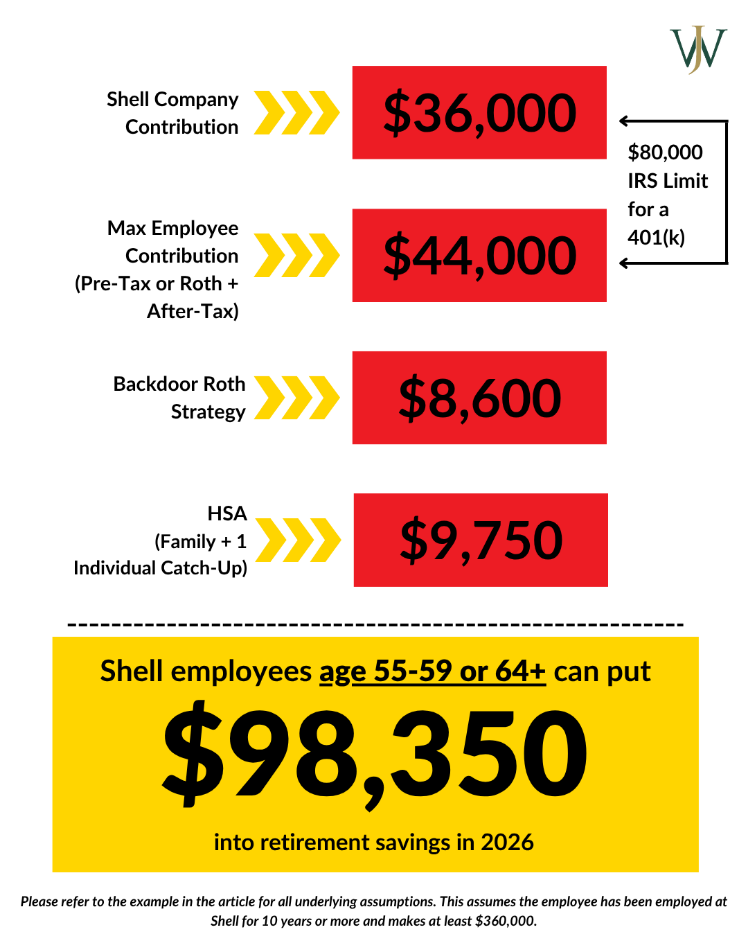
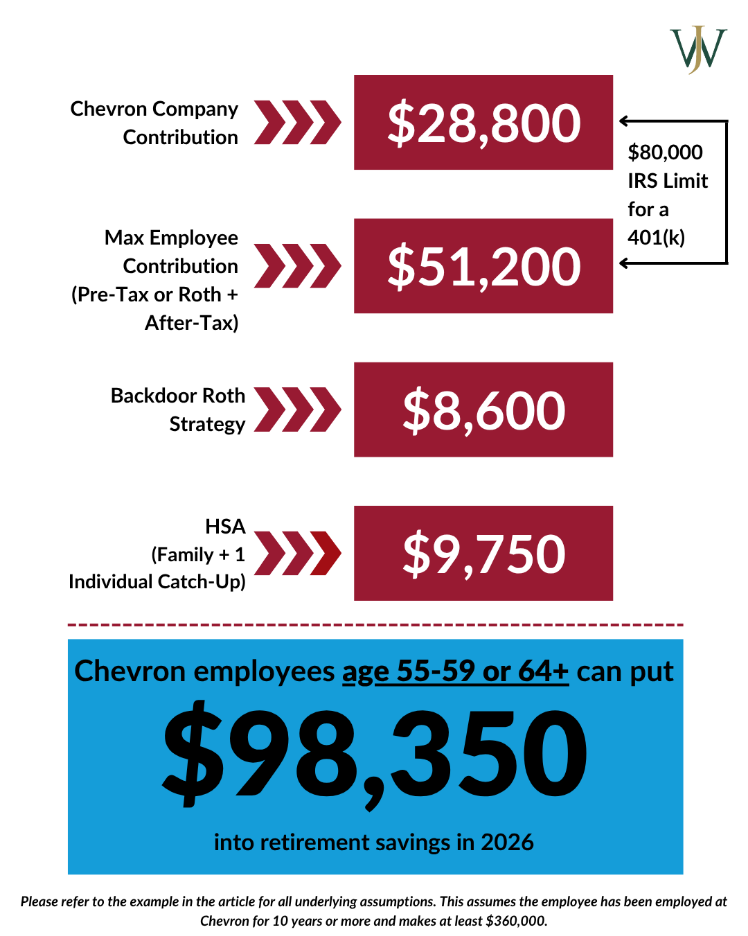

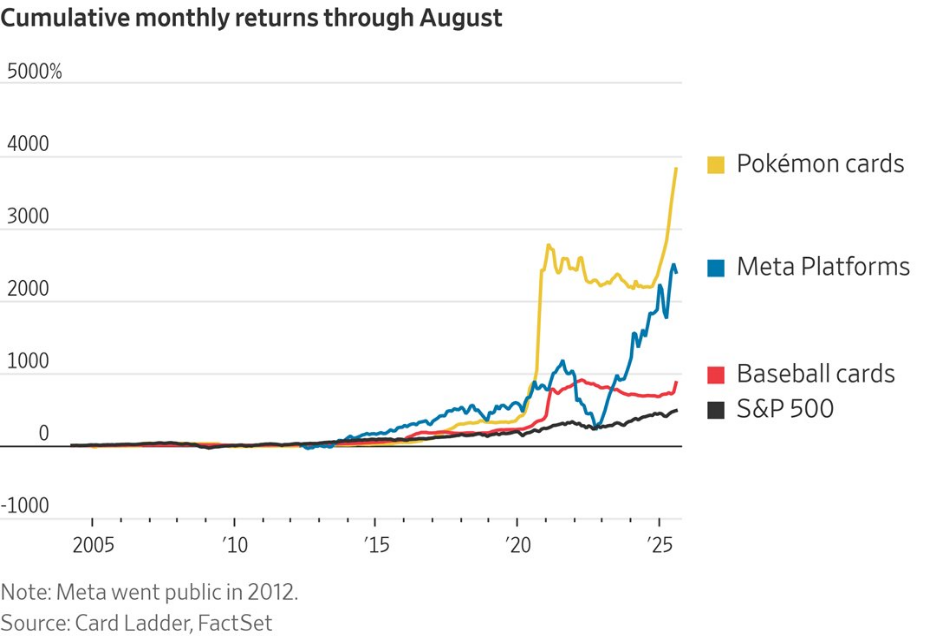
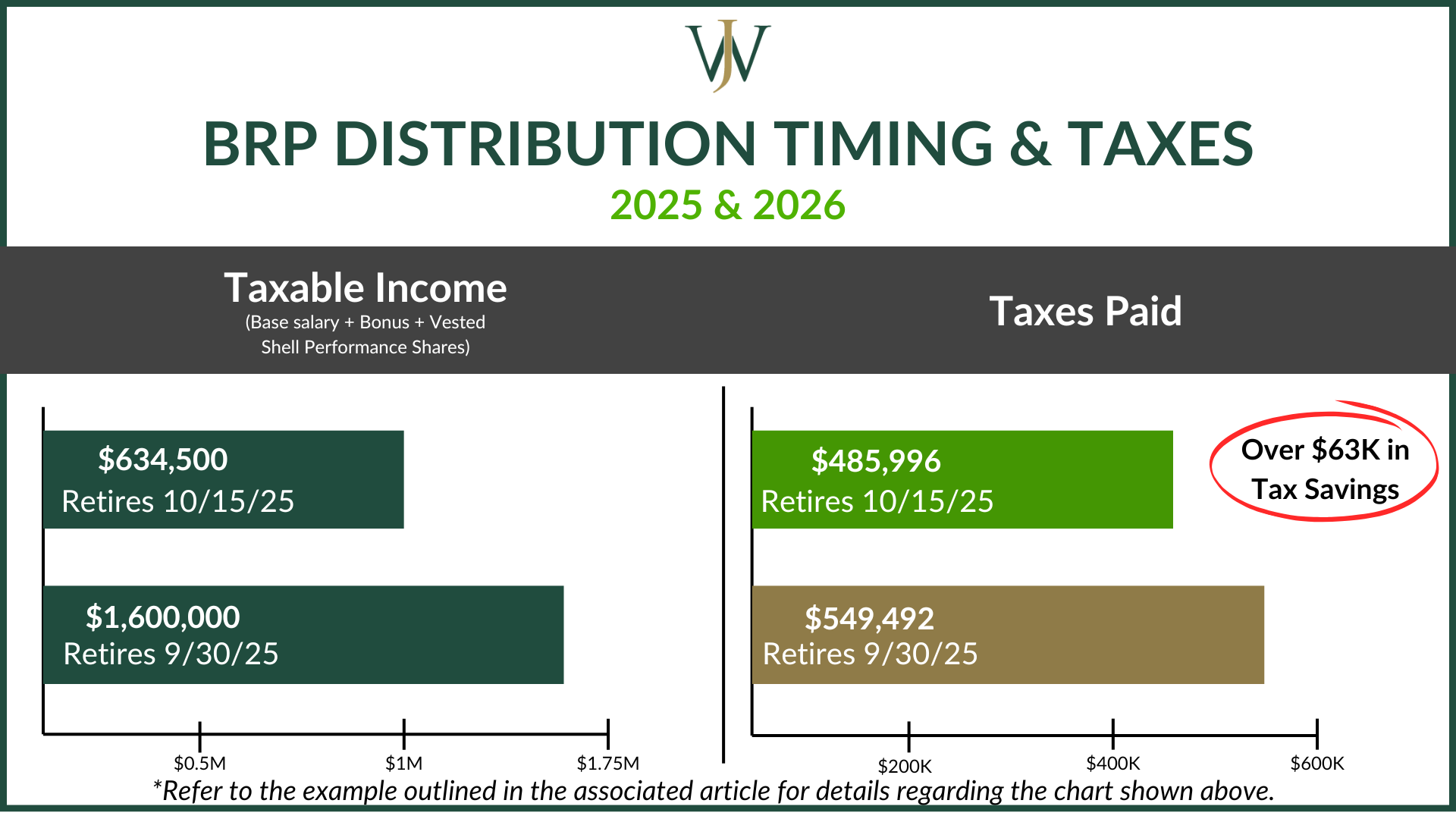


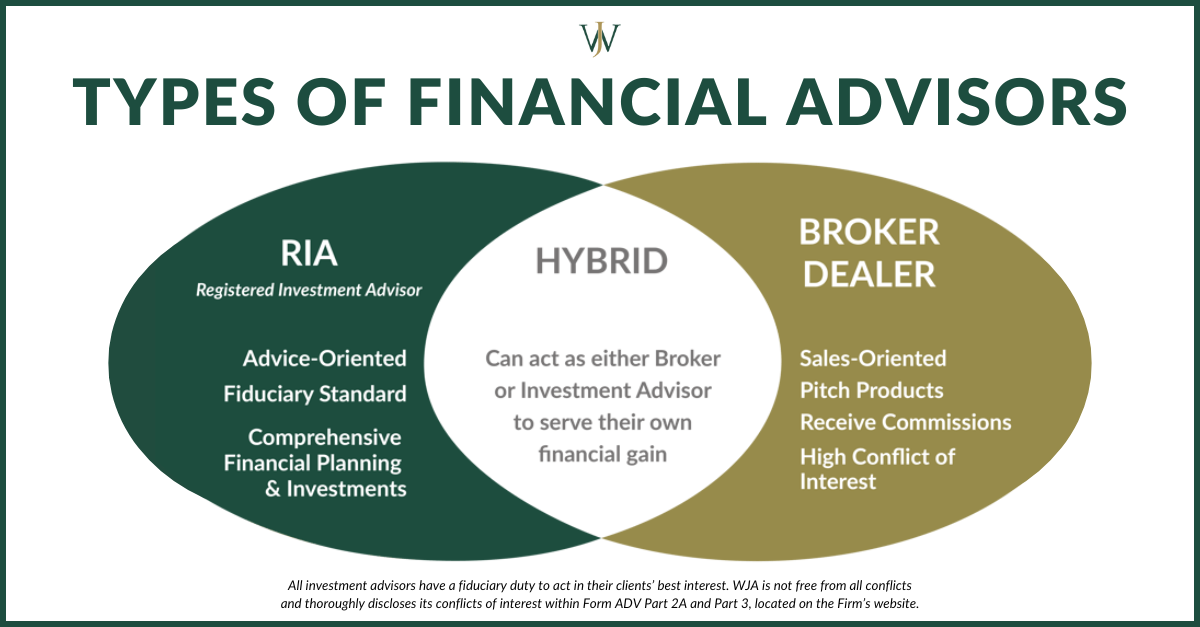
.png)
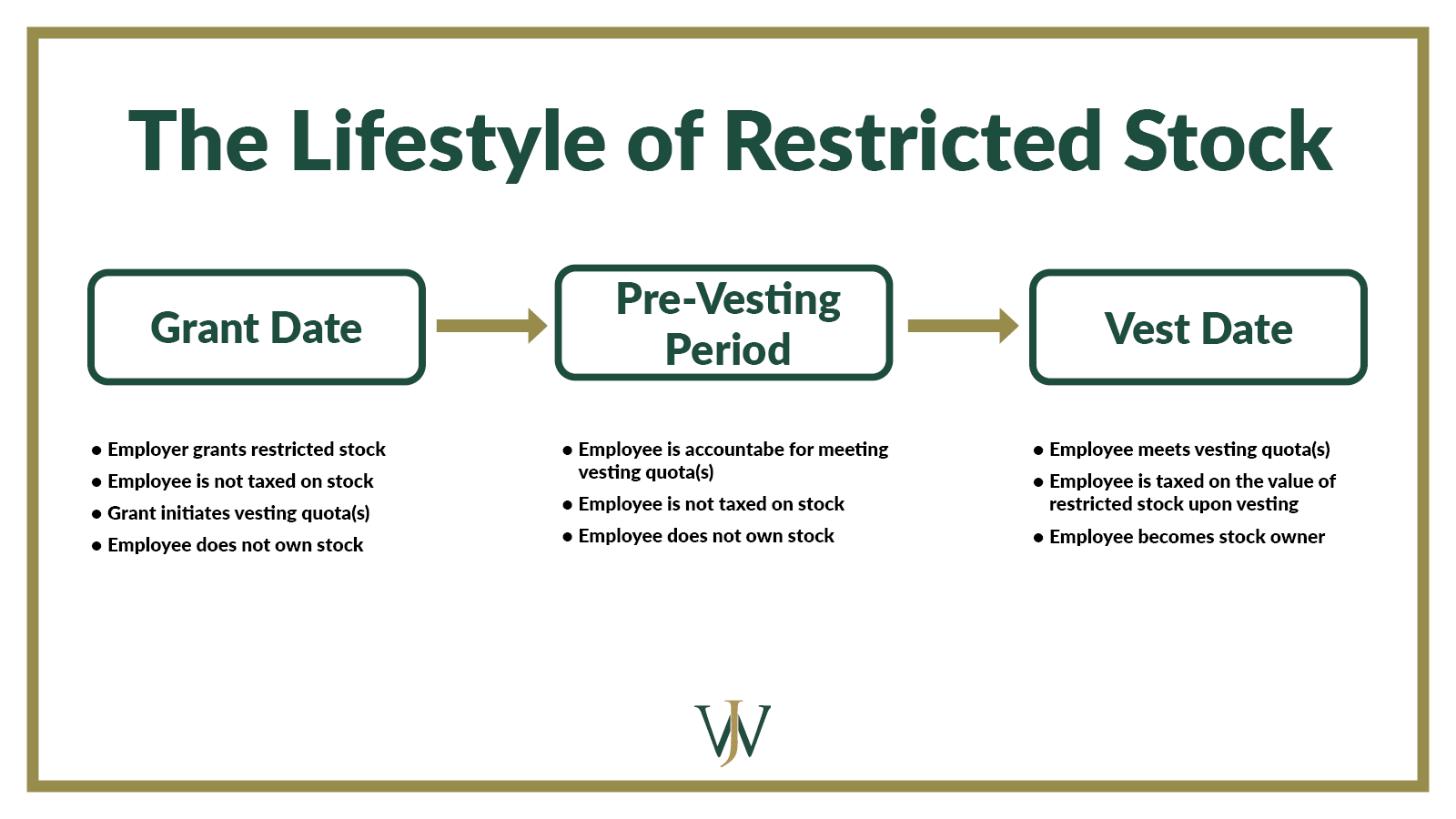
.png)